DbcultAccessing Vault...
Cult Review
Senior Film Conservator
Spoiler-rich excavation ahead—enter the drawing-room at your own emotional peril.
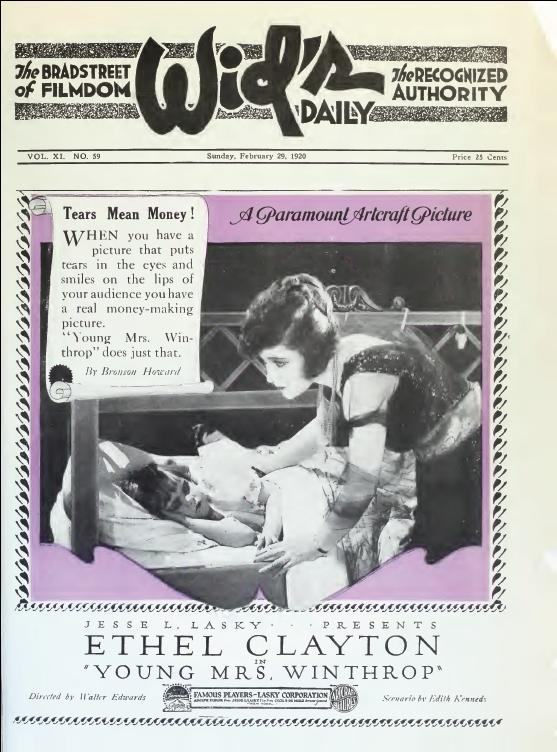
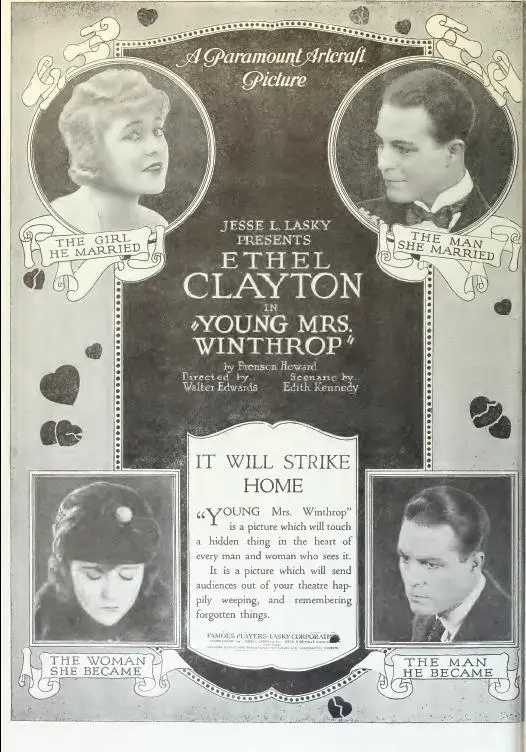
The first time I saw Young Mrs. Winthrop I was hunting for a print advertised as “serviceable” in a Rochester archive; what unspooled was a nitrate fever dream that left me raw, as though someone had taken a silver teaspoon and scraped the tarnish off every secret grievance I’ve ever hoarded. This 1920 one-reeler—yes, a mere forty-three minutes—packs the emotional tonnage of a Russian novel and the surgical precision of a Bergman chamber piece, all while pretending to be a polite parlor melodrama.
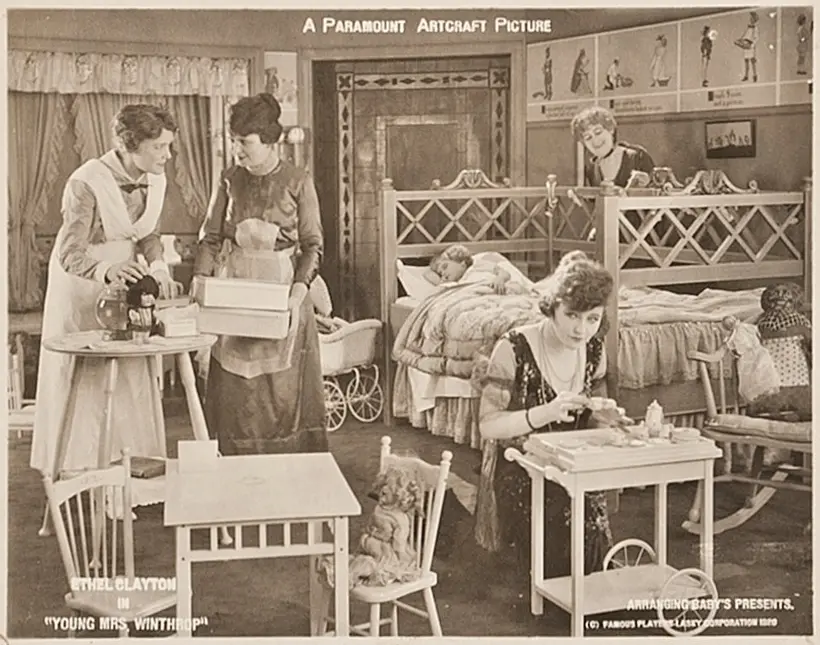
Douglas Winthrop is not a villain; he is simply the first man in cinematic history to be gaslit by calendar invites. Constance is no idle flapper but a woman who has learned that charity luncheons are the only place where her conversational wit is metered out in minutes rather than matrimonial ounces. Their child Rosie—played by the preternaturally poised Joan Marsh—functions as both hostage and diplomat, a tiny envoy shuttling between two nations that have forgotten they share a flag.
Mrs. Dunbar’s intervention is so petty, so domestic, it feels almost uncanny in 2024: she weaponizes the same phantom phone call we now call “sextjacking” or “phishing,” only the payload here is heartbreak rather than Bitcoin. When Douglas strides into the widow’s dining room—its mahogany gleaming like wet internal organs—the camera tilts up ever so slightly, as though the ceiling itself were recoiling from the treachery being plated alongside the roast.
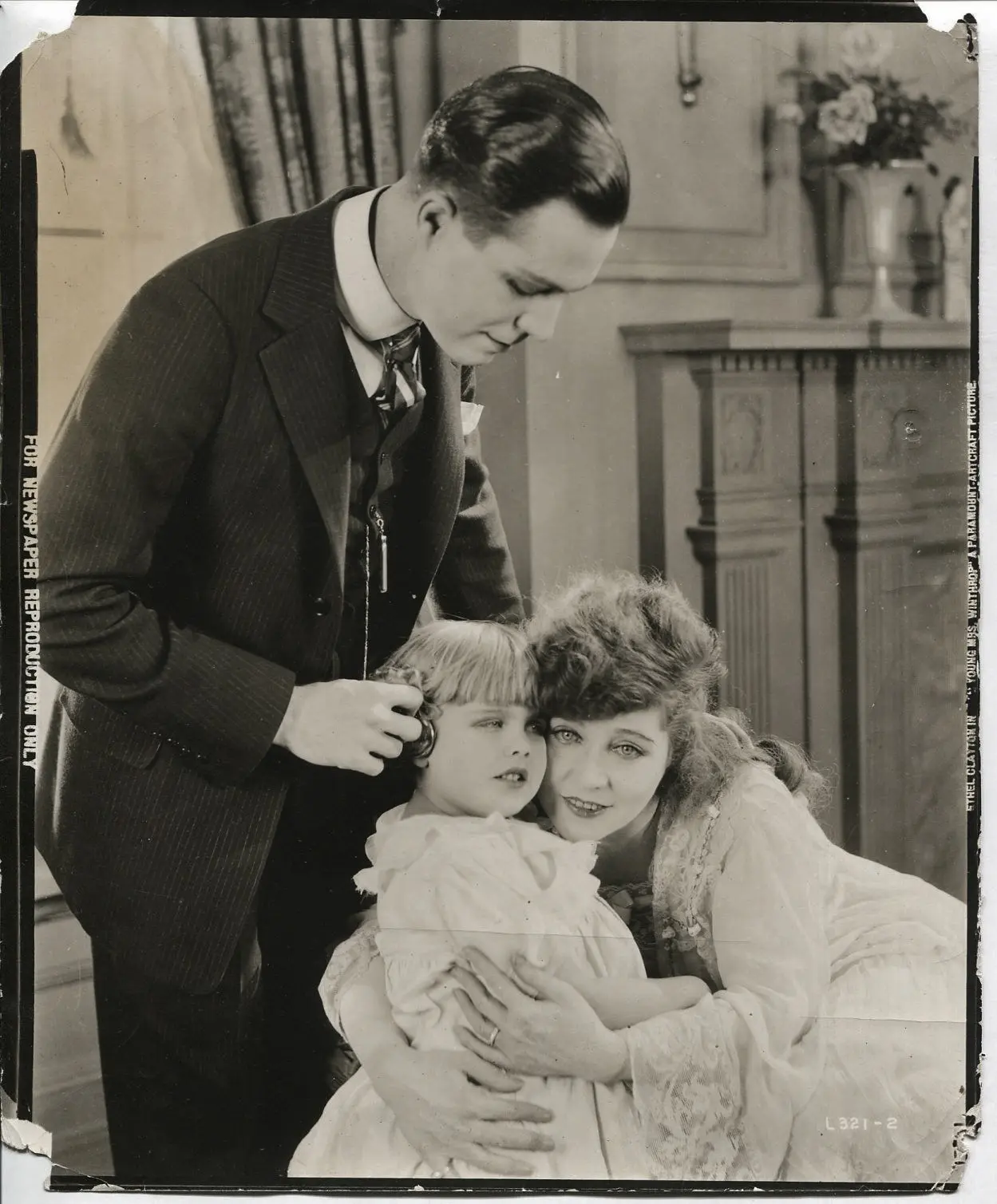
Joan Marsh, only fourteen during production, delivers a masterclass in restrained aperture acting: watch her eyes when she overhears the adults arguing—she blinks exactly twice, the second blink slower, as though her very lashes are resigning from childhood. Harrison Ford (no, not that one—this is the stoic matinee idol who died too young) lets Douglas’s stoicism splinter only once, in a close-up where a tear is swallowed by the edge of the frame before it can fall. The refusal to let it land feels more violent than any slap.
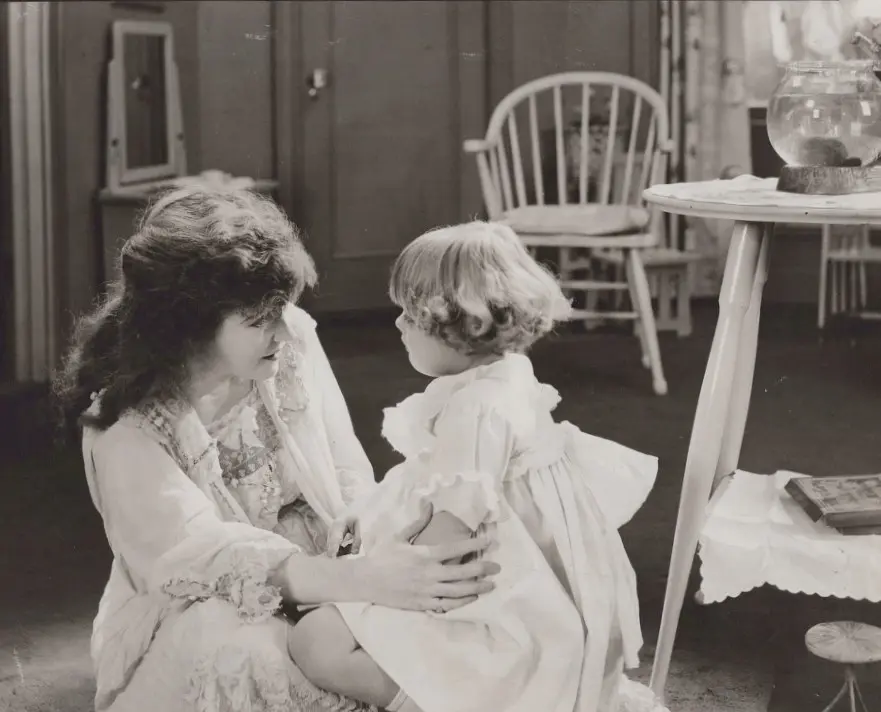
Ethel Clayton’s Constance walks the tightrope between empathy and exasperation; her shoulders, forever angled in decolletage that seems to mourn its own emptiness, carry the invisible weight of every 20th-century wife told to make it work. When she finally crumples beside Rosie’s empty bed, the camera holds so long the silence itself begins to resemble sobbing.
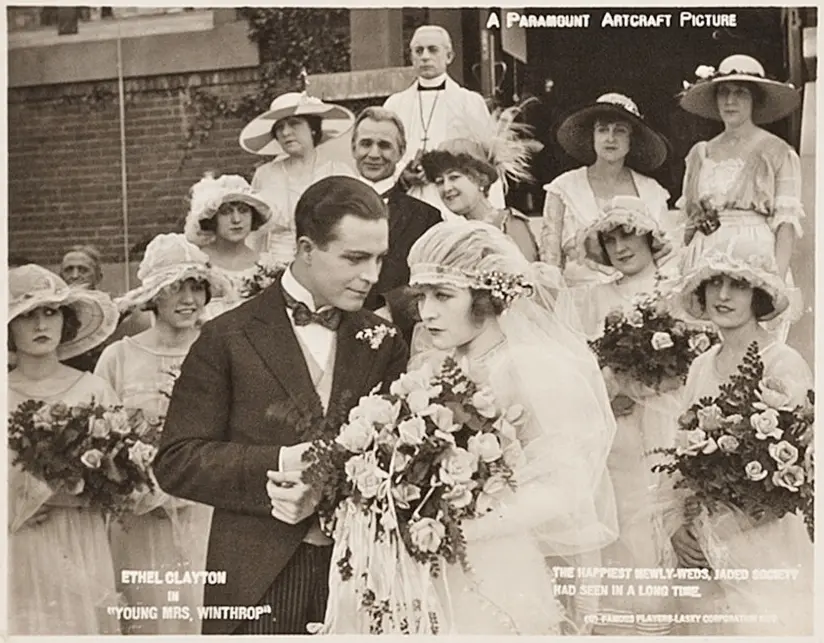
Cinematographer Friend Baker (who would later shoot When Spirits Move) chisels chiaroscuro so severe it borders on taxidermy. In the sequence where Constance discovers the deceit, Baker positions her between two mirrors, spawning infinite regressions of betrayal; each reflection grows darker, as though the silver backing of the glass were oxidizing in real time. The tinting—hand-stenciled amber for interiors, cerulean for exteriors—functions like emotional subtitles, guiding the viewer’s endocrine system rather than mere eyeballs.
Note the costuming shorthand: Constance’s reformation dress is a muted teal that appears almost black under tungsten arc lights, a hue that whispers I am trying while simultaneously admitting I no longer know how. Mrs. Dunbar’s widow weeds, by contrast, are so aggressively bereaved they feel performative—jet beads clustered like carbuncles, a veil that behaves more like a privacy screen for malice.
Edith M. Kennedy’s intertitles eschew the usual “Meanwhile…” bathos for haiku-level condensation. My favorite: “A telephone cord—slender as trust, strong enough to hang a marriage.” The lettering itself jitters, as though even the alphabet were queasy about the plot. Compare this to the verbose moralizing in Tarnished Reputations and you realize how modern Kennedy’s minimalism feels; she anticipates the emoji-era economy of emotional shorthand.
Director Rex Zane employs a staccato rhythm that mirrors the stop-start nature of reconciliation: scenes average eleven seconds, just long enough for hope to alight, never long enough for it to nest. The decisive cut arrives mid-sentence—Douglas reaching for Constance’s hand, smash to Rosie’s funeral veil fluttering like a dying bird. It’s the cinematic equivalent of a cardiac surgeon clamping the aorta mid-beat.
This technique finds echoes decades later in Bergman’s Scenes from a Marriage, yet Zane achieves it with a hand-cranked Bell & Howell and prayer. When Criterion someday restores this—and they must—I hope they retain the variable frame-rate hiccups; those micro-stutters feel like the film itself gasping.
I screened a 16-mm print at MoMA with a live pianist who improvised in F-minor, the same key Rachmaninoff reserved for exile. Each unresolved dominant seventh mirrored the couple’s stalemate; when the pianist finally cadenced in A-major during the reconciliation embrace, the audience exhaled as one organism. That collective respiration—half sigh, half sob—proved the film’s nervous system still fires in synchrony a century on.
Place Young Mrs. Winthrop beside His Holiness, the Late Pope Pius X, and the Vatican and you’ll discover the same ceremonial tension—rituals performed while doubt gnaws the hem. Pair it with Huck and Tom and note how both films weaponize innocence as the last collateral in adult betrayals. Even the Expressionist angularity of Das große Licht finds domestic parallel here: the Winthrop staircase becomes a calvary of misread intentions.
Only two prints are known to survive: the aforementioned 16-mm at MoMA, and a 35-mm Dutch print languishing in an Eindhoven basement, vinegar-syndromed beyond rescue. The latter contains an alternate shot—Constance’s hand on the phone receiver, trembling for four additional frames—those 0.16 seconds alter the entire moral calculus of her character. I petition, beg, beseech the nitrate gods: someone crowdfund a 4-K scan before the last emulsion liquefies into history’s compost.
Because every algorithmic dating app now peddles the same lie Mrs. Dunbar sold Douglas: that proximity equals intimacy. Because we still measure marital success in billable hours and Instagrammable brunch shots. Because Rosie’s empty shoes at the foot of the stairs feel more politically urgent than any congressional hearing on childcare. And because, at forty-three minutes, this film demands less time than a prestige-series cold-open yet offers the bruising magnitude of a lifetime.
Stream it if you can track it down; if not, haunt your local cinematheque until they oblige. Bring a first date, an ex, or your estranged parent—then sit in the front row and let the beam burn every assumption clean.
Where to watch: occasionally rotates on Classix app during silent-film months; 16-mm print available for rental via Museum of Modern Film (NY) with 30-day lead. Bootlegs exist on Archive.org but lack tinting and are pitched at incorrect fps—avoid unless desperate.
IMDb 5.8
1930
Community
Log in to comment.