DbcultAccessing Vault...
Cult Review
Senior Film Conservator
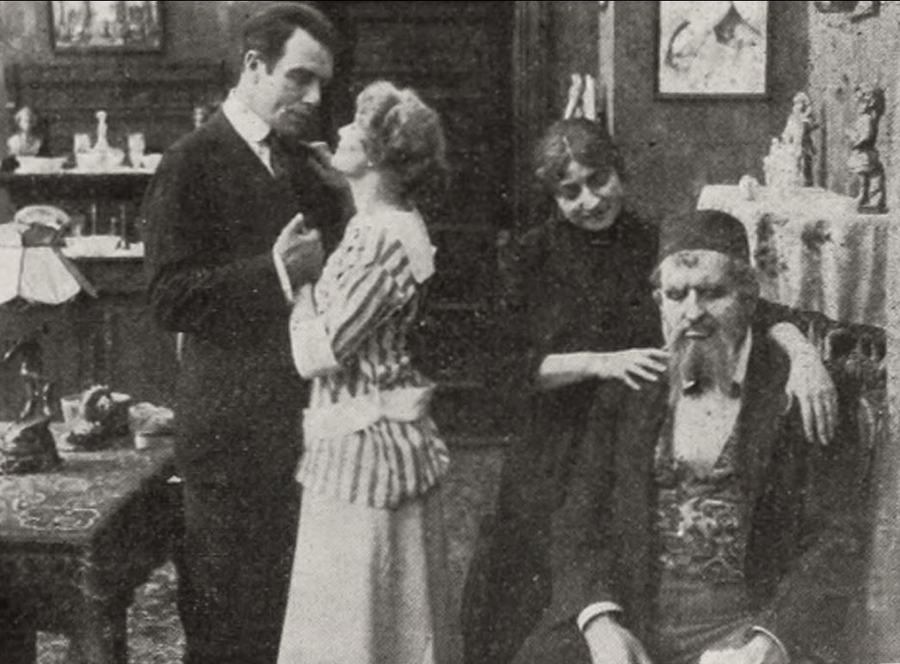
The year 1916 represented a crucible for American cinema, a period where the medium transitioned from mere nickelodeon amusement into a formidable vehicle for social agitation. Among the most incendiary artifacts of this era is Should a Baby Die?, a film that dares to tread upon the electrified fence of bioethics long before the term was even coined. Directed with a surprising lack of sentimentality by Perry N. Vekroff, the film functions as a grim mirror held up to the face of a society obsessed with the 'science' of human improvement. It is a work that demands to be viewed not just as a historical curiosity, but as a precursor to the modern debates surrounding medical autonomy and the quality of life.
At the heart of this narrative is the figure of the Doctor, played by Arthur Donaldson. Donaldson’s performance is a masterclass in restrained anxiety; he does not play a villain, but a man burdened by the terrifying power of his own hands. In 1916, the medical profession was undergoing a radical transformation, and the film captures the physician as a secular deity, a gatekeeper of the gene pool. When he is presented with the 'defective' infant—played with a haunting stillness by Baby Christine—the film pivots from a domestic tragedy into a philosophical inquiry. Should he operate to save a life that will be defined by pain and dependency? The tension is palpable, rendered through tight framing that makes the hospital room feel as claustrophobic as a confessional booth.
The film’s refusal to provide easy answers is its greatest strength. Unlike the more overtly propagandistic Where Are My Children?, which tackled birth control and eugenics with a heavy-handed moralism, Should a Baby Die? focuses on the immediate, agonizing intimacy of the decision. It forces the audience into the doctor’s shoes, making us complicit in his hesitation. The cinematography, though restricted by the technology of the time, utilizes shadow and light to delineate the moral grey zones in which these characters reside.
While the doctor represents the cold logic of the era’s scientific leanings, Camille Dalberg provides the film’s emotional marrow. Her portrayal of the mother is devoid of the theatrical flailing common in silent cinema. Instead, she offers a nuanced study of grief and desperate hope. When she looks at her child, she doesn't see a 'problem' to be solved by eugenics; she sees a soul. Her chemistry—or rather, her friction—with Jack W. Johnston and Florence Hackett creates a secondary layer of social pressure, illustrating how the community at large views the 'unfit' child as a communal burden rather than a private tragedy.
This dynamic reflects the harsh realities of the early 20th century, where films like A Daughter of the Poor explored the intersection of poverty and morality. Here, however, the struggle is more primal. Dalberg’s performance elevates the film from a mere 'social problem' picture into a timeless exploration of maternal instinct versus societal mandate. The scene where she confronts the medical board is particularly striking, her face illuminated by a harsh key light that emphasizes every line of her anguish.
The screenplay by Charles Harris is surprisingly sophisticated for its time. Harris avoids the redundant intertitles that plagued many silents, allowing the visual storytelling to carry the philosophical weight. The dialogue we do see is sharp, interrogative, and often uncomfortable. He doesn't shy away from the term 'euthanasia,' though it is wrapped in the parlance of the day. The script cleverly juxtaposes the sterile environment of the clinic with the warmth of the home, suggesting that the 'solution' offered by science is fundamentally incompatible with the human heart.
In comparing this work to contemporary films such as The Gates of Eden, one notices a distinct lack of pastoral escapism. Harris keeps the action grounded in the urban and the immediate. There is no divine intervention here, no 'Eden' to retreat to. There is only the cold steel of the surgical tray and the ticking of the clock. This realism was a hallmark of the more daring independent productions of the mid-1910s, which were willing to alienate certain segments of the audience to provoke a genuine conversation.
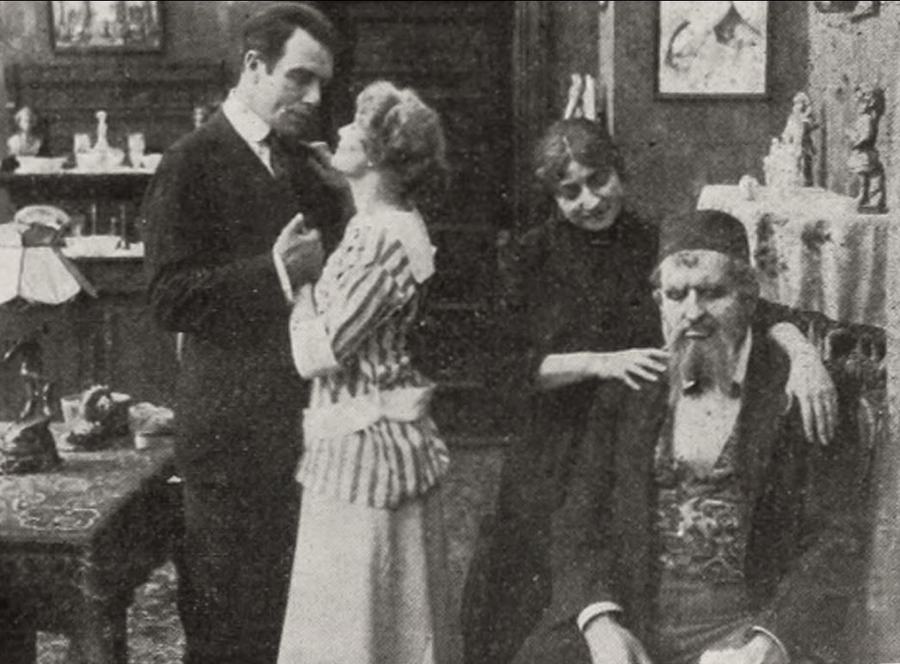
Visually, the film is a fascinating study in early expressionism. The use of deep shadows in the doctor’s study suggests a mind clouded by doubt, while the bright, overexposed nursery scenes feel ironically clinical and cold. The director uses the physical space of the set to mirror the internal states of the characters. When the father, played with a stolid, perhaps too-quiet intensity by George Henry, paces the hallway, the camera remains static, emphasizing his helplessness against the institutional forces at play.
The supporting cast, including Sonia Marcelle and Gazelle Marche, fill out a world that feels lived-in and judgmental. Every background extra seems to carry the weight of Victorian morality, their stares acting as a silent jury. This atmosphere of constant surveillance adds to the film’s tension, making the central dilemma feel like a public execution of one family’s peace. It’s a far cry from the adventurous spirit of Sylvia of the Secret Service; here, the secrets are not geopolitical, but biological and terrifyingly personal.
To truly understand Should a Baby Die?, one must recognize the real-world controversy surrounding Dr. Harry J. Haiselden, who in 1915 famously refused to operate on a baby born with severe defects in Chicago. This film is a direct response to that cultural firestorm. It was part of a wave of 'hygiene' films that sought to educate—or perhaps indoctrinate—the public on issues of heredity and public health. However, Vekroff’s film is more nuanced than the actual 'The Black Stork' film released around the same time. It allows for the possibility that the doctor might be wrong, a radical notion in an era where scientific progress was often viewed as an unalloyed good.
The inclusion of Mrs. Arthur Donaldson in a supporting role adds a layer of domestic reality to the film’s medical focus. The film suggests that the consequences of these decisions ripple far beyond the operating room, affecting the very fabric of the family unit. This is not a film about a single baby; it is a film about the soul of a nation at the dawn of the American Century, deciding what kind of people it will allow to inhabit its future.
Watching this film today is a disquieting experience. The grain of the 35mm stock, the flickering light, and the exaggerated makeup of the period all melt away when the central question is posed. The ethical quagmire remains as relevant now as it was then, perhaps even more so in our age of genetic editing and prenatal screening. Should a Baby Die? serves as a haunting reminder that cinema has always been a battleground for our most difficult conversations.
While it lacks the epic scale of The Life Story of David Lloyd George or the historical grandeur of Votsareniye doma Romanovykh, its impact is more visceral because it is so intimate. It doesn't deal with the fall of empires, but with the collapse of a single mother’s world. It is a film of small moments—a hand reaching for a cradle, a doctor’s sigh, a judge’s gavel—that accumulate into a crushing emotional weight. It is a masterpiece of the 'social problem' genre, a work that refuses to blink even when the subject matter becomes unbearable.
In conclusion, for those interested in the evolution of film as a social tool, this is essential viewing. It bridges the gap between the moralistic fables of the early 1900s and the psychological realism that would define the next decade of filmmaking. It is a difficult, often painful watch, but its bravery in tackling such a taboo subject with such artistic integrity is nothing short of remarkable. It stands alongside films like Crime and Punishment as a profound meditation on the limits of human judgment and the heavy price of playing God.
IMDb 5.6
1926
Community
Log in to comment.