DbcultAccessing Vault...
Cult Review
Senior Film Conservator
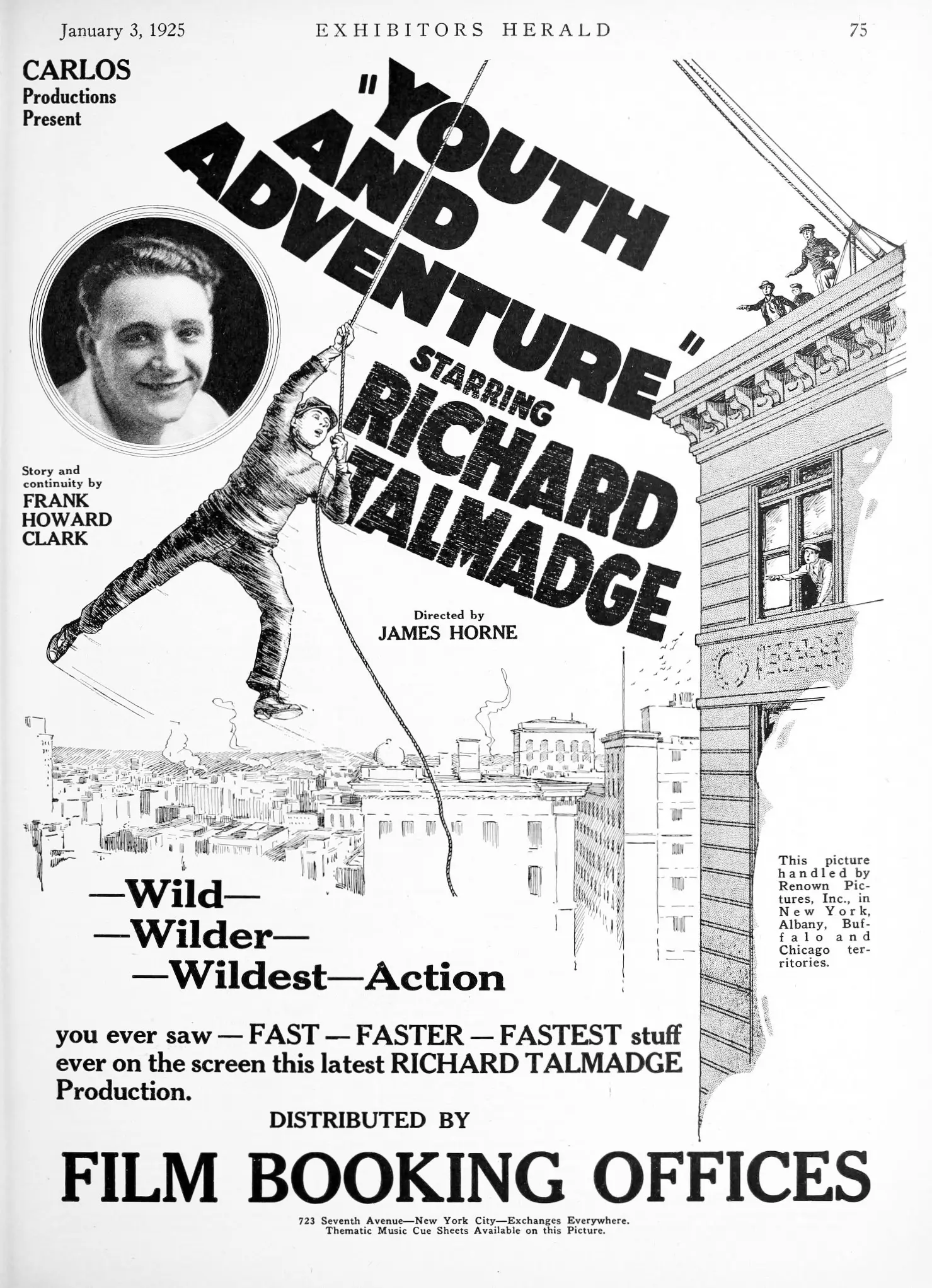
Is Youth and Adventure (1925) a film worth seeking out today? Short answer: yes, but only if you appreciate the specific physical comedy of Richard Talmadge and the historical curiosity of Prohibition-era storytelling. This film is for those who enjoy silent-era 'manhood' arcs and newsroom dramas; it is not for those who require deep psychological complexity or modern pacing.
This film works because Richard Talmadge brings a kinetic, almost restless energy to the screen that makes Reggie’s transformation from a dandy to a fighter feel physically earned, even if the script is thin.
This film fails because the moral pivot from blackmailing a political boss to becoming a crusading journalist happens with the grace of a car crash, lacking the necessary character development to make the transition believable.
You should watch it if you are a fan of 1920s 'stunt-acting' or if you want to see how early Hollywood reconciled the image of the wealthy socialite with the emerging American ideal of the self-made professional.
Yes, Youth and Adventure is worth watching as a historical artifact of the silent era's obsession with reform and physical prowess. It offers a fascinating look at the 1920s perspective on wealth, work, and the power of the press. While it lacks the emotional depth of a film like The Four Horsemen of the Apocalypse, it compensates with a brisk, albeit predictable, plot that keeps the viewer engaged through its 60-minute runtime.
The character of Reggie Dillingham is a fascinating study in 1920s class anxiety. At the start of the film, Reggie is portrayed as a parasitic entity, a man who has 'squandered' a million dollars. In 1925, that sum was astronomical, and the film doesn't shy away from showing his initial incompetence. When Reggie tries to find a job, his failure isn't just played for laughs; it’s a critique of the idle rich. However, the film quickly shifts gears. It suggests that the 'breeding' of a socialite, when combined with the necessity of work, creates a superior kind of leader. This is a common trope of the era, also seen in films like The Sporting Venus.
The blackmail scene is the film's turning point. Reggie photographing Clint Taggart in a 'compromising situation' is handled with a slickness that feels almost modern. It’s cynical. It’s dirty. And yet, the film uses this act of moral bankruptcy to launch Reggie into a position where he can do good. The irony is likely unintentional, but it adds a layer of grit to an otherwise standard redemption story. One might compare this to the investigative themes in Plain Clothes, though Youth and Adventure leans much more heavily into the action-comedy genre.
Richard Talmadge was often marketed as a rival to Douglas Fairbanks, and in Youth and Adventure, you can see why. He doesn't just walk into a room; he occupies it with a spring-loaded intensity. During the final office siege, where Taggart’s thugs attempt to silence the paper, Talmadge’s physicality is the highlight. He uses the furniture, the doors, and the very architecture of the newsroom as props for his defense. It’s a masterclass in silent film choreography. It works. But it’s flawed. The problem is that Talmadge’s acting in the quieter scenes—specifically the romance with Mary Ryan (played with a steady, if unremarkable, grace by Katharine Lewis)—feels a bit stiff.
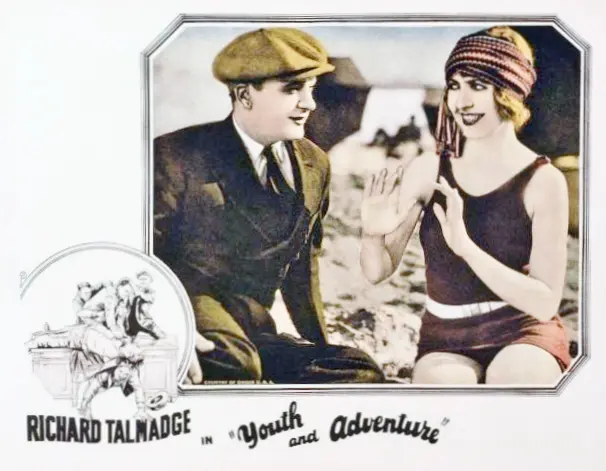
Consider the moment Reggie first takes the editor's chair. He doesn't just sit; he reclines with a bravado that borders on parody. He’s playing a part within a part. This meta-layer of performance is where the film finds its most interesting moments. It’s not just Reggie learning to be an editor; it’s a socialite learning how to perform 'masculine authority.' Compared to the more grounded performances in Chickie, Talmadge feels like he’s in a different movie entirely, one fueled by adrenaline rather than pathos.
The inclusion of a bootlegging operation as the primary antagonist's secret shame is a direct reflection of the 1925 zeitgeist. Clint Taggart, played with a wonderful sneer by Joseph W. Girard, is the quintessential 'political boss.' He represents the corruption that the era’s 'muckraker' journalists were desperate to expose. The film positions the newspaper not just as a business, but as a moral weapon. When Reggie 'liberalizes the paper’s editorial policy,' the film treats it as a revolutionary act. It’s a naive view of journalism, perhaps, but one that is incredibly satisfying to watch.
The tension between the newsroom and the bootleggers provides the film's best pacing. While the early scenes of Reggie failing at odd jobs feel like a standard comedy like Beaches and Peaches, the final act turns into a proto-noir thriller. The use of shadows in the warehouse scenes where the bootlegging is discovered shows a level of cinematographic intent that is often missing from B-movies of this period. Director Frank Howard Clark (who also wrote the script) knows how to build a sense of claustrophobia, even within the confines of a silent film's static camera work.
Visually, Youth and Adventure is a product of its time, but it has moments of surprising clarity. The newspaper office is a character in itself—cluttered, loud (visually), and chaotic. The contrast between the sterile, opulent world Reggie comes from and the ink-stained reality of the press is sharp. The cinematography doesn't take many risks, but it is effective. There is a specific shot of Mary Ryan looking through a doorway that captures the silent era's ability to convey longing without a single word of dialogue.
The tone, however, is a bit of a chameleon. It starts as a lighthearted 'fish out of water' comedy, shifts into a romance, and ends as an action-packed crime drama. For some, this will feel disjointed. For others, it’s part of the 'adventure' promised in the title. It lacks the singular focus of a film like Assunta Spina, but it makes up for it with sheer variety. The film treats the doubling of Reggie’s money at the end as a reward for his moral growth, which is a bit of a problematic message—essentially saying that if you do the right thing, you’ll get even richer. It’s a very 1920s ending.
Pros:
- High-energy stunts that still look impressive today.
- A fascinating look at 1920s newsroom culture and Prohibition-era crime.
- Joseph W. Girard makes for a formidable and memorable villain.
- Short, punchy runtime that never overstays its welcome.
Cons:
- The plot relies heavily on coincidences and convenient timing.
- The romantic subplot feels tacked on and lacks real chemistry.
- The 'lesson' of the film is somewhat undercut by the hero getting all his money back plus interest.
Youth and Adventure is a solid, entertaining piece of silent cinema that manages to balance social commentary with popcorn-flick energy. While it doesn't reach the heights of the era's true masterpieces, it provides a compelling look at a man finding his soul in the most unlikely of places: a corrupt newspaper office. Richard Talmadge is the glue that holds it all together. Without his physical charisma, the film would likely have faded into total obscurity. It’s a film that asks if a man is more than his bank account, and answers with a resounding—if slightly confused—yes. If you can overlook the simplistic morality and the convenient ending, there is a lot of fun to be had here. It’s ink, blood, and bootleg liquor. It’s a ride worth taking.
IMDb 6.6
1924
Community
Log in to comment.