DbcultAccessing Vault...
Cult Review
Senior Film Conservator
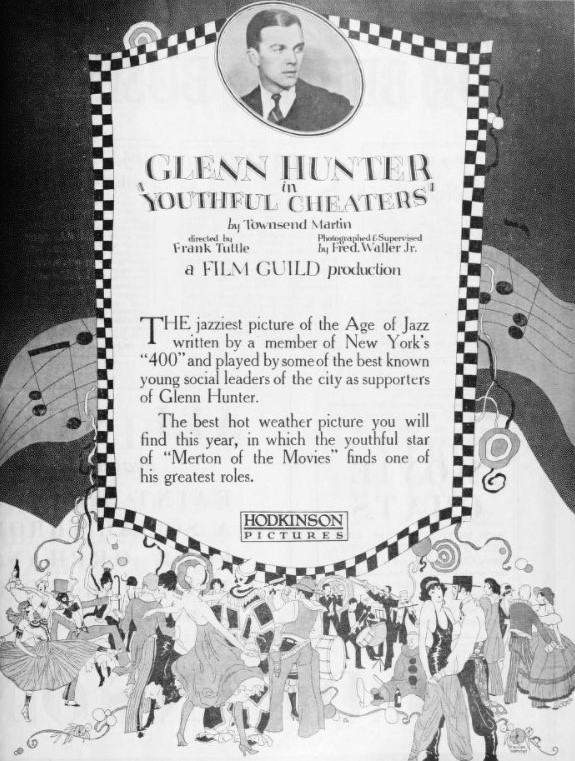
Stepping back into the cinematic tapestry of the early 1920s, one encounters a fascinating artifact in Youthful Cheaters (1923), a film that, at first glance, might seem like a simple romantic drama, yet it unveils a surprisingly nuanced exploration of moral fortitude, the intoxicating pull of societal indulgence, and the enduring conflict between duty and desire. Penned by Townsend Martin, this silent era gem, featuring a compelling ensemble including Marie Burke, Nona Marden, Martha Mansfield, William Calhoun, Dwight Wiman, and Glenn Hunter, is more than a period piece; it’s a mirror reflecting the anxieties and allure of a rapidly changing world. The narrative, deceptively straightforward, delves into profound questions about character, commitment, and the true cost of youthful indiscretion.
The film opens with a powerful, if brief, tableau of altruism: Dr. Edmund MacDonald and his son, Ted, embarking on a perilous voyage to the South Seas. Their mission, a selfless endeavor to combat a virulent cholera epidemic among native populations, immediately establishes a moral compass for the story. This initial setting, though fleeting, imbues the MacDonalds with an almost heroic quality, painting them as men of principle and profound dedication. It’s a stark contrast to the world they will soon re-enter, a world of superficiality and fleeting pleasures. The return journey, however, brings not triumph but tragedy: Edmund contracts the very disease he fought so valiantly. This twist of fate transforms their ship, once a vessel of noble purpose, into a floating quarantine, a silent testament to the fragility of life and the unyielding grip of illness. It's a somber, almost gothic turn that sets the stage for the emotional and ethical dilemmas to come. The confinement, the forced isolation, creates a crucible for introspection, particularly for the younger Ted, who finds himself adrift in a new kind of uncertainty, far removed from the tangible heroism of his past endeavors.
Enter Lois Brooke, a vibrant socialite whose impulsive decision to board the quarantined vessel shatters the MacDonalds' solitude. Her presence, initially a breach of protocol, quickly becomes a catalyst for the film's central romantic entanglement. Lois is not merely a plot device; she embodies the spirit of the Jazz Age, a woman of privilege and vivacity, perhaps a touch reckless, but undeniably captivating. Her forced quarantine alongside Ted creates an intimate, hothouse environment where emotions ripen quickly. Glenn Hunter, as Ted, portrays a character grappling with the weight of responsibility and a burgeoning, unexpected passion. His chemistry with Lois (portrayed with an alluring blend of innocence and daring by Nona Marden) is palpable, a silent language of glances and gestures that transcends the limitations of the medium. The film masterfully uses their confinement to accelerate their connection, suggesting that true intimacy often flourishes in adversity, away from the distractions of the external world. This burgeoning romance, however, is not without its inherent tension, as Lois represents the very antithesis of Ted’s life of disciplined service.
The narrative takes a significant turn when Ted, during an extended visit to Lois's opulent home, is seduced by her glittering world. This is where Youthful Cheaters truly distinguishes itself, moving beyond a simple love story to become a commentary on the societal currents of the Roaring Twenties. Lois’s life is a whirlwind of endless parties, the intoxicating rhythm of hot jazz, and a seemingly boundless pursuit of pleasure. For Ted, accustomed to the austere demands of medical duty and the solemnity of his father's mission, this world is both exhilarating and disorienting. He finds himself caught in a moral maelstrom, torn between the profound purpose instilled in him by his father and the siren call of hedonism. The film subtly critiques this era of excess, showcasing how easily genuine commitment can be overshadowed by superficial allure. It’s a thematic thread that resonates even today, reminding us of the enduring struggle between meaningful contribution and fleeting gratification. The visual contrast between the stark, utilitarian ship and the lavish, decorative interiors of Lois’s mansion is a powerful, unspoken dialogue on the film’s central conflict.
The character of the avaricious interloper, though not extensively detailed in the synopsis, serves as a crucial antagonist, embodying the darker, more cynical aspects of this opulent society. This individual, driven by material gain rather than genuine affection, attempts to drive a wedge between Ted and Lois, highlighting the predatory nature that often lurked beneath the glittering surface of the Jazz Age. This plot device effectively raises the stakes, forcing Ted and Lois to confront not only their internal conflicts but also external pressures threatening their nascent bond. It underscores the idea that their love, born in isolation and challenged by indulgence, must also withstand the corrosive influence of envy and greed. The tension here is not merely romantic; it is a battle for the very soul of Ted, and by extension, for the moral compass of the film itself. The performances, particularly in these moments of societal pressure, would have relied heavily on exaggerated expressions and body language, typical of silent cinema, to convey the characters' turmoil and the villain's manipulative intent.
The film's resolution, guided by the sagacious intervention of Edmund MacDonald, provides a powerful moral anchor. Edmund, despite his illness, remains a figure of unwavering principle. His quiet persuasion, urging Ted and Lois to return to the ship and continue their charitable mission, is a profound statement on the enduring value of purpose over pleasure. It’s not a condemnation of happiness, but a reassertion of a higher calling. This denouement suggests that true fulfillment lies not in escapism or self-indulgence, but in meaningful contribution and shared commitment. It’s a poignant call to maturity, a recognition that youthful impulsiveness must eventually yield to a more profound understanding of life’s responsibilities. The film, in this regard, offers a timeless lesson, one that transcends its specific historical context to speak to universal human experiences. The return to the ship isn't a retreat but a deliberate choice, a conscious embrace of a life less ordinary, a life defined by service rather than superficiality.
From a technical perspective, silent films like Youthful Cheaters relied heavily on strong visual storytelling, expressive acting, and well-crafted intertitles to convey narrative and emotion. While specific details about cinematography or direction are not available, one can infer that the contrast between the confined, austere ship and the vibrant, bustling Long Island social scene would have been visually emphasized through set design and perhaps even lighting choices. The performances by the cast, particularly Glenn Hunter and Nona Marden, would have been central to conveying the emotional arc of their characters without spoken dialogue. Marie Burke, as Edmund, would have needed to project wisdom and moral authority, even from a sickbed, largely through subtle gestures and facial expressions. Martha Mansfield and William Calhoun, along with Dwight Wiman, would have contributed to the rich tapestry of supporting characters, each embodying different facets of the era’s social landscape.
Comparing Youthful Cheaters to other films of its era reveals its unique position. While films like Wealth might have explored similar themes of affluence and its corrupting influence, Youthful Cheaters adds the dimension of a specific, noble mission as a counterpoint. It lacks the overt adventure of something like The Last Outlaw, or the frontier drama of In Mizzoura, opting instead for an internal, moral struggle. The social commentary, though present, is less overtly satirical than perhaps a film like Piccadilly Jim, which also delves into the lives of the wealthy elite. Instead, Youthful Cheaters feels more grounded in a specific ethical dilemma, placing personal responsibility at its core. It's not a grand epic like Big Brother, but a more intimate, character-driven piece that resonates on a human scale. The film's message of choosing purpose over pleasure, of returning to a life of service even after experiencing the allure of decadence, sets it apart from many contemporary dramas that often focused solely on the pitfalls of wealth or the triumphs of romance. It champions a quiet heroism that is perhaps more enduring than any swashbuckling adventure.
Townsend Martin's screenplay, even in its silent form, must have possessed a strong structural integrity to convey these complex ideas. The arc of Ted's character, from dedicated son to seduced socialite and ultimately to a man recommitted to his mission, is central to the film's success. The narrative avoids simplistic moralizing, instead presenting the Jazz Age world as genuinely attractive, making Ted's eventual choice all the more meaningful. It’s not a choice made out of obligation, but seemingly out of a reawakened sense of self and purpose. The film implicitly asks its audience to consider what truly constitutes a 'rich' life: material abundance or spiritual fulfillment. The 'cheaters' of the title are not necessarily malicious, but perhaps those who cheat themselves out of a more profound existence by succumbing to transient pleasures. This interpretation adds a layer of introspection to the title, making it more than just a label for romantic infidelity, but rather an indictment of moral compromise.
The enduring appeal of films like Youthful Cheaters lies in their ability to transcend their historical context and speak to universal human experiences. The struggle between personal desire and societal duty, the allure of wealth versus the satisfaction of service, and the journey of self-discovery are themes that remain perennially relevant. While it might lack the grand spectacle of some of its contemporaries or the avant-garde experimentation of others, its strength lies in its thoughtful character development and its clear, resonant message. It serves as a valuable window into the social mores and anxieties of the early 20th century, a time when traditional values were clashing with a burgeoning modernism and a new sense of freedom.
Moreover, the film's portrayal of the cholera epidemic, even if briefly, grounds the narrative in a tangible reality, providing a stark reminder of the harsh realities that existed beyond the gilded cages of high society. This contrast is vital; it prevents the film from becoming merely a frivolous romantic drama and elevates it to a more serious contemplation of life's true priorities. The silent era, with its reliance on visual cues and emotive acting, often excelled at conveying such stark contrasts, allowing the audience to fill in the unspoken dialogue with their own interpretations and emotional responses. The very act of watching a silent film requires a different kind of engagement, a more active participation in constructing the narrative's emotional landscape.
The performances, particularly from Glenn Hunter and Nona Marden, would have been key to selling the emotional journey. Hunter, likely portraying Ted with a blend of earnestness and vulnerability, would have had to convey the inner turmoil of a man torn between two worlds. Marden, as Lois, would have needed to balance her character's initial carefree spirit with a growing understanding of deeper values. The transformation of Lois, from a frivolous socialite to someone willing to embrace a life of service, is as crucial as Ted's reaffirmation of purpose. It suggests that growth and change are possible even for those seemingly entrenched in a life of ease. The film doesn't just focus on Ted's redemption but also on Lois's awakening, making their joint return to the ship a shared commitment rather than a unilateral decision by Ted.
In conclusion, Youthful Cheaters stands as a compelling testament to the power of early cinema to explore complex human dilemmas. It's a film that asks its audience to consider what truly matters in life, to look beyond the ephemeral glitter of social status and material wealth, and to find fulfillment in purpose and shared humanity. While it might not be as widely celebrated as some other silent classics, its thematic depth and character-driven narrative make it a worthwhile discovery for anyone interested in the evolution of storytelling on screen. It’s a quiet triumph, a film that, despite its age, resonates with a timeless message about the choices we make and the values we choose to uphold. It reminds us that sometimes, the greatest adventure lies not in chasing fleeting pleasures, but in dedicating oneself to a cause greater than oneself, a truth that remains as potent today as it was a century ago. The film, in its subtle yet powerful way, encourages us to be 'youthful' in spirit and energy, but never 'cheaters' of our own potential for good.
IMDb 5.3
1928
Community
Log in to comment.