DbcultAccessing Vault...
Cult Review
Senior Film Conservator
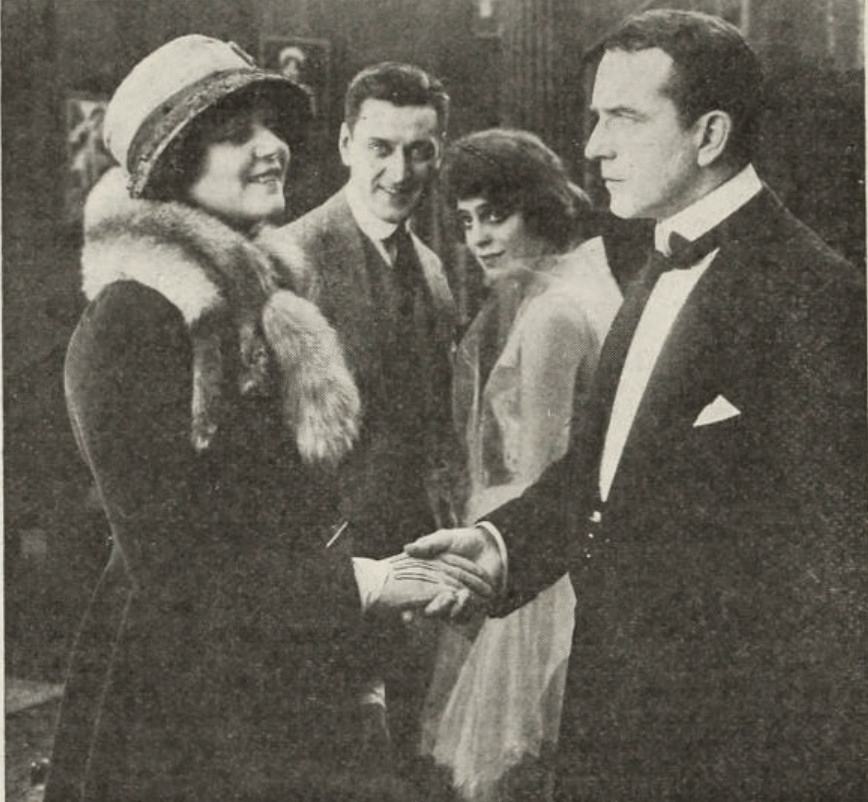
In the vast, often forgotten annals of early cinema, there occasionally surfaces a gem that transcends its era, offering insights into human nature that remain profoundly relevant. Such is the case with 1917's As Man Made Her, a film that, despite its age, navigates the treacherous waters of societal expectation, personal betrayal, and the complex journey toward redemption with a surprising depth. Penned by the formidable duo of Frances Marion and Helen Beare, this narrative, brought to life by a compelling cast including Gerda Holmes and Frank Mills, is far more than a simple melodrama; it is a trenchant critique of the patriarchal structures and hypocritical moral codes that often dictated women's lives in the early 20th century. My recent revisit to this silent classic left me contemplating its intricate character arcs and its bold, for the time, exploration of what it truly means to be 'made' by the hand of man, both literally and figuratively.
The film opens by introducing us to Claire Wilson, portrayed with a nuanced vulnerability by Gerda Holmes, a young woman fresh from the supposedly protective embrace of finishing school. This institution, designed to polish young women for respectable marriages, ironically leaves her ill-equipped for the more predatory realities of the world beyond its walls. Her innocence, a quality often romanticized but here shown as a dangerous susceptibility, makes her an easy target for Mason Forbes (Frank Mills), a wealthy rake whose charm is as potent as his intentions are dishonorable. Mason, a character archetype familiar from countless literary and cinematic works, from the cad in The City to the manipulative figures in more explicit moral dramas, uses his position and allure to install Claire as his mistress. This act, seemingly one of passion, is revealed to be utterly devoid of genuine affection, a mere dalliance for a man whose life is dictated by fleeting desires rather than genuine commitment. Holmes's portrayal of Claire in these early scenes is particularly striking; her initial joy, quickly curdling into a quiet desperation, speaks volumes without a single uttered word, a testament to the power of silent film acting when executed with such precision.
Mason's eventual abandonment of Claire to pursue a 'respectable' marriage with socialite Grace Hughes ignites a firestorm of betrayal within Claire. This isn't merely a jilted lover's sorrow; it's a profound sense of injustice, an awareness of having been used and discarded by a system that values status over integrity. Her response is not one of passive despair, but active, calculated revenge. Claire marries Harold, Mason's younger brother (Edward Langford, delivering a performance of understated decency), setting the stage for one of the film's most compelling dramatic conceits: two couples, inextricably linked by blood and deceit, living under the same roof. This forced cohabitation, a veritable powder keg of suppressed emotions and simmering resentments, is a masterstroke of narrative design. The visual tension of shared spaces, polite greetings masking internal turmoil, and stolen glances charged with unspoken histories, elevates the drama beyond mere soap opera. It’s a bold exploration of how societal norms can trap individuals in unbearable situations, a theme that resonates with the more overt critiques of social hypocrisy found in films like The Devil's Bondwoman, albeit with a more intimate, domestic focus.
The narrative deftly explores the shifting dynamics within this peculiar household. Mason, predictably, tires of the 'respectable' life with Grace (Miss Layton, portraying the socialite with an appropriate air of constrained elegance) and attempts to rekindle his affair with Claire. This moment is pivotal, showcasing Claire's evolution. No longer the naive girl, she now carries the weight of her past, but also the burgeoning reality of her present: she is pregnant with Harold's child. Her refusal to abandon Harold, even as Mason begs her, marks a significant turning point. It's not necessarily a declaration of love for Harold at this stage, but rather an acknowledgment of a new responsibility, a nascent sense of self-preservation and perhaps a flicker of maternal instinct. This refusal sets her on a path distinct from the purely vengeful figure she initially became.
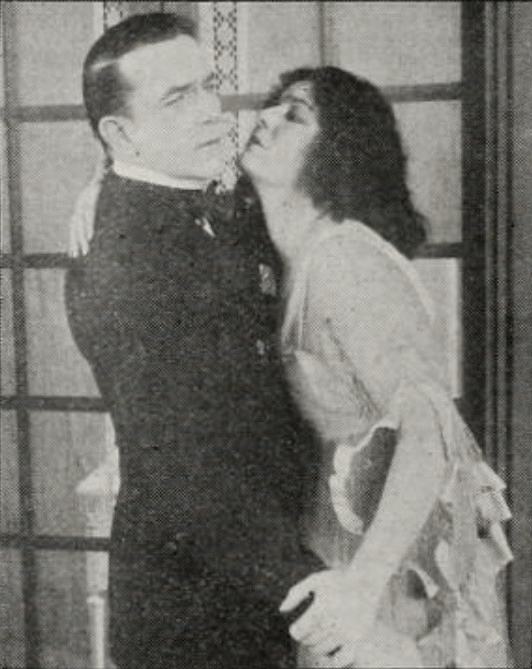
The film then delves into Claire's initial struggle with motherhood. Her indifference, leading her to leave her child with a nurse while she continues her clandestine meetings with Mason in cabarets, is a stark, uncomfortable portrayal of a woman grappling with overwhelming circumstances and an unaddressed past. This period of her life is crucial for understanding her eventual transformation. It shows her as flawed, human, and still caught in the destructive orbit of her past relationship. The visual language of these cabaret scenes, often depicting a facade of gaiety masking profound emptiness, is particularly effective. Gerda Holmes conveys a sense of detachment, a woman physically present but emotionally adrift, a performance that speaks to the complex inner world of a character often simplified in less nuanced portrayals.
The narrative's emotional core truly ignites with the near-fatal illness of Claire and Harold's child. This crisis acts as a powerful catalyst, stripping away the layers of resentment, indifference, and pretense that have shrouded their relationship. In the crucible of shared fear and vulnerability, Claire and Harold find a genuine connection, a reconciliation rooted in their mutual concern for their child. This development is beautifully handled, avoiding saccharine sentimentality by grounding it in authentic human emotion. The shared vigil, the desperate hope, and the eventual relief forge a bond far stronger than any initial romantic ideal. It's a testament to the idea that adversity can reveal the true strength of character and the possibility of genuine connection even in the most fractured of relationships. This emotional arc, where a crisis brings estranged individuals together, echoes the dramatic intensity found in narratives like On the Banks of Allan Water, where life-altering events force characters to confront their true feelings and allegiances.
Mason, observing this burgeoning domestic harmony, is consumed by a furious jealousy. His attempts to reclaim Claire have failed, and he sees his brother gaining the genuine affection and family life he himself squandered. In a moment of vindictive rage, Mason divulges Claire's sordid past to Harold. This revelation is designed to destroy, to shatter the fragile peace and expose Claire as unworthy. Frank Mills, as Mason, delivers a chilling performance in this scene, embodying the bitter, resentful man whose self-serving actions ultimately lead to his own downfall. The moment of revelation is handled with exquisite tension, the audience acutely aware of the devastating impact such a disclosure would have in that era.
Harold's reaction, however, is not what Mason anticipates. While overwhelmed by the revelation, his love for Claire, now deepened by shared experience and genuine affection, proves resilient. He forgives her, a powerful act of grace that elevates his character beyond the simple 'good brother' archetype. This forgiveness is not naive; it's a conscious choice, an understanding that people can change and that past mistakes do not define a person entirely. It speaks to a more progressive view of morality than one might expect from a film of this period. This theme of forgiveness and second chances, even after significant transgressions, finds a parallel in the nuanced moral landscape sometimes depicted in films like A Man's Prerogative, which also explored complex ethical dilemmas within relationships.
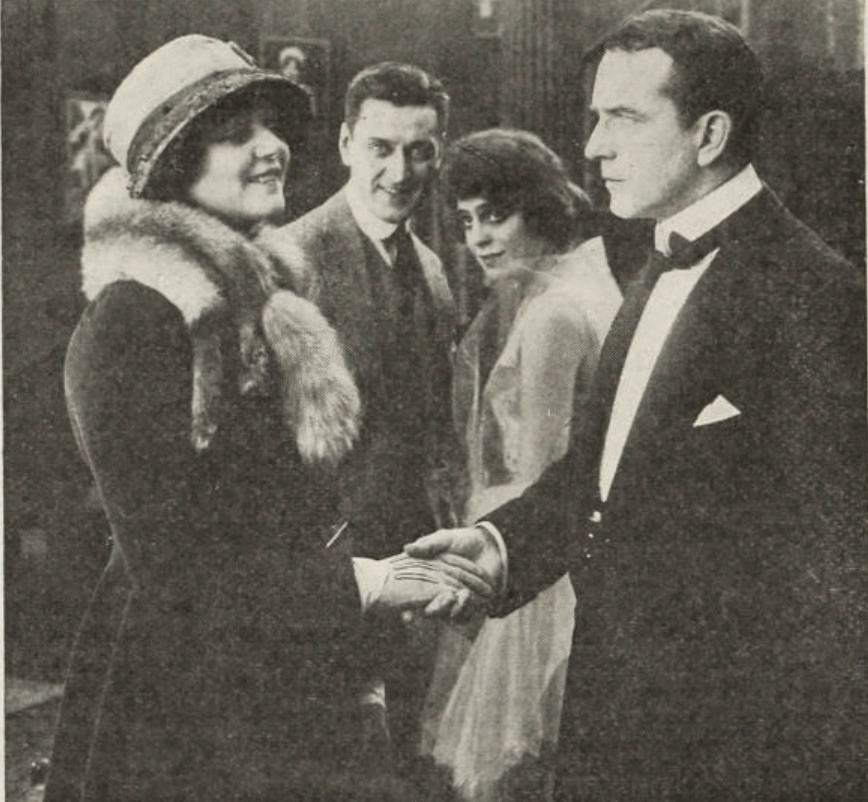
Mason, rejected and utterly alone, his schemes and manipulations having backfired spectacularly, turns to alcohol. This final descent is a poignant, if predictable, end for a character who embodies unchecked self-interest and moral decay. His fate serves as a cautionary tale, a stark contrast to Claire's journey of redemption. The film, in its quiet finality, suggests that while society can 'make' a woman in destructive ways, it is ultimately her own choices, and the grace of others, that can unmake and remake her into something stronger, more authentic. Mason's tragic end, a man consumed by his own bitterness, underscores the film's moral compass, demonstrating that true happiness and fulfillment cannot be built on a foundation of deceit and manipulation.
While specific directorial credits are sometimes fluid in early cinema, the overall execution of As Man Made Her showcases a sophisticated understanding of visual storytelling. The use of intertitles is judicious, allowing the emotional weight to be carried by the actors' expressions and body language. The cinematography, though basic by today's standards, effectively uses framing to emphasize character relationships and emotional states. Close-ups of Gerda Holmes, particularly during moments of internal conflict or profound sadness, draw the audience into Claire's psychological journey. The costumes and sets, while period-appropriate, also serve to highlight the social stratification and the constraints placed upon women. The stark contrast between the opulence of Mason's world and the more modest, yet ultimately more fulfilling, domesticity Claire finds with Harold is subtly conveyed through set design and lighting.
Thematically, the film is remarkably prescient. It questions the very notion of 'respectability' and exposes the double standards prevalent in society. Claire's 'sordid past' is entirely a consequence of Mason's actions, yet society would condemn her, not him. The film subtly champions the idea of individual agency and the capacity for growth, even in the face of profound societal judgment. It's a narrative that, while rooted in its time, speaks to universal struggles for self-determination and the search for authentic connection. In an era when films like The Witch (which, though a different genre, also explores societal condemnation and female agency) were pushing boundaries, As Man Made Her offers a more grounded, yet equally impactful, critique of social mores.
Gerda Holmes's performance as Claire Wilson is truly the linchpin of the film. She navigates a complex emotional landscape, from naive innocence to hardened cynicism, and finally to a quiet strength and maternal love, all without uttering a single word. Her eyes convey volumes, her subtle gestures communicate depths of feeling that modern actors often struggle to achieve even with dialogue. Frank Mills, as Mason Forbes, is equally compelling in his portrayal of the charming yet ultimately despicable villain. He manages to make Mason alluring enough to justify Claire's initial attraction, yet sufficiently callous to evoke genuine audience antipathy. Edward Langford, as Harold, provides the necessary moral anchor, his quiet dignity and eventual capacity for forgiveness making him a deeply sympathetic character. The ensemble, rounded out by Miss Layton (Grace Hughes) and Miss McDonald (the nurse), contributes to a cohesive and emotionally resonant experience.
In conclusion, As Man Made Her stands as a powerful testament to the storytelling capabilities of early silent cinema. Its narrative, crafted by Frances Marion and Helen Beare, is intricate and emotionally charged, avoiding simplistic moralizing in favor of a more nuanced exploration of human frailty and resilience. The film's themes of betrayal, revenge, societal hypocrisy, and the arduous journey towards redemption remain as potent today as they were over a century ago. It reminds us that the human heart, in its capacity for both cruelty and profound forgiveness, has remained largely unchanged. For enthusiasts of silent film, or indeed anyone interested in the evolution of cinematic storytelling and its enduring ability to hold a mirror to society, As Man Made Her is an essential viewing experience. It's a film that not only entertains but provokes thought, leaving a lasting impression long after the final fade to black. It challenges us to consider how much we are 'made' by external forces, and how much by our own internal strength and choices. A truly remarkable piece of cinematic history that deserves to be rediscovered and appreciated.
IMDb —
1915
Community
Log in to comment.