DbcultAccessing Vault...
Cult Review
Senior Film Conservator
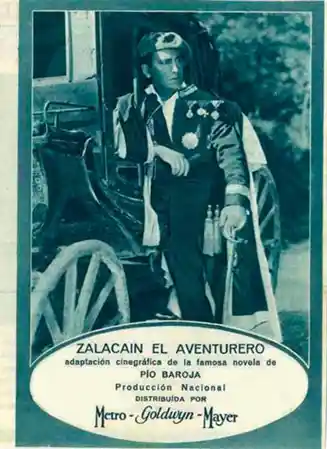
So, Zalacaín el aventurero. Is it actually worth watching today? Only if you’re the type of person who likes looking at old, grainy footage of guys in very tall hats running around the mountains.
If you need 4K resolution and fast editing, you are going to absolutely hate this. It’s slow, the film is scratched to hell, and sometimes you can't even tell who is shooting at who.
But for the history nerds or people who like seeing Spain before it became a tourist trap, it's a pretty neat find. It feels like a moving postcard from a world that doesn't exist anymore.
The story is about Martín Zalacaín. He’s supposed to be this great hero, but in this 1929 version, he mostly just looks like a guy who forgot where he parked his horse.
The plot is tied to the Carlist Wars. Don't ask me to explain the politics of that because the movie doesn't really bother to explain it either. You just need to know there are "good" guys and "bad" guys and a lot of walking.
I noticed early on that the camera work is... well, it’s 1929. It’s shaky. Sometimes a character’s head is nearly cut off by the top of the frame.
There is this one scene where Martín is sneaking across the border. The lighting is actually pretty cool there, all dark and moody, even if the film quality makes it look like it was shot through a dirty sock.
Armando Pou plays Martín. He has this very intense way of staring at things. Like he’s trying to burn a hole through the other actors with his eyes.
It reminds me a bit of the acting style in The Scarlet Shadow, where everything is just a little too much. Every emotion is LOUD even though there’s no sound.
The coolest thing about this movie, honestly? Pío Baroja is in it. He wrote the book this is based on.
It’s like seeing a ghost. Imagine if Stephen King just showed up in the middle of a movie based on his book, but it’s 100 years ago and nobody knows what a cameo is yet.
He just sits there looking grumpy. It’s great.
The romance with Catalina (Amelia Muñoz) is a bit thin. They look at each other, they sigh, and then Martín goes off to get shot at again.
There is a lot of focus on her brother, Carlos, who hates Martín. Their rivalry is basically the whole engine of the movie, but it feels like they’re fighting over who has the better mustache.
The mountain scenery is the real star here. You get these wide shots of the Basque country that feel huge, even on a small screen. It makes you realize how empty the world used to be.
I found myself getting distracted by the extras. Half of them look like they just pulled some random farmers off a field and told them to hold a rifle.
One guy in the background of a village scene is just staring directly at the camera for like ten seconds. He looks confused, like he’s never seen a camera before, which... he probably hadn't.
It’s not as polished as something like The Hungry Heart, which came out around the same era. This feels much more "local" and rough around the edges.
The ending comes up pretty fast. It’s one of those silent film endings where everything happens in about two minutes and then the screen just says FIN.
I left feeling like I’d been through a bit of a time warp. It’s not a masterpiece, but it’s a vibe.
If you’re looking for a deep emotional journey, maybe go watch The Marriage Lie instead. This is more of a "let's see what Spain looked like 95 years ago" kind of experience.
It’s imperfect and dusty. But there’s something kind of sweet about how hard they were trying back then with such limited tools.
Don't expect much and you might actually enjoy the ride. Just keep your expectations as low as the film's frame rate.
IMDb 4.8
1929
Community
Log in to comment.