DbcultAccessing Vault...
Cult Review
Senior Film Conservator
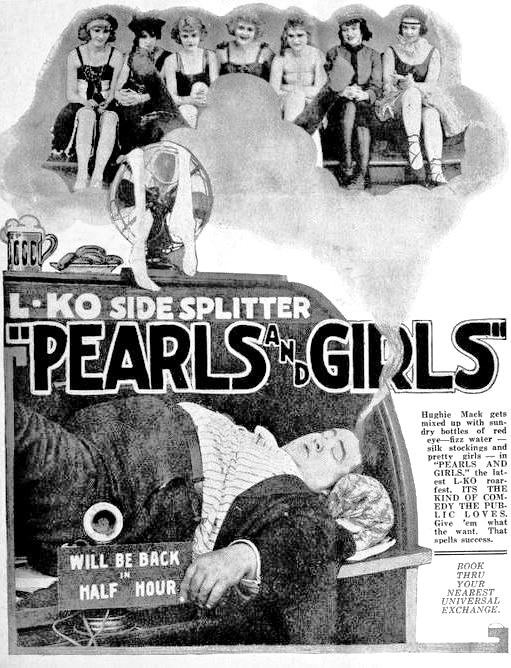
Stepping back into the cinematic annals of 1916, one encounters Pearls and Girls, a film that, even through the mists of time and the often-fragmented legacy of the silent era, offers a fascinating glimpse into the narrative preoccupations and societal reflections of its period. This is not merely a forgotten relic, but a vibrant tableau of human desire, class struggle, and the intoxicating allure of romantic ambition, all played out against a backdrop of burgeoning modernism. The film, starring the expressive Hughie Mack and the luminous Eva Novak, positions itself as a quintessential melodrama, yet it possesses a certain charm and thematic depth that elevates it beyond mere escapism. It’s a narrative that, despite its age, resonates with fundamental human experiences: the yearning for connection, the desire for upward mobility, and the perilous dance with deception.
At its core, Pearls and Girls explores the age-old dilemma of love transcending social barriers. Our protagonist, an unassuming office boy, embodies the everyman archetype, a figure often found in the narratives of the era, struggling against the confines of his station. His infatuation with his employer's daughter is not just a simple crush; it's a silent rebellion, a dream harbored in the quiet corners of his heart, challenging the rigid social hierarchies of the time. This unspoken affection forms the emotional bedrock of the film, setting the stage for the dramatic convolutions that follow. The daughter, portrayed with an endearing blend of innocence and spirited independence by Eva Novak, becomes more than just an object of desire; she represents a world of privilege and opportunity that our hero, Hughie Mack's character, yearns to enter, not just for love, but perhaps for a sense of belonging and self-worth.
The introduction of a stolen necklace acts as the primary catalyst, an elegant MacGuffin that propels the plot into a whirlwind of intrigue and moral quandaries. This isn't just any piece of jewelry; it's a symbol of the wealth and status that separates the lovers, and its disappearance throws their respective worlds into disarray. The theft is a pivot point, transforming a gentle romance into a suspenseful drama, forcing characters to confront their desires and their moral compasses. The film intelligently uses this external conflict to illuminate internal struggles, exploring how individuals react under pressure, how they navigate the treacherous waters of suspicion and accusation. It's reminiscent, in a thematic sense, of the moral complexities explored in films like Crime and Punishment, though perhaps with a lighter, more melodramatic touch, focusing less on existential guilt and more on the immediate consequences of a transgression.
The masquerade ball sequence stands out as a particularly potent narrative device, a classic trope employed with considerable flair. Here, identities are fluid, societal distinctions momentarily dissolved under the guise of festive anonymity. For our office boy, this is his moment of audacious aspiration. Clad in a borrowed or perhaps cleverly acquired costume, he steps onto a stage where he can, for a fleeting night, exist on equal footing with his beloved. This scene is rich with symbolic meaning: the mask not only conceals his true identity but also reveals a truer, bolder self, unburdened by the constraints of his daily life. It’s a moment of wish fulfillment, a temporary triumph over social barriers, echoing the romantic idealism found in works like Vanity, where characters often grapple with societal expectations and the desire to present an idealized version of themselves. The visual spectacle of the ball, even in a silent film, would have been crucial, a dazzling display of costumes and movement, hinting at the intoxicating power of illusion and the thrilling possibility of reinvention.
Hughie Mack, as the office boy, likely delivered a performance characterized by broad, yet earnest, gestures and facial expressions, a hallmark of silent acting that communicated emotion without dialogue. His transformation from timid employee to daring suitor at the ball would have demanded a nuanced physical portrayal, conveying both his inherent shyness and his burgeoning confidence. Eva Novak, meanwhile, would have brought a delicate strength to her role as the employer's daughter, navigating the complexities of her privileged position and her burgeoning feelings for a man from a different world. Their on-screen chemistry, though silent, would have been paramount, relying on gazes, touches, and the subtle interplay of body language to convey the depth of their connection. The success of such a narrative hinges entirely on the audience's belief in their burgeoning affection and the obstacles they face. In this regard, Pearls and Girls, like many films of its era, would have relied heavily on the charisma and dramatic prowess of its lead actors to carry the emotional weight of the story.
The film culminates in a series of dynamic chase scenes, a staple of early cinema designed to inject adrenaline and excitement into the narrative. These sequences are more than just thrilling spectacles; they serve as the ultimate crucible, forcing all secrets into the open and accelerating the resolution of the central conflict. The frenetic energy of the chase would have contrasted sharply with the more intimate moments of romance and intrigue, creating a compelling rhythm to the storytelling. Here, the film likely employed innovative camera work and editing techniques for its time, aiming to immerse the audience in the urgency of the pursuit. This concluding action sequence ensures that the dramatic tension, built through stolen glances and whispered suspicions, explodes into a physical manifestation of the characters' struggles. It’s a classic cinematic device, seen in countless films from the period, including those with more overtly adventurous plots like Wolves of the Rail or A Successful Adventure, where physical prowess and quick thinking determine fate.
Beyond the immediate plot, Pearls and Girls offers a window into the social anxieties and aspirations of the early 20th century. The fascination with class divisions, the moral implications of theft, and the idealization of romantic love were all prevalent themes in literature and cinema of the time. The film inadvertently becomes a historical document, reflecting the societal norms and aspirations of its audience. The 'pearls' in the title are not just a plot device; they symbolize the unattainable, the glittering prizes of a world beyond reach, while the 'girls' represent the emotional heart of the story, the human element that drives the narrative forward. This interplay between material desire and emotional longing gives the film a certain enduring resonance, making it more than just a period piece.
The silent film era, often dismissed by modern viewers for its lack of synchronized sound, was an incredibly sophisticated period of visual storytelling. Directors and cinematographers had to rely solely on imagery, performance, and intertitles to convey complex emotions and intricate plots. In Pearls and Girls, one can imagine the director's careful staging, the use of light and shadow to create mood, and the precise framing to draw attention to key details—a stolen glance, a nervous hand, the glint of the missing pearls. Every visual element would have been meticulously crafted to communicate without dialogue, a testament to the artistry of early filmmakers. The film would have been accompanied by a live orchestra or pianist, whose music would have provided the emotional score, swelling with romance, building tension during the chase, and underscoring the pathos of the characters' predicaments.
Comparing Pearls and Girls to other films of its time reveals shared narrative conventions and evolving cinematic techniques. The theme of an underdog rising to the occasion, often driven by love, is a common thread in films like The Lonesome Chap or even the more overtly religious allegories such as The Christian, where moral fortitude is tested. The element of mistaken identity or hidden truths unveiled at a social gathering harks back to theatrical traditions and found its way into many silent pictures, providing rich dramatic irony. The chase sequences, a precursor to modern action filmmaking, were often the highlight for audiences, demonstrating the nascent power of cinema to create thrilling spectacle. Films like Acquitted, while perhaps more focused on legal drama, still relied on suspenseful plot developments to engage viewers, much like the mystery surrounding the stolen necklace in Pearls and Girls.
The performances of Hughie Mack and Eva Novak would have been central to the film's success. Mack, known for his comedic and dramatic range in the silent era, would have infused his office boy character with a blend of vulnerability and nascent courage. His journey from an overlooked employee to a romantic hero, albeit one embroiled in scandal, is the emotional backbone of the narrative. Novak, with her captivating screen presence, would have embodied the aspirational ideal, a symbol of beauty and social standing that the protagonist strives for. Their combined talent would have lent credibility to the rather extraordinary circumstances of the plot, making the audience invest emotionally in their plight. This kind of character-driven narrative, where the audience roots for the underdog, is a timeless appeal, seen repeatedly in cinema's evolution, from early melodramas to contemporary blockbusters.
The stolen necklace itself functions as more than just a plot device; it's a commentary on the perceived value of material possessions versus genuine human connection. The pursuit of the pearls inadvertently forces characters to confront deeper truths about themselves and their relationships. Is the love between the office boy and the daughter strong enough to withstand the scandal of theft and the chasm of social class? The film, in its resolution, would likely have offered a definitive answer, reinforcing moral lessons prevalent in early cinema—that true love and integrity ultimately triumph over deceit and greed. This moralistic undertone is a common thread in many films of the period, including those exploring more complex ethical dilemmas, such as Più forte del destino (Stronger Than Fate), where characters wrestle with their destinies and moral choices.
The thematic exploration of social mobility and the 'American Dream' is also palpable within Pearls and Girls. The office boy's ambition isn't solely to win the girl, but implicitly to elevate his standing, to prove himself worthy of a life beyond his current means. The masquerade ball is his temporary passport to this desired world, but the reality of the stolen necklace threatens to pull him back down, or worse, condemn him. This tension between aspiration and reality, between the desire for social ascent and the harsh consequences of bending the rules, provides a rich dramatic landscape. It reflects a society grappling with rapid industrialization and changing social structures, where the opportunities for advancement were tantalizingly close, yet often guarded by rigid class distinctions. Films like Sudden Jim often explored similar themes of ambition and the challenges faced by individuals striving for success.
The enduring appeal of a film like Pearls and Girls, even if only through its plot description, lies in its timeless narrative elements. Love, betrayal, suspense, and ultimate redemption are universal themes that transcend eras and cinematic styles. The film, in its original presentation, would have captivated audiences with its blend of romance and thrilling action, offering both emotional escapism and perhaps a subtle commentary on the societal pressures of its day. The sheer audacity of an office boy daring to love his employer's daughter, and then becoming entangled in a high-stakes jewel theft, creates a compelling drama that speaks to the human condition's enduring fascination with forbidden desires and the consequences of our choices. The chase scenes, in particular, would have delivered a visceral thrill, an exciting conclusion to a narrative steeped in emotional and social complexities. It’s a testament to the fundamental power of storytelling that these ingredients, as simple as they may seem, continue to hold sway.
Finally, considering the legacy of such a film, Pearls and Girls, even without its full visual resurrection, stands as a valuable piece of cinematic history. It reminds us of the foundations upon which modern filmmaking was built, showcasing the early mastery of narrative structure, character development, and suspense. The use of symbols like the pearls, the dramatic potential of a masquerade, and the excitement of a chase all demonstrate a sophisticated understanding of how to engage an audience without a single spoken word. It’s a silent symphony of human emotions, a drama where every gesture, every expression, and every plot twist had to sing. The contributions of actors like Hughie Mack and Eva Novak, working within these constraints, underscore their immense talent and the enduring power of their performances to convey intricate human experiences. The film, in essence, is a beautiful echo from a bygone era, a whisper of grand narratives and heartfelt performances that continue to inform and inspire. Its ingredients, though simple, combine to form a rich and satisfying cinematic experience, even if only through the lens of historical imagination. It’s a reminder that the core tenets of compelling storytelling have remained remarkably consistent over the decades, proving that a well-crafted narrative, irrespective of its technological trappings, will always find its audience and leave its mark on the collective consciousness of cinema enthusiasts. The echoes of its drama can be heard in subsequent films that continue to explore the delicate balance between love and ambition, wealth and morality, a testament to its timeless thematic power.

IMDb 5.4
1915
Community
Log in to comment.