DbcultAccessing Vault...
Cult Review
Senior Film Conservator
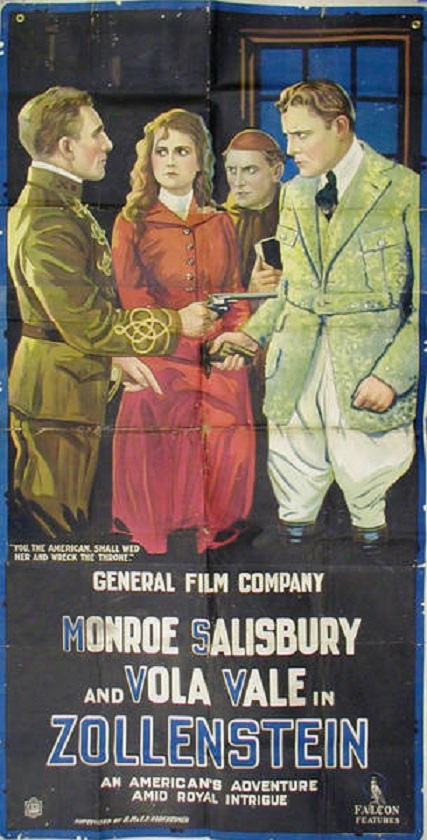
Stepping into the world of Zollenstein is to immerse oneself in a grand, sweeping narrative, a cinematic tapestry woven with threads of duty, love, betrayal, and the relentless hand of fate. This isn't just a film; it's a meticulously crafted period piece that, even decades after its original release, resonates with the timeless human struggles for power, identity, and justice. The writers, William Blair Morton Ferguson and Douglas Bronston, have conjured a tale that feels both epic in its scope and intimately personal in its tragedies, a testament to their storytelling prowess that transcends the limitations of early filmmaking techniques.
At its core, Zollenstein grapples with the age-old conflict between dynastic responsibility and individual desire. The film opens with a kingdom's future hanging in the balance, as its aging monarch, portrayed with a compelling blend of regal authority and paternal concern by Daniel Gilfether, orchestrates a strategic marriage for his son, the Prince, to the Princess of Saxonia. This alliance is not born of affection but of political necessity, a calculated move to secure regional stability. Such arrangements were the bedrock of monarchical power, and the film deftly explores the immense pressure placed upon heirs to subjugate personal happiness for the greater good of the realm. However, the Prince, brought to life with a nuanced performance by Monroe Salisbury, has already chosen a different path, having secretly wed Lady Maulfrey Le Fay. This clandestine union forms the pivotal fulcrum upon which the entire narrative hinges, setting in motion a chain of events that will shake the very foundations of the kingdom.
The revelation of the Prince's secret marriage is not merely a plot point; it's a cataclysmic event that underscores the rigid societal expectations of the era. The King's furious reaction, leading to his son's exile to England, isn't just an act of anger but a desperate attempt to salvage his carefully constructed political landscape and restore perceived order. This scene, though likely depicted through the grand, expressive gestures characteristic of silent cinema, would have conveyed the profound rupture within the royal family. The emotional weight of this banishment, the severing of familial ties for the sake of royal protocol, provides a potent dramatic foundation. The tragic irony is that this very act of preserving the crown's purity inadvertently sows the seeds for future chaos and a far greater threat to the lineage.
The film then navigates a period of separation, only for a deathbed summons to recall the exiled Prince. This return, however, is tinged with profound sorrow, as Lady Le Fay, whose secret love had caused such upheaval, tragically dies in childbirth. This sequence, undoubtedly designed to evoke maximum pathos, establishes a melancholic tone. The Prince, now a widower and, upon his father's passing, the new king, is left with an infant son—the unwitting symbol of both his forbidden love and the precarious future of Zollenstein. This child, whose existence is shrouded in a tragic past, becomes the ultimate prize in a deadly game of succession. The performances here, particularly from Leah Gibbs as Lady Le Fay, would have been crucial in conveying the depth of this fleeting romance and its heartbreaking end, even in a non-speaking role.
No royal drama is complete without a villain, and Zollenstein delivers a truly formidable one in Boris, the late king's illegitimate brother, likely portrayed with chilling ambition by Harl McInroy. Boris embodies pure, unadulterated covetousness, seeing the infant heir not as a symbol of hope but as an obstacle to his own ascent. His plot to bribe Betta, Lady Le Fay's maid (a character given depth by Jane Pepperell), to commit infanticide is a chilling testament to his ruthlessness. This act of attempted regicide, veiled in the guise of a domestic tragedy, elevates the stakes considerably, transforming a family drama into a grand political thriller. The tension here would have been palpable, a silent scream of impending doom.
However, the narrative pivots on an extraordinary act of human decency. Instead of carrying out Boris's heinous command, Betta, driven by a profound moral conviction and perhaps a lingering loyalty to her former mistress, makes a choice that reshapes the kingdom's destiny. She hides the royal baby, raising him as her own and christening him John Mortimer. This pivotal decision is the heart of the film's thematic exploration of identity, destiny, and the power of individual conscience. Betta's character becomes a quiet hero, a beacon of integrity against the backdrop of aristocratic deceit. Her sacrifice and courage in defying a powerful villain, all to protect an innocent life, is a narrative device that resonates deeply, much like the hidden identities in films such as Daughter of Destiny or the intricate family secrets uncovered in The Shadow of a Doubt, though Zollenstein grounds its mystery in overt royal intrigue rather than psychological suspense.
The narrative then jumps forward, likely years, to a moment where the new king (the Prince who had succeeded his father) dies in an accident, clearing Boris's path to the throne. This sudden turn of events highlights the capricious nature of power and the fragility of life, but also serves as the catalyst for the eventual restoration of justice. With Boris now claiming the crown, the kingdom falls under the shadow of a usurper. Yet, the wheel of fortune continues to turn, bringing forth an unlikely champion in the Grand Chancellor, Boris's sworn enemy. This character, potentially played by Edward Jobson or Frank Erlanger, is not merely an antagonist to Boris but a figure of astute perception and unwavering loyalty to the true lineage. His chance encounter with John Mortimer is the very definition of dramatic irony and fateful intervention. The Chancellor, struck by John's uncanny resemblance to the Royal Family, begins to piece together the truth, setting the stage for a dramatic confrontation.
The ensuing struggle to prove John's heritage forms the narrative's climax. Boris, desperate to maintain his illicit grasp on power, undoubtedly attempts to discredit John, employing all manner of subterfuge and intimidation. However, the truth, as often happens in these grand narratives, cannot be suppressed indefinitely. It is Betta, the humble maid who once saved a prince, who steps forward with irrefutable proof of John's royal blood. This moment, where the truth is finally revealed, would have been a profoundly satisfying release of tension, a triumphant vindication for the long-suffering and the unjustly dispossessed. It speaks to the film's underlying belief in moral order and the eventual triumph of right over wrong, a common theme in early 20th-century cinema, echoed in the clear moral lines drawn in films like The Crisis or A Woman's Way.
The culmination of John's journey sees him crowned king, a rightful heir restored to his throne. The film closes with another strategic marriage, this time to Princess Zenia, the daughter of his father's original, jilted betrothed. This final act of union is more than just a happy ending; it's a profound statement on the cyclical nature of history, the healing of old wounds, and the restoration of balance. It neatly ties up the narrative threads, fulfilling the original dynastic ambitions in a way that respects both love and duty, albeit through a circuitous and often tragic path. The casting of Vola Vale as Princess Zenia would have provided a dignified and suitable match for the newly crowned monarch.
While specific details of individual performances from this era are often lost to time, the very structure of Zollenstein demands powerful, expressive acting. Silent film actors relied heavily on pantomime, facial expressions, and grand gestures to convey emotion and drive the narrative. One can imagine Monroe Salisbury delivering a nuanced portrayal of the Prince’s internal conflict between love and duty, and later, the weight of kingship and loss. Harl McInroy as Boris would have likely embodied the quintessential villain, his ambition etched in every movement. But perhaps the most compelling performance would have come from Jane Pepperell as Betta, whose quiet strength and moral courage would have shone through, making her acts of defiance all the more poignant. Her character, in particular, offers a departure from purely aristocratic focus, highlighting the impact of ordinary people on extraordinary events, a theme sometimes explored in films like The Vicar of Wakefield, which centers on less exalted figures.
Thematic explorations are rich within Zollenstein. Beyond the obvious struggle for the throne, the film delves into the nature of identity. John Mortimer, raised as a commoner, embodies the idea that true royalty isn't just about birthright but about character and destiny. His journey from an unknown child to a rightful monarch is a classic hero's arc, resonating with archetypal tales of hidden princes and lost heirs found. This narrative trope, while ancient, remains eternally captivating because it speaks to universal desires for justice and the belief that inherent nobility will, eventually, shine through. The film also powerfully demonstrates the corrosive nature of unchecked ambition, as seen in Boris's actions, contrasting it with the loyalty and integrity of characters like Betta and the Grand Chancellor. This moral clarity is a hallmark of many films from this era, offering clear distinctions between good and evil, a comforting narrative structure in a rapidly changing world.
In an era of nascent cinema, Zollenstein stands as a testament to the power of grand storytelling. It avoids the simpler, more contained narratives of some of its contemporaries, opting instead for a sprawling, multi-generational saga. The film’s focus on the continuity of a royal line, despite personal tragedies and treacherous plots, speaks to a societal fascination with monarchy and the stability it represented. It’s a narrative that would have captivated audiences with its dramatic twists and turns, its moments of heartbreaking loss, and its ultimate triumph of justice. The intricate plotting, credited to Ferguson and Bronston, ensures that the audience is constantly engaged, anticipating the next revelation or betrayal. This complexity distinguishes it from more straightforward melodramas like The Heart of Jennifer, offering a more robust narrative tapestry.
The visual language of Zollenstein, even without the benefit of sound, would have been rich with symbolism and atmospheric detail. Period costumes, elaborate sets (or carefully chosen locations), and dramatic lighting would have contributed significantly to the film’s immersive quality. The grandeur of royal courts, the shadowy corners where conspiracies are hatched, and the humble settings where a true king is unknowingly raised—all these visual elements would have been crucial in conveying the film’s epic scope and emotional depth. The director's vision, executed through the lenses of early cinematography, would have aimed to transport viewers directly into this world of intrigue and destiny. It’s a reminder that even without dialogue, cinema could weave incredibly complex and emotionally resonant narratives that held audiences spellbound.
Ultimately, Zollenstein is more than just a historical drama; it's a profound exploration of human nature under duress. It examines the corrupting influence of power, the unwavering strength of loyalty, and the enduring hope that truth and justice will, in the end, prevail. The film’s intricate plot, compelling characters, and timeless themes ensure its place as a noteworthy piece of cinematic history, offering a window into the storytelling sensibilities of its era while still captivating modern audiences with its universal appeal. It's a film that asks us to consider what truly defines a ruler, and whether bloodline or character ultimately holds greater sway in the destiny of a kingdom. Its enduring legacy lies in its ability to tell a story of such monumental stakes with a clarity and emotional force that transcends its silent origins.
IMDb 4.2
1925
Community
Log in to comment.