
DbcultAccessing Vault...
Recommendations
Senior Film Conservator
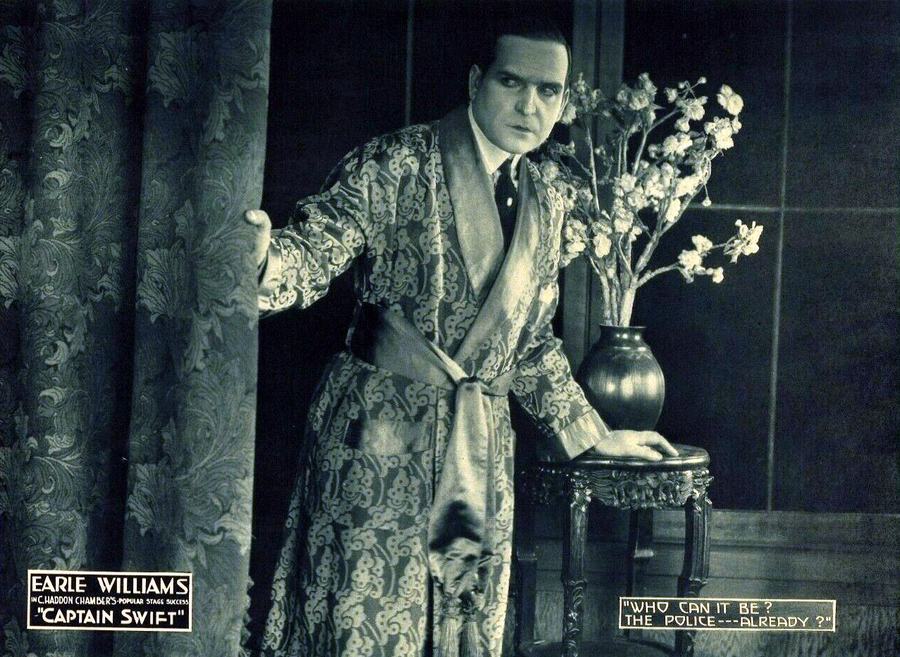
The artistic legacy of Tom Terriss was forever changed by Captain Swift, the thematic layers of this 1920 classic invite a wider exploration of the genre. This list serves as a bridge to other Drama experiences that are just as potent.
The vintage appeal of Captain Swift to reinvent the tropes of Drama cinema for a global audience.
When notorious bank robber Captain Swift is pursued by a posse, he switches clothing and identities with a dying prospector and escapes from Australia to England. Under an assumed name he gains admittance to London society and falls in love with Stella Darbisher, a ward of Lord and Lady Seabrook. One day the banker whom Swift robbed in Australia appears and recognizes him, but, realizing that Swift has changed, the banker dismisses the charges against him. Swift then discovers that he is the son of Lady Seabrook, and cleared of all charges, he marries Stella.
Based on the unique poignant storytelling of Captain Swift, our vault has identified these titles as the most compelling follow-up experiences for fans of Drama cinema:


Dir: Tom Terriss
William Lanyon, a West Indian planter, dies and leaves all his estate to his nephew, Dick Lorient, a New York society rounder, who is engaged to be married to his cousin, Dulcie Lanyon. Dick leaves to inspect his property and John Stark, the overseer, to whom the estate has been left in the event of Dick's death, conspires to gain possession of the property. In Jamaica, Dick meets the "Woman," and in the Flame of Passion, passes through rushing waters and fires of hell. How he escapes the siren's deadly fascination and the villainous scheming of Stark is depicted herein.
View Details
Dir: Tom Terriss
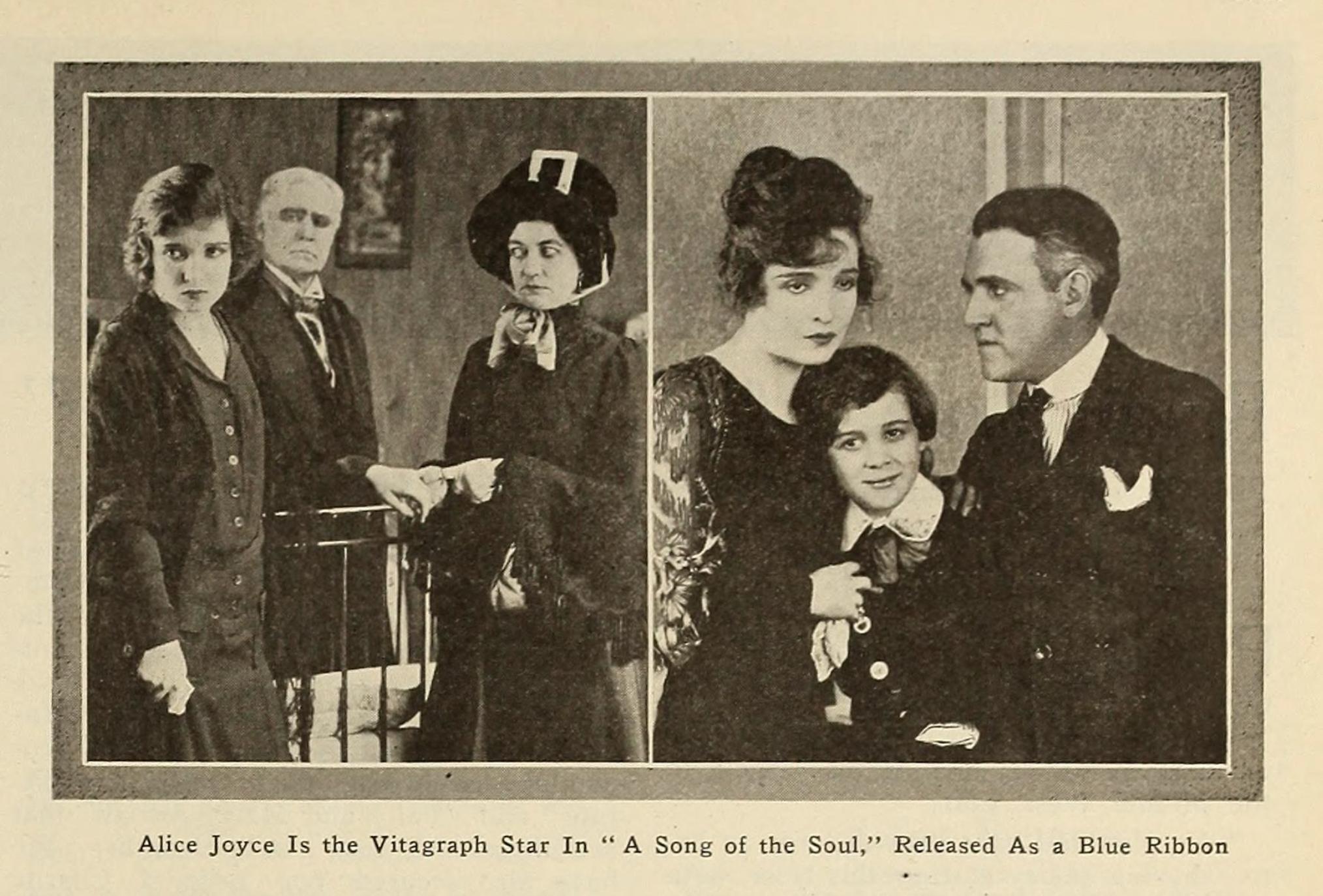
Young, innocent, confiding, it is a shock to Ann Fenton to learn that her supposed husband is not a business man, but a gambler, and that her marriage is bigamous. The child is taken from her by a Helping Hand Society and apprenticed to a brutal farmer. She is left upon her own resources. Seven years later Fenton again crosses her path, but she finds happiness in honorable marriage while her betrayer is taken away to face a murder charge, and the Song of the Soul now rises in full, pure tones from the breast of the happy wife and mother.

Dir: Tom Terriss
Raoul Mendoza, a famous swordsman, in order to save his daughter from the temptations of Paris, sends her to the tropical South of France, to live with an old lighthouse keeper and his wife and son. Sometime later Mendoza is stricken with illness and is advised by his doctor to take a complete rest and an immediate change of air. Mendoza decides to join his daughter in the south. Through cunning, Marquise de Bregant secures an invitation from Mendoza to join in the trip and he accepts. Meanwhile, Caprice, the daughter of Mendoza is, quite unknown to her, loved by Jean, the son of Charcot, the old lighthouse keeper. She is also worshiped by Hannibal, an assistant at the lighthouse to Charcot, a mysterious man who was picked up on the sands, shipwrecked and never regained his memory. Mendoza and Bregant arrive at the village and Caprice is at once attracted by Bregant. Jean is jealous, and Hannibal, when he meets Bregant, almost awakened out of his dormant lethargy, behaves in a peculiar fashion. Juliette, having followed Bregant, arrives and meets him secretly. Caprice takes Bregant over the lighthouse. There is a little lovemaking which Hannibal sees and attacks Bregant in spite of the pleadings of Caprice. During the struggle Bregant recognizes Hannibal. Bregant makes arrangements with Caprice to elope. Hannibal finds out all, tells Mendoza, but he disbelieves him. Hannibal leaves and while gazing out of the window, Bregant passes. An old negro in his way begs alms. He knocks him down; the negro rises and he fells him again and beats and kicks him mercilessly as he lies on the ground. The fight partly restores Hannibal's memory, and he returns to Mendoza and reveals the hidden past. Two men went to South America on an exploring expedition, one was the Marquis de Bregant, the other Count Chambord. They were very successful, but particularly Chambord, who located gold mines. Bregant was, in consequence, exceedingly jealous. One day Bregant beat an old porter into insensibility. Chambord interfered, but was soon felled by Bregant, who took the latter's papers and returned to France, where he was acclaimed with high honors, giving out that poor Chambord died of fever. In the meantime, Chambord was nursed back to life by the natives, but his memory never returned and he eventually found himself upon a ship as a sailor until wrecked upon the shores of the South of France, where he remained as assistant lighthouse keeper to Charcot. As he finishes the story, Jean rushes in with the news that Bregant had gone off in his yacht and taken Caprice with him. The shock of such news is too much for Mendoza, and he is stricken with paralysis. Meanwhile, Caprice, who only consented to leave with Bregant under the promise of marriage on the boat, Bregant having told her that he had the minister, discovers that it is all a fraud. He fails in his attempt to drug her, and when he leaves to procure assistance, she locks herself in a cabin. When they reach port, Caprice escapes with the captain's assistance. Meantime, Jean, who has come to Paris in search of Caprice, by chance, one day, meets her. He persuades her to return to her father, who forgives her for her actions. Jean locates Bregant one night in a restaurant with his paramour, and a duel is arranged for the next day. Mendoza's prayer for the return of his strength is answered, and he swears vengeance upon his enemy. In the morning Bregant arrives in the woods to fight Jean, but to his horror and amazement, he meets Mendoza. Realizing he is doomed, he tries to avoid a fight, but is forced to it, and after a very thrilling encounter he is killed. Mendoza, Caprice and Jean then leave Paris forever to settle in the beautiful spot where Caprice spent her childhood days.
View Details
Dir: Tom Terriss
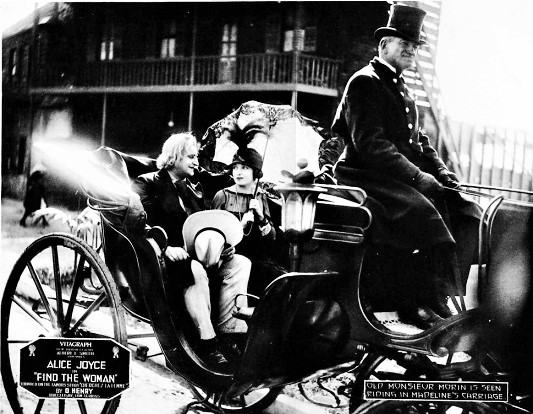
Maurice Dumars, a journalist, is enamored of Madeline Renard of a French opera company. She is to sing Marguerite in Faust and induces Monsieur Morin, a gold worker, to make a past replica of a string of pearls, which belong to her mother and which is worth $20,000, for the great jewel aria. Morin makes the counterfeit gems, and the next day is found dead. The $20,000 which Mr. Morin received from Madame Thibault to invest for her is missing from his effects but a note from him to Madeline which is found saying he had done her a great favor in making the jewelry casts suspicion upon the opera singer. When she makes her appearance as Marguerite in Faust she is hissed, and she tells of her business relations with M. Morin and of her mother's jewels. Simultaneous with her leaving the convent a year or so later, where she had gone to seek refuge, Dumars finds pinned on the walls of Mme. Tibault's inn the $20,000 in bank notes which M. Morin had given her and which she had carelessly left there . With the mystery cleared, Madeline is again sought by Dumars and all who had done an injustice. - Moving Picture World.


Dir: Tom Terriss
The story is of Angelina Allende, who is left an orphan by the suicide of her father, a real-estate visionary who has beggared not only himself but his friends in a vain attempt to "boom" the deserted hamlet of Anne's Bridge. Receiving news of his death, Angelina returns home, where she is presently inveigled into a trip to New York by two men, one of whom wants the property and the other of whom wants Angelina. In a restaurant scene which follows, Bink, the elder of the conspirators, makes advances to Angelina, is repulsed and then is shot by Wolver his fellow conspirator. The police enter, Angelina is accused of the shooting, and she is sentenced at length to a three-years' term in a home for delinquent girls. Emerging at the expiration of her sentence, she returns to Anne's Bridge. Here, in the lonely days that follow, she advertises for boarders and is at last rewarded by the appearance of James Deane. It is here that the love story begins; and it progresses until Angelina is cleared, through Deane's efforts, and, finally, is free to marry him. - New York Dramatic Mirror, November 10, 1917.
View Details
Dir: Tom Terriss
Florence is a little milliner who shares a room in "Brick Dust Row" with Ella, a fellow worker. It is all the home she has and the girls have to receive their company in the parks because there is no reception room, the millionaire owner of the Row having sublet the parlors. They see no harm in chance acquaintances. Then Florence meets Blinker, and real love comes into her life; but Blinker learns of what to him seems her promiscuous acquaintances and makes it plain that he cannot marry such a woman. There is a fire on the excursion boat on which they are traveling, and Bill, a gun-packing husky, who has constituted himself Florence's champion, saves them both. Then he learns Blinker's attitude, and a visit to the young millionaire owner of the Roy shows Blinker that his own greed is basis for Florence's actions and a changed Row is Florence's wedding present. - Moving Picture World 1918.
Dir: Tom Terriss
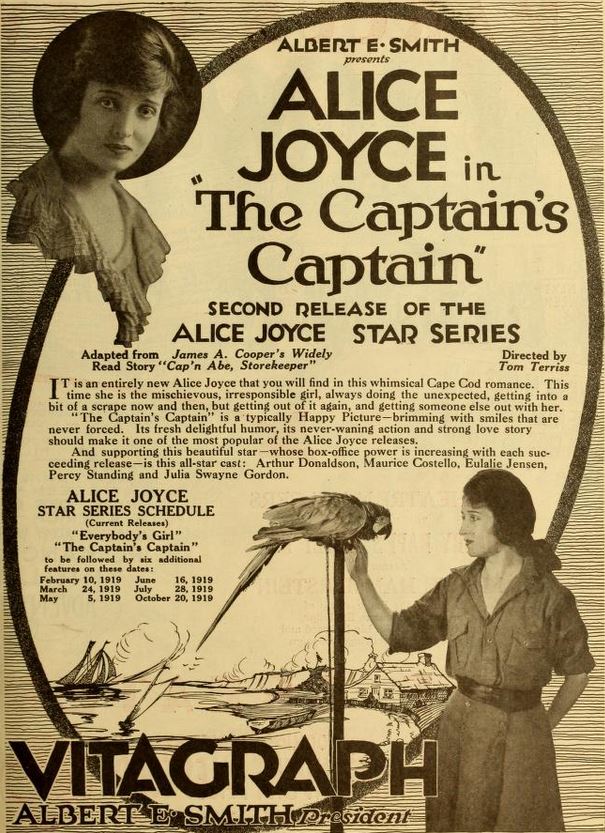
Louise Grayling escapes from a straight-laced aunt on a plea that she wants to visit her uncle, Captain Abe, on Cape Cod. Abe is henpecked by his housekeeper and rather looked down upon by the villagers who haunt his store. To give himself a fictitious glory he invents a fictitious brother, Amzon, who is a composite of all the pirates from Blackbeard to the food profiteers. Louise penetrates the deception and induced Abe to go away and come back as the fictitious brother. She has the time of her life keeping the placid Abe up to the reputation of his fire-eating brother, but all would have gone well had not some shipwrecked East Indians imagined that they recognized him as the desecrator of their Temple. Between them and the town people, who get the idea that Abe has been murdered by Amzon, Louise has her hands full, but Abe is transformed into his proper self, and a supposed fisherman who turns out to be a young millionaire rescues her from the mob and all ends happily after all. - Moving Picture World.
View Details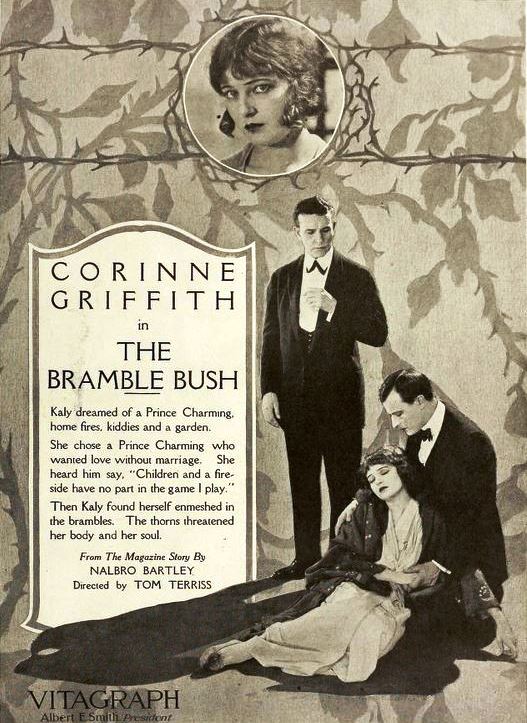
Dir: Tom Terriss
Innocent Kaly Dial comes to New York from the Cumberland Mountains and gets employment at a fashionable dress shop owned by a friend of her deceased mother. Peter Vernon, the brother of the owner, falls in love with her, but Kaly becomes attracted to suave John Crispen, not knowing of his reputation as a Lothario and his shady business deals. Crispen scoffs at conventional marriage and rearing children, preferring "comradeship," while Vernon offers marriage. Kaly finds herself attracted to Crispen's unconventionality and, believing that he loves her, goes with him to a hotel, but soon realizes that his love is not right and asks to be taken back. Crispen complies even though he knows he will face imprisonment when he returns. Vernon takes Crispen's case and after finding out that Crispen is already married, gets him off with the promise that he will never see Kaly again. After a year, Kaly falls in love with Vernon and they are married.
Dir: Tom Terriss
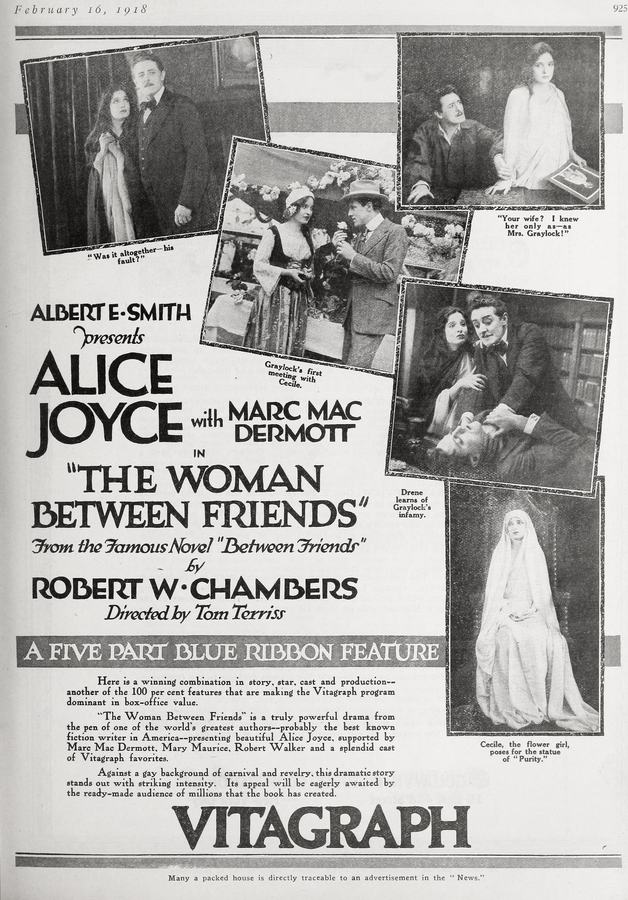
The friends of the story are John Drene, a sculptor, and Jack Graylock, a painter. Both men swear eternal friendship on the night before Drene's marriage. Later on the artist runs away with the sculptor's wife. The couple tire of each other, and the woman becomes an outcast. Then Graylock falls honestly in love with a flower girl, one of those sweetly innocent young women found in romance of the Chambers school Her name is Cecelie, and she follows the painter back to Paris. He installs her with the housekeeper of the studios where he lives, and introduces her to Drene, who is at once inspired to employ her as the model for a half completed statue posed by his wife. Drene, who was present when the runaway woman paid for her folly be being accidentally burned to death, has never suspected his friend, but Cecelie unintentionally betrays him. Drene is filled with a determination to kill Graylock at once. He then concludes that this would not be sufficient punishment, and informs the artist that on a certain day he must shoot himself or be killed. As a further revenge, Drene makes up his mind to wind Cecelie away from Graylock. He starts to put his plan in operation, not knowing that the girl has already fallen in love with him. Her gentleness and devotion soften his heart toward his one time friend, and he tries to prevent Graylock from carrying out the compact. The artist fires the shot as agreed, but only wounds himself, and Drene finds peace and happiness with Cecelie. - Moving Picture World.
View Details
Dir: Tom Terriss
Carrying on with the antique business of her deceased father, Jacqueline Nevers (Alice Joyce) is asked to catalog James Desboro's (Walter McGrail) collection. When they fall in love, it induces the jealousy of Elena Clydesdale, a married woman who is also in love with James. Jacqueline and James marry, but Elena endangers their happiness by announcing that she and James are having an affair. When Elena becomes ill, she becomes reconciled with her husband and confesses her lies to Jacqueline, permitting the newlyweds to live in peace.
View DetailsAnalysis relative to Captain Swift
| Film Title | Atmosphere | Complexity | Similarity |
|---|---|---|---|
| The Flame of Passion | Surreal | Linear | 95% Match |
| The Song of the Soul | Ethereal | Layered | 85% Match |
| The Pearl of the Antilles | Tense | Linear | 95% Match |
| Find the Woman | Surreal | Abstract | 92% Match |
| The Fettered Woman | Gritty | High | 88% Match |
This guide was algorithmically generated using the cinematic metadata of Tom Terriss's archive. Last updated: 6/25/2026.
Back to Captain Swift Details →