
DbcultAccessing Vault...
Recommendations
Senior Film Conservator
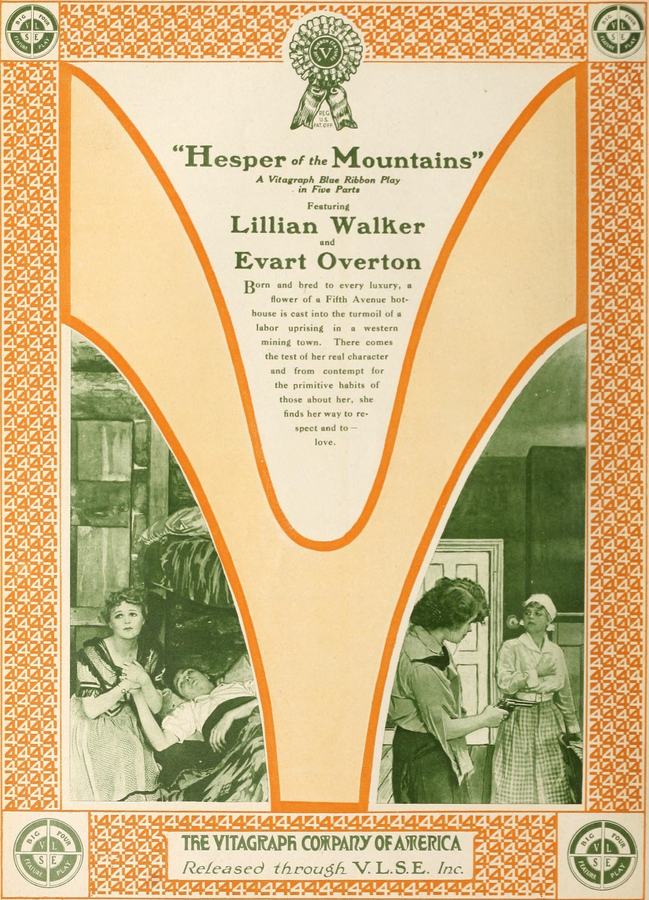
After experiencing the cult status of Hesper of the Mountains (1916), you are likely searching for more films that share its specific artistic vision. Unlock a new level of cinematic understanding with these cult alternatives.
This 1916 cult classic stands as a testament to push the boundaries of conventional storytelling.
Ann reluctantly agrees to leave her beloved New York City to accompany her sick brother on a trip out West, which he must take for his health. There she meets hunky ranch foreman Bob Raymond. He's interested in her, but she feels so lost outside of New York that she rebuffs his advances. However, the more she gets to know him, the more she begins to rethink her attitude--although she still cant wait to get back to New York. Bob has his own ideas about that.
The influence of Wilfrid North in Hesper of the Mountains can be felt in the way modern cult films handle cult status. From the specific lighting choices to the pacing, this 1916 release set a high bar for atmospheric immersion.

Based on the unique cult status of Hesper of the Mountains, our vault has identified these titles as the most compelling follow-up experiences for fans of cult cinema:
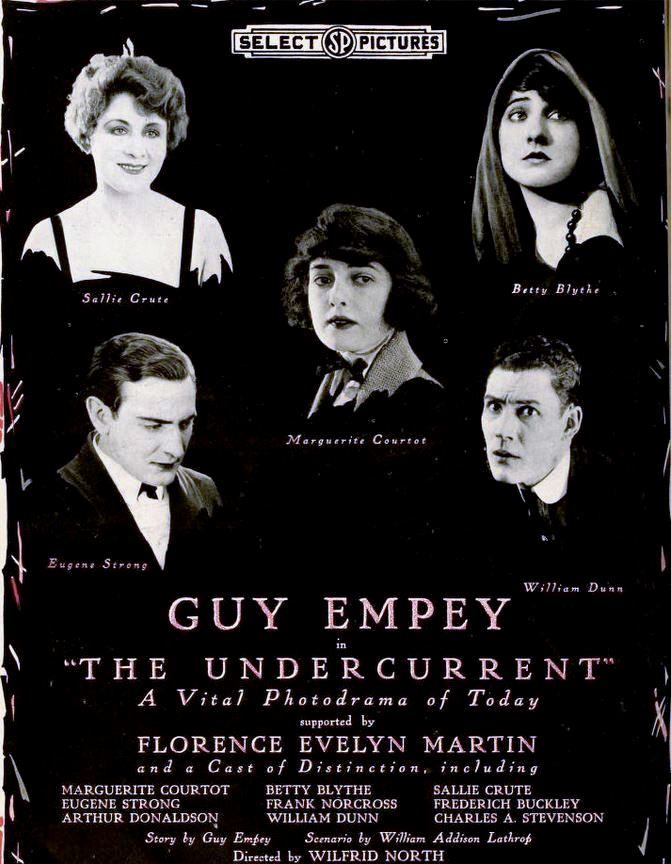
Dir: Wilfrid North
Jack Duncan returns from the war in France to his wife and baby and learns that his job as a draftsman at the Loring Steel Mills has been taken. Given work in the machine shop, Jack becomes the prey of Red agitators who want him because of his popularity with soldiers. The Reds cause Jack's discharge just when his house payments come due, and when they convince him of the injustice of his situation, he joins their ranks. After learning of plans to burn the factory and Loring's home, and start a riot in the town, Jack is won over by a socialist's arguments advocating mild reforms. At a meeting of workingmen, Jack praises Americanism. He warns Loring and, with soldiers at a nearby camp, quells the riot. After a woman agitator kills her comrades and then shoots herself, Jack arrives home to save his wife from an attack by a Red ringleader. Jack is then made a foreman at the mill.
View Details
Dir: Wilfrid North
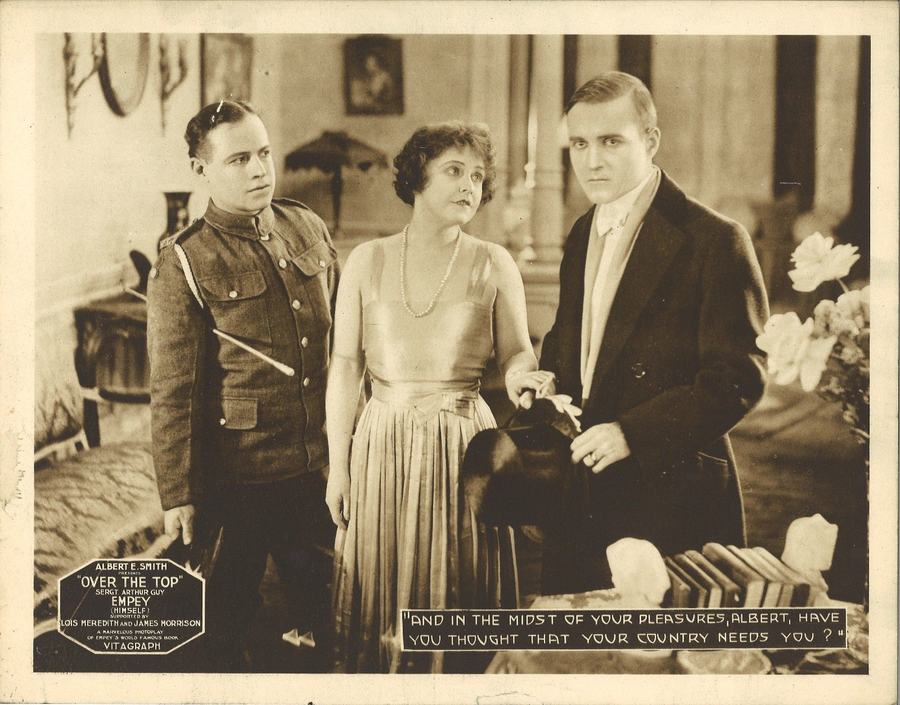
After the sinking of the Lusitania, American James Garrison "Garry" Owen joins the British army and fights gallantly until he is wounded and subsequently discharged. Recuperating in New York, he meets and falls in love with Helen Lloyd, and the two plan to be married after his return from active duty with the American forces in France. Helen's brother Albert, fighting in France under Garry's command, panics and deserts his post, and Garry is forced to report him. At the court-martial, Albert is sentenced to death, but when Company D is attacked, his heroic actions save the day and he dies a hero. Meanwhile, Helen is abducted by German officer Friederich von Emden, whose submarine transports her to his headquarters: Madame Arnot's chateau in Belgium. Von Emden captures Garry and orders him to attend a banquet celebrating the German's forced marriage to Helen, but an old servant named Sonia poisons most of the German guests. Garry kills von Emden, then escapes with Helen to the Allied lines.
View Details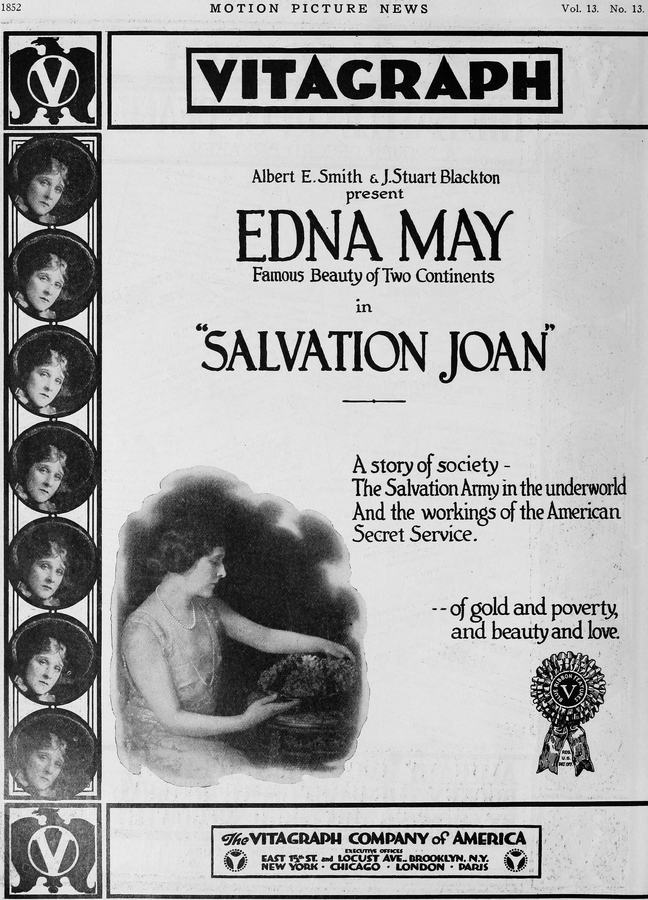
Dir: Wilfrid North
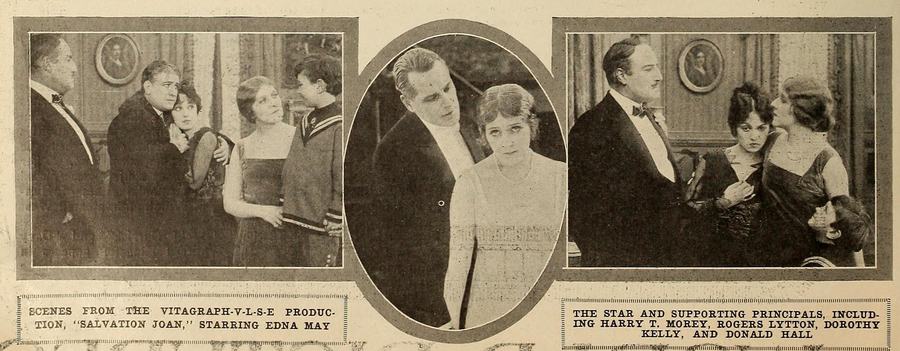
Joan, a refined young Salvation Army volunteer, fall in love with a gangster.
View Details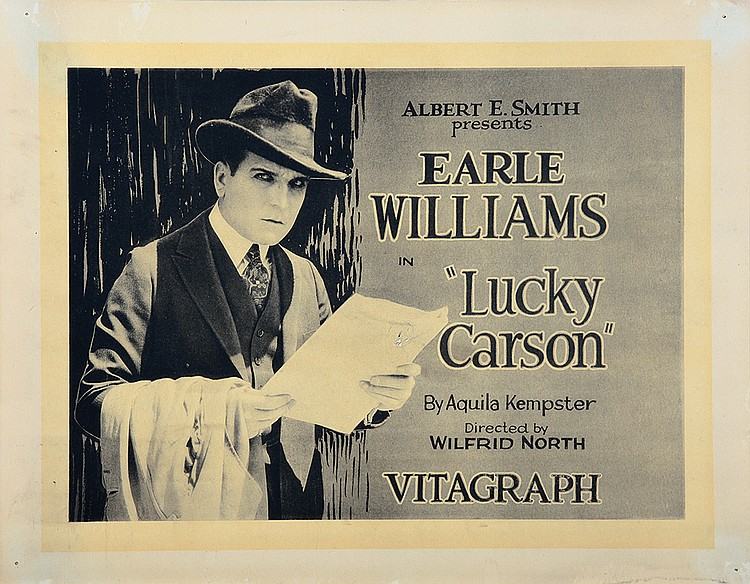
Dir: Wilfrid North
Having lost all his funds betting on the races in London, John Peters contemplates suicide; then, overhearing the conversation of two men, he considers a new course of action. He stuns one of them--Kluck--and after changing clothes with him, he makes his way to the United States, where he wins at the races, speculates successfully on Wall Street, and amasses a fortune under the sobriquet "Lucky" Carson. Kluck arrives in America, makes Carson's acquaintance, and begs for his help, which is freely given. Carson manages to retrieve some incriminating correspondence between Kluck and an adventuress, Madame Marinoff, who is threatening him. Kluck accuses him of a conspiracy, and a quarrel ensues when Carson reveals his true identity; but Doris Bancroft, Kluck's sister-in-law, discovers that he is innocent.
View Details
Dir: Wilfrid North
Lily Upjohn leaves the London slums after her father dies and becomes a chorus girl at the Pandora Theatre. When a scene painter drops some paint from a scaffold, Lily's screams prompt the show's composer to create a hit song entitled "Mind the Paint Girl," which warns men about made-up actresses. After Lily becomes an overnight sensation singing the song, she is courted by Nicholas Jeyes, a young officer who gives up his commission so he can remain near her, and by Lord Francombe. Jeyes' increasing jealousy causes Lily to become distant, which further intensifies his degeneration. After Jeyes bursts into Lily's birthday celebration and discovers her embracing Francombe, who has just proposed, Jeyes' anguished tale of his ruin due to being dangled by Lily, moves her to promise him marriage, but at the end, Jeyes and Francombe become friends and neither marries Lily.
View Details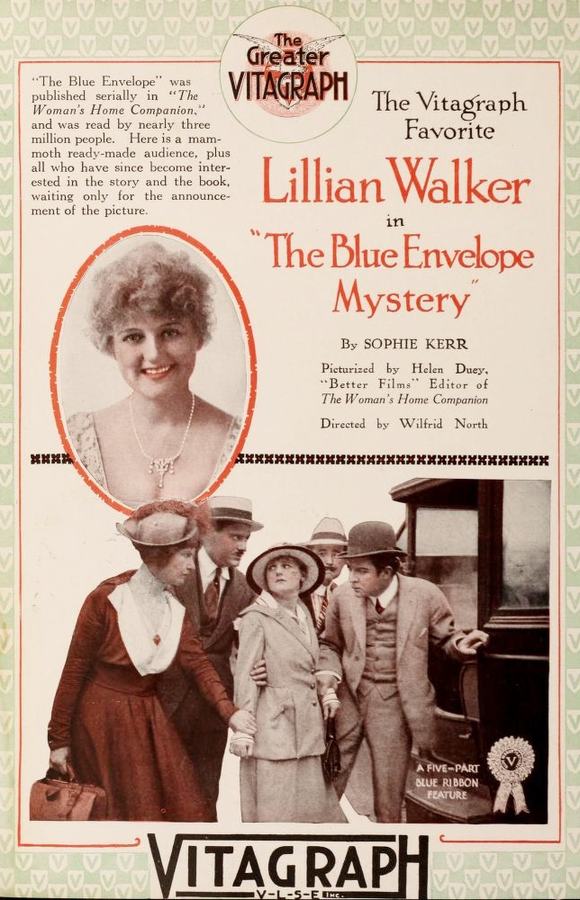
Dir: Wilfrid North
Leslie Brennan, an heiress, suddenly discovers that she is almost penniless, and faces the ordeal of making her own living. Before learning this condition of affairs she had become dazzled by the society manners of a cold-hearted fortune hunter, but becomes disillusioned when she discovers that he is attracted solely by her supposed wealth, and goes at once to earn her livelihood in the City of New York. There she studies typing and makes friends among the lowly. She secures a position with a brusque preoccupied young chemist, who is in the midst of a great discovery of value to the government. How Leslie becomes aware of the machinations of a foreign spy, how she saves her young employer's secret to the government in a series of encounters and how she comes to learn that he has fallen in love with her and that he is one who is really worthy of her, is told in a series of compelling scenes.
View Details
Dir: Wilfrid North
A fascinating piece of cinema that shares thematic elements.
View Details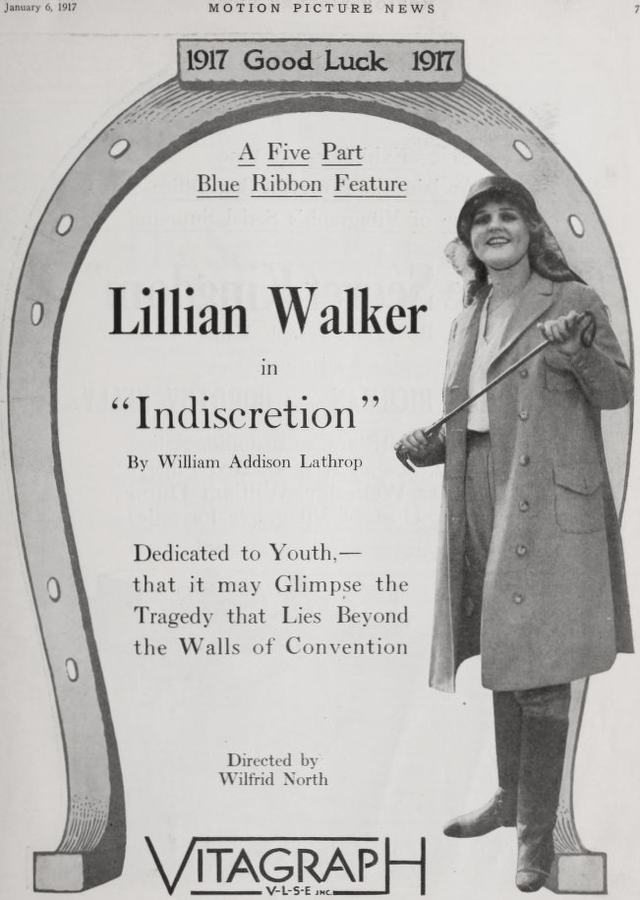
Dir: Wilfrid North
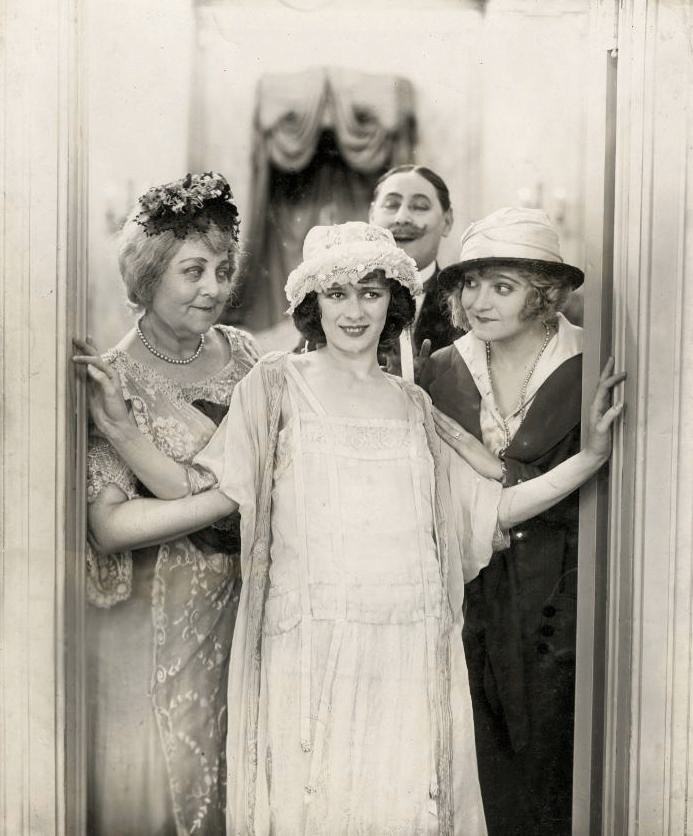
Marcellus Holloway, a rich widower, buries himself among his books and allows his only daughter, Penelope, to bring herself up. At the age of eighteen she was courageous and self-reliant, also self-willed and independent, with a disregard for the restraints of convention. She caused gossip by fishing on Sunday and galloping wildly about on her colt. An old friend, Mrs. Travers, and her son, Jimmy, visit them. Jimmy and Penelope become friendly. Mrs. Travers induces the father to allow Penelope to enter a fashionable boarding school with her daughter. Marjorie. At the school Penelope's behavior is not as dignified as it should be. Her father dies and Penelope refuses to see her friends or return to school. Jimmy finally persuades her to come and make his mother a visit. She goes and at a party in her honor meets Mr. and Mrs. Rivers and enjoys Rivers' company, causing his wife much anger. At the golf club she continues flirting and Jimmy remonstrates with her without success. Mrs. Rivers puts detectives on her husband's trail and they follow Rivers and Penelope to a roadhouse. On the way Jimmy joins them. They arrive just as Rivers is beginning to show his real self to Penelope and she faints. The detectives take Rivers away, while Jimmy goes to Penelope. Mrs. Rivers starts a divorce suit, naming Penelope as a co-respondent. Penelope goes to Mrs. Rivers and pleads with her. Mrs. Rivers sees she is innocent and returns with her to the Travers' home, where Jimmy takes her into his arms.
View Details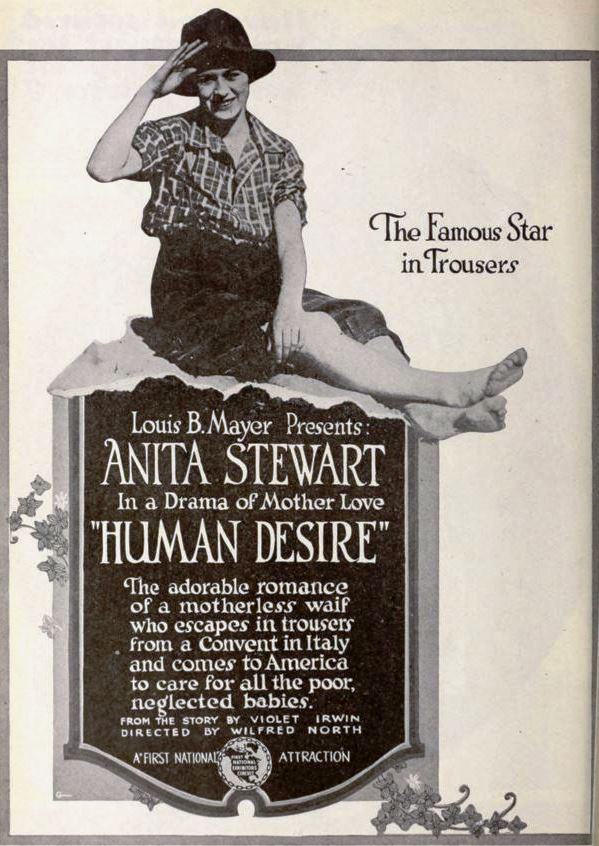
Dir: Wilfrid North
Inspired by a statue of the infant Christ in the hands of the Madonna, Bernice who lives in a convent in Naples, Italy conceives of a deep passion for babies. Learning that there are infants dying of hunger and neglect in America, Bernice determines to come to their aid. Dressed as a boy, she arrives in New York where destitute, Bernice meets artist Robert Bruce who hires her to pose for a painting of the Madonna. The two fall in love until one day, during Robert's absence, his wife appears and drives Bernice into the streets. Bernice's trials finally end when Mrs. Bruce dies in an automobile accident, freeing Robert to marry his model.
View Details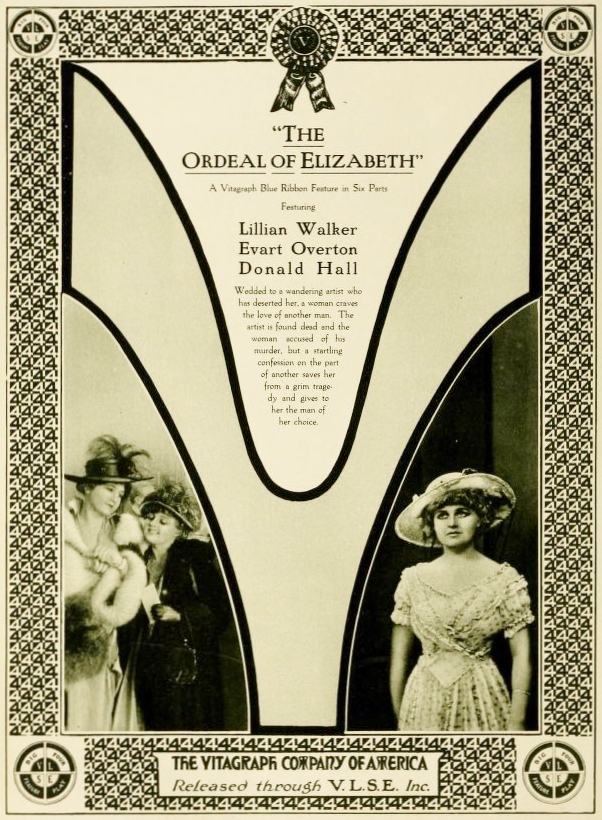
Dir: Wilfrid North
At first sight of Elizabeth Van Vorst, Hallock loses interest in her cousin, Amanda, whom he professed to love. Bereft of parents at an early age, Elizabeth was left in the care of a matronly aunt, Cornelia. Now, at twenty, she is a charming young miss. While visiting her cousin, Amanda, she meets Hallock, a wandering artist and musician. Attracted by her loveliness and charm, he forgets his avowed love for her cousin, and becomes infatuated with Elizabeth. Elizabeth's old-fashioned aunt objects to her friendship with a man whose affections are so easily swayed, and forbids her to see him. Piqued at her aunt's objection, Elizabeth continues to see him and he asks her to be his bride. After much pleading, she goes with him to a neighboring town where they are married. Fearing her aunt's ire, she pledges her husband to secrecy. She continues to live at home, while Hallock returns to the city, where he soon forgets his wife. Through an accident, Elizabeth meets and becomes interested in Julian Gerard, a gentleman from New York. Later, at the home of a mutual friend in New York they meet again. Their interest rapidly ripens into love. A prominent artist paints her portrait and when it is shown, she becomes the belle of the season. She goes to many social affairs with Gerard, and at one of them, is seen by her husband, who determines to use her apparent love for Gerard to his own benefit. In sore straits, he demands that she help him socially and financially, holding their marriage over her should she refuse. Elizabeth, unable to meet his demands for money sells her jewels. When she takes the blackmail to him, she is seen by Amanda, who is in Hallock's power. Thinking Elizabeth's relations with Hallock are the same as her own Amanda, in a fierce tirade, upbraids her for coming between them. Gerard, deeply in love with Elizabeth, persistently pleads his suit and is puzzled by her attitude. Although he can see that she loves him, she refuses to give him an affirmative answer, nor will she explain her action. Finally, he demands an explanation and she tells him of her unfortunate marriage. Despondent, he leaves the country to go on a long hunting trip to try and forget his sorrow. Soon after Gerard's departure, Hallock is found dead in his room, with a bottle of poison by his side bearing mute evidence to the cause of death. Elizabeth attracts suspicion to herself by a display of emotion, is taken into custody and held without bail. The trial begins. In connection with other damaging evidence, the testimony of the maid, who heard Elizabeth express a wish for Hallock's death, seems to nullify her chances of acquittal. In London, Gerard reads of the murder and the trial of Elizabeth. He leaves at once for America, where, on his arrival, he gives evidence which sways the case in Elizabeth's favor. After hours of deliberation, the jury returns the verdict of not guilty, and Elizabeth is freed. After the trial she is summoned to the bedside of Amanda in a hospital. Here, with her life blood fast ebbing, Amanda confesses to the murder of Hallock telling of the disgrace and humiliation he had caused her. Her confession finished, her lips are sealed forever by the hand of death. After their marriage, Elizabeth and Gerard leave for a honeymoon in the country, where Elizabeth will have an opportunity to blot the terrible ordeal from her memory.
View DetailsAnalysis relative to Hesper of the Mountains
| Film Title | Atmosphere | Complexity | Similarity |
|---|---|---|---|
| The Undercurrent | Surreal | Abstract | 95% Match |
| Over the Top | Ethereal | Abstract | 92% Match |
| Salvation Joan | Ethereal | Dense | 90% Match |
| Lucky Carson | Gritty | High | 87% Match |
| Mind the Paint Girl | Gothic | Abstract | 94% Match |
This guide was algorithmically generated using the cinematic metadata of Wilfrid North's archive. Last updated: 6/28/2026.
Back to Hesper of the Mountains Details →