
DbcultAccessing Vault...
Recommendations
Senior Film Conservator
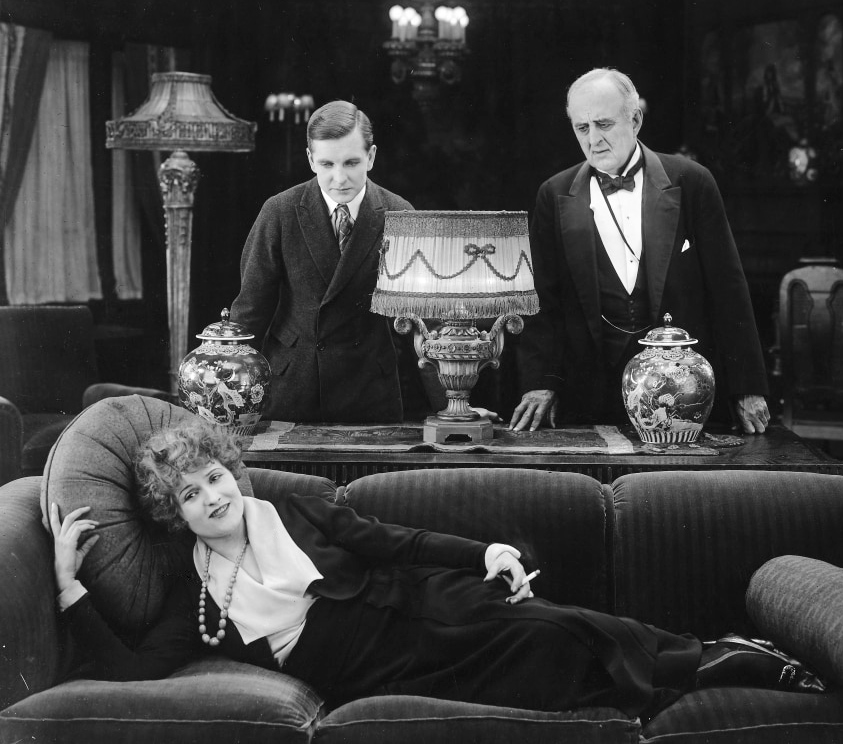
Exploring the stylistic flair in His Bonded Wife is a journey into United States cinema, its influence on cult cinema remains a vital reference point for fans today. Below, we've gathered a list of films that every fan of Charles Brabin's work should explore.
With Charles Brabin at the helm, His Bonded Wife became to blend thematic complexity with stunning visual execution.
Doris Morse, the daughter of wealthy copper magnate Digby Morse, is eager to escape the unwelcome attentions of the many fortune hunters who pursue her, so she steals away to Atlantic City for a vacation. There she falls in love with Philip Hazard, an earnest and hard working young man, but because his income is so meager, she poses as a Macy's counter girl to avoid wounding his pride. When, by accident, he finally learns of her wealth, the two quarrel. In order to save the romance, her father pretends to disown her, but at the wedding, he secretly gives her a large sum of money in bonds. Doris soon wearies of her modest home and begins to spend the money on furniture and servants, which so piques her husband that he decides to steal the bonds from her safe. Doris is awakened by the noise and fires a shot, wounding Philip. The shock of injuring her husband brings Doris to her senses, and she agrees to live solely on his income.
Based on the unique stylistic flair of His Bonded Wife, our vault has identified these titles as the most compelling follow-up experiences for fans of cult cinema:
Dir: Charles Brabin
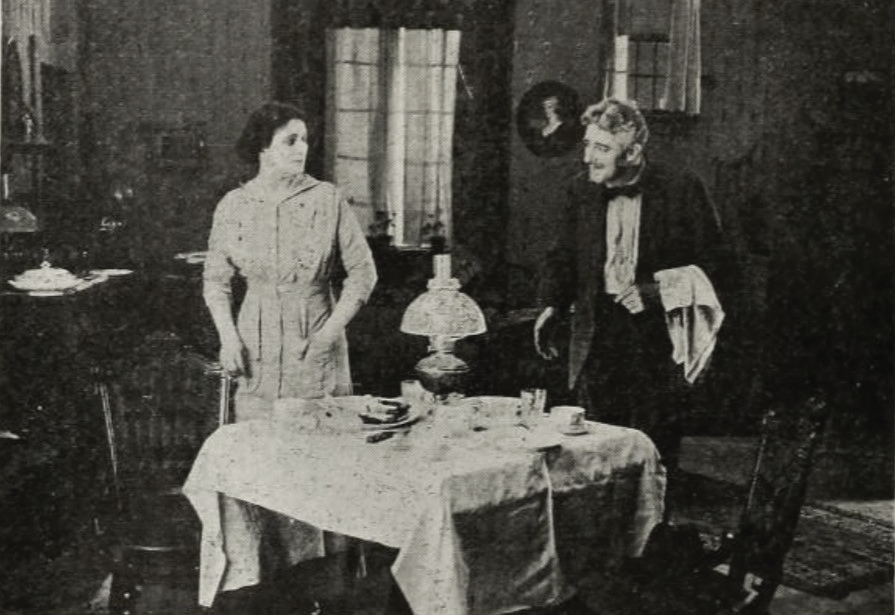
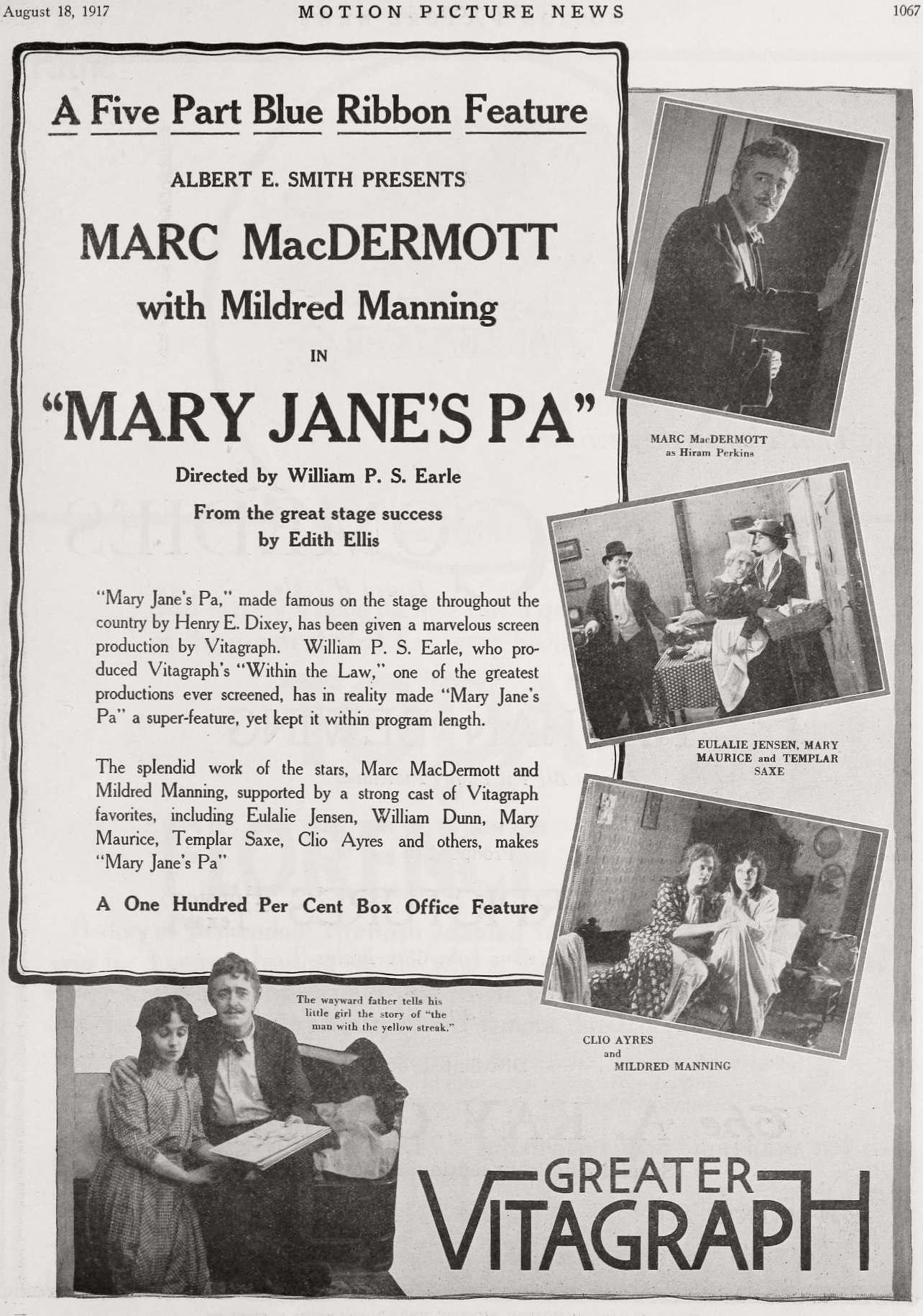
After wandering the world for fifteen years, Hiram Perkins returns home to find his wife running a small town newspaper to support their two daughters. With pity in her heart, Mrs. Perkins allows her husband to stay in the house providing that he not disclose his identity. Mrs. Perkins is waging a battle against the re-election of Joel Skinner for a seat in the assembly, and when she learns that Skinner has mistreated old Mrs. Miller, she is determined to expose his actions. Rome Preston, running in opposition to Skinner, requests that she stop the story, but Mrs. Perkins refuses and so Preston disables the press. With Hiram's help, Mrs. Perkins prints the story and Skinner is defeated. In revenge, Skinner's men burn the press and demand that Hiram be tarred and feathered. At this moment, Mrs. Perkins acknowledges that Hiram is her husband and all is forgiven as the Perkins family is reunited.
View Details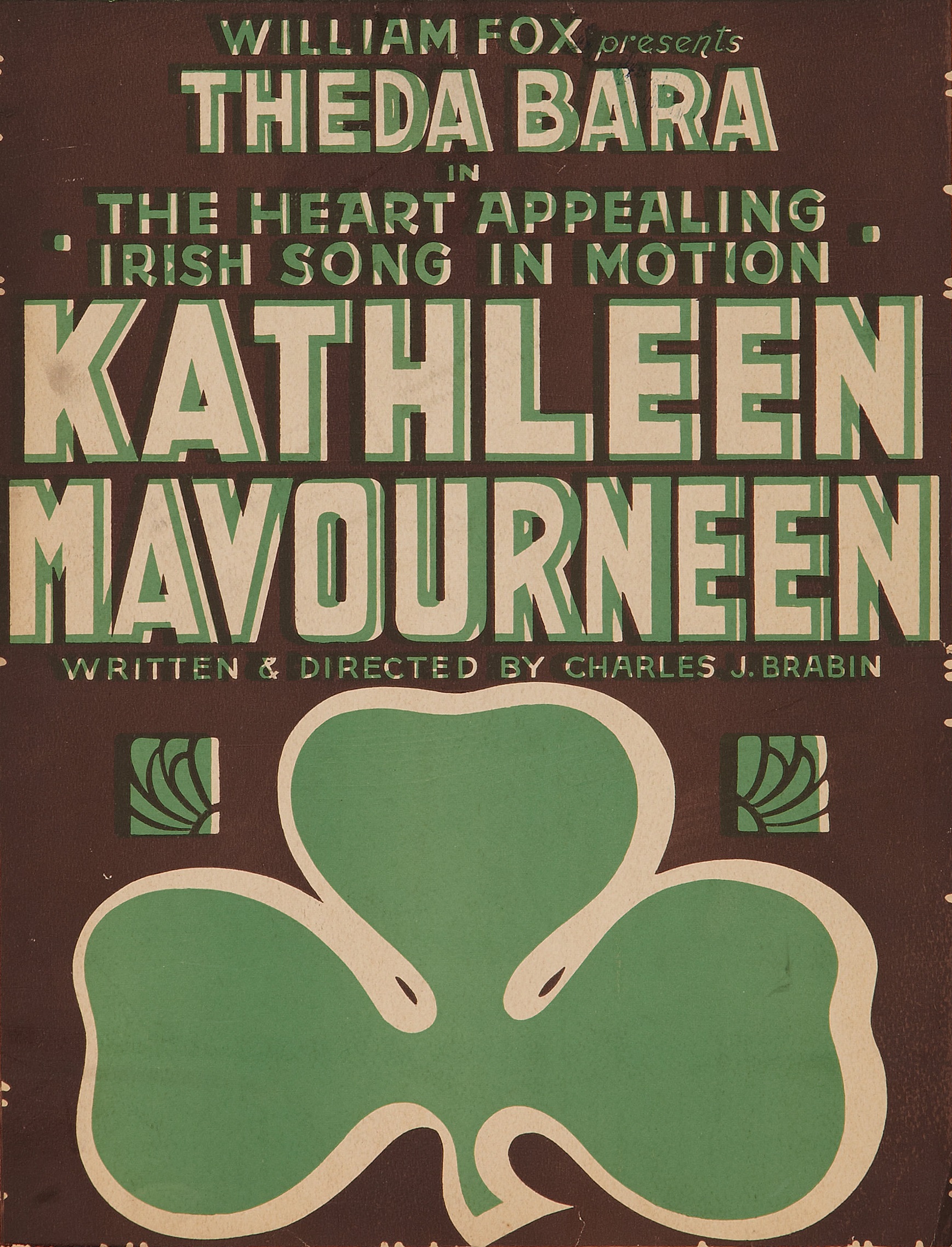
Dir: Charles Brabin
Kathleen, the daughter of a poor tenant farmer, dreams of her wedding with her beloved Terrence. The dream is interrupted when the Squire of the estate takes an interest in Kathleen and forces her father to allow him to marry her to forgive the father's debt. Unfortunately the Squire loses interest in Kathleen once a potential gravy train arrives in the person of the exceedingly wealthy Lady Clancarthy. To be rid of Kathleen the Squire abandons her in the forest where she is beset upon by ruffians, but is rescued by Terrence, who is framed for murder for his troubles.
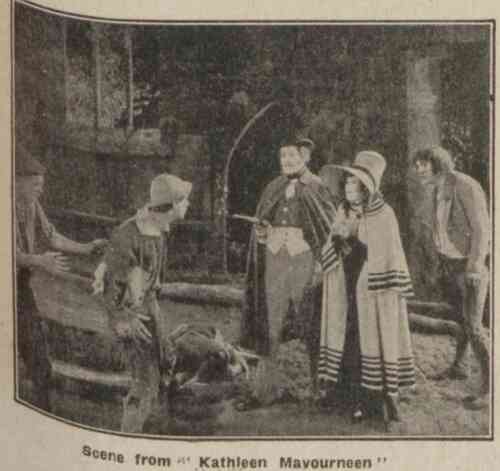
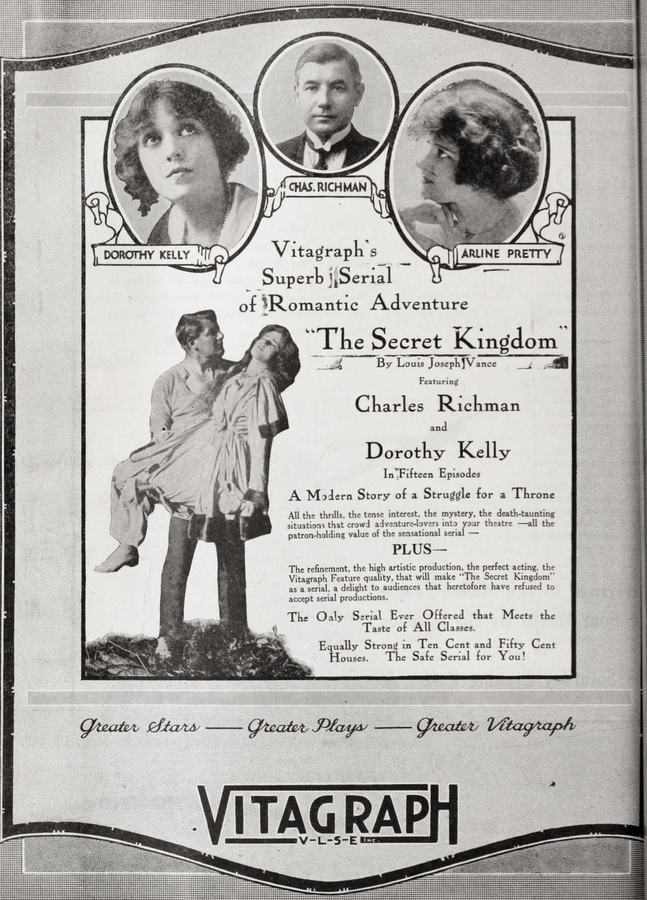
Dir: Charles Brabin
Episode 1: "Land of the Intrigue" Taking advantage of his monarch's lack of funds. Prime Minister Simond of Alania, who secretly aspires to the throne, induces him to pass an obnoxious tax bill. Then, with his sovereign unpopular, Simond feels it a good time to strike, so he causes the assassination of the King, Phillip II and Queen Alize, while they are hunting in the royal forests. Capt. Barreto, Commander of the Alanian palace guard, and a loyal friend of Phillip II, realizes Simond's dastardly plan, and when he hears him issue an order for the apprehension of the little Crown Prince, the only obstacle remaining in his path to the throne, he dashes off with him to America, with the aid of Juan, a fisherman. Barreto makes arrangements with Juan to keep in communication with his brother, Lieut. Jarreto. Simond proclaims himself Prince Regent, and with a bold bid for popularity, rescinds the obnoxious tax bill, his first official act.
View Details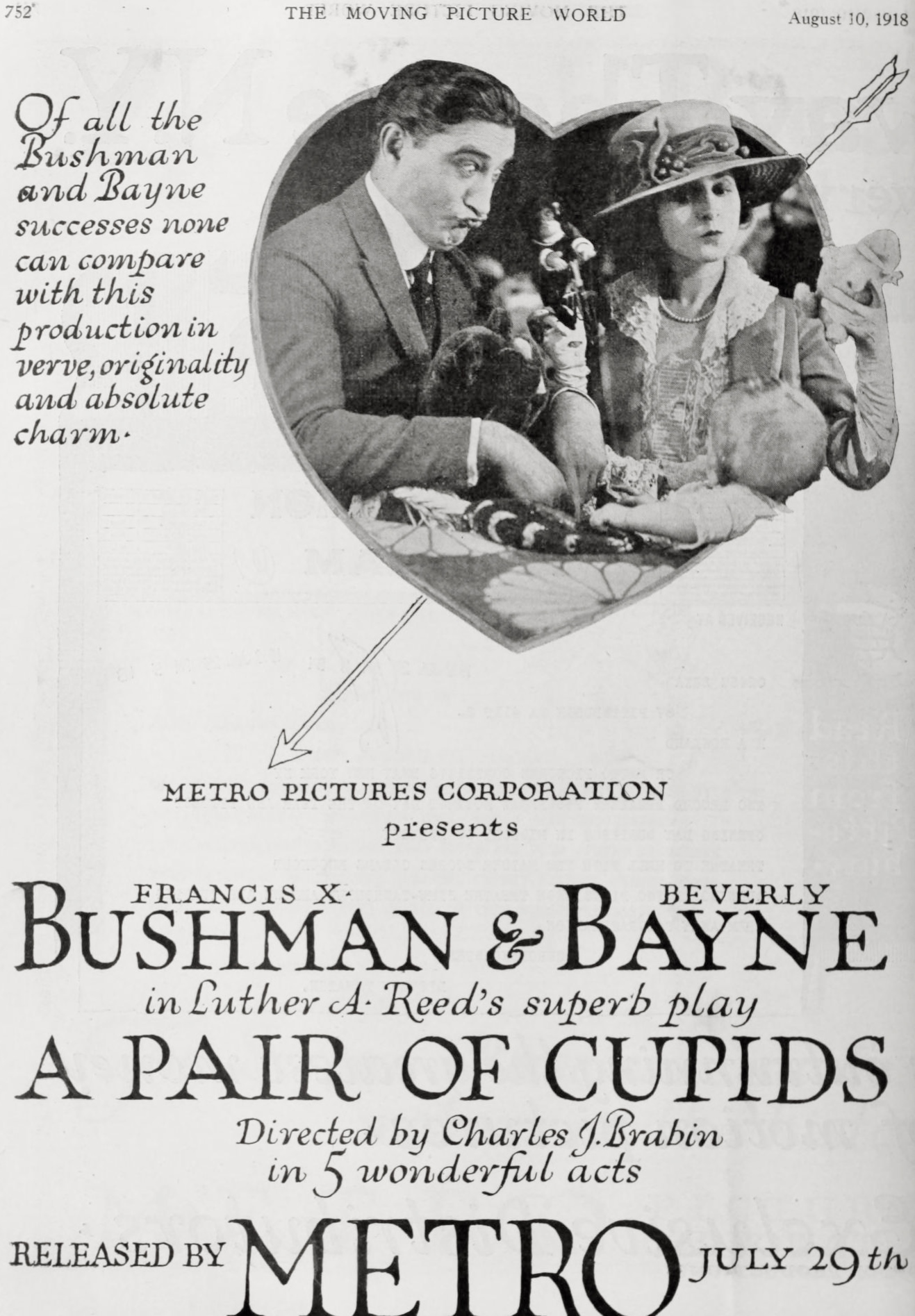
Dir: Charles Brabin
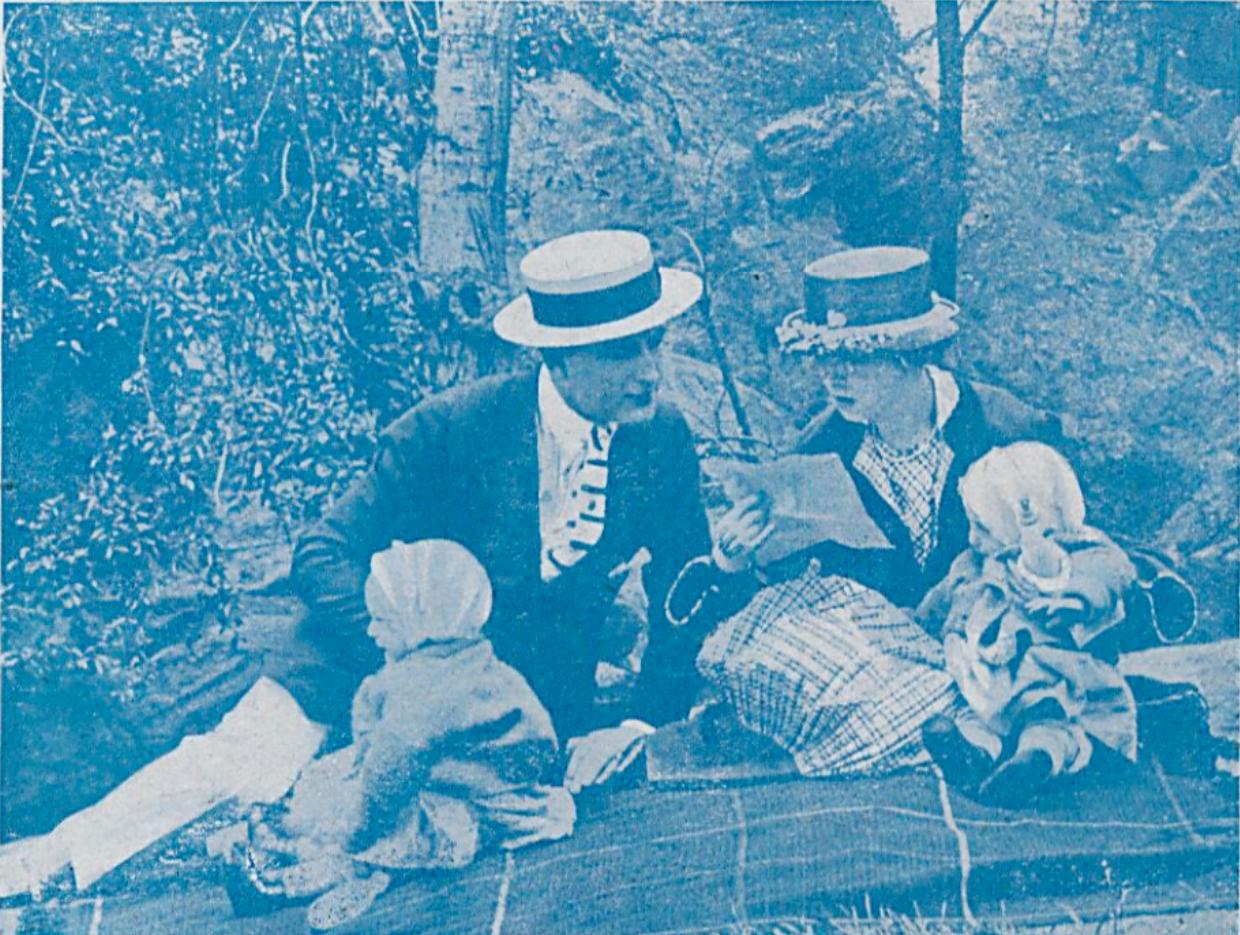
Henry Burgess favors a match between his ward, Virginia Parke, and his nephew, Peter Warburton, but she is only interested in her poodle, Frou Frou, and Peter devotes all of his attention to his business. To bring them together, Uncle Henry rents twin babies of the laundrywoman, Bridget McGroghan, placing one on Peter's doorstep and the other on Virginia's. Each discovering that the other has a baby, Peter and Virginia soon begin to share their views on child rearing and matrimony, and are about to become engaged when the babies disappear. Michael McGroghan, the twins' father, hires a pair of crooks to kidnap the babies so that he may collect the $25,000 bond that has been put up by Henry for their safe return. Peter, however, tracks down the kidnappers, and after the infants are returned to their grateful mother, he and Virginia look forward to having their own babies.
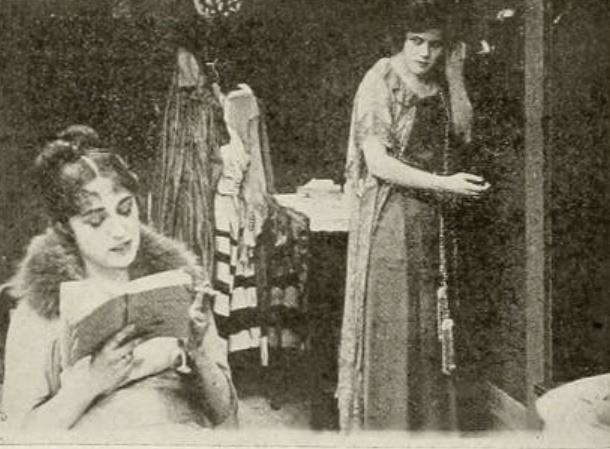
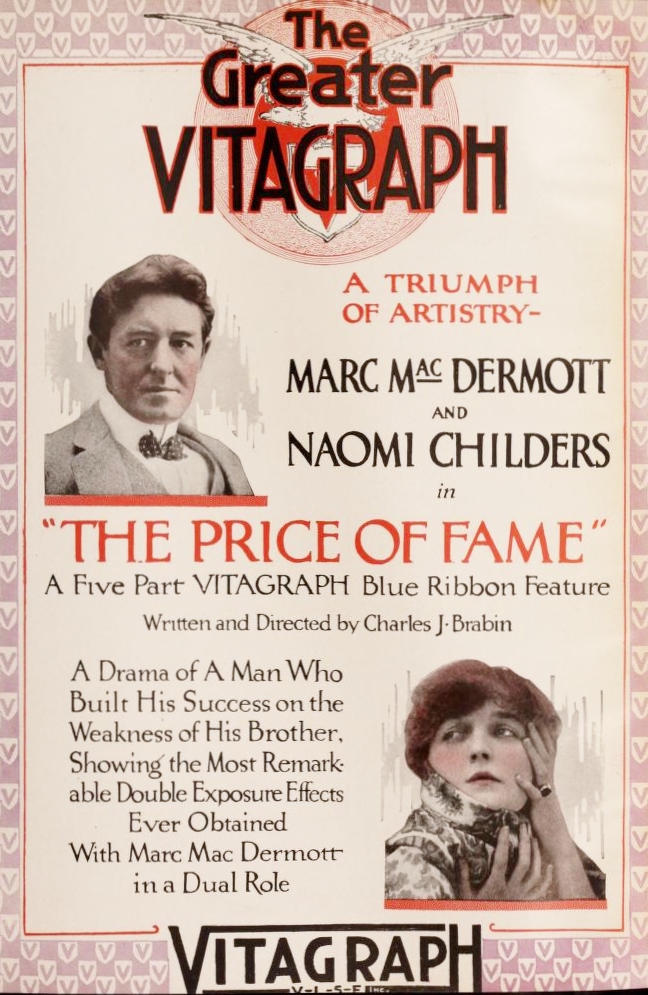
Dir: Charles Brabin
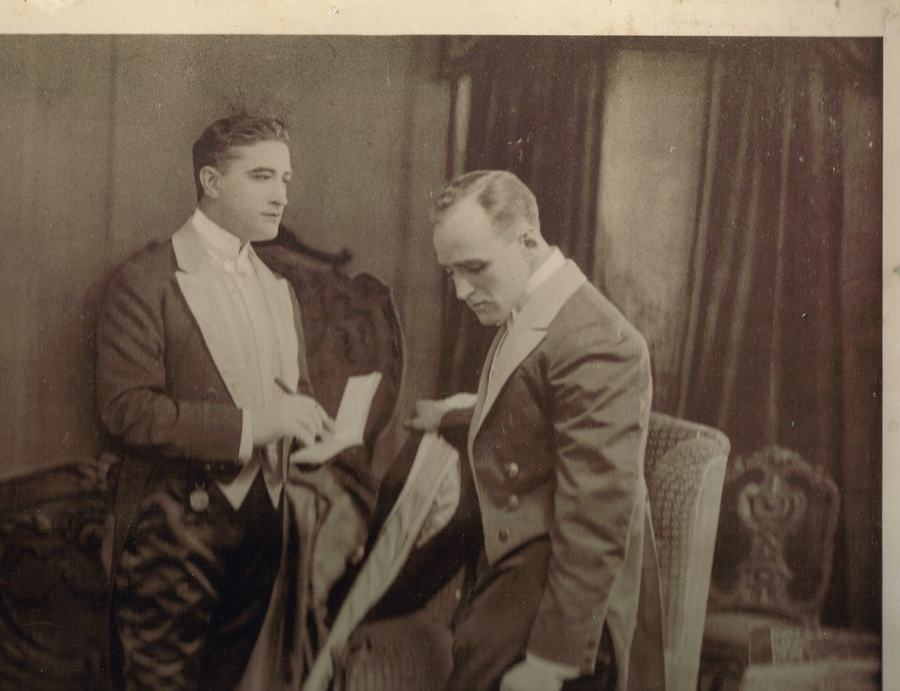
They were twins, and the passing years had in the sifting melting-pot of life. William looms brilliantly, a success, while John is deep in the discouraging shadows, a failure. Another span of fleeting years, and William attains the summit of a meteoric career; he is a candidate for the United States Senate. John (under an assumed name so that his brother is spared the relationship of the black sheep) holds a modest newspaper position in the same city where William's campaign is centered. William falls sick and John, taking advantage of their resemblance, addresses an important meeting and sweeps the audience into frenzied enthusiasm. Sensing in John that which she has always missed in William, the latter's sweetheart confesses her love, thinking, of course, that she is speaking to William. Soon John finds himself facing the fact that he loves his brother's sweetheart. Fate's law is Heaven's justice; William is found dead by John, and what would have been his brother's now becomes John's, as a reward to his genius.
View Details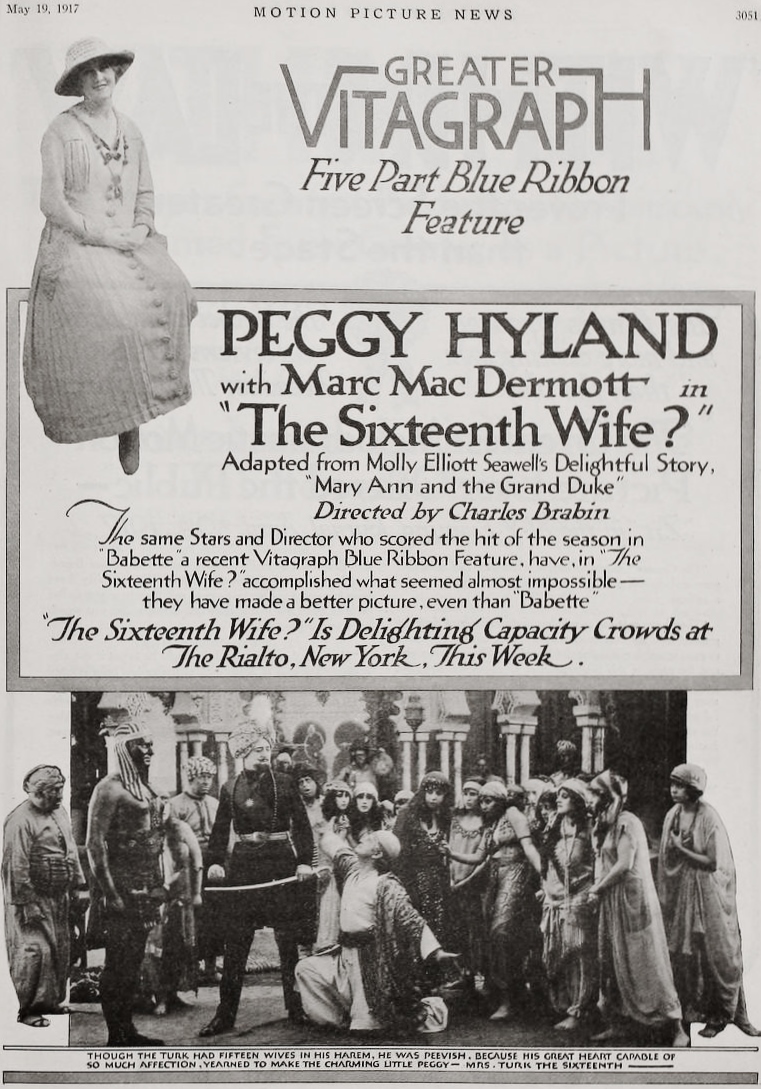
Dir: Charles Brabin
Though the Turk has 15 wives, he yearns to make our heroine his 16th.
Dir: Charles Brabin
John Spaulding saves Helen Molloy-Smythe and her mother, who has recently acquired great wealth, from a train robbery while they are on vacation out West. Some time later, John returns to his father's country estate on Long Island and again saves Helen when she almost drowns. The two fall in love, but when John learns that Helen has a reputation as a society coquette, he plans to teach her a lesson in humility. Learning of his plan, Helen retaliates by accepting the proposal of the fortune-hunting Count Berratti. All ends happily, however, when John saves Helen for a third time and she trades the count's proposal for his.
View Details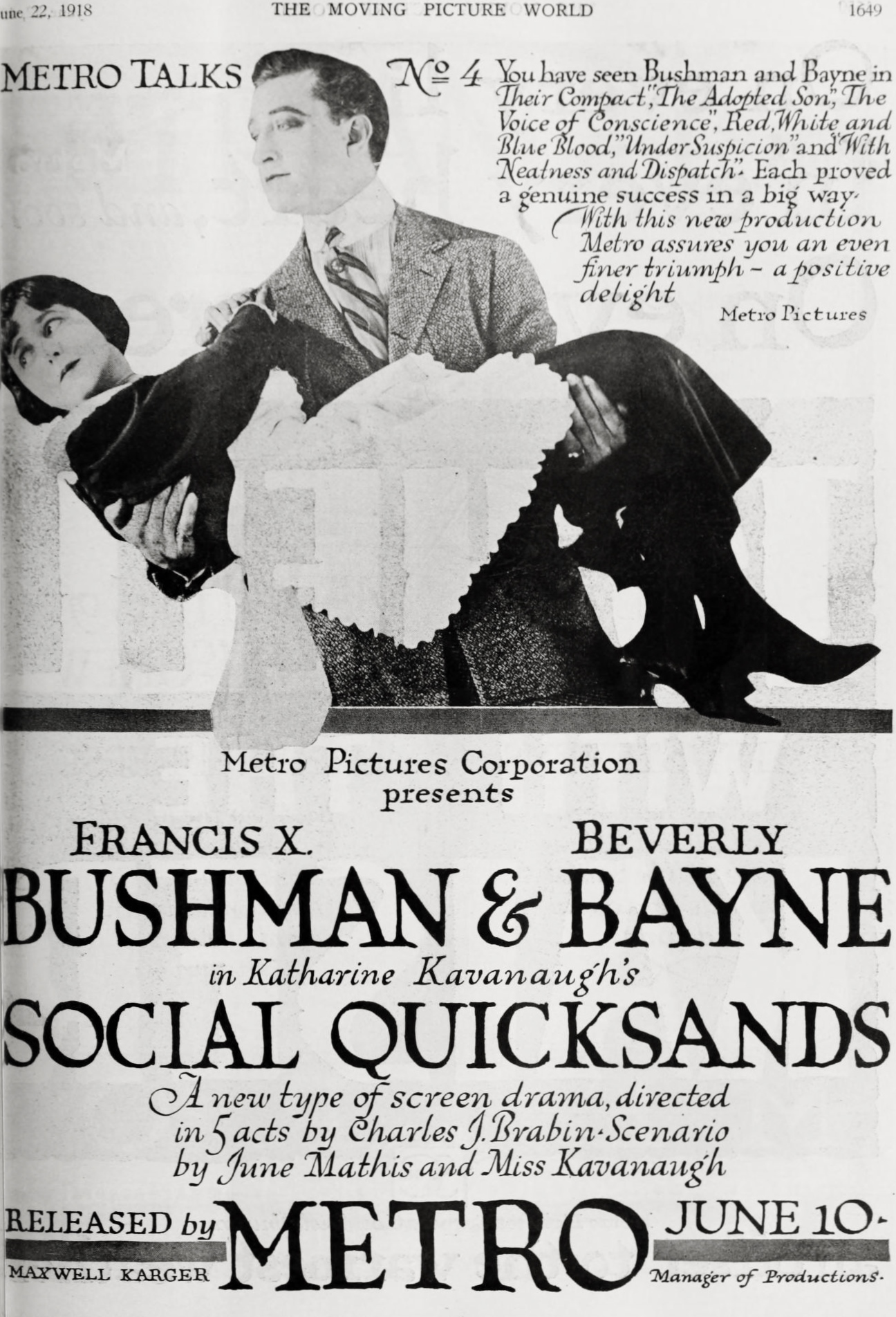
Dir: Charles Brabin
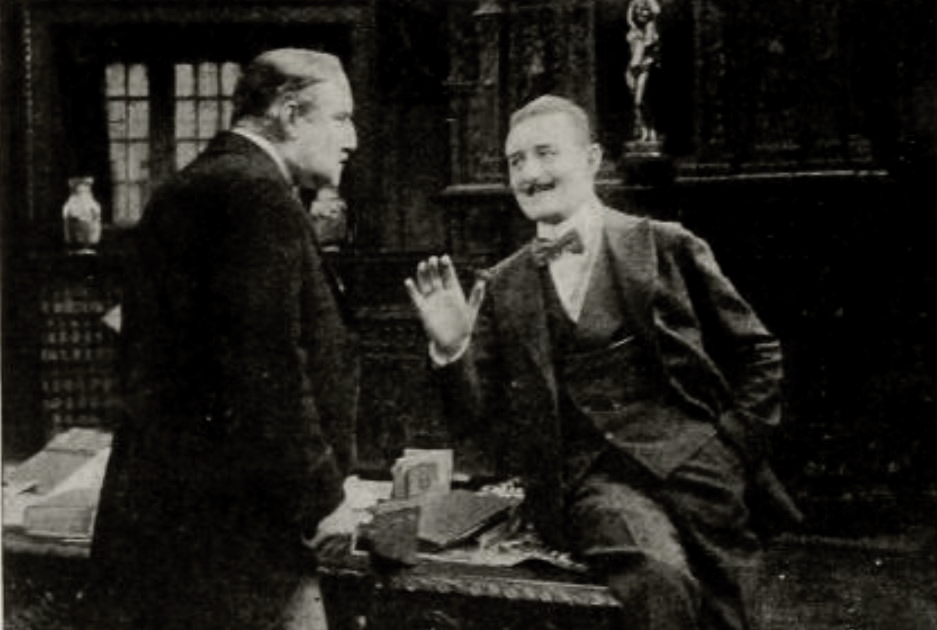
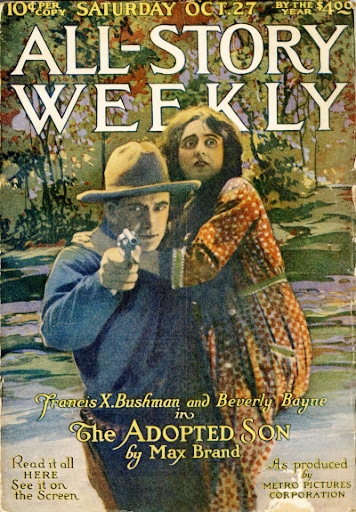
Claiming that he has no need for social butterflies, Warren Dexter refuses to attend a reception at which he was to meet debutante Phyllis Lane. Humiliated, Phyllis makes a wager that she will lead Warren to the altar within the month. To gain his attention, she faints on his doorstep and then realizes that he is not at home. Peering through the window, Phyllis spies a woman stealing the silver, whereupon she enters the house and forces Mollie, the burglar, to exchange clothing with her. When Warren arrives, Phyllis feigns a guilty look and explains that her father and brother force her to steal. Hoping to reform the attractive "crook," Warren offers her a position as his maid and soon falls in love with her. Later the crooks again try to rob him, and after Phyllis helps him to foil their plan, he proposes. Upon learning her true identity, Warren is greatly offended, but Phyllis easily convinces him that her love is genuine.
Dir: Charles Brabin
A feud has existed between the McLanes and the Conovers in the Tennessee mountains for many years. "Two Gun Carter" leaves Texas after a shooting fray and arrives just in time to witness George Conover's death at the hands of Henry McLane. Carrying young Conover's body to his family, Carter is very moved by their grief that he agrees to become their adopted son and subsequently falls in love with Marian Conover. In an attempt to put an end to the feud, Carter suggests a duel between himself and Henry McLane, but Henry refuses, and so, to uphold his family honor, Tom McLane, the clan leader, accepts the challenge. In the midst of the match, news arrives that Henry has abducted Marian. Carter rushes off and rescues Marian just as Henry and his horse plunge over the edge of a cliff. Carter then demands that an end be put to the feud as he himself was a born McLane and now plans to marry Marian Conover.
View Details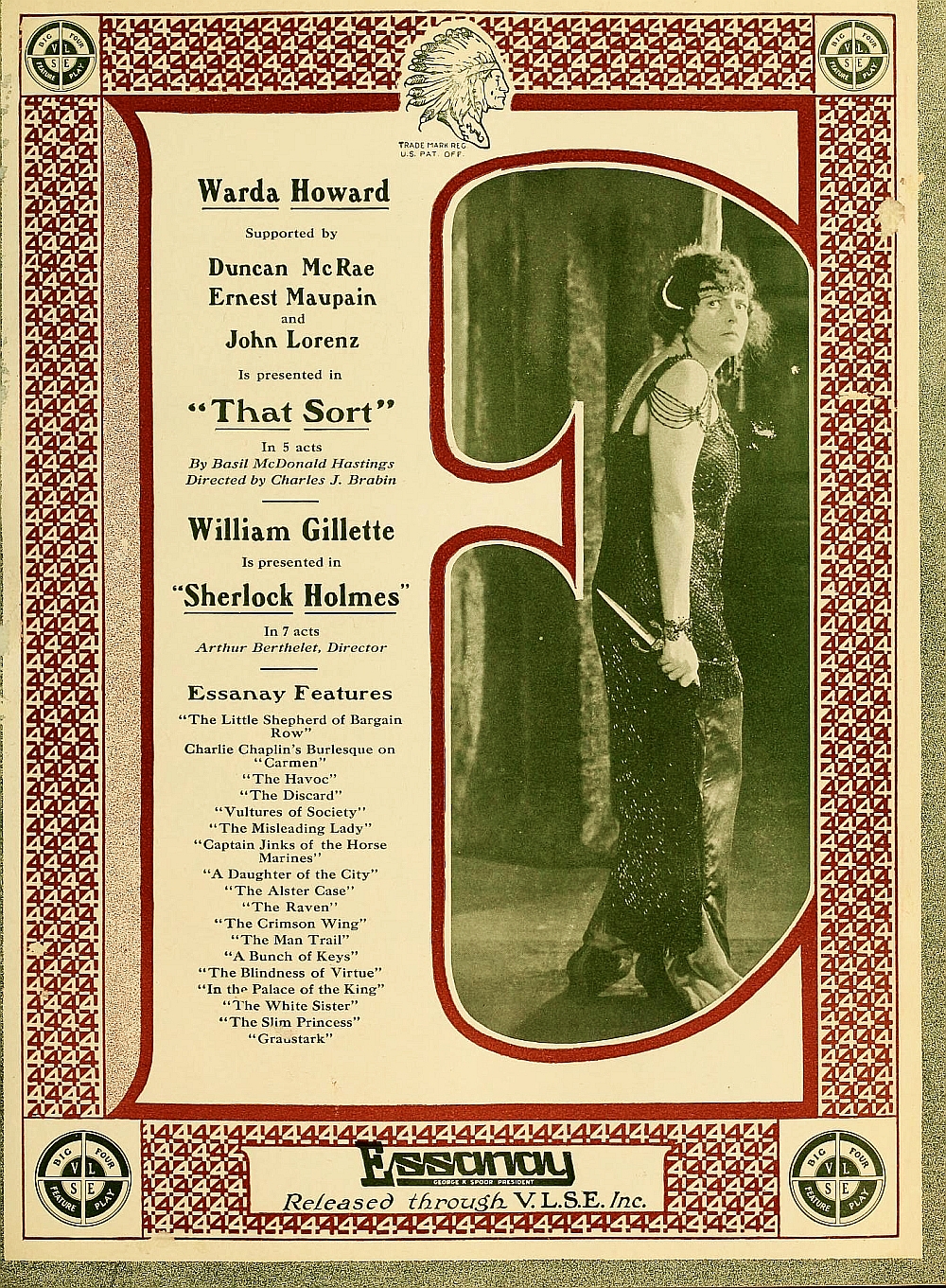
Dir: Charles Brabin
John Heppell, a wealthy young man about town, falls in love with Diana Laska, a noted actress, and marries her. After their child is born he tires of her and goes back to his old way of living. Infuriated at his neglect, Diana leaves him and goes abroad with Philip Goodier. He also tires of her in time, and she becomes a notorious character on the continent. Finally she awakens to the evil of her life and tries to reform. She finds her path strewn with thorns as the world holds her for what she has been. A longing is kindled in her heart for her daughter. Her first husband has remarried and refuses to permit her to see her. Sick of life, she attempts suicide. She is attended by Doctor Maxwell. He instills hope into her by promising to aid her in her attempt to see her daughter. Maxwell is an old friend of Heppell and partly by persuasion and partly by threats Diana Laska is received into the Heppell home as the governess for Heppell's son by his second wife. She meets her daughter only to find that she is engaged to Philip Goodier, the man who had cast her off. Horrified, she tells the Heppells her daughter must not marry him. Goodier denounces Diana, while admitting his relations with her, but cannot understand why she should have an influence over the Heppells. Finally, Diana tells him that the girl to whom he is engaged is her daughter. He consents to break the engagement only on condition that she leave the house and never see her daughter again. The woman who has developed under Doctor Maxwell's influence, then makes the supreme sacrifice of giving up her daughter to save her from her own shame. And through this sacrifice she wins atonement for her sins.
View DetailsAnalysis relative to His Bonded Wife
| Film Title | Atmosphere | Complexity | Similarity |
|---|---|---|---|
| Mary Jane's Pa | Surreal | Dense | 97% Match |
| Kathleen Mavourneen | Tense | Dense | 85% Match |
| The Secret Kingdom | Gritty | Abstract | 96% Match |
| A Pair of Cupids | Gritty | Linear | 85% Match |
| The Price of Fame | Ethereal | Layered | 89% Match |
This guide was algorithmically generated using the cinematic metadata of Charles Brabin's archive. Last updated: 6/28/2026.
Back to His Bonded Wife Details →