
DbcultAccessing Vault...
Recommendations
Senior Film Conservator
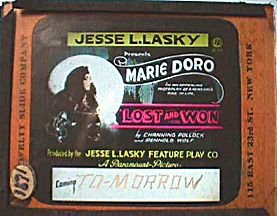
If you found yourself captivated by the stylistic flair of Lost and Won (1917), the profound questions raised in 1917 still require cinematic answers today. Experience the United States influence in these recommendations that echo Lost and Won.
Lost and Won remains a monumental achievement to provide a definitive example of Frank Reicher's stylistic genius.
Cinders, a news girl, with a love for books, idealizes as her hero a "Daddy Long-legs," who will someday make her a great lady. Bill Holt, a reporter, is one of her best friends. Walter Crane and Kirkland Gaige observe Cinder's independence as she turns over to a policeman a man who has been annoying her. Later Crane wagers $50,000 that within a year he can transform and improve the girl that one of the men will want to marry her. Crane places her in the care of his aunt, who sends her to a boarding school. At the end of a year she returns home and at once becomes a favorite. Cleo Duvene, an adventuress, demands of Gaige a necklace which he is unable to purchase. Crane meets with reverses and Gaige, anxious to win Cinders, reveals the bet, suggesting she marry him in order that Crane may realize the $100,000 stake. She refuses and goes to her friend. Holt, securing a position as reporter on the paper. Crane accepts the position of assistant cashier in the bank of which Gaige is vice president. In order to buy the necklace for Cleo Gaige takes a bag of currency and Crane, accused of the theft, is placed in jail. Cinders goes to Gaige and by placing chewing gum on the end of her umbrella, picks up the pieces of a receipted bill for the necklace. She gets into the apartment of Miss Duvene, and is demanding that she tell all she knows of Gaige just as he comes in. They bind Cinders but she manages to get the telephone receiver down, calls Holt, who hears the conversation of the three, and with Crane and a policeman apprehend the guilty man just as he is about to escape. Crane frees the brave little girl and takes her to his arms with the statement that it pays to lose some bets.
Lost and Won was a significant production in United States, bringing a unique perspective to the global stage. It continues to be a top recommendation for anyone studying cult history.
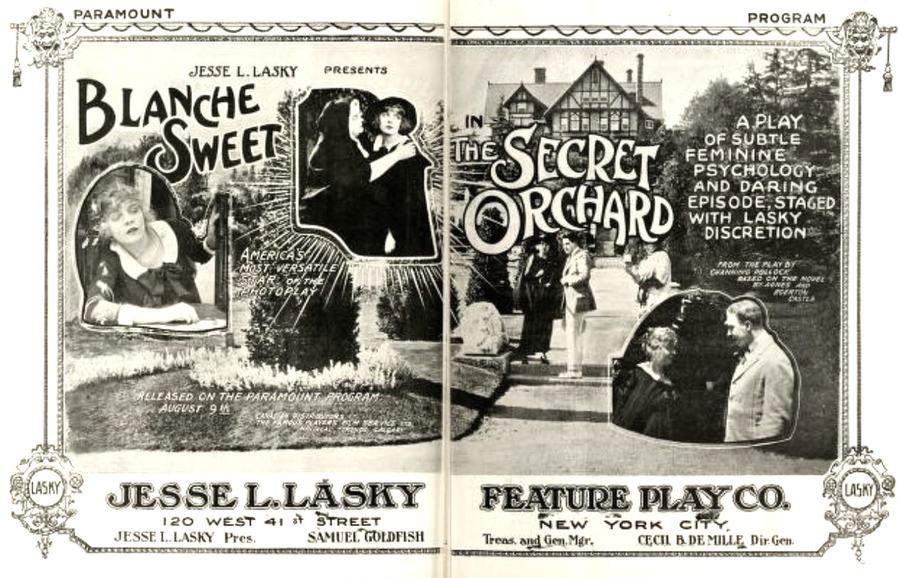
Based on the unique stylistic flair of Lost and Won, our vault has identified these titles as the most compelling follow-up experiences for fans of cult cinema:
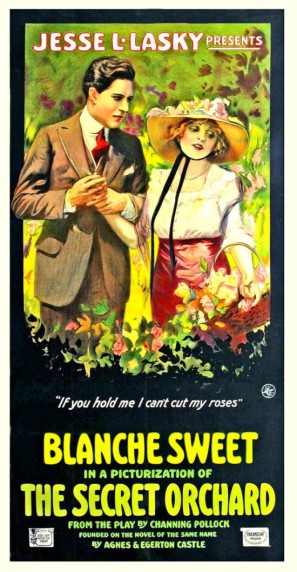
Dir: Frank Reicher
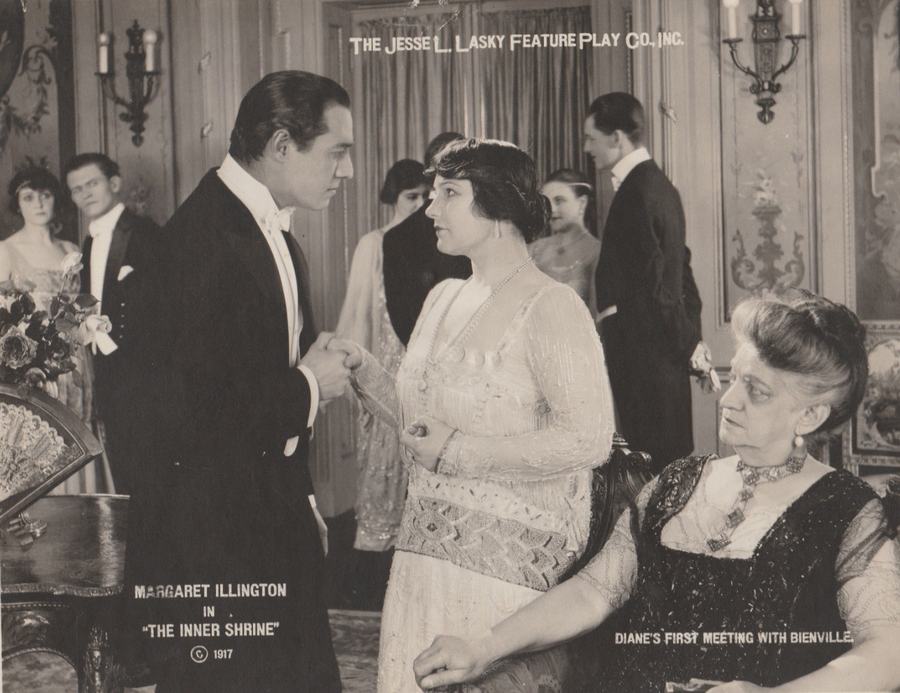
The sound of merry voices and the clinking of wine glasses came through the closed door of a child's room in an apartment situated in a quarter of Paris where night life predominates and where revelers know they may come and go as they please. It was late at night. The child had been asleep, but awakening, frightened, she stepped to the door a moment to listen and then fearlessly, having heard the musical laugh of her mother, she opened the door and entered a large room. It was filled with men and women, whose gaiety may have had some inspiration from the bottles which poked their heads above the rim of ice buckets, which formed an outer fortification around the banquet table. At the sight of the child the conversation ceased for a moment, then burst forth at some indiscreet remark. A woman arising from the head of the table hurried across the room, caught the child in her arms and carried her back into her room. The woman was Cora May, the child her daughter Diane, age four. Cora May was one of the stirs of the Parisian demimonde. The next morning Cora took the child to a convent, bade her a tearful farewell, and returned, sorrowful, to Paris. In her ears there still rang relentlessly the words spoken by a friend the previous evening when he saw the child, "She has the devil in her eyes, Cora, just like you." The little girl, Diane, grew up in the convent, learned to love the sisters and their sweet ways, blossomed into lovely girlhood and at 19 she left the convent to pass a vacation at a friend's home by the seashore at Narbonne. "Monsieur le Chevalier" saw her one day. Her beauty attracted him, her innocence kept him at a distance, but her eyes, those eyes wherein the "devil" was lurking, baffled and confused him. There followed a flirtation, innocent enough, a few words between them, a declaration of love and Diane had fallen a victim to the worldly wiles of "Monsieur le Chevalier," who was, in fact none other than the Duke of Cluny. Meanwhile Cora May, Diane's mother, had died, never having seen her child from the day she had taken her to the convent. Deserted by her care-free friends she found sympathy in a woman of rank, Duchess of Cluny, who sat at her bedside and watched an unhappy life ebb swiftly away. The Duchess made one promise: she would seek out the child, Diane, and take her into her home and guard her from temptation. Diane, still stunned by the experience of her betrayal, dedicates her life to the friendship for the kind Duchess, never associating her with "Monsieur le Chevalier." Subsequently Diane and the Duke, filled with remorse because of his indiscretion, recognize each other yet spare the Duchess, whom each loves from their secret. The past would have remained untold had Diane and not Lieutenant Dodd, U.S.N. fallen in love. The young woman refuses marriage but withholds her reasons, but the young American is obdurate and in time the truth dawns upon him. In a duel he kills the Duke of Cluny who by death atones for his sin, and we are left with the reasonable conclusion that in time Diane and Lieutenant Dodd find happiness together.
View Details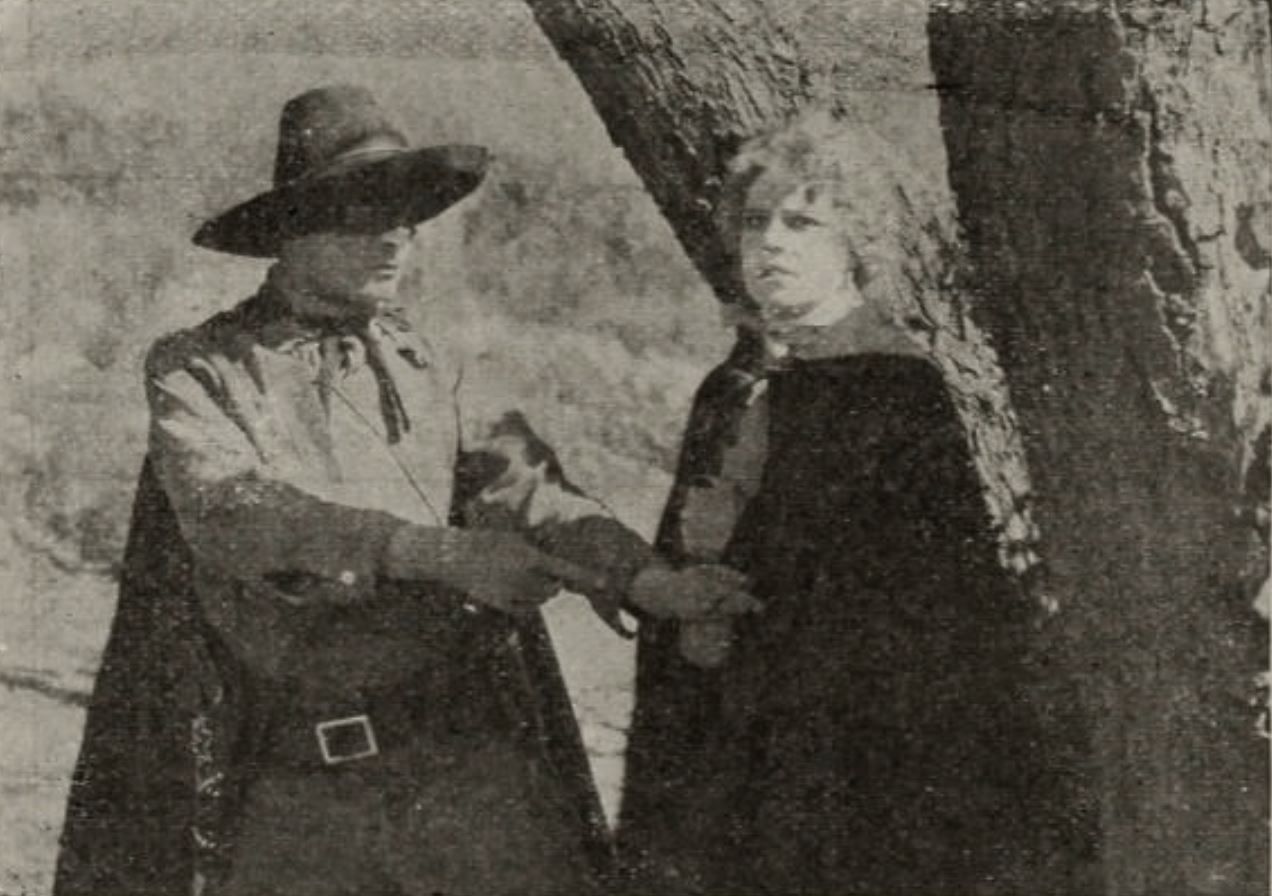
Dir: Frank Reicher
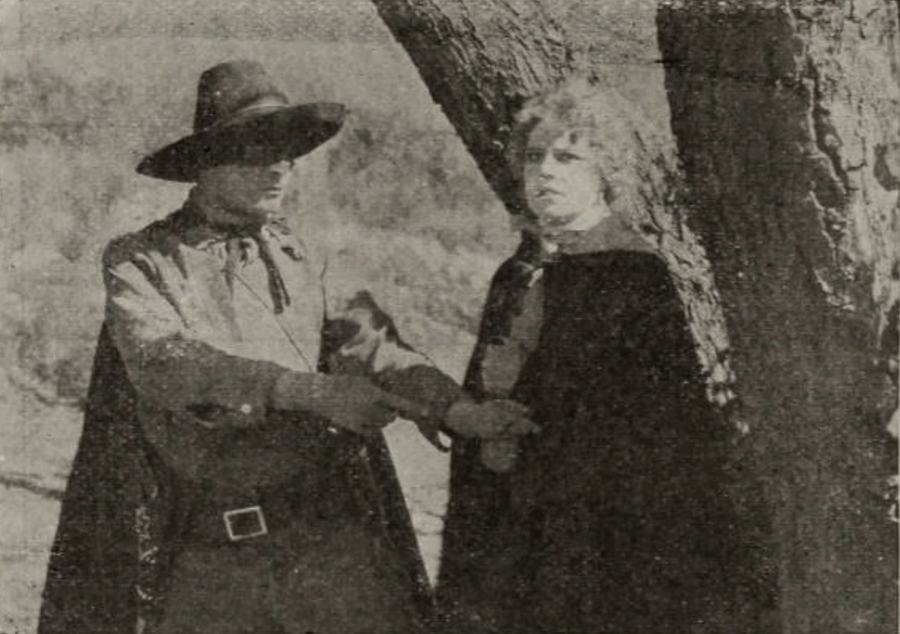
During the California gold rush, four unsuccessful miners assume that a woman prospector will give in without a fight, so they jump the claim of Kate Kenner and take her gold away from her. Afterward, although she is Sheriff Dan Deering's sweetheart, Kate decides to take the law into her own hands. Donning the trademark black mask of Silver Spurs, the noted bandit, Kate holds up the saloon where the crooks have stored the gold. As she makes her getaway, however, Dan catches her, and after unmasking her, is astonished to discover Silver Spur's true identity. The town puts Kate on trial immediately and a guilty verdict seems assured until the real Silver Spurs, who had greatly admired the masquerade, himself steals the gold and leaves a note exonerating Kate. Then, taking time out from his sheriff's duty, Dan, instead of pursuing Silver Spurs, starts making plans with Kate for their wedding.
View Details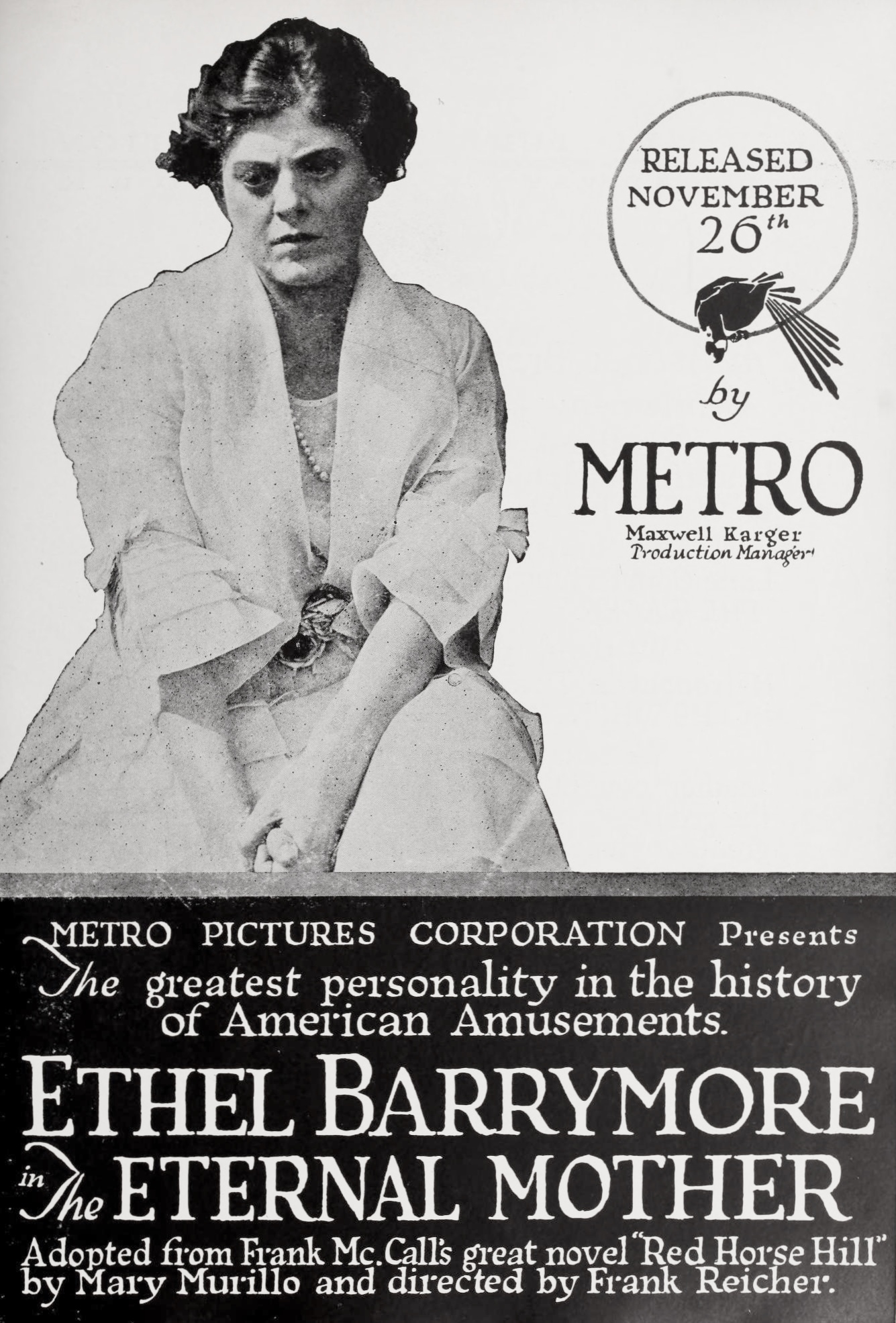
Dir: Frank Reicher
Maris, having married Lynch, a worthless man who deserts her, taking their daughter Felice with him, marries mill owner Dwight Alden after receiving notification that her husband and child are dead. Discovering that Alden employs child labor, Maris, assisted by the village minister, tries to persuade him that this is wrong, but he will tolerate no interference in his business. After violently denouncing Alden from the pulpit, the minister dies and Maris becomes interested in a child who has been injured while working overtime at the mill, only to discover that the child is her daughter and her first husband is still alive. She leaves, taking Felice, and Alden, after having a fight with the first husband, discovers that Lynch had secured a divorce. Alden seeks out Maris, tells her that he has abolished child labor and made other improvements affecting the welfare of his workers, and a reconciliation occurs.
View Details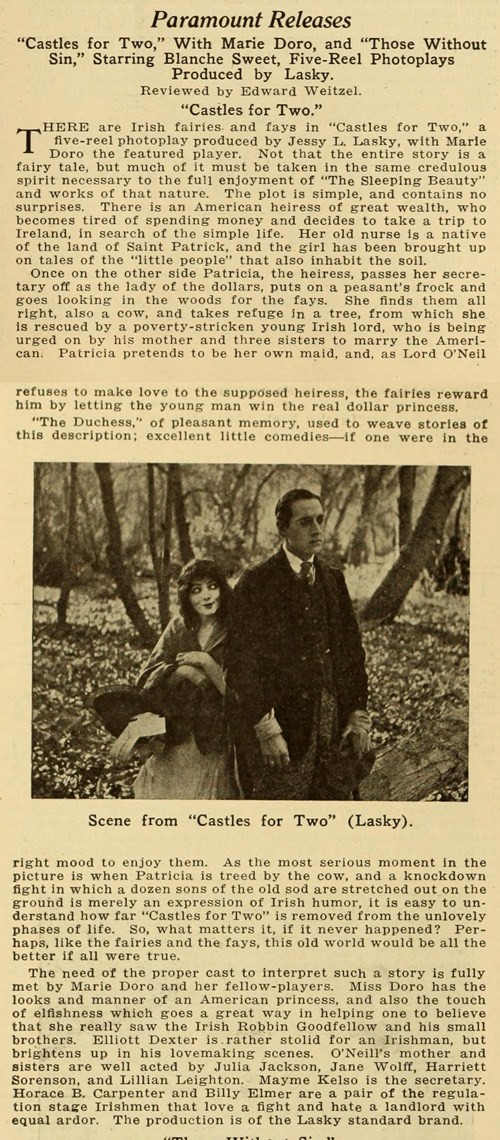
Dir: Frank Reicher
The family of an Irish landlord want him to wed who they think is a visiting heiress from the US but the real heiress pretends she is just a servant and hides her identity.
View Details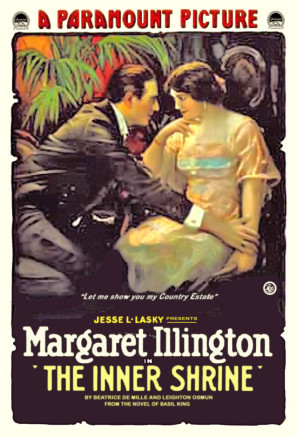
Dir: Frank Reicher
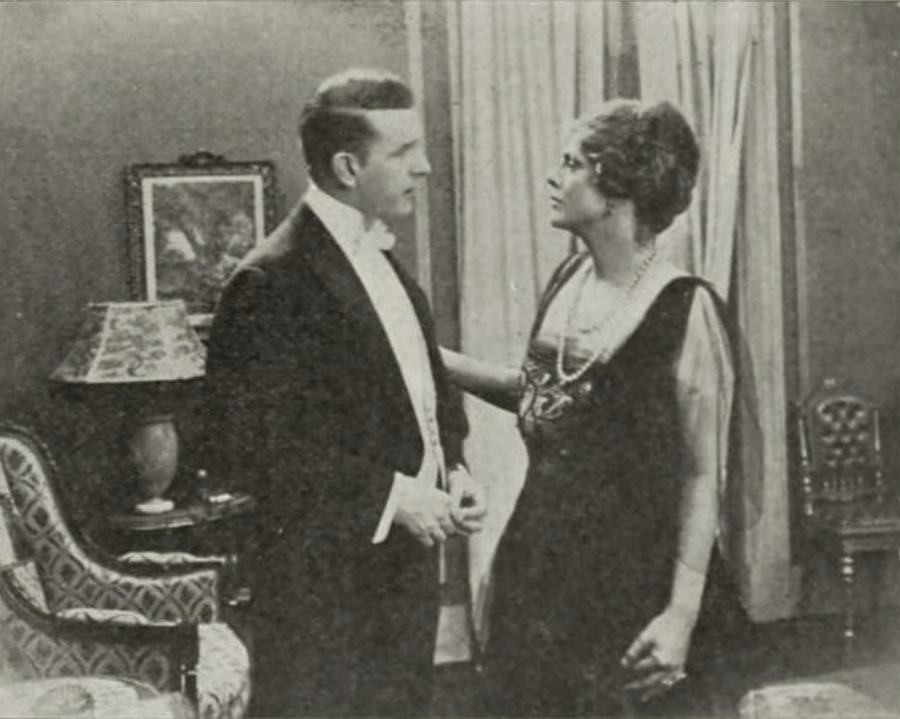
Bad woman turns good, but as a recent widow finds her past a roadblock in terms of accepting remarriage.
View Details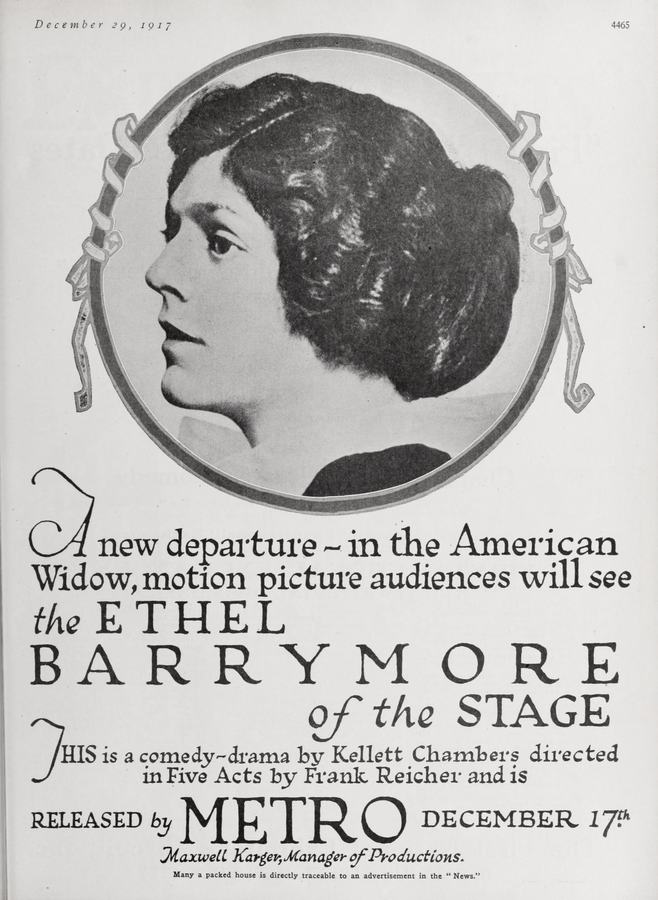
Dir: Frank Reicher
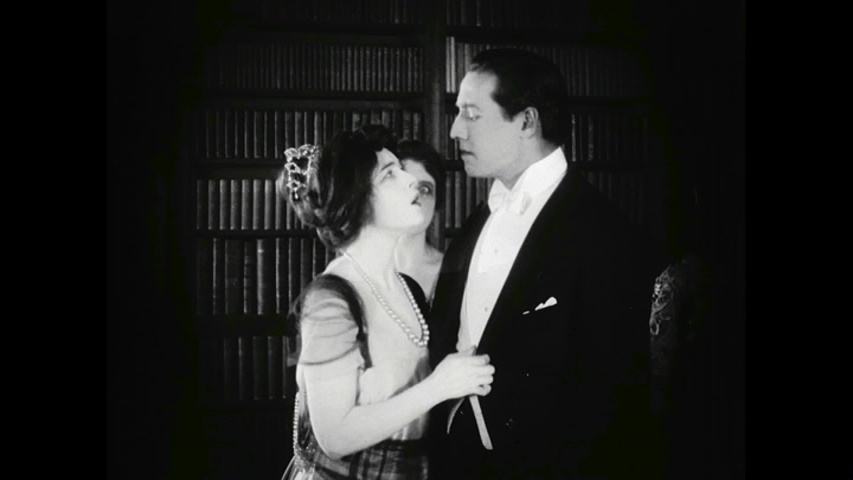
Wealthy American widow Elizabeth Carter plans to marry the Earl of Dettminster when lawyer Augustus Tucker informs her of a codicil in her late husband's will. The Carter fortune will go to nephew Pitney Carter, who is in love with Elizabeth, if her second husband is not an American. Elizabeth therefore pays penniless playwright Jasper Mallory $50,000 to marry her and schemes with actress Mme. Albani to provide grounds for divorce so that she may then make the earl her third husband. The plan backfires when Jasper's play is a success and Elizabeth finds herself falling in love with him. Tucker admits to forging the codicil to enhance Pitney's chances with Elizabeth. As Jasper and Elizabeth announce their plans to remain married, a telegram arrives with news that Mme. Albani and the earl have wed.
View Details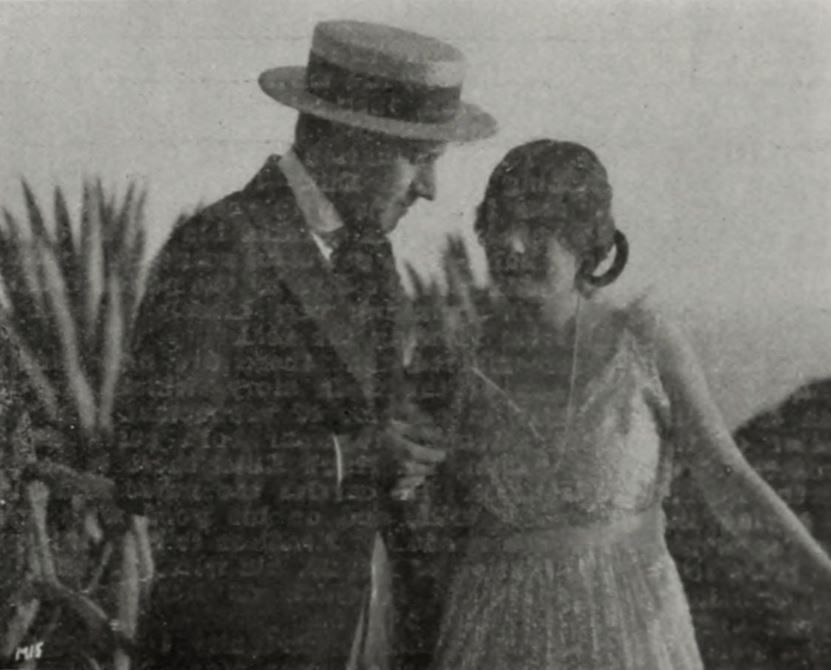
Dir: Frank Reicher
"Mr. Grex of Monte Carlo" is an interesting play of intrigue between the Grand Duke Augustus Peter of Russia, whose incognito is Mr. Grex, an English Secret Service agent, Lord Huntersley and a young American millionaire on pleasure bent, Richard Lane. Mr. Grex and two other diplomats who unofficially represent France and Germany, plan to meet as if by chance in Monte Carlo for the purpose of arranging a secret pact. The American millionaire sees and falls violently in love with Miss Grex, that is, the Grand Duchess Fedora. After several fruitless efforts to gain an introduction to this mysteriously inaccessible young lady, he secures the services of a bandit who is to pretend to hold up Fedora's car so that Lane may effect a rescue. Lane arrives on the scene as per schedule and is informed by the bandit that he has changed his mind and intends to make a real hold-up instead of a fake one. Lane, therefore, makes a real rescue and meets Miss Grex. He is informed by Lord Huntersley that his efforts are useless as she is a Grand Duchess of Russia. The third member of the conference arrives and coming across Lane in the middle of a love scene with Fedora, thrusts the papers into his hand saying "Give these to Huntersley," and disappears. Complications arise between Fedora and Lane. Lane finally manages to get rid of Fedora's father for a few hours and hiring a yacht they pick up a parson who for $5,000 and his trip home consents to go with them to America. Once outside the three-mile limit they are married under the laws of the United States.
View Details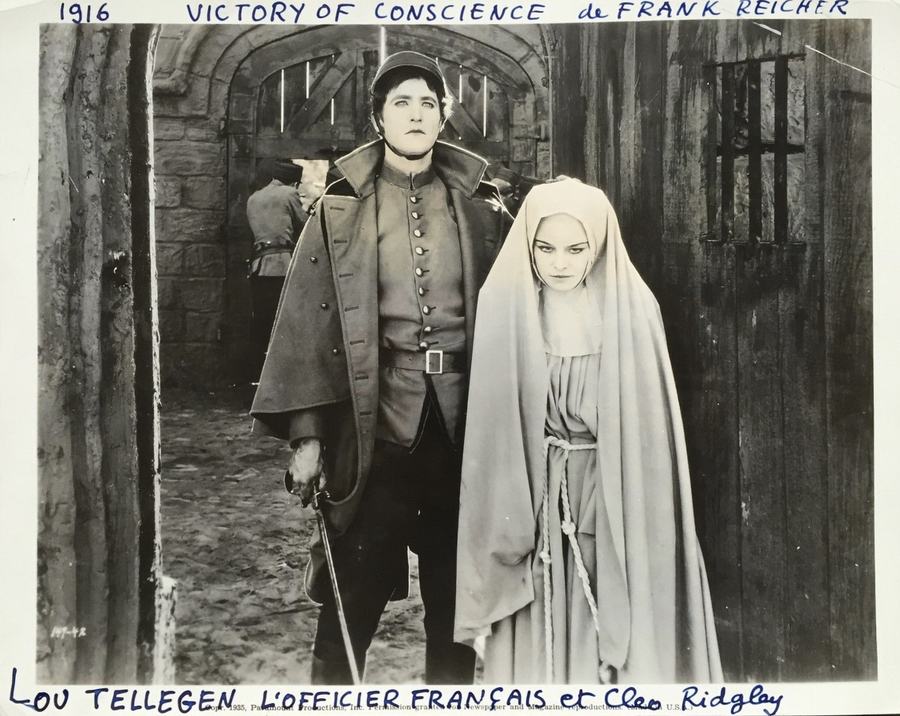
Dir: Frank Reicher
Louis, Count de Tavannes, and his companion, Dimitri, lead a gay life in Paris. On the return trip of a motor tour, they stop at an inn and discover Rosette, the daughter of the innkeeper, who dances for the guests, not from choice, but necessity. Dimitri suggests they take her to Paris. The patrons of the inn, jealous of the fashionably-attired young men and the attention paid them, raise a riot. During the uproar Rosette is taken to the motor and to Paris, where she goes to a hotel with Louis, her favorite of the two young men. During their breakfast the next morning, she learns from Louis' lips that he will not marry her. Remy, the faithful servant of the inn, has sought her out, grasps the situation, strikes Louis in the face and a fight ensues between the two men. Louis is discovered, bleeding and unconscious, and taken to the home of a young priest. Through the influence of the good men whom he has thus accidentally met, he enters the priesthood. Rosette secures a position as dancer in a café of the underworld in Paris, patronized by the rough element, and occasionally by the wealthy class in search of excitement. Dimitri is at this café, trying to induce Rosette to drink and dance, as Father Louis enters in search of a man whose wife is ill. The recognition is mutual, and none is so surprised as Dimitri. The latter plans an elaborate supper for himself and Rosette, and Louis interrupts them. As Louis uses his good influence for the girl, Dimitri is exerting a conflicting power, and Rosette bids them fight it out, "for God and my soul, or the devil and my body." With only their hands for weapons, the men go to battle, Louis with a righteous determination to win, and he does. He takes the girl to a convent, where she realizes her great love for Louis and a desire to live a pure life. Father Louis has won the love of the patrons of the café, and when the war is on and France calls for her men, he with his followers tries to defend the convent where Sister Rose Marie is. Mortally wounded, Sister Rose Marie falls across the dead body of the man she loves, and they are united in spirit, although their lives have been sacrificed in an attempt to save other souls, endeared to them.
View Details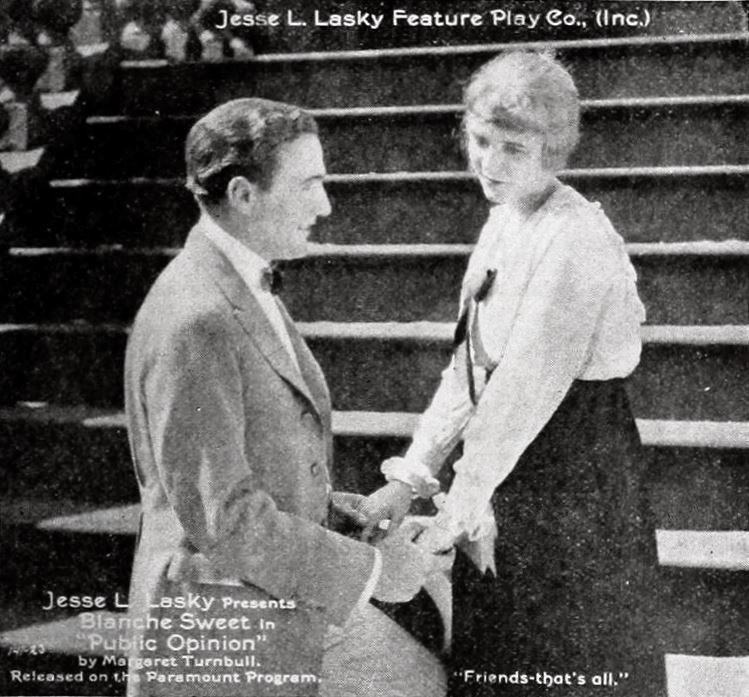
Dir: Frank Reicher
Hazel Gray, a young nurse, is in love with Phillip Carson, son of Mrs. Carson-Morgan, a philanthropist. Phillip, having quarreled with his step-father, leaves home, secures a position, and lives at the same boarding house as Hazel. Called home by his mother's sudden illness, Phillip manages to have Hazel called on the case. Her recognition of the doctor as the man whose trickery she discovered in time to save her own honor, is concealed from Phillip, but her stay is rendered almost unbearable by the doctor's forced attentions. Mrs. Morgan dies suddenly and in terrible agony, from arsenic poisoning. Suspicion points to Hazel, proof of her knowledge of the location of a bottle of arsenic being established by Morgan. Her former supposed relations with the doctor appear as a reason for the crime. Phillip's testimony is against her, but Gordon Graham, a wealthy young man who is on the jury, is at once impressed with the girl's innocence, and succeeds in securing a verdict of "not guilty." Throughout the trail the spirit of the poisoned woman endeavors to point out the guilty person. The weight of public opinion, however, falls heavily upon the girl, sensational newspapers doing their share to increase it, until Hazel can find no place to stay. Finally Graham takes her to his sister's home where he declares his love for Hazel and an unshaken belief in her innocence. Smith, a dope fiend, refused drugs by Dr. Morgan, threateningly reveals his knowledge that the doctor has substituted arsenic for powders prescribed for his wife by the attending physician. During the struggle which follows, Hazel, Graham and a policeman appear, and Smith, having secured possession of the doctor's pistol, fires the shot which mortally wounds Dr. Morgan, who confesses in his dying moments that he is the guilty person. Hazel's innocence is thus established, the public opinion is quickly changed, and the girl goes to the waiting arms of the man who has so valiantly defended her.
View Details
Dir: Frank Reicher
Soon after arriving in the U.S., Romanian immigrant Franz Libelt dies, leaving his daughter Michelna an orphan. The girl is befriended by newsboy Blackie Moyle, who invites her to share his home, which is a large piano box in a vacant lot. After he teaches her to be a "newsie," she cuts her hair, dresses as a boy, and changes her name to Mike. When Blackie is blinded while protecting her from a thief, Mike is forced to find a way to support them both. It occurs to her that two clay statuettes they sculpted might be valuable, so she takes them to an art exhibit. Mike's statue, known as the "trouble buster," sells immediately, but she credits Blackie as the sculptor. He then becomes the sensation of the art world and is sent to Paris to have his sight restored. Blackie comes to understand Mike's deception and returns to the U.S. to set things right. When Blackie is finally reunited with Michelna, she asks why he came back, and he replies, "For the love of Mike."
View DetailsAnalysis relative to Lost and Won
| Film Title | Atmosphere | Complexity | Similarity |
|---|---|---|---|
| The Secret Orchard | Gothic | Dense | 96% Match |
| The Love Mask | Surreal | Layered | 93% Match |
| The Eternal Mother | Surreal | High | 85% Match |
| Castles for Two | Surreal | High | 88% Match |
| The Inner Shrine | Gritty | Dense | 96% Match |
This guide was algorithmically generated using the cinematic metadata of Frank Reicher's archive. Last updated: 8/16/2026.
Back to Lost and Won Details →