
DbcultAccessing Vault...
Recommendations
Senior Film Conservator
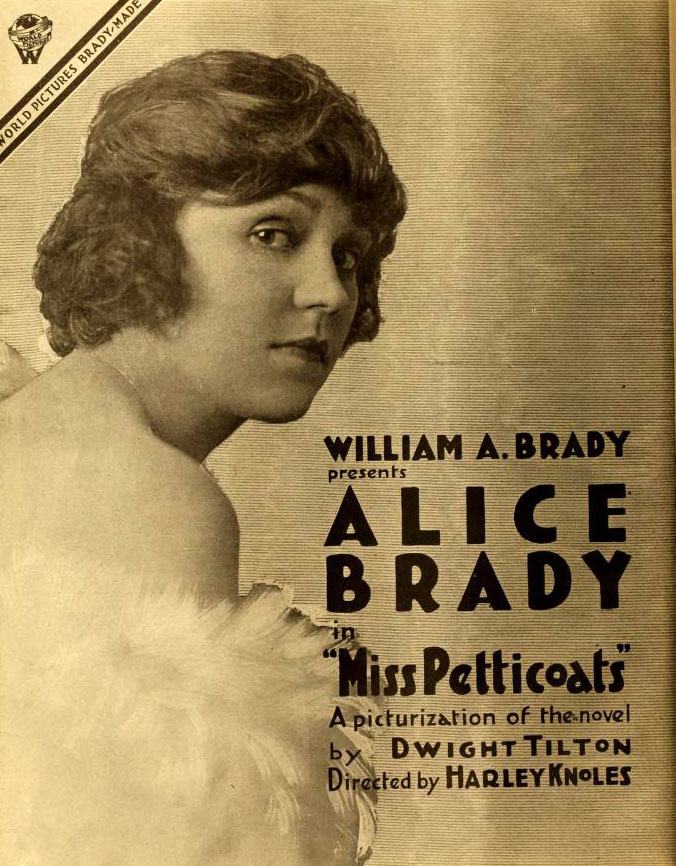
If the stylistic flair of Harley Knoles's work in Miss Petticoats left an impression, the cinematic shorthand used by Harley Knoles is both ancient and revolutionary. We've prioritized films that capture the 1916 aesthetic with similar precision.
By merging stylistic flair with cult tropes, it to articulate the unspoken anxieties of United States's 1916 era.
Agatha, called "Miss Petticoats," is daughter of a French nobleman and an American woman, lives with her grandfather, Captain Joel Stewart, since the death of her mother years before. Knowing nothing of her royal heritage, Agatha gladly takes a job as secretary to the wealthy Sarah Copeland, whose nephew, Guy Hamilton, immediately begins pursuing the new employee. Jealous of Agatha, one of Guy's former sweethearts, Mrs. Worth Courtleigh, starts spreading rumors about her, and when Joel hears a particularly scandalous one, he dies of shock. Taking Agatha away from all the gossip, Sarah sails with her to Europe, where Agatha finally learns about her bloodline, and also discovers that she is the heiress to a fortune. Then, when she and Sarah return home, Agatha forgives all the people who believed the rumors, and marries the Reverend Ralph Harding, who was always certain of her innocence.
Based on the unique stylistic flair of Miss Petticoats, our vault has identified these titles as the most compelling follow-up experiences for fans of cult cinema:
Dir: Harley Knoles
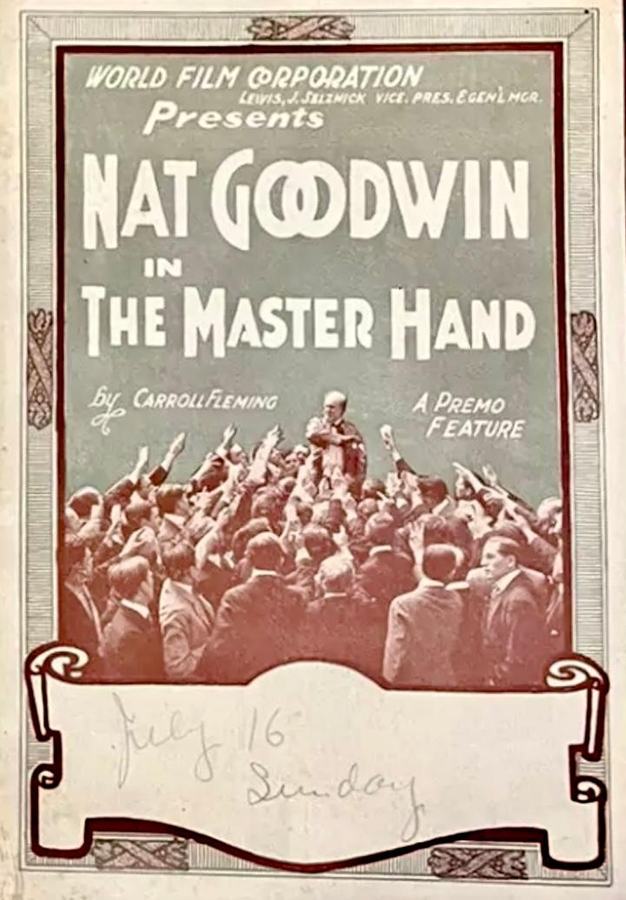
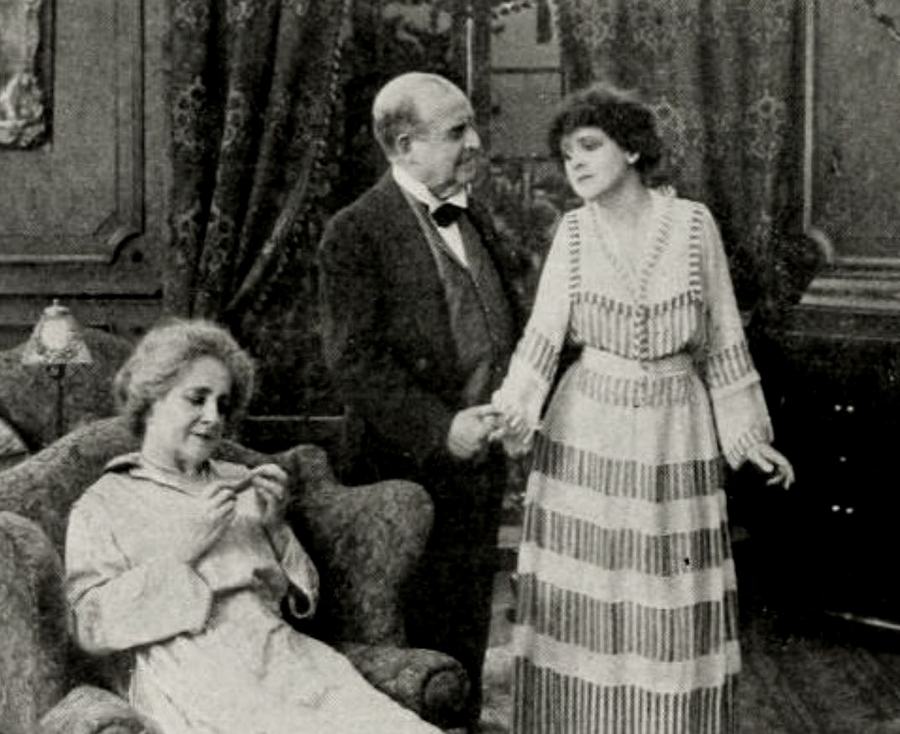
James Rallston has married a rich widow who is an invalid with a daughter, Jean. Being in financial difficulties, he plans to get control of his wife's fortune. A woman doctor, Miss Lane, attends Mrs. Rallston and by drugging her reduces her to such a condition of physical impotency that no difficulty is found, by the aid of an unscrupulous keeper of a sanitarium. Dr. Garside, to secure an order for commitment and deprive her of liberty. Fifteen years pass. Rallston lives in magnificent style on his wife's money. He believes her to be dying. Miss Lane hopes to marry Rallston when Mrs. Rallston dies, but instead of dying, she recovers her health and is perfectly sane. Meanwhile, Rallston speculates heavily and loses his daughter's fortune. He tries to persuade the girl to marry an old friend Bigelow, to whom he appeals for help in recovering his fortune. Bigelow suspects Rallston of deception, as well as dishonesty, and is unwilling to believe that Mrs. Rallston is either dead or insane. Bigelow forces up the price of a stock and recovers Jean's fortune for her. Then he disguises himself and, obtaining admission to the sanitarium, rescues Mrs. Rallston. The keeper of the sanitarium, Dr. Garside, takes to flight, and Rallston is killed in an automobile accident. Miss Lane confesses her crime. Mother and daughter are reunited and the girl marries the man of her choice.
View Details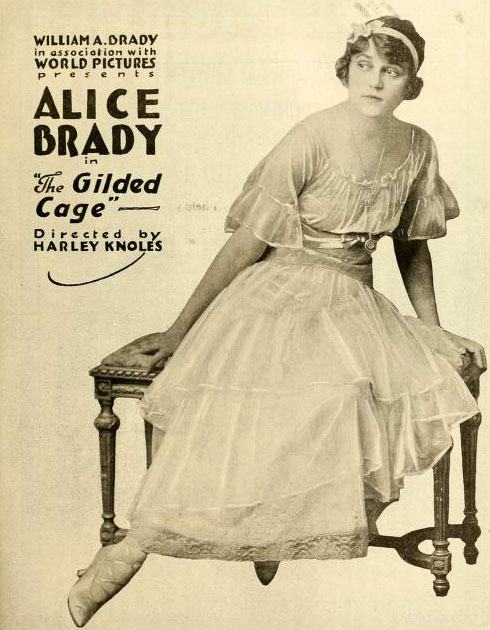
Dir: Harley Knoles
In the little kingdom of Balkany lived a king and queen who were not liked by their subjects. His Majesty was King John the Fifth, and Her Royal Highness was Queen Vesta. To them was born a daughter, the Princess Honore, who was placed in the convent of the Holy Sisters. The little kingdom rebelled against the extravagance of King John, and an attack was made upon the castle. Both the king and queen were assassinated. Princess Honore succeeded to the throne. In love with her and coveting the crown was Baron Stefano, Prime Minister, but his love was not returned. This incurred the ill-will of the Prime Minister, who set out to overthrow the little kingdom and turn it into a republic with himself as ruler. Prince Boris renounced his title and cast his lot with the peasantry. He was loved by the common folk and proved a leader. During the annual fair people gathered in the capital from far and near. There were rumors of an uprising. The young queen had not brought about much change in the conduct of the official household. The extravagance had continued to eat up the revenue raised by the heavy tax, and the people were protesting and demanding that something be done for their relief. These rumors reached the girl queen, and clad in the garments of a peasant girl she went forth during the fair to learn what she could. In this way she soon learned of her disfavor. One day she met Prince Boris, who told her of conditions that existed. One of the government spies, overhearing his conversation, suspected that he was forming a plot against the young queen, who was not recognized by the spy because of her disguise. The spy hastily informed the Prime Minister, who ordered the arrest of Prince Boris. The soldiers were dispatched, and Prince Boris was placed under arrest. The young queen protested. She as his companion was also confined to the prison. The chief of the Royal Guard notified the Prime Minister of the arrest, telling him that during the struggle with the queen she defied him by proclaiming that she was the queen, and this aroused the suspicions of the Prime Minister. Alone he went to the dungeon and discovered that Boris's companion really is the queen. It dawned upon him that now he had her in his power, he will force her to make him her king consort, or bring about conditions that will speedily overthrow the government. Meanwhile Lesbia, a peasant girl, learns of the conspiracy and through her love for one Ivan, sergeant of the Royal Guard, she secured the release of the queen, who escaped in safety to the Royal castle. Next morning the queen heard the tolling of the prison bell. On asking her secretary what it indicated, she was told that her sweetheart, the Prince Boris, was to be executed at sunrise. She rushed into the office of the Prime Minister and forbid the execution. He laughed at her. Back in the village, outside the prison wall, the soldiers were drawn up to execute Prince Boris. But the people saw their beloved leader. rushed forward, overpowered the soldiers and released him from his bonds. An attack was then made on the castle. Prince Boris discovered his peasant girl companion to be none other than her Royal Highness, Queen Honore. The people were for revenge, but the queen told them of the Prime Minister's conduct and followed by her the crowd attacked Baron Stefano, which resulted in his death. The queen accepted Prince Boris as her beloved king consort.
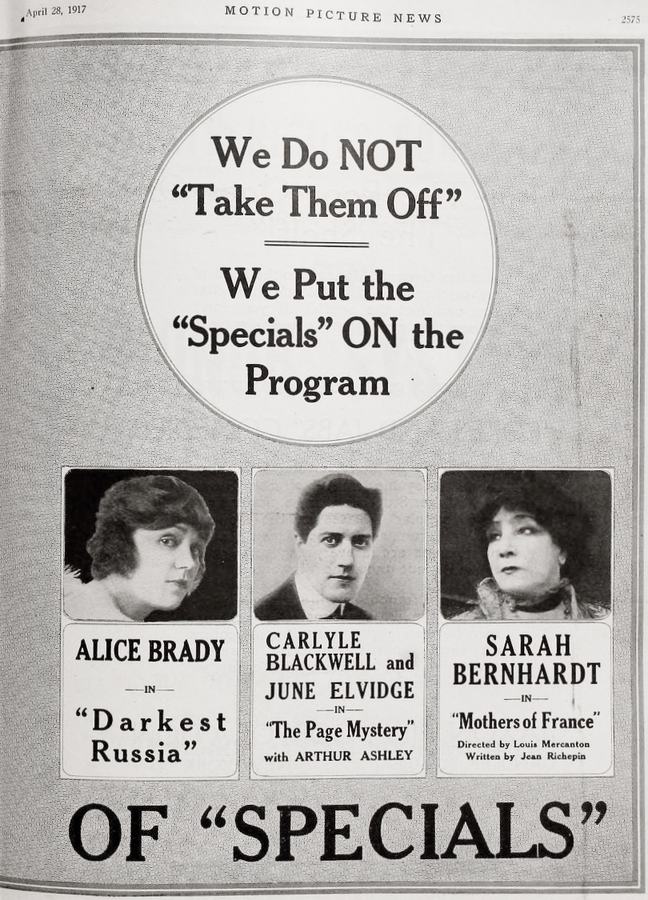
Dir: Harley Knoles
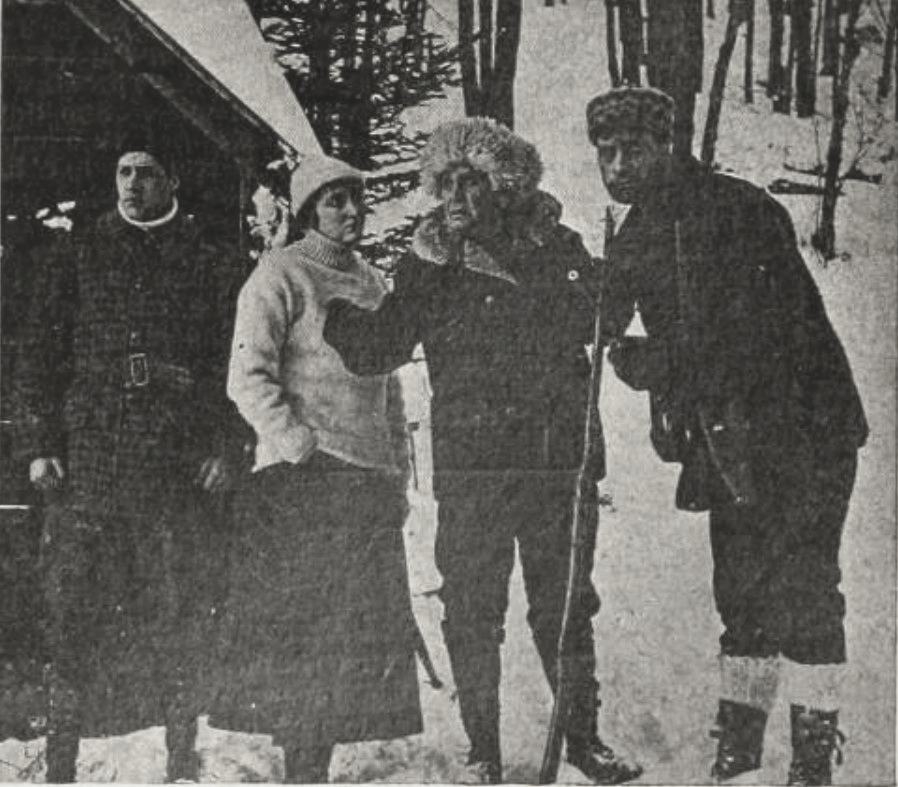
Alan Winthrop, the younger son of an English family, accepts the blame for his older brother's loss of five thousand pounds at cards, and is turned out of the house. This gives the young man the opportunity he desired, travel. In America, Ralph Cornwell, an unscrupulous young millionaire, asks Edward Strong, a bankrupt financier, for his daughter's hand in marriage, in exchange for which Cornwell will clear all of Strong's liabilities. His need for money determines Strong to influence his daughter. Edith tells Cornwell that it is to be a marriage of convenience. At the wedding supper Cornwell becomes intoxicated, and after the guests have departed Edith struggles to free herself from his embraces. She eludes him and leaves the house. Cornwell finds her note saying that she cannot live with him. Alan Winthrop, now in America, gets a position as caretaker of Cornwell's mountain lodge, and is told to engage a woman to help him. Cornwell impresses on Alan's mind that in the mountains he is known as "Colonel Page." Unable to get work Edith applies for a theatrical position. When the manager intimates that he will give her a position if she is "nice" to him, she tells him she would rather die. That night, while Alan is making his way to the railroad station, preparatory to leaving for Sylvia Lodge, he sees her jump off a pier. He rescues her. She tells him that she has nothing to live for, and he engages her to help him in the care of Sylvia Lodge. Cornwell has an "intimate friend" in Laura Le Moyle, who left her husband to go with him. At a dinner given by Cornwell, he pays marked attention to Kathleen Lorraine, thereby Incurring the jealousy of Mrs. Le Moyle. Alan and Edith reach the lodge, and Jaeger warns them that the lodge is haunted. Saul Potter, the half-crazed ex-caretaker of Sylvia Lodge, sees them coming, and realizes that Colonel Page must be coming back. He tells Jaeger that the chance to kill Page has now arrived. He stares through the window into Alan's cottage, and Edith is frightened. When Edith communicates her fears to Alan he gives her a revolver, telling her to use it in case of need. Going through the lodge to prepare it for Page's arrival, Alan comes across a boudoir, beautifully furnished. On a dressing table he sees a framed photograph of Edith. Page arrives with his guests, among whom is Mrs. Le Moyle and Kathleen Lorraine. He again neglects Mrs. Le Moyle and she warns him not to goad her too far. He calms her, tells her to go to her room. Kathleen Lorraine has no maid, and while Alan is locking up the lodge Page tells him to send someone to help Miss Lorraine. Mrs. Le Moyle hears Page tell Miss Lorraine that he will come back to her later. Edith comes to help Miss Lorraine, while Pages goes to pacify Mrs. Le Moyle. Returning to Miss Lorraine's room there is a mutual recognition between Edith and her husband. Edith rushes from the lodge, goes to her cottage, and taking the revolver with her for protection leaves. Page leaves the lodge to follow his wife, and then Mrs. Le Moyle is seen pointing a revolver out of her room at the same time that Saul Potter is seen pointing his rifle. Both fire, and Mrs. Le Moyle throws her revolver out of the window. Page falls in the snow, where his guests come down in time to see him die. Edith meets Saul Potter and seeks his aid in getting away. Alan finds her and the revolver gone and sets out to look for her. He learns that Edith must leave at once, although she offers no explanation. There being no train until the morning, she is forced to stay at Saul's shack overnight. At the coroner's inquest the guests give their testimony and then Edith is summoned. She says she is the deceased man's wife. Fearing that Edith is guilty, and wishing to spare her, Alan says that it was he who killed Page, giving as a motive the fact that he found Edith's photo in a secret bedroom, and knew that Page was a villain. Then Saul Potter tells his story: A year ago he was caretaker at Sylvia Lodge. Page sent him on a trip to get him out of the way, and then he seduced his young wife, keeping her imprisoned in his secret bedroom. When his wife died he swore to have vengeance. He waited for Page to return and then killed him. At this point one of the guests brings a revolver which he found under Mrs. Le Moyle's bedroom window, and the coroner announces that the bullet which killed Page was of the same caliber as the ones used in this revolver. Unobserved, Mrs. Le Movie takes poison. After telling that she left her husband and sacrificed everything, only to be thrown off like an old glove by Page, she dies. Later that evening Alan receives a cable from his father saying that he knew the truth about the rambling episode, and bidding him return to his home at once. Alan tells Edith ho will go on one condition, that she accompany him as his wife. She agrees.
View Details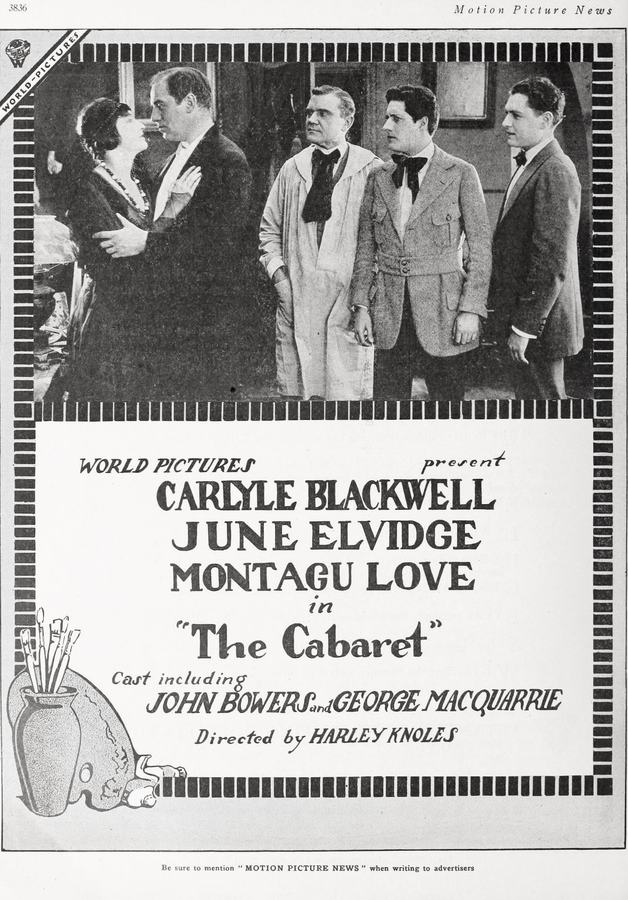
Dir: Harley Knoles
Helene, who dances in a Greenwich Village cabaret accompanied on the violin by her grandfather, loses her job after his death. She then is hired as a portrait model by four artists--Jaffrey Darrel, Ned Lorrimer, Dick Turner and Stanley Sargent--all of whom become fascinated with her. Helene leaves the Village when Ned's jealousy disrupts the camaraderie of the quartet and becomes a stage star. Meanwhile, all of the artists have attained success except Jaffrey, who refuses to taint his art with commercialism. Helene, learning of Jaffrey's failure, visits him in the Village and accepts his marriage proposal.
Dir: Harley Knoles
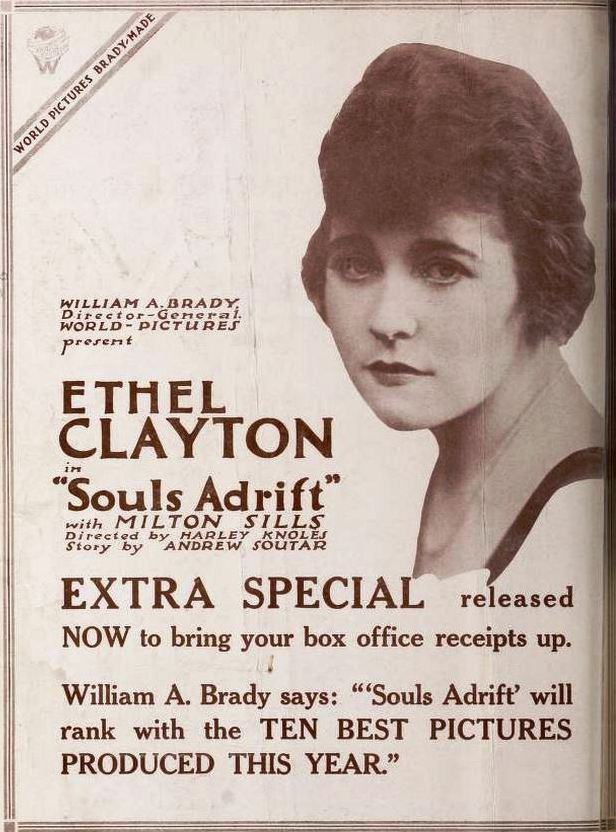
After an explosion that sinks a yacht, Elma is shipwrecked with Micah, who claims her father ruined him by stealing the plans of a valuable machine.
View Details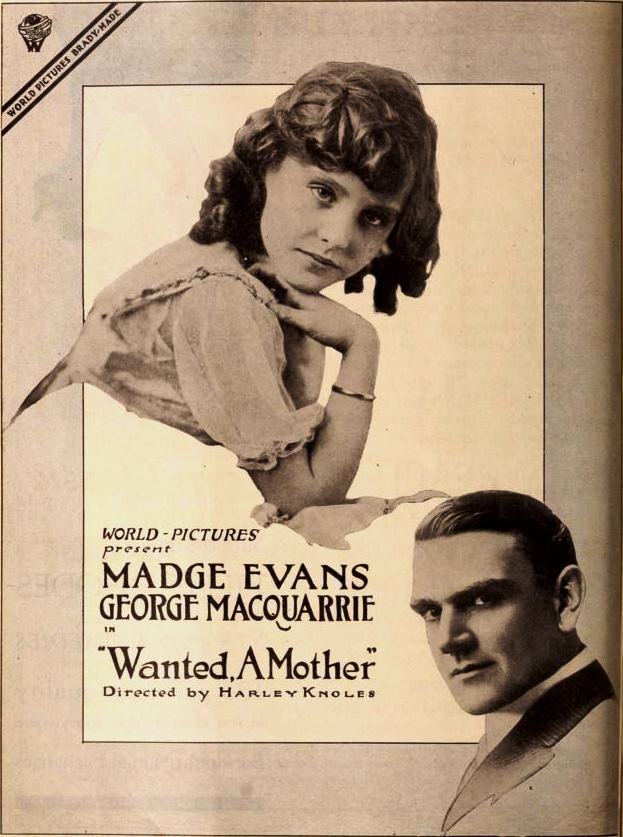
Dir: Harley Knoles
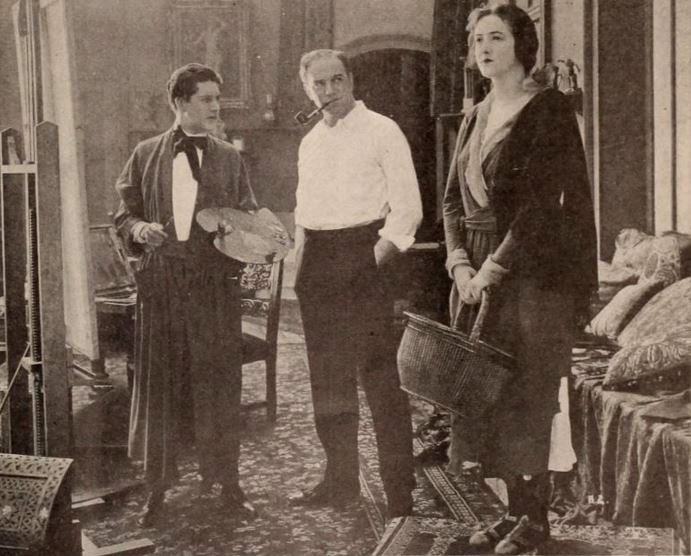
Neglected by her grief-stricken father, a doctor, after the tragic death of his wife, little Eileen Homer changes the wording of her father's ad for a governess to read: "Wanted, a mother." A laborer named Giuseppe asks Dr. Homer to operate on his ailing son, but when the boy dies, the enraged father attacks the doctor. Eileen meets her father's friend, Dr. Thelma Winter, and that night, while dreaming that Dr. Winter has become her fairy mother, she walks in her sleep to the edge of the lake. Wandering aimlessly in his grief, Giuseppe rescues the girl and takes her home to fill the void left by the loss of his son. In trying to return home, Eileen falls from the fire escape and is rushed to the hospital, where Dr. Winter saves her life. Afterwards, the grateful Dr. Homer becomes a more loving father with the help of his new wife, Dr. Winter, and Giuseppe becomes the family's gardener.
Dir: Harley Knoles
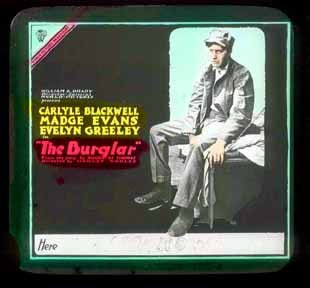
As a prank, college student William Lewis and some of his friends break into a house and are interrupted by a policeman who is accidentally shot. Will's friend Sid accuses Will of the shooting, but Will manages to escape and moves to a large city far away. He meets and marries Alice Hamilton, and they later have a daughter, Editha. Will has a job as a bank teller and everything is going fine--until Sid shows up one day and threatens to expose Will as the man who killed the officer unless Will helps him rob the bank. Complications ensue.
View Details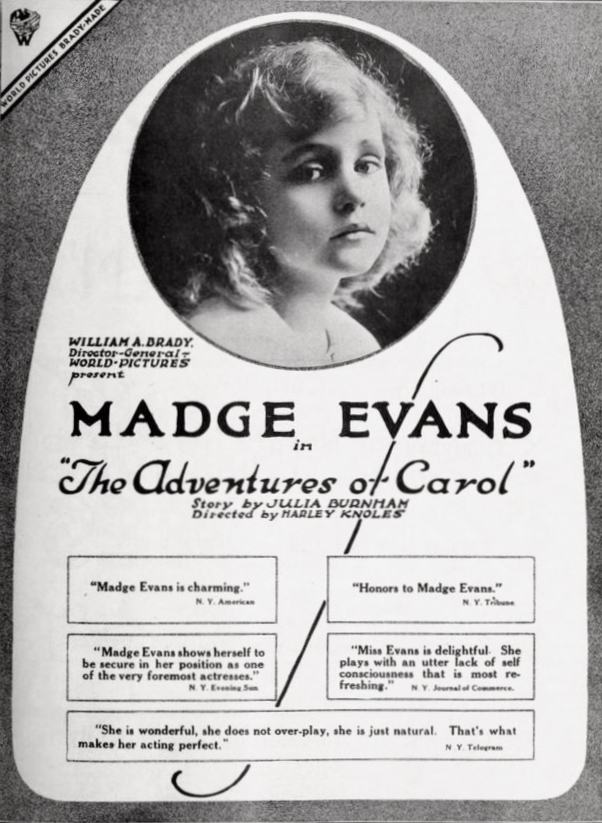
Dir: Harley Knoles
Little Carol Montgomery's father, a navy commander, discovers a spy in the house, he earnestly counsels the family not to answer questions regarding themselves. Later, while attempting to follow her mother, Carol becomes lost on the subway, and, taking her father's words to heart, refuses to tell a police officer who she is. Eluding the officer, Carol falls asleep in a tenement hallway where she is found by Beppo, an organ grinder who decides to add her to his show. They travel south, where, becoming separated from Beppo, Carol seeks refuge at the Fairfax plantation. Mrs. Fairfax, estranged from her husband because he had disowned their daughter years earlier when she eloped without his permission, refuses to speak to anyone. However, under Carol's winning influence, the Fairfaxes are reconciled and send for their long-lost daughter, who turns out to be Carol's mother.
Dir: Harley Knoles
Richard Barton, a prosperous manufacturer, has an accomplished wife, Helen, and Bess, a child of five. Richard has in his employ a man addicted to gambling. After repeated warnings, he discharges him, fearing that some day he may have a losing streak and take some of the firm's money. Being of a moody, vindictive turn of mind, he vows revenge. The same evening the Bartons are giving a party and it is arranged that Mrs. Barton will recite for her guests. Charles Burham, a theatrical manager, is present and, charmed with her elocution, tells her there is always a position waiting for her should she ever desire to go on the stage. The party is abruptly ended when Richard receives the news that his plant is on fire, having been set by the discharged employee. Richard assists the firemen, gets drenched and catches a severe cold, which turns to tuberculosis. The litigation over the insurance of the plant has forced the little family to hard circumstances and they are compelled to seek cheaper quarters in which to live. During all this time, Howard Barton, a wild young brother of Richard's, who has been seeking his fortune in Australia, has at last achieved success, and decides to return to New York. He has written Richard at the plant, but when he arrives there, finds the place in ruins. He tries in vain to locate his brother's present whereabouts. Richard is discouraged, and during this strenuous time, his wife is like a guiding star, taking discomforts cheerfully and giving him the loving care, tender sympathy and moral support that only a good woman can give. He, however, has not much moral stamina, and adversity breeds peevishness and irritability. After a time they are so impoverished she has to pawn her jewelry. While in the pawn shop one day, she meets a stranger, who is greatly impressed by her beauty, and listening to her pitiable tale, tells her that if she will but let him entertain her that evening, she will not have to want in the future. Helen rebukes him, but not until he has given her his name and address. When she finds later that she cannot raise any more money and must have money to buy medicine, she dresses up for the sacrifice, and goes to Howard's apartment. A few days later, Howard's letter reaches Richard, who sends for his brother. Both brothers are happy at seeing each other, but when Richard introduces his wife, Howard recognizes her and she meets his brother's wife as well as the visitor to his apartment. Howard arranges for the little family to go into the mountains. He sees them off and makes all sorts of excuses for remaining away, until Richard insists that he come, as he has been injured while out sleighing. The presence of Howard is a trying ordeal for Helen as well as himself. Being unable to quell his passions, he resolves to leave for Australia, but while talking about the past, Richard steps into the room and hears the terrible truth. Angry, he turns his wife from the house. She goes to Burnham and obtains a position on the stage, at the same time caring for her child. She is cast in a play very similar to that in which she has figured in real life. Richard and Howard, now both in New York city, are present at the first night. When he sees Madame Bondorti on the stage, Richard is by her resemblance to his own wife, but when he hears her speak, he is sure it is her. A few days later, after Richard learns the great depths of the sacrifice his wife made for him, he realizes how he had been unjust to her, and through Howard's efforts, they are brought together through the pleadings of their child, Bess, who has been in an orphanage during these years of estrangement. After the loving union of the three, Howard leaves for Australia, never to return.
View Details
Dir: Harley Knoles
Myron Leeds and his brother Roger are both in love with Mary, but when Myron wins her, his father disowns him. While Myron struggles as an artist to support his wife and little daughter Beth, Roger marries and settles into his father's sumptuous estate. Roger's maid Norah, concerned when the death of his little boy causes him and his wife to shut themselves off from all society, invites Beth to visit the estate posing as her niece. Beth endears herself to the couple, but Myron, driven to desperation by his poverty and his wife's ill health, decides to rob the estate. Roger hears that someone is breaking in, but in attempting to shoot the intruder, he wounds Beth instead. As a result of this unhappy incident, Roger resolves to share his fortune with his brother, and the family is reunited.
View DetailsAnalysis relative to Miss Petticoats
| Film Title | Atmosphere | Complexity | Similarity |
|---|---|---|---|
| The Master Hand | Gritty | Dense | 92% Match |
| The Gilded Cage | Ethereal | High | 98% Match |
| The Page Mystery | Surreal | Linear | 89% Match |
| The Cabaret | Tense | Dense | 96% Match |
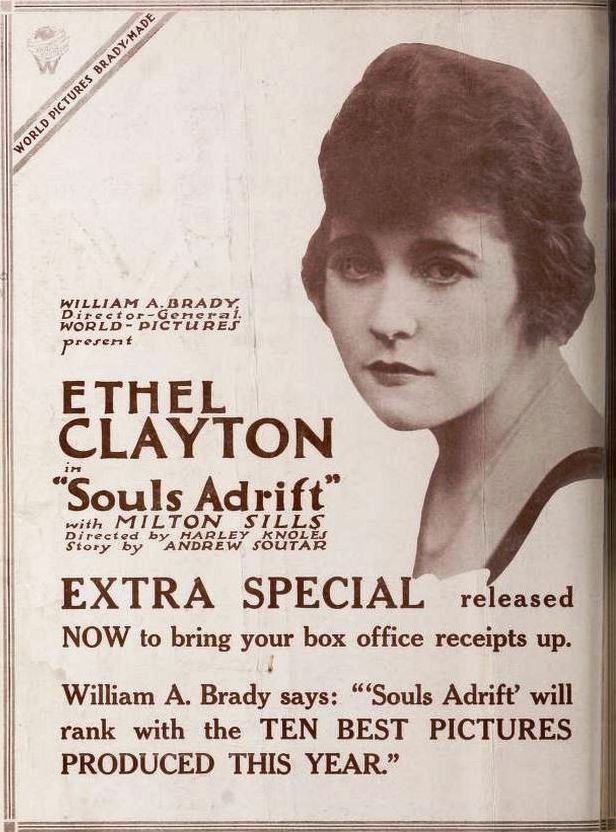
| Souls Adrift | Gothic | Linear | 89% Match |
This guide was algorithmically generated using the cinematic metadata of Harley Knoles's archive. Last updated: 6/20/2026.
Back to Miss Petticoats Details →