
DbcultAccessing Vault...
Recommendations
Senior Film Conservator
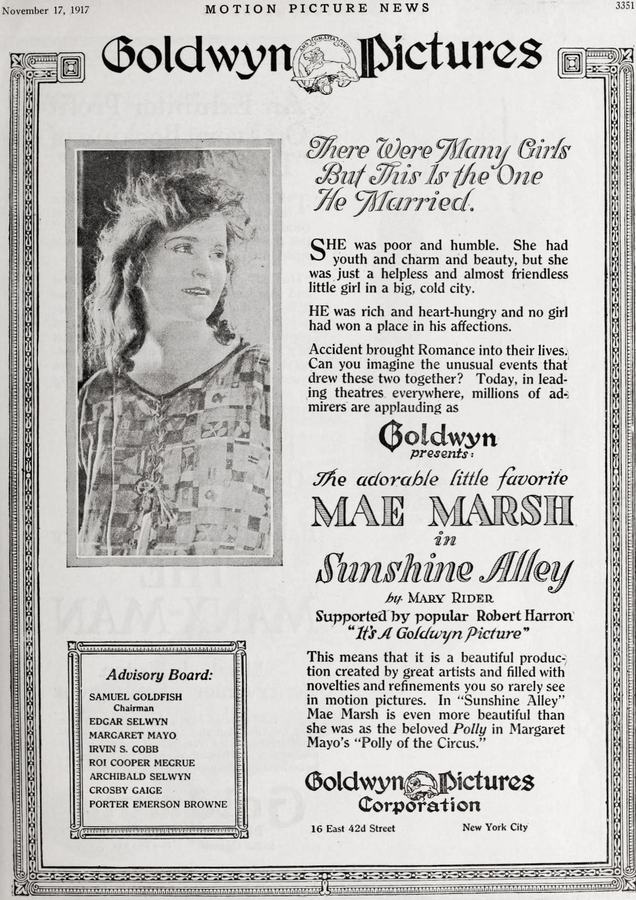
If the artistic bravery of John W. Noble's work in Sunshine Alley left an impression, the cinematic shorthand used by John W. Noble is both ancient and revolutionary. We've prioritized films that capture the 1917 aesthetic with similar precision.
By merging artistic bravery with cult tropes, it to articulate the unspoken anxieties of United States's 1917 era.
In the poorest section of the city lives Nell, who spends her days at her grandfather's bird store, finding constant delight in the companionship of her feathered friends. One day Nell's grandfather is run over by a car driven by Mr. Morris, a millionaire, who offers to purchase a bullfinch at a large price in order to forestall a damage suit. When Nell's grandfather refuses to sell because the bird is his granddaughter's pet, the Morris' son Ned, impressed with Nell's charm, tells her to call if she is ever in need of assistance. It soon becomes evident that her grandfather is in need of expensive medical care, so Nell calls Ned and offers to sell the bird. Later the finch becomes ill and Nell is summoned to treat it. While she is at the house, Nell and Ned fall in love. Nell's happiness is clouded, however, when her misguided brother Carlo attempts to rob the Morris house. All ends happily, however, when through Nell's and Ned's devotion, Carlo is reformed and the grandfather receives the care he needs.
Based on the unique artistic bravery of Sunshine Alley, our vault has identified these titles as the most compelling follow-up experiences for fans of cult cinema:
Dir: John W. Noble
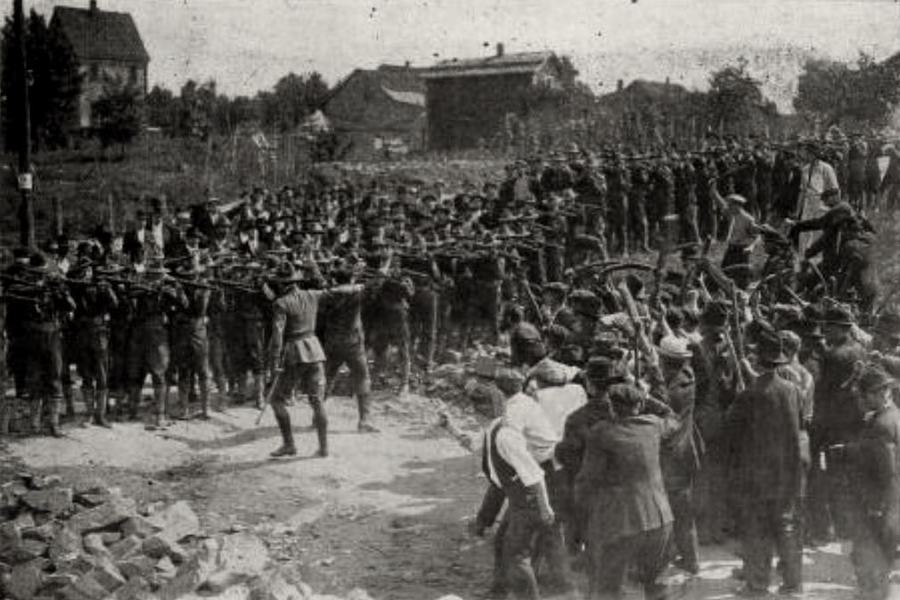
In a prologue, the relationship between capital and labor throughout history is shown in caveman days, Biblical times, and the feudal period. In the main story John Stoddard, a construction chief building a gigantic bridge for capitalist Courtlandt Van Nest, sympathizes with the workers' dissatisfaction with low salaries and subsistence conditions. When his attempts to negotiate with Van Nest fail, the workers, led by agitator Lavinsky, prepare to strike. Van Nest's daughter Janet, who is engaged to a militia captain, visits the site and is appalled by the squalor. Despite their differences, Janet and Stoddard fall in love. When the strike breaks, Van Nest sends in the militia. As they prepare to fire, Stoddard sees Lavinsky about to throw dynamite, and wrestles it away. He then agrees to Van Nest's demand for settling the strike that he refrain from seeing Janet. After Janet leaves home to help poor families, Van Nest looks for her at Stoddard's house where Stoddard demonstrates that because of their similar ancestry, he and Van Nest are not very different. When Stoddard's sister Edith allows Van Nest to witness the surprise reunion of a worker and his wife from Europe, to whom Janet had sent transportation money, Van Nest softens and agrees to Janet's marriage to Stoddard. An epilogue follows showing blindfolded Justice saying to fat Capital and burly Labor, "Why quarrel? You are worthless without the other."
View Details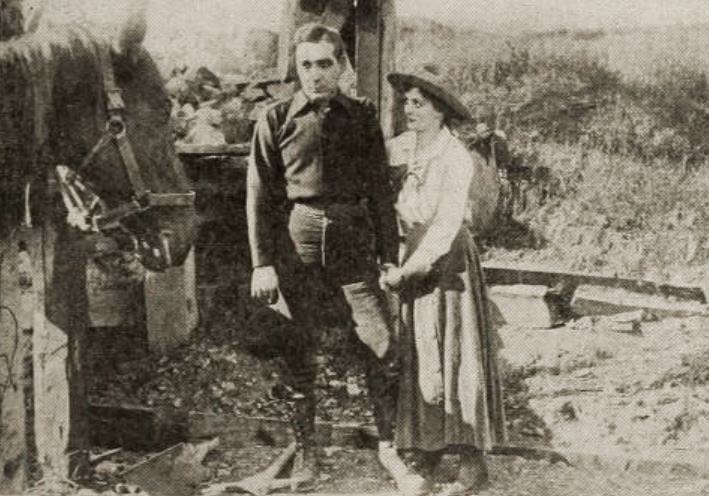
Dir: John W. Noble
Rhy MacGhesney and her two brothers, Clem and Sonnie, live with their father and their servant Maggie in a small boom mining town in Colorado. The boom has passed to the camps further on, leaving their little camp practically deserted. Rhy still has faith in the claim her father worked up to the time he was killed, some five years before, but her brother hates the life of the camp, and wants to sell for what they can get and go back to New York, where he feels he can have a chance to make something of himself. Their neighbor across the street is Lewis Beresford, whose obvious mission in the camp is one of pleasure, but who is in reality a mining expert, connected with big mining interests. He has ingratiated himself into the affection of the people of this little camp, and shows a great liking for Rhy and her brothers. Steve Towney, the former mine superintendent for "The Three of Us," is in love with Rhy and is jealous of Beresford, as he has been accepted as suitor for Rhy's hand, up to the time of Beresford's coming. Mr. and Mrs. Bix, Rhy's closest friends in the camp, give a Hallowe'en dinner, which is to be the biggest event of the year. On the day that the dinner is to be given, Steven strikes, by accident, mineral. This assures the success of the mine on which he holds an option, and which adjoins "The Three of Us." Overjoyed, he rushes to Rhy to tell the good news, informing her that it will be impossible for him to attend the Bix dinner, as his option expires the next day at noon. Rhy confesses her love for him, and asks him to wait until next morning. She will then go with him. He consents, giving her the option and samples of ore. Clem overhears the conversation. He is bribed by Beresford to reveal it. The latter thus has an opportunity to make an attempt to gain possession of the mine. He is at the recording office waiting to establish a claim the moment that the option to Towney's mine expires. But Rhy saves the mine and proves her loyalty to Steve by a thrilling ride over the mountains. This is shown in a series of exciting pictures. A great explosion for the breaking of ground for a smelter for the two successful mines ends the picture.
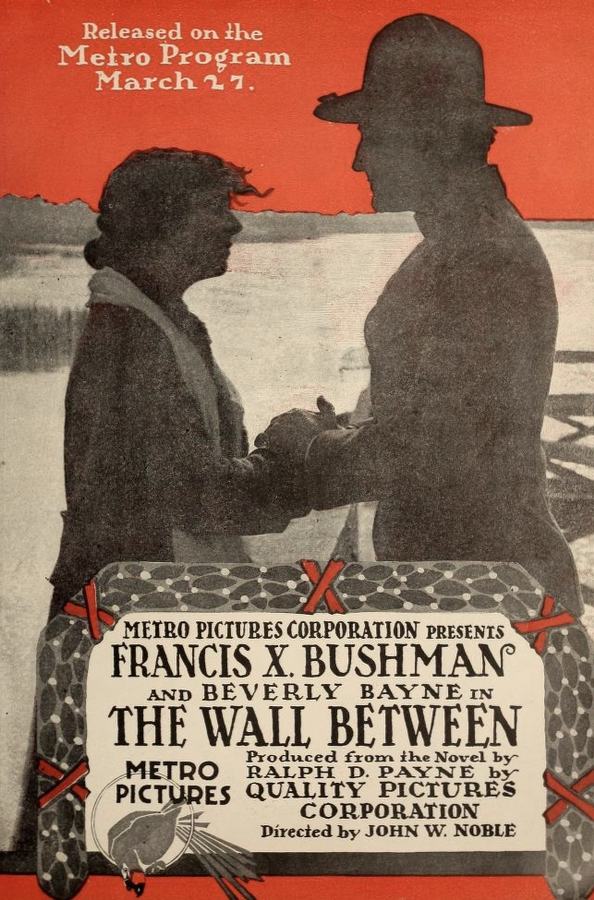
Dir: John W. Noble
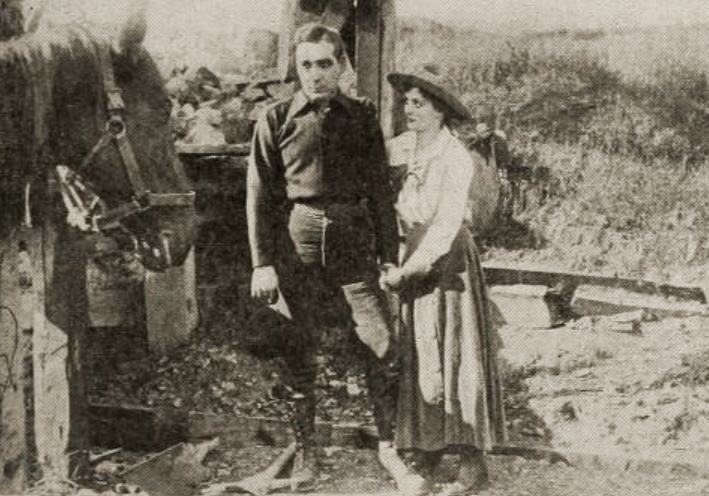
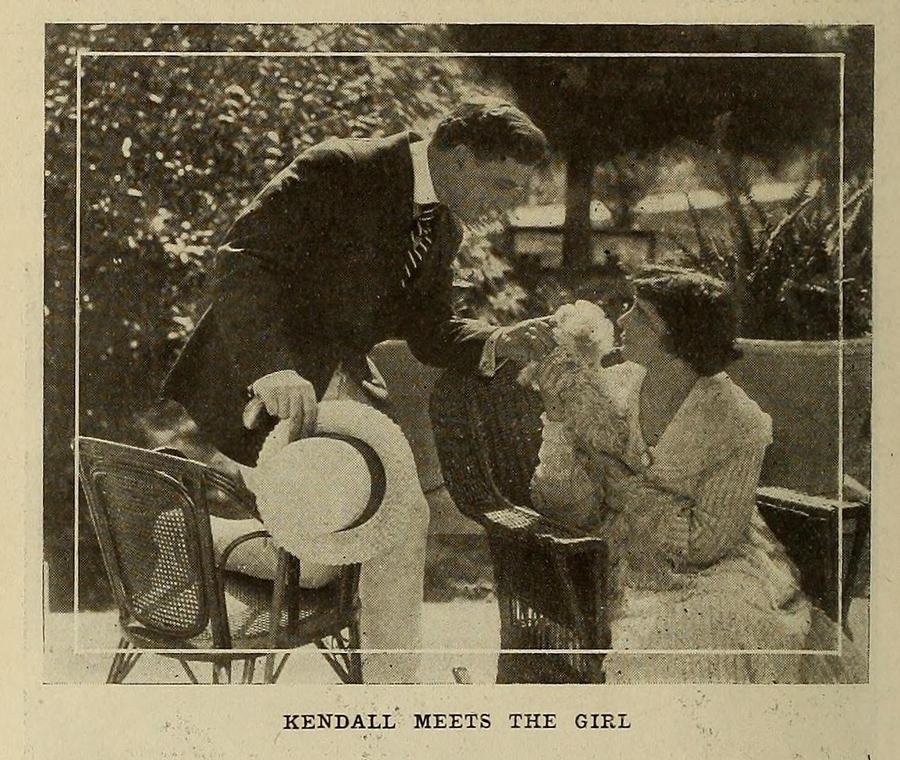
John Kendall was brought up in a wealthy family, but when his father loses the family fortune and then dies, John is left penniless. He joins the army and rises to the rank of sergeant. He soon meets and falls in love with Edith Ferris, the daughter of Col. Dickinson. When he talks to her at a party, Lt. Burkett upbraids him for fraternizing with an officer's family. Edith's mother, not wanting her daughter getting involved with a lowly enlisted man, conspires with Lt. Burkett to discredit John.
View Details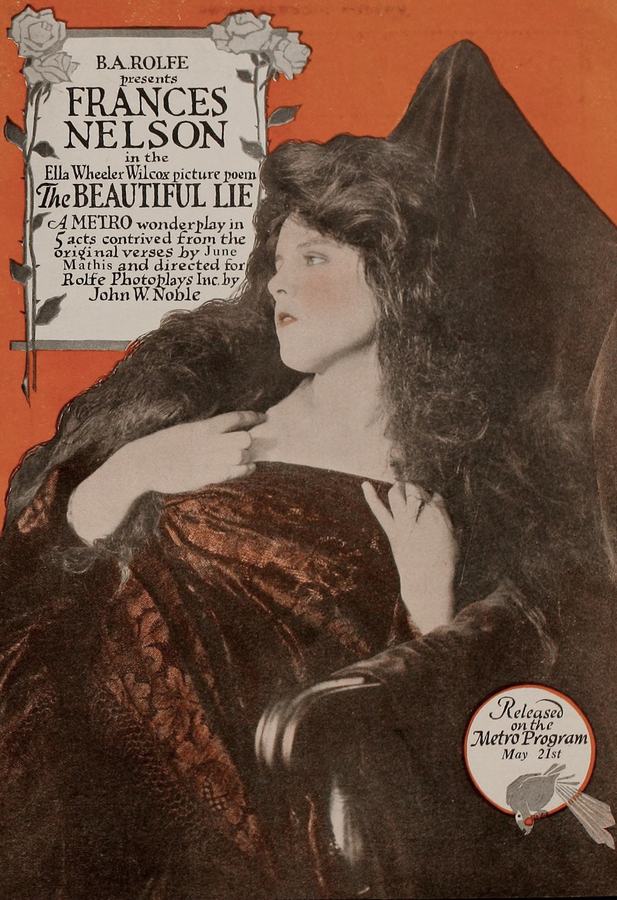
Dir: John W. Noble
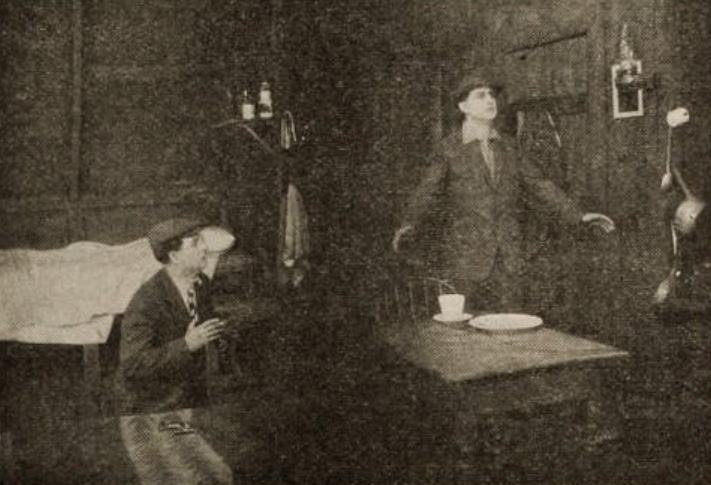
After a brief courtship, Louise Joyce is married to her employer, architect Mortimer Grierson, who soon tires of her and begins to see other women. One night, he comes home drunk and informs Louise that the marriage was a fraud, actually only a mock ceremony arranged by Grierson's nephew Howard Hayes, then deserts her for good. Louise becomes an artist's model, and while working she meets Paul Vivian, a protégé of her husband, and the two fall in love. Grierson discovers their relationship and tells Paul that Louise was his mistress. Soon after, Grierson is mortally wounded by one of his lovers and Howard returns from Mexico to visit his uncle's deathbed. As Grierson instructs Howard to put his affairs in order, Howard confesses that Louise's marriage is legal because in an effort to spite his uncle, he secured a real minister to perform the ceremony. After Grierson's death, Paul finds Louise and learns the true story, and together they begin a new life.
Dir: John W. Noble
The story of Reverend 'Satan' Sanderson, Hugh Stires and Jessica Holmes, a beautiful and romantic blind girl and ward of David Stires, father of Hugh. The latter is signing his will, making Jessica his sole heir, thereby disinheriting his dissolute son. Jessica protests and Reverend Sanderson protests to David on behalf of Hugh. Sanderson acknowledges that he himself was a wayward youth in college, the leader of a fast-set and looked favorably upon by Hugh, and he feels responsibility for Hugh's downfall. David Stires is obdurate and Jessca's sympathy goes out to Hugh and she blames Sanderson for Hugh's troubles. Sanderson, though, is in love with Jessica. Hugh returns home, gains his father's forgiveness, and weds Jessica, whose eyesight had been restored by a medical operation. And then David learns that Hugh has forged his name to a check. Davis threatens his son with jail and Hugh runs away and seeks Sanderson's help, again. From there the story takes a few turns.
View Details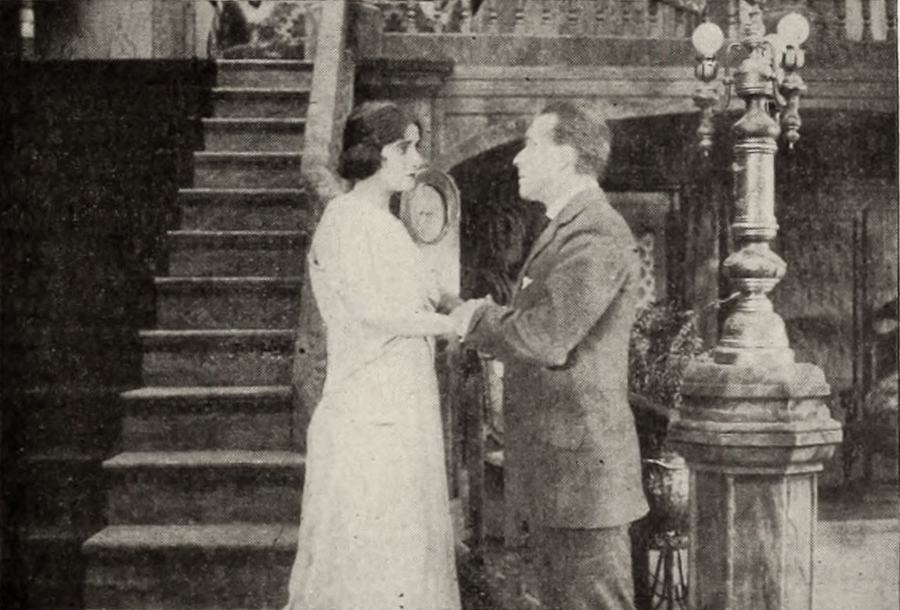
Dir: John W. Noble
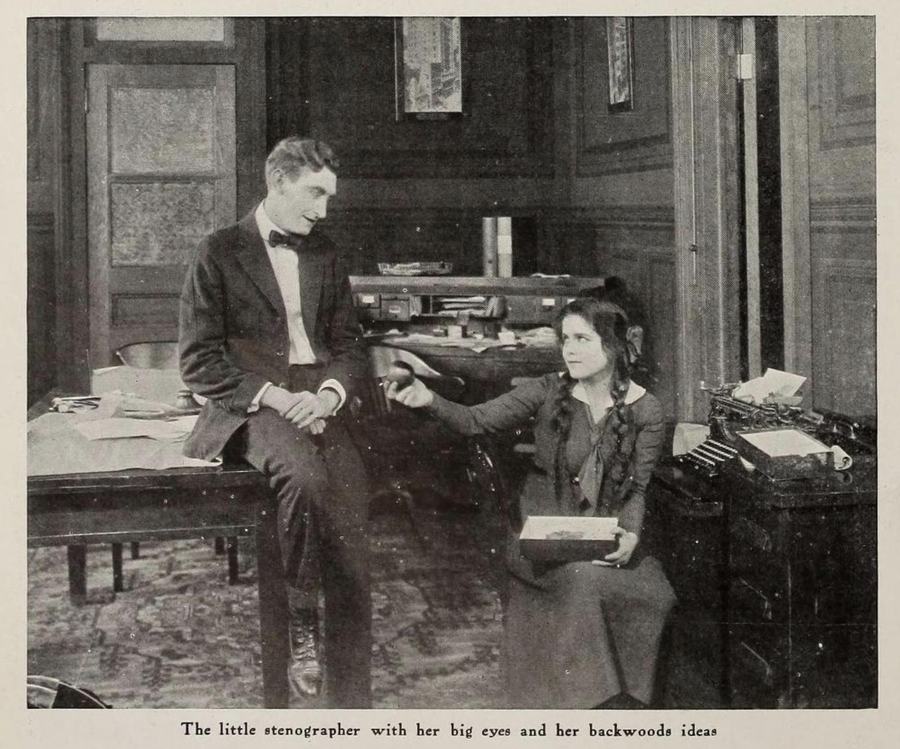
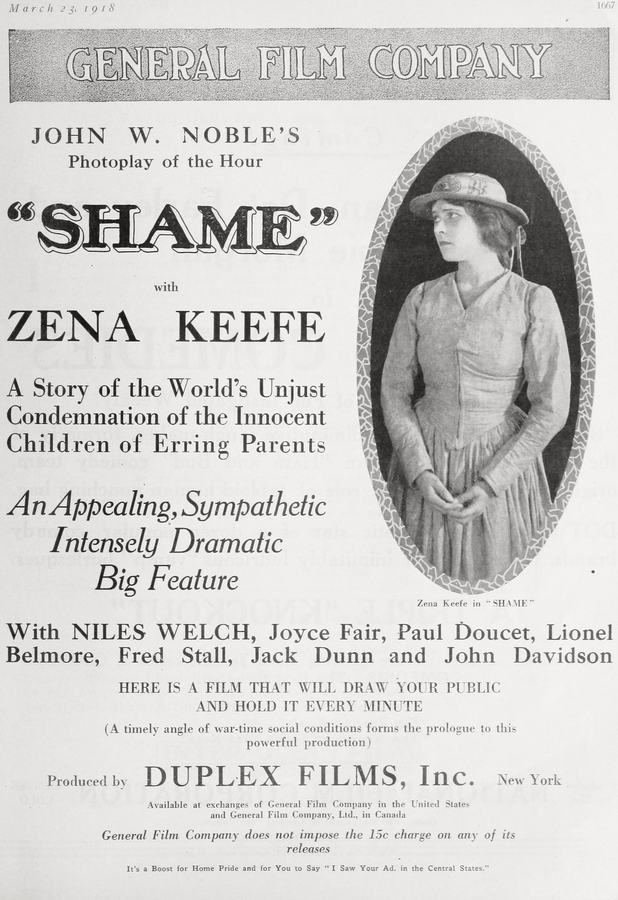
While touring India, noted English criminologist Richard Duvall saves the life of a Buddhist priest who rewards him with the presentation of a wonderful crystal globe. By gazing in it the priest demonstrates that Duvall can fall into a cataleptic state and his astral body is released and is free to roam at will. Leaving the temple, Duvall collides with Grace Ellicott, who is touring the Far East with her aunt, the Countess D'Este and the Count. A mutual admiration between Grace and Duvall results from the accidental meeting. Later, in England, the mistress of Count D'Este makes financial demands which he cannot meet. With his housekeeper, Mrs. Cooke, he plans to put his wife out of the way and thus obtain her fortune. Poison is put in candy which the Countess eats. Her sudden death arouses the suspicion of her niece. On his return to England, Duvall experiments with the magic globe. He is surprised and pleased to see the face of the girl he met in India. Further experiments, while in the cataleptic state, discloses part of the plot that resulted in the death of Grace's aunt, which has cheated her out of the fortune. Duvall seeks out Grace to explain his strange experiments. She tells him that previous to the death of the Countess she had seen her will and that the entire fortune, which included one million dollars in cash, was to be left to her. But after the suspicious death of the Countess, Grace is puzzled when the Count produces a new will in which he is named the sole beneficiary. Duvall succeeds in having his East Indian servant, Purtab Gar, secure a position in the Count's home. Then he proceeds to unravel the mystery and at the same time recover the one million dollars for Grace. Count D'Este is driven to distraction by finding, everywhere he turns in his home, cards that read: "I want One Million Dollars. Victor Gerard." Disguised as "Victor Gerard," Duvall pays a visit to the Count. He insists that the one million dollars be ready for him at midnight, when he will call again. D'Este notifies the police and the chief calls in Duvall to assist in solving the mystery and apprehending "Gerard." Duval outlines a plan in which the Count is directed to have the money ready as demanded. He assures him the premises will be well protected and that "Gerard" cannot escape. "Gerard" arrives at the appointed time and mysteriously disappears, together with the money, as the police close in. Duvall walks out of a room where they think they have "Gerard" trapped. Count D'Este accuses Grace of stealing the money and attempts to strangle her when Purtab Gar saves her. Duvall succeeds in obtaining a confession of the murder from the housekeeper, when he traps her as she is attempting to poison Grace. Duvall explains everything to the mystified police. D'Este is carried off under arrest and Grace and Duvall are left happily together.
Dir: John W. Noble
At the outbreak of the Spanish-American War, John Grey enlists in the Army and leaves his sweetheart Mary for Cuba. Later Mary discovers that she is pregnant, but John is killed before they can legalize their union. When Mary dies, her daughter Little Mary is taken into an orphanage and adopted by Peters, a cruel farmer who turns her into a slave. Befriended by Seppe, a hunchback farmhand of similar parentage, young Mary escapes to the city where she finds work at a hospital run by Dr. Strong. Soon after, she falls in love with Strong's son Donald and accepts his marriage proposal. When Donald learns from Peters, who comes to the city to reclaim Mary, that she is illegitimate, he backs out of the engagement. To stop Peters from stealing Mary, Seppe shoots him, wounding him only slightly. The incident shocks Donald into rethinking his decision; but even after she and Seppe are freed from Peters and the law, Mary refuses to compromise Donald's reputation and returns to the country with Seppe.
View Details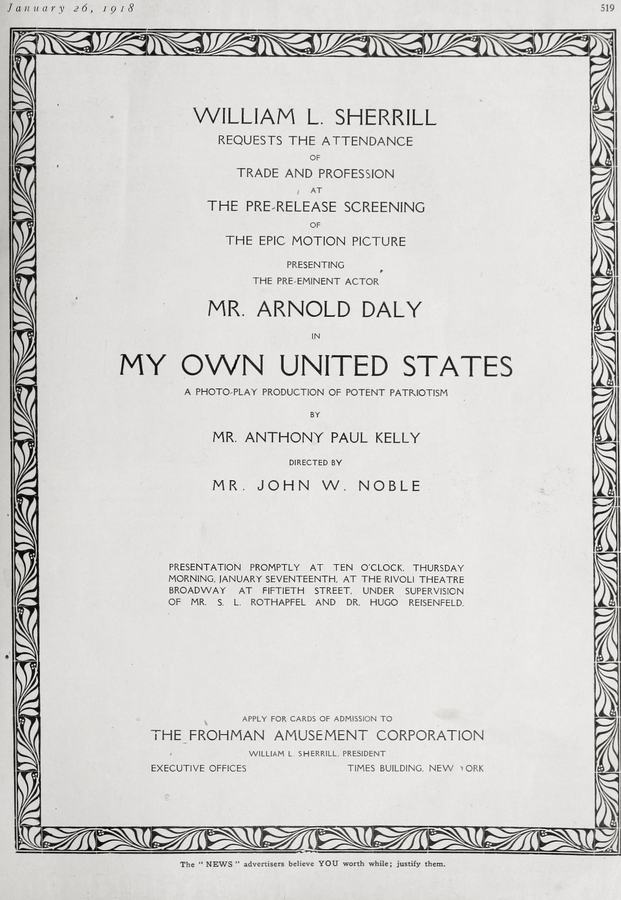
Dir: John W. Noble
Philip Nolan III refuses to fight for the cause of democracy. His father, Philip Nolan II, who has failed in his efforts to convince his son of the fallacy of arguments, then lays bare all the details of the shameful treason of his own ancestor, the first Philip Nolan, "The Man Without a Country." The father's story shows how the first Philip Nolan played into the hands of Aaron Burr; how Thomas Jefferson was elected president over Burr; how Alexander Hamilton prevented the conscienceless Burr becoming governor of New York; the duel between Hamilton and Burr; how Philip Nolan was later arrested on his wedding night for aiding Burr, who had conspired to start a rival government in the south to wage war against the United States, and how he was later banished from the United States for saying "Damn the United States! I wish I might never hear its name again," and how Philip Nolan died kissing the flag of the country he had execrated. Deeply moved, Philip Nolan III loses no time in joining the boys in khaki.
Dir: John W. Noble
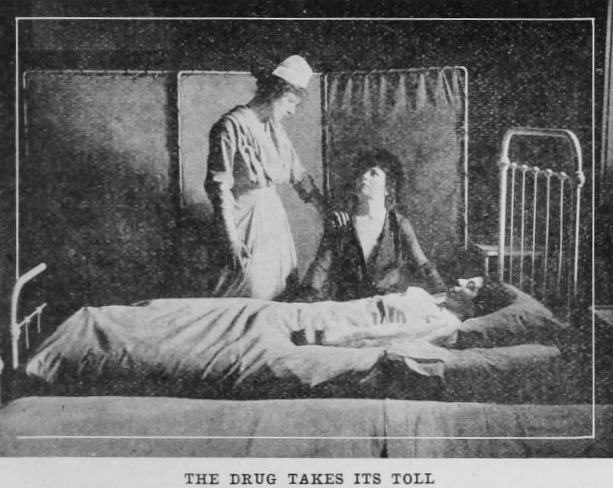
A story about the affects of cocaine on the lives of a family.
View Details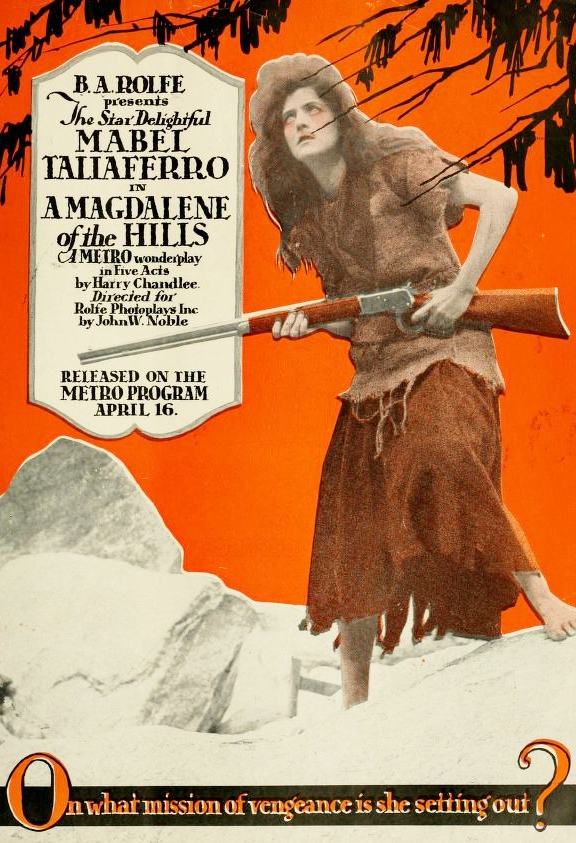
Dir: John W. Noble
Herbert Grayson has timber holdings in a Southern state. One of his mills is burned, and he accuses Len Mathis, a young mountaineer. In trying to avoid arrest Len is killed, and old John Mathis, his father, swears to shoot Grayson or any member of his family on sight. His young daughter, Renie, makes the same vow. Grayson is anxious to gain control of lands owned by Mathis, Grayson's nephew, Eric Southard, volunteers to effect the purchase. On his arrival, he telegraphs his uncle, disclosing his identity to the station-agent, who loses no time in telling the bystanders. Eric starts for the home of Peets, his uncle's foreman, in the village "jitney," as Renie, rifle in hand, is walking across the hills to Hibbitsville to get cartridges. One of the tires of the automobile bursts, and Renie, thinking the noise that of a gun, creeps behind Eric and the chauffeur, who are mending the tire, and makes them throw up their hands. When they explain that the tires contain wind, she shoots one in order to prove it, and while the chauffeur is repairing the damage she and Eric sit by the roadside. She learns in the village that Eric is Grayson's nephew, and goes to Peets' cabin to avenge her brother. Trying to shoot through the window, she misses Eric, who returns her fire, and slightly wounds her. He carries Renie home, and she tells her father she has been wounded by dropping her own gun. Eric and Renie fall in love. John Mathis has promised Renie's hand in marriage to Bud Weaver, as soon as he earns the necessary $100 with which to set up housekeeping. Eric writes to his uncle, refusing to further his schemes in the mountains. Eric is summoned to the Mexican border with the National Guard. He promises Renie to return for her. Bud Weaver demands his bride, and old John, true to his promise, sets a date for the wedding. Eric, stricken with typhoid fever, has been sent back to New York to recuperate, but Renie, unable to read or write, cannot communicate with him. The night before the wedding Renie tries to run away, and discovered by her father, has to tell him the reason. Old John gives her her rifle and shows her the door. Renie goes to Peets' cabin to try to learn news of Eric, and Peets takes advantage of her loneliness. In the ensuing struggle, Renie's gun is fired, and Peets is killed. Some men who are passing break into the cabin and Renie is arrested charged with murder. In a New York hospital Eric is convalescent. He learns that Renie has shot Peets and that her trial will be held in a few days. Eric hurries to Hibbitsville and plans her defense. At the trial, the feud between the Grayson and the Mathis factions is brought out, making the case against Renie look serious, but Eric appeals to the sympathies of the mountaineers in her behalf, and the jury returns a verdict of "not guilty." Eric and Renie are married, and Grayson, having come to a realization of the needs of the mountaineers, begins a new regime of helpfulness among the hills.
View DetailsAnalysis relative to Sunshine Alley
| Film Title | Atmosphere | Complexity | Similarity |
|---|---|---|---|
| The Bigger Man | Gritty | Dense | 89% Match |
| The Three of Us | Gothic | Linear | 87% Match |
| The Wall Between | Tense | Abstract | 91% Match |
| The Beautiful Lie | Ethereal | Abstract | 92% Match |
| Satan Sanderson | Gothic | Linear | 85% Match |
This guide was algorithmically generated using the cinematic metadata of John W. Noble's archive. Last updated: 6/27/2026.
Back to Sunshine Alley Details →