
DbcultAccessing Vault...
Recommendations
Senior Film Conservator
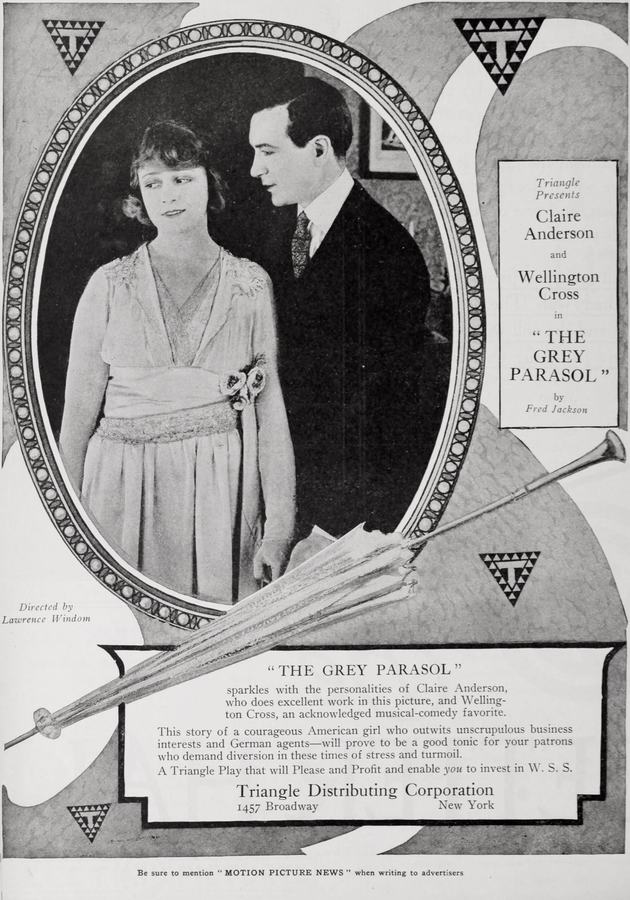
Navigating the complex narrative architecture of The Grey Parasol is a stylistic flair experience, the legacy of The Grey Parasol is a beacon for those seeking the unconventional. Unlock a new level of cinematic understanding with these cult alternatives.
The artistic audacity of The Grey Parasol ensures it to sustain a sense of mystery that persists after the credits roll.
Hamilton Hill meets Estelle Redding in an umbrella repair shop and rescues her from two thugs soon afterwards. Estelle has hidden in the handle of her grey parasol the formula for "Coalex," an inexpensive substitute for coal which the coal trust is trying to prevent from reaching the market. Edward Burnham, one of the thugs, tells Hamilton that Estelle is a German agent, but the infatuated young bachelor fails to believe the story. Estelle entrusts Hamilton with the parasol, but when Burnham, who is revealed as Estelle's brother, finally snatches it away from him, they discover that the formula has been removed and that she has outwitted them all. Two German agents, posing as representatives of the United States government, nearly obtain the formula from her, but Hamilton, accompanied by Burnham, who has experienced a change of heart, rescue her in time. With the formula safely delivered to U.S. government officials, Hamilton and Estelle turn to more romantic pursuits.
Critics widely regard The Grey Parasol as a cult-favorite piece of cult cinema. Its stylistic flair is frequently cited as its strongest asset, solidifying its place in United States's film legacy.
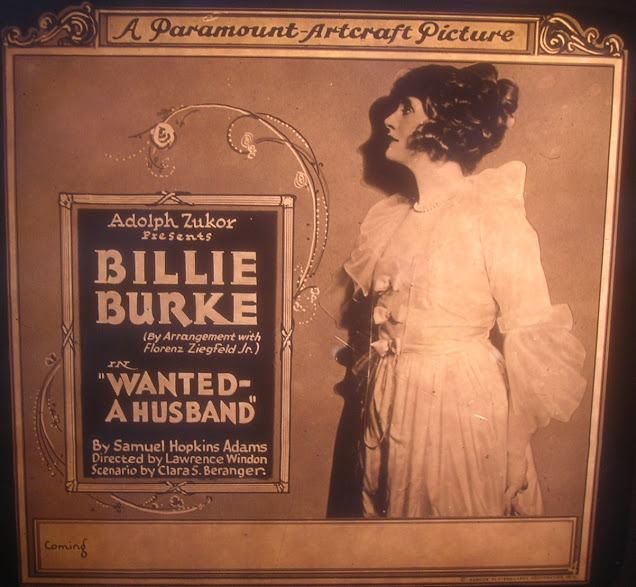
Based on the unique stylistic flair of The Grey Parasol, our vault has identified these titles as the most compelling follow-up experiences for fans of cult cinema:
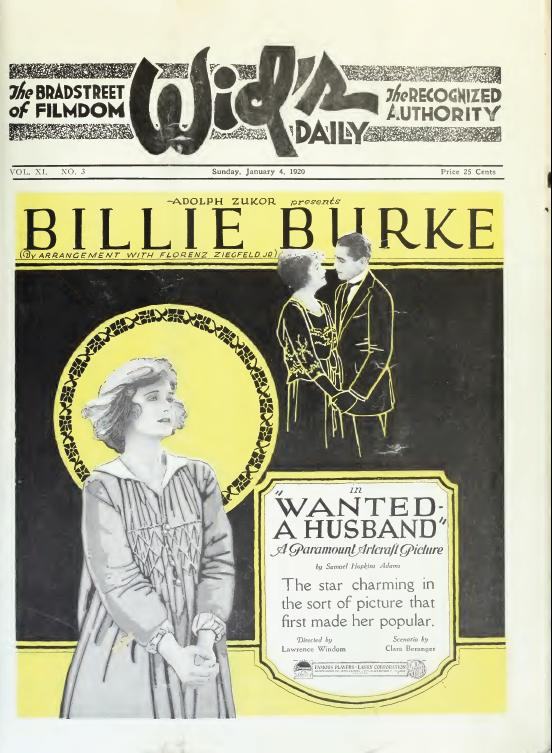
Dir: Lawrence C. Windom
When her two roommates, Maude Raynes and Helen Bartlett, become engaged, Darcy Cole invents a titled fiancé of her own, in part to ward off her friends' nasty remarks about her untidy appearance. Darcy's friend Gloria Green lends a photograph of her cousin, Jack Remsen, made up as a lord for a college play, then transforms Darcy into a stylish beauty. As a practical joke, Gloria's fiancé Tom Harmon agrees to lend his bungalow to each couple for their honeymoon. Darcy pretends to elope with her imaginary lord, played by Jack. The real and pretended honeymooners arrive in succession and are assigned bedrooms by housekeeper Veronica. When Veronica sees Jack remove his makeup, she is certain he is Gentleman Jack, the burglar she has been reading about. Finally, Gloria and Tom arrive and straighten matters out, and Darcy and Jack decide to become real honeymooners.
View Details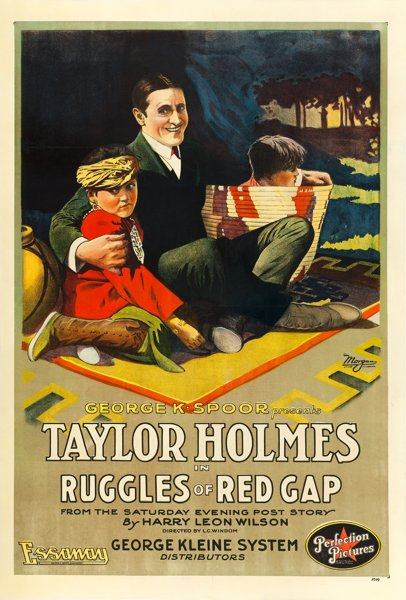
Dir: Lawrence C. Windom
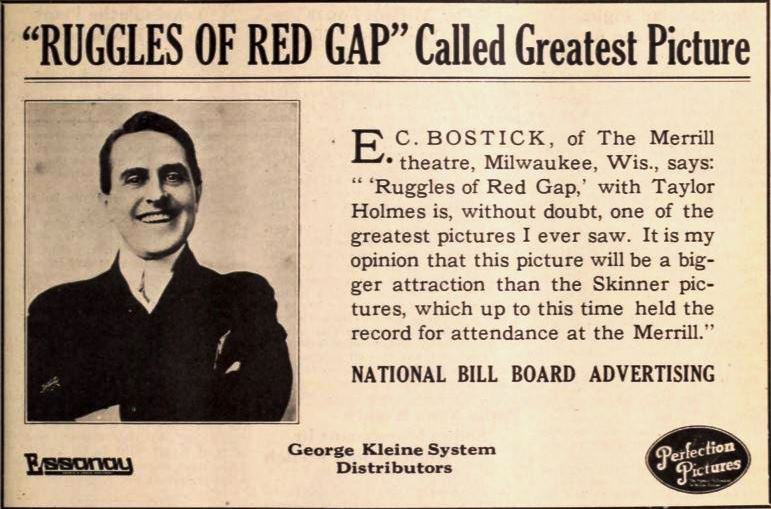
Harry Leon Wilson has written nothing more diverting than this story of the irreproachable English valet who is lost in a poker game to a rough-and-ready westerner and taken to Red Gap ultimately to become its social mentor and chief caterer, and there is sheer delight in the story of how the Earl, brought over to save his younger brother from the vampirish clutches of Klondike Kate, makes the lady his Countess and once more stands Red Gap upon its somewhat dizzy head.
View Details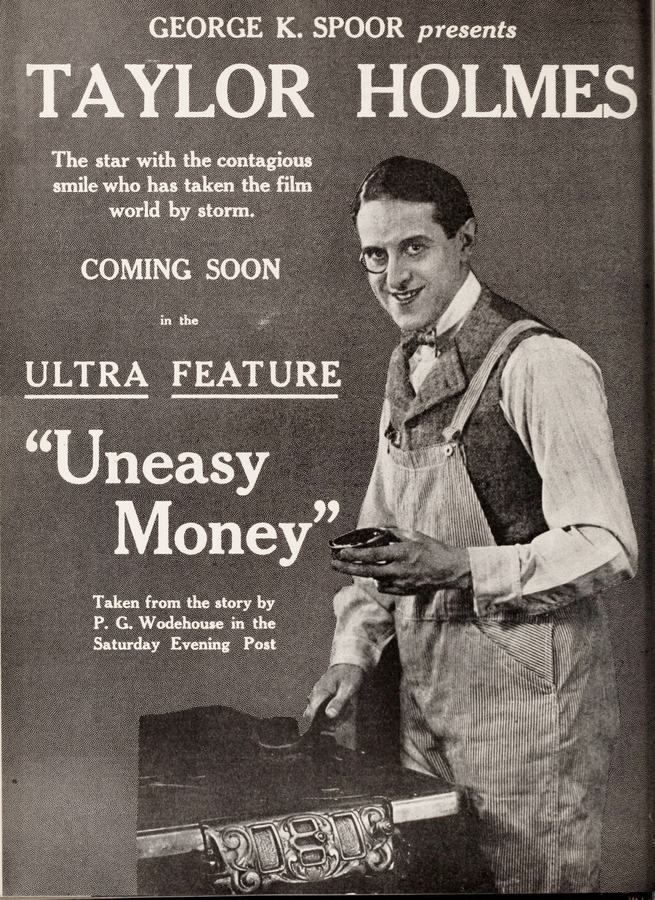
Dir: Lawrence C. Windom
Lord Dawlish is made the heir of an eccentric English millionaire, who cuts off a nephew and niece, living in America. Dawlish is engaged to Claire Edmont, an actress. Dawlish offers half his inheritance to the niece, and when she refuses to accept he goes to America to persuade her. Claire follows, but not having received the letter regarding the inheritance she marries a man she meets on the boat. Dawlish meets Elizabeth as Bill Chalmers, his family name, and as Bill she learns to love him, but she discovers his identity, and things work to a rapid conclusion.
View Details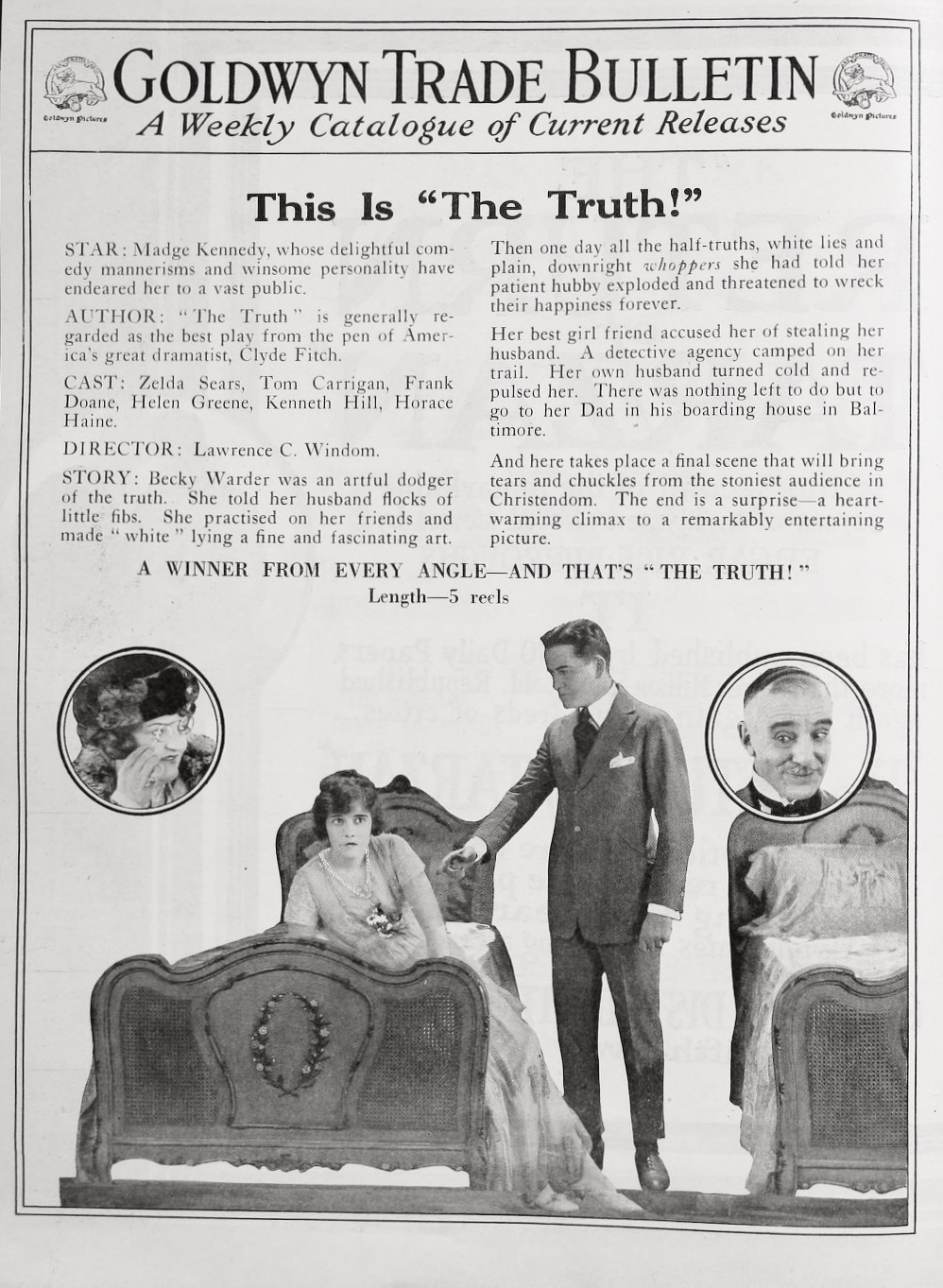
Dir: Lawrence C. Windom
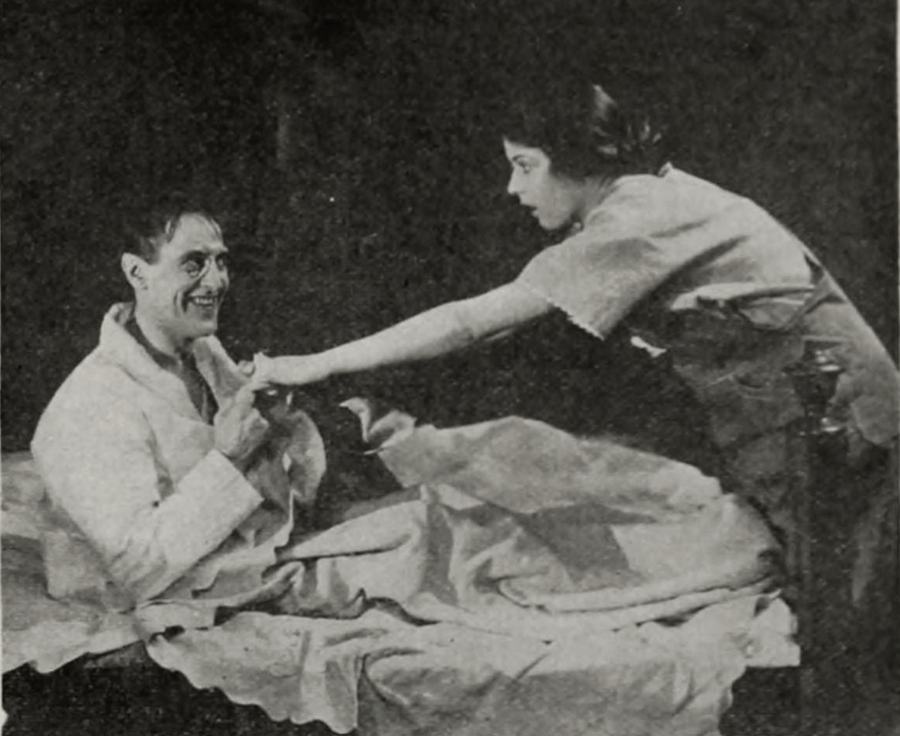
Becky Warder constantly indulges in the telling of little white lies. In an innocent effort to ease the troubled marriage of her quarreling friends Eve and Fred Lindon, Becky meets secretly with Fred, thereby constructing a web of deceit that leads Eve to suspect Becky of trifling with her husband's affections. Eve informs Becky's husband Tom of these meetings and Tom, suspicious, accuses his wife of infamy. After denying her participation in the matter, Becky goes to Baltimore to see her father Stephen Roland, who, like his daughter, is a schemer. Roland begins to construct an elaborate plan by which his daughter can win back her husband and so sends a false telegram to Tom notifying him that Becky is extremely ill. Rushing to Baltimore, Tom overhears Becky inform her father that she will not participate in any more lies, and, elated by his wife's reformation, Tom forgives her.
View Details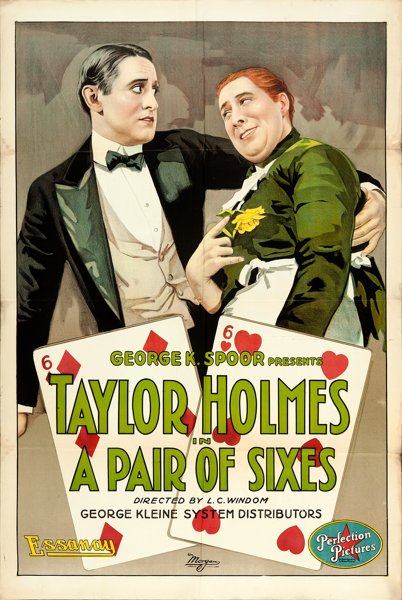
Dir: Lawrence C. Windom
T. Boggs Johns and George Nettleton, proprietors of the Digestive Pile Manufacturing Companny agree upon a unique method to stop their quarreling: play a game of poker, the loser to act as servant to the winner for a year. If either member of the agreement reveals the circumstances of the pact, he shall pay a fine of $5,000. Boggs loses, and he must serve as butler in the Nettleton home. His sweetheart Florence Cole comes to dinner at the Nettletons' and is surprised to see Boggs acting as butler, but cannot learn what has brought about the change in his social status. Thomas J. Vanderholt, an attorney in love with Florence, lets her in on the pact and tells her that he drew up the plans. She denounces him, and she and Boggs plan revenge on Nettleton. Boggs arranges an intimate tableau with Mrs. Nettleton; this so angers Nettleton that he schemes to make Boggs the loser financially, but Florence declares that the pact, being based on a poker game, is not legal.
View Details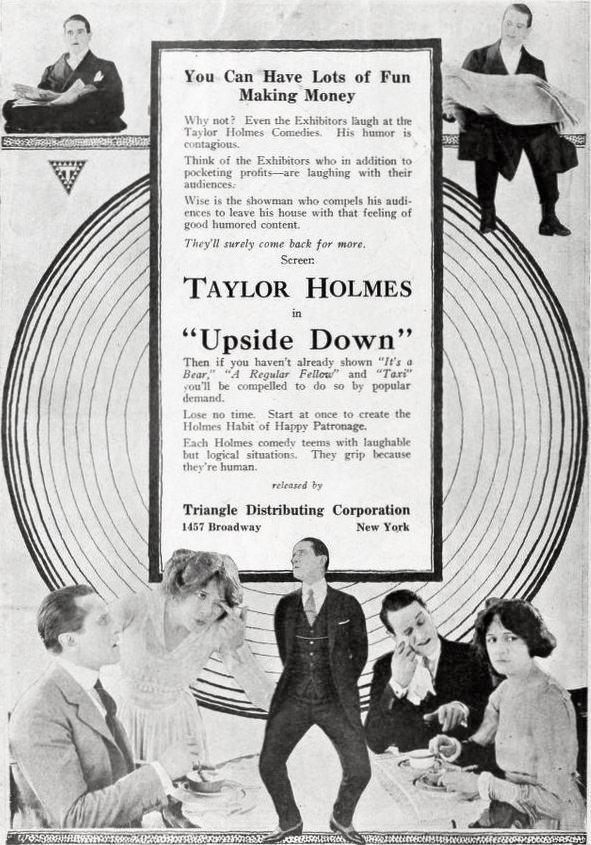
Dir: Lawrence C. Windom
When Juliet Pim, bored with her husband Archibald's habitual ardent attentions, goes to a Swami, his advice that her "individualism" is being crushed leads her to request that Pim furnish her with a "reason" for a divorce suit. Shocked but compliant, Pim rents a hotel room. Later, he finds his college friend and rival stockbroker, wealthy James Wortley Tammers, at a restaurant with his wife, who also felt neglected and went to the Swami. Pim joins them and then goes with Mrs. Tammers to a roadhouse. After Tammers locates them, and his wife returns, the two husbands engage in an all-night wine party with cabaret dancers. The next day, while Tammers sleeps, Pim manipulates the market to control Tammers' wealth. The newspaper reports of Pim's elopement with Mrs. Tammers leave Juliet valuing her husband more than her freedom. After Pim reveals he was saving Tammers from a scheme to ruin him, he sells back most of the stocks and the couples are reunited.
View Details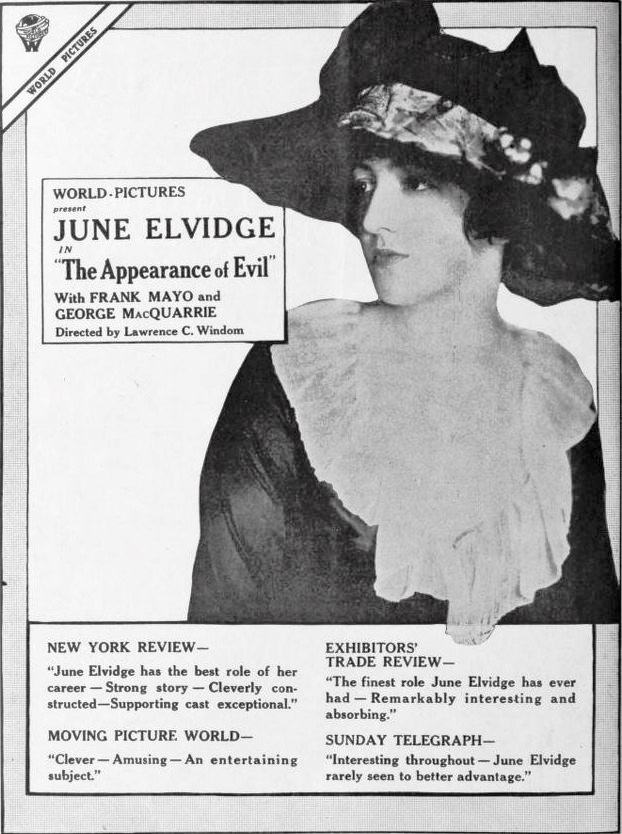
Dir: Lawrence C. Windom
Maida Brown, a rich widow, is being visited by wealthy aircraft manufacturer Louis Letchworth at the Brown family estate in Bayport. The family maid notices the pair's affectionate behavior toward each other and, aghast, reports the incident to Maida's father, the head of the local Purity League. The local citizenry is so outraged by this scandalous behavior that they force Maida to leave town. Meanwhile, Harold Brown, her late husband's brother, is aware that the family estate will revert to him if Maida remarries, so he spies on her in order to prove that she and Louis are married, so Harold can get the family fortune for himself.
View Details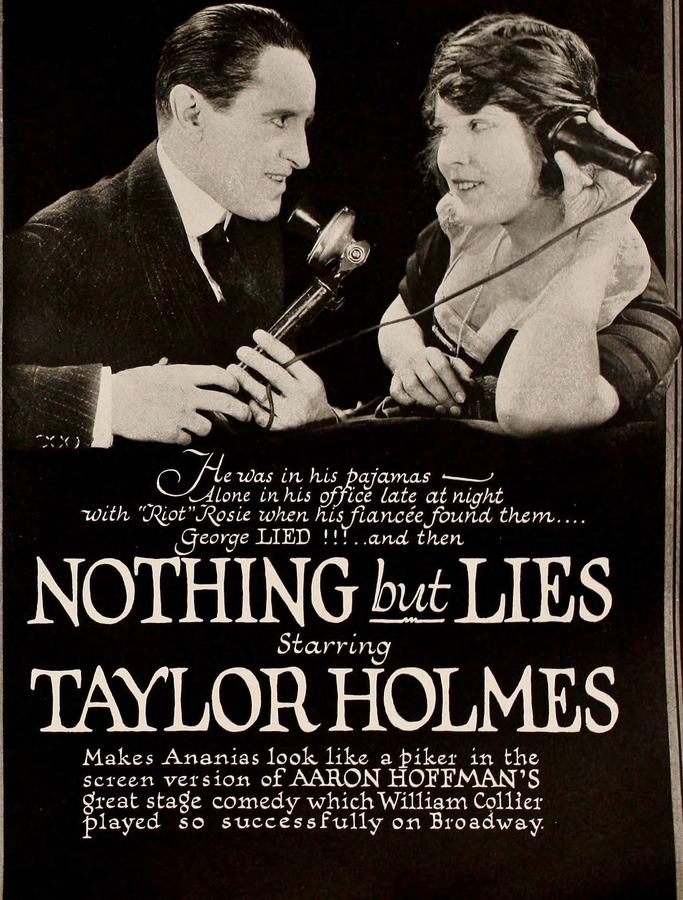
Dir: Lawrence C. Windom
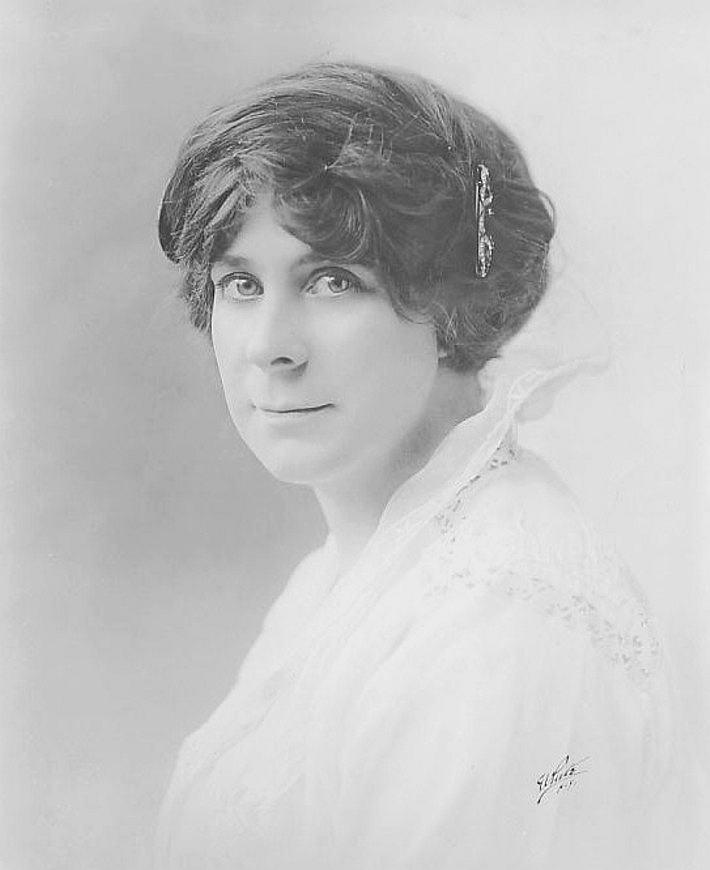
George Cross, a junior partner in the advertising agency of Nigh and Cross, goes to his office one evening to get a plate for a newspaper and surprises Allan Nigh, his partner's son, who has been distributing a leaflet exposing the lies of the advertising firm. Rosie, a member of the "Truth Society" to which Allan belongs, is hiding in the next room. George sends Allan to the newspaper office and then discovers Rosie. Shortly thereafter, Nigh and his daughter Ann, who is also Allan's sweetheart, arrive and George lies his way out of a compromising situation. Soon after, a detective arrives to investigate a front-page exposé on the circulars that Allan has written. When the advertisers realize that the exposé is actually the best campaign ever conceived, the supposed detective offers Allan a tremendous salary to write ads for him, Rosie reveals herself as a reporter from the Journal and Allan and Ann reconcile.
View Details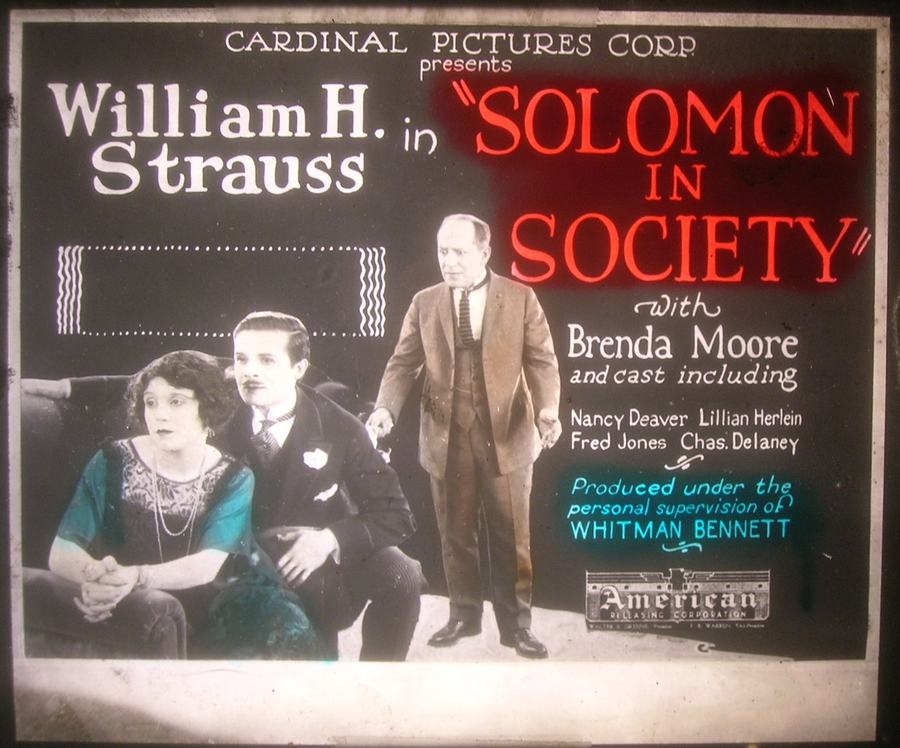
Dir: Lawrence C. Windom
I. Solomon, a humble tailor on New York's East Side, dreams of being a designer with a shop on Fifth Avenue, but he makes no headway until a dress that he designs for Mary Bell, a laundress who suddenly becomes a movie star, attracts attention and becomes popular. Three years later Solomon has a successful Fifth Avenue shop, but his prosperity is too much for his wife, Rosie, who succumbs to a scheming Greenwich Village pianist, Orlando Kolin. Resigned to giving Rosie her freedom, Solomon, with Mary's help, stages evidence to give Rosie a reason for divorce. Fortunately, Rosie realizes her mistake in time and falls into Solomon's arms; Mary resumes her romance with Solomon's lawyer.
View Details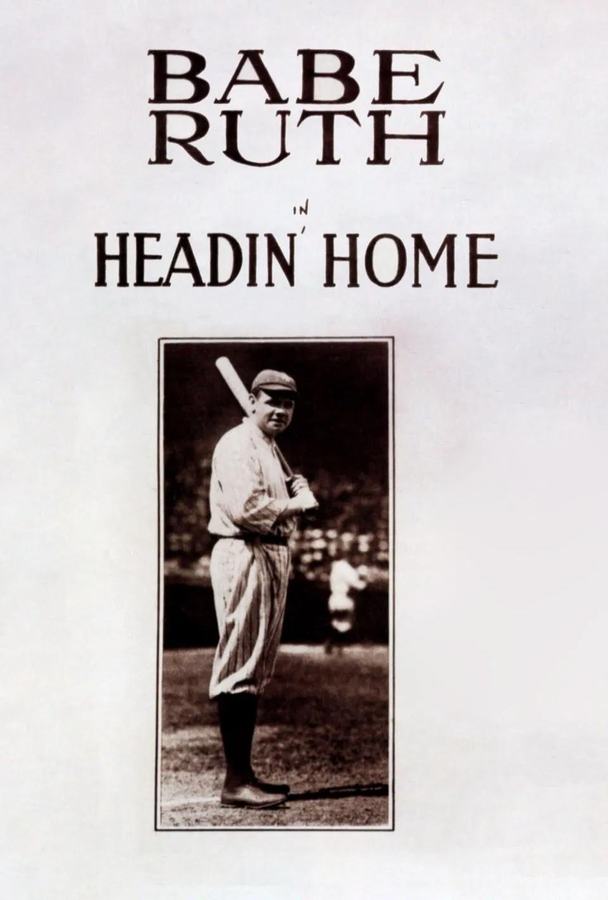
Dir: Lawrence C. Windom
The "true story" of baseball great Babe Ruth; Ruth plays himself.
View DetailsAnalysis relative to The Grey Parasol
| Film Title | Atmosphere | Complexity | Similarity |
|---|---|---|---|
| Wanted: A Husband | Ethereal | Abstract | 93% Match |
| Ruggles of Red Gap | Surreal | Linear | 98% Match |
| Uneasy Money | Gothic | Abstract | 98% Match |
| The Truth | Gritty | High | 95% Match |
| A Pair of Sixes | Tense | Layered | 95% Match |
This guide was algorithmically generated using the cinematic metadata of Lawrence C. Windom's archive. Last updated: 8/17/2026.
Back to The Grey Parasol Details →