
DbcultAccessing Vault...
Recommendations
Senior Film Conservator
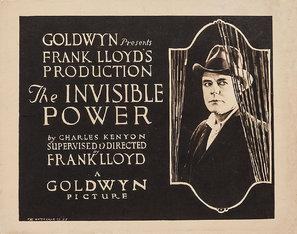
If you found yourself captivated by the nuanced performance of The Invisible Power (1921), the quest for comparable cinema becomes a journey through the fringes of film history. Below, we've gathered a list of films that every fan of Frank Lloyd's work should explore.
The Invisible Power remains a monumental achievement to create a hauntingly beautiful cinematic landscape.
Ex-convict Sid Chambers, while lodging with the Millers, meets schoolteacher Laura Chadwick, and in spite of his record she believes in him. They are married, move to the city, and are happy. Shadwell, the detective who sent Chambers to prison, tries to obtain information from him regarding a former friend and gang member, Bob Drake, who has committed a robbery; and refusing to cooperate, Chambers is sent to prison again on another charge. Meanwhile, Laura's child is born, and fearing that it will develop criminal instincts she gives it up for adoption. When Chambers is released, he vows to kill Shadwell, and Laura, in her effort to warn him, finds her child in Shadwell's home. Touched by her grief, Shadwell arranges to give Chambers his freedom, and the couple is reunited.
Based on the unique nuanced performance of The Invisible Power, our vault has identified these titles as the most compelling follow-up experiences for fans of Drama cinema:
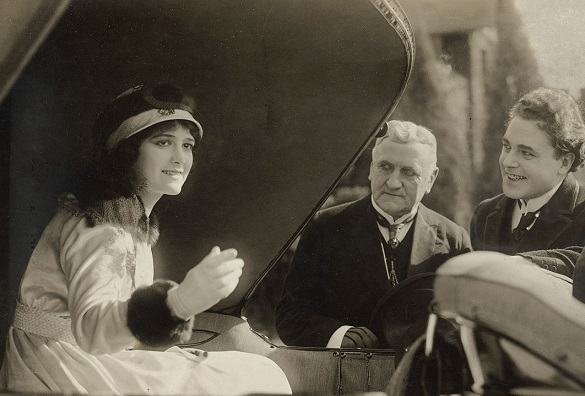
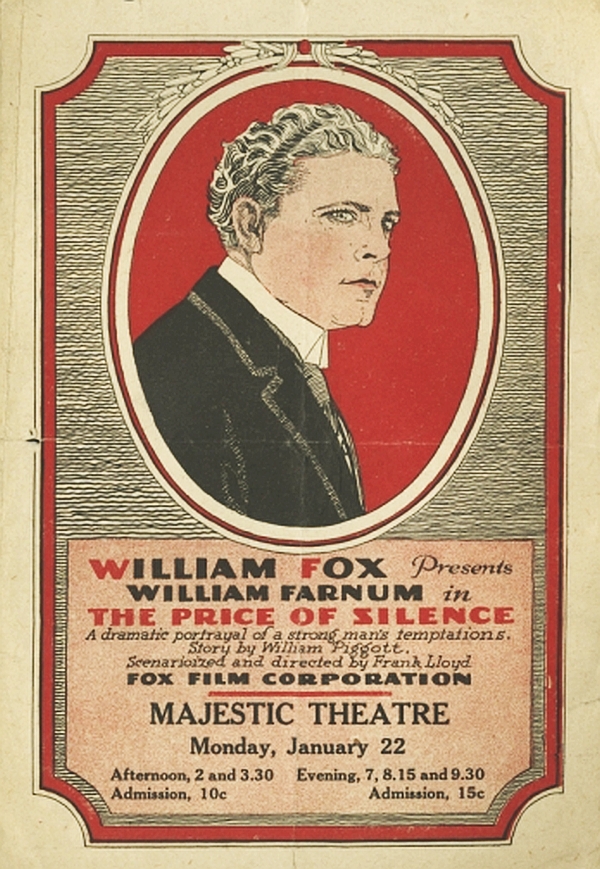
Dir: Frank Lloyd
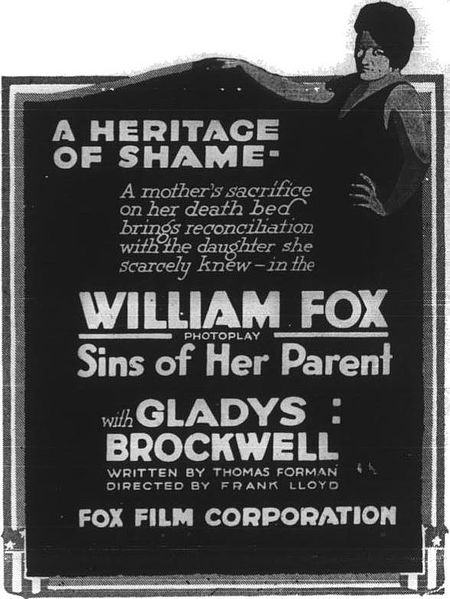
U. S. Senator Frank Deering has spent his life trying to alleviate the misery of child labor. Judge Vernon, his closest friend, aids him in this struggle. Unexpected circumstances force Judge Vernon to borrow money from Henry McCarthy, one of the factory owners most responsible for the harsh and inhumane working conditions. Judge Vernon is unable to pay off the loan, and is reduced to accepting a bride from McCarthy. Later, the Judge is stricken with a heart-condition but, on his dying bed, he confesses the shameful act he committed to Deering. To keep his friend's name unsullied, Deering makes a deal with McCarthy and votes against the child-labor-act he sponsored. His colleagues and the world, unaware of his sacrifice, mock and jeer him.
View Details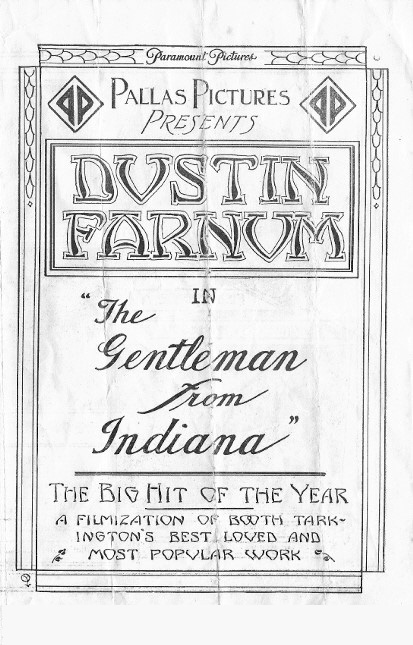
Dir: Frank Lloyd
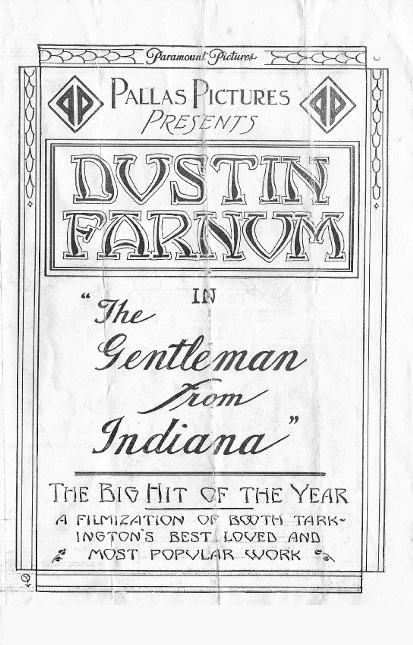
After a spectacular college football career, John Harkless leaves the university to pursue a place in Indiana politics. He buys the failing Plattville Herald and, using the newspaper to expose various illegal activities, sets out to rid the county of all mobsters and corrupt officials. When a traveling circus comes to town, he uncovers a crooked gambling ring and drives away the fleecers. That night, returning from his sweetheart's house, he is badly beaten and left for dead by a gang of men. Believing that John has been murdered, vigilantes gather to avenge his death, but the identity of the perpetrators is in question. The evidence finally points to the White Caps, a band of thugs allied with Rodney McCune, a notorious local politician opposing John in an upcoming Congressional race. Before the angry mob clashes with the White Caps, John is located in a hospital emergency room. While he recovers, his girlfriend, Helen Sherwood, takes over the newspaper and cleverly concocts a way for John to win the election.
Dir: Frank Lloyd
After her parents separate, young Violet Dale's father takes her to Alaska. Although he tries to protect her from the sordidness of life in a lawless town, Violet must resort to working in a dance hall after he is killed after being caught cheating at cards. Despite her circumstances, Violet remains virtuous and earns the respect and admiration of the dance-hall clientele. Frank Carson, a young man who has come to Alaska to seek his fortune, is attracted to Violet and asks her to marry him. When he shows her a portrait of his mother, Violet sees that it is a duplicate of a portrait she has of her own mother. Now realizing that Frank is her own brother, she refuses his proposal but does not tell him why. Some time later, Frank receives word that his mother is seriously ill and needs an expensive operation that she cannot afford. Desperate to help, Violet holds an auction at the dance hall to offer herself to the highest bidder. Rev. David Cromwell, a kind man who is in love with Violet and knows her predicament, makes the winning bid of $6,000, although he does not have the money. Dance-hall owner Buck, who is jealous of David's influence over the community, decides to lend him the money for three months on the condition that if David does not pay, he will belong to Buck for 10 years. David eventually obtains the money and wins Violet's love.
View Details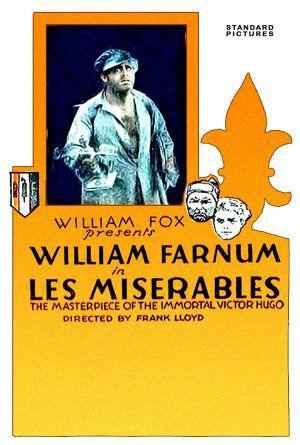
Dir: Frank Lloyd
Jean Valjean, a good and decent man who has committed a minor crime, is imprisoned but escapes. He is pursued thereafter for years by Javert, the cruel and implacable arm of the law.
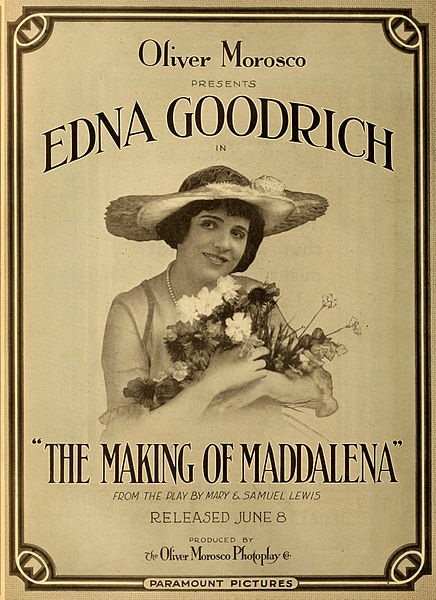
Dir: Frank Lloyd
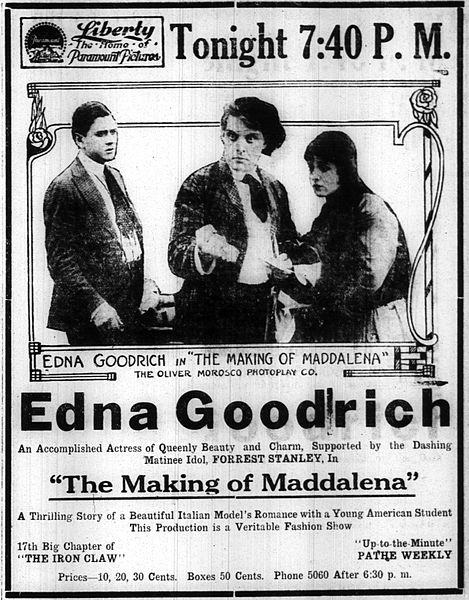
George Hale, a rather good-for-nothing son of wealthy parents, is engaged to marry Marie, a young society girl. She refuses to marry him until he has made good. Young Hale's chum, Augustus Foster, an art student, induces Hale to join him in his studio in Rome. To win the admiration of his sweetheart, Hale accepts his chum's offer and starts his career as an artist. Being of a carefree, happy disposition, he dallies with his work. Here he meets Maddalena, a very beautiful young Italian girl, who poses as his model. Her father, a rough and muchly-dissipated Italian of the poorer class, has abused his daughter most shamefully, using the money she earned selling flowers to buy his drink. Young Hale is greatly attracted to the beautiful Maddalena. One night at the studio, where a number of his friends were celebrating the Fourth of July, in true American fashion, the studio gaily decorated with American flags, bunting of red, white and blue, a letter is received by Hale from the American sweetheart denouncing him and announcing her engagement to Signor Pastorelli, a great artist, who was then living in America. Leaving her home because of her father's abuses, Maddalena seeks refuge in the studio of Hale. In a fit of rage over the news of his sweetheart's betrothal to Sig. Pastorelli, Hale announces to his friends his intentions of marrying his beautiful model, Maddalena. He marries her, a son is born to them. Hale finds the struggle for existence a very difficult one and seeks employment. He becomes ill, loses his position. Hale's father, who has learned of his marriage and illness, decides to go to his son and bring him to America, to his mother, who is grieving for him. This he does, takes his son away until he is well enough to go to America. He would like to take the child, but the mother will not give him up. Maddalena's brutal father, seeing an opportunity to get a few dollars from the elder Hale if he should bring him the child, kidnaps the baby. Grandfather Hale, with his son and grandson, leave for America. Months later, Hale's chum, Augustus Foster and his aunt, Mrs. Wright, go to find young Hale, only to learn from poor little broken-hearted Maddalena of her desertion. Mrs. Wright takes the girl as her companion to Paris. Here she is educated. They finally come to America. Here Maddalena becomes interested in settlement work, meets Dr. Comstock and interests him in her great work among the poor. She becomes a trained nurse, nursing in the homes of these poor people. An epidemic breaks out in the city, a most dreaded disease and one day she learns through the newspaper that her child has been stricken with this disease. She goes to the home of the child's grandfather, acts as nurse to her child. The child becomes very ill, the elder Hale does not recognize the young nurse as his daughter-in-law, and thinking the child is dying, says: "Oh, if the child's mother was only here." Hale, who has been out of the city, has been called home because of the seriousness of his child's illness, comes into the room and recognizes his wife. A reconciliation takes place, the elder Hale recognizes the great change in the girl, sees the noble character, and takes her into his home.
View Details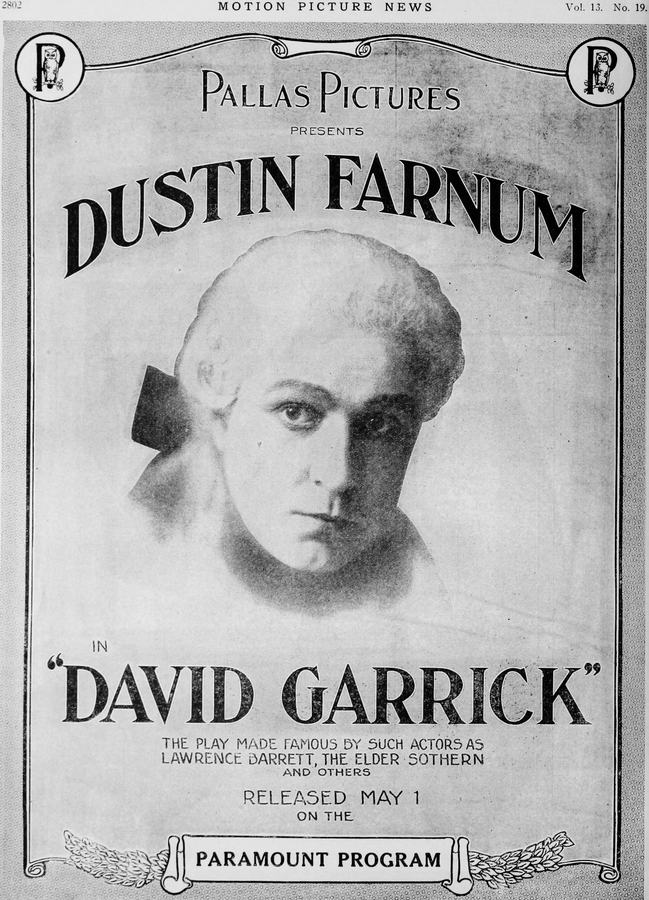
Dir: Frank Lloyd
The true story of the famed British actor David Garrick and his love for Ada Ingot.
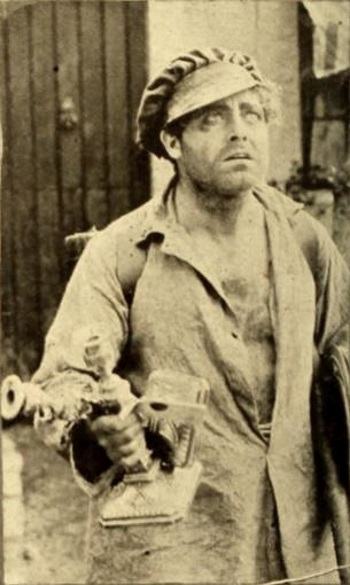
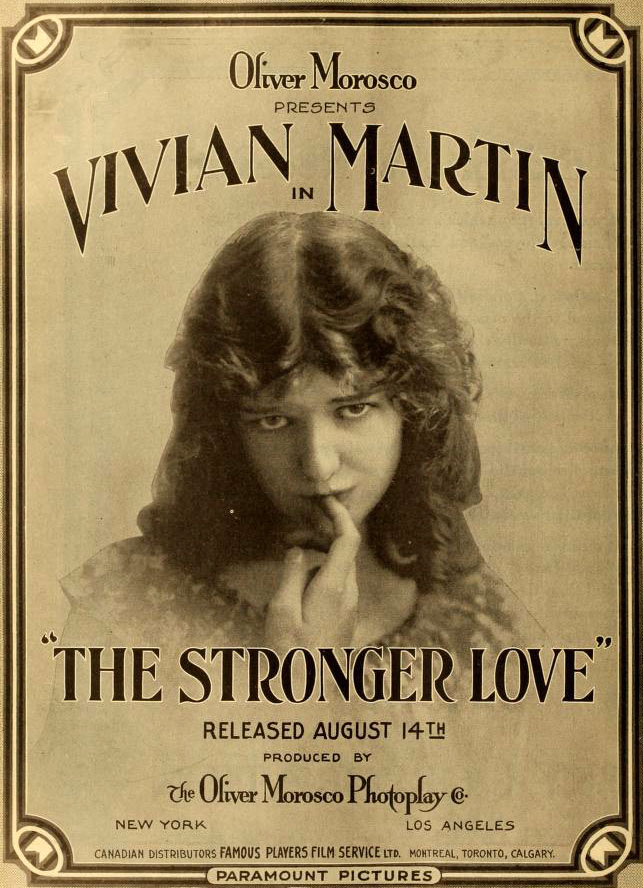
Dir: Frank Lloyd
Nell, a beautiful mountain girl, is a member of the Serviss family, rivals of the neighboring Rutherford family. Nell is engaged to Jim Serviss, who is the head of their clan, but when, by accident, she meets a stranger who has come to stay with the Rutherfords, they become infatuated. The stranger spends much of his time examining and chipping away at rocks, causing an intense curiosity among the mountaineers, who suspect that he is a "revenuer." When Nell learns that the stranger is searching for radium, she shows him a deposit rich in ore located near the Serviss still. On the night of a big dance, the Serviss still is burned by revenue officers and the mountain people are convinced that the stranger is to blame. Nell rushes to the Rutherford cabin to warn the stranger who is revealed to be Rolf Rutherford. When Jim arrives, Nell saves Rolf's life by telling Jim that she will marry the stranger. Soon after Jim leaves, however, Nell goes after him and admits that it is only he who she loves and that she lied to save him from committing murder.
View Details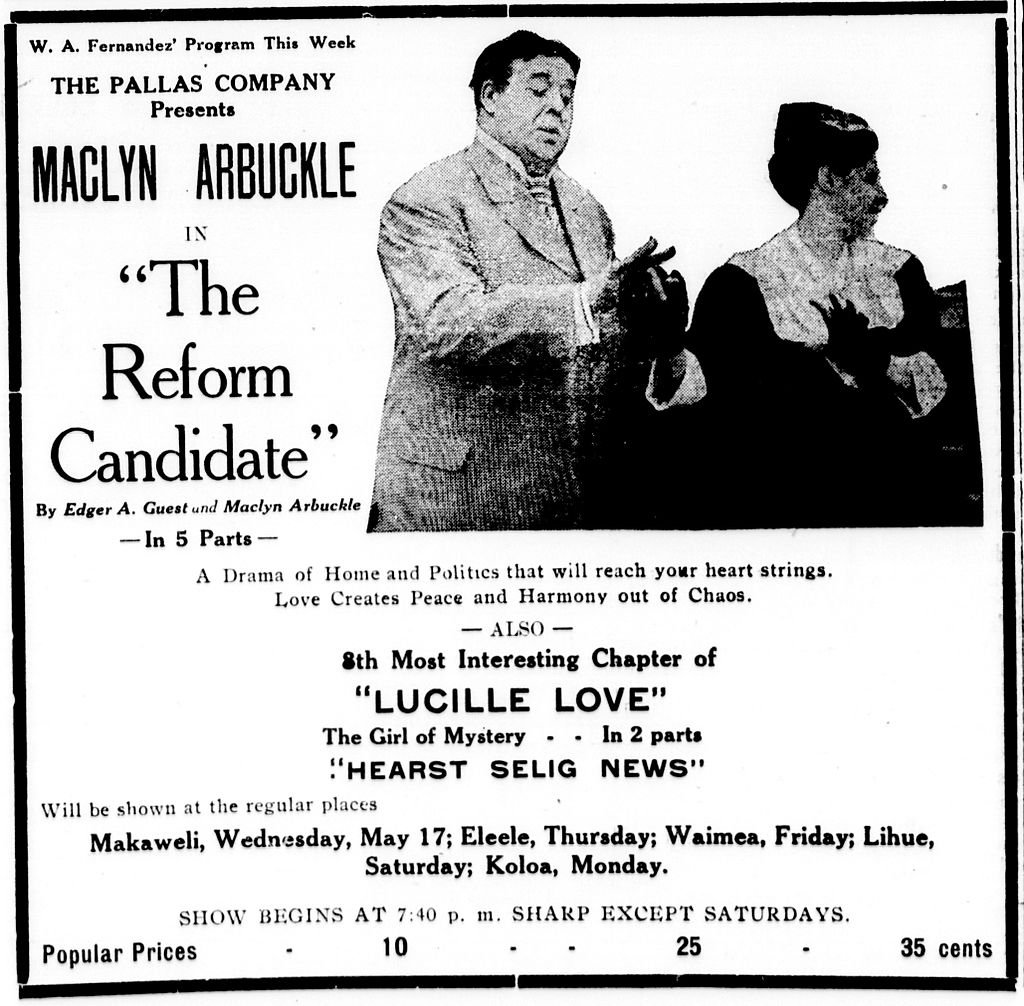
Dir: Frank Lloyd
Realizing that his mayoral campaign is in serious trouble, reform candidate Frank Grandell sends his people out to dig up some dirt on Art Hoke, the boss of the city's political machine. Their investigation leads them to Hoke's flunky, nicknamed "Looney Jim". Jim implies that he has some damaging information about Hoke's daughter, but he dies before he can reveal it. Grandell eventually finds out what the "secret" is, however, and must decide whether to use it in his campaign to defeat Hoke's candidate.
Dir: Frank Lloyd
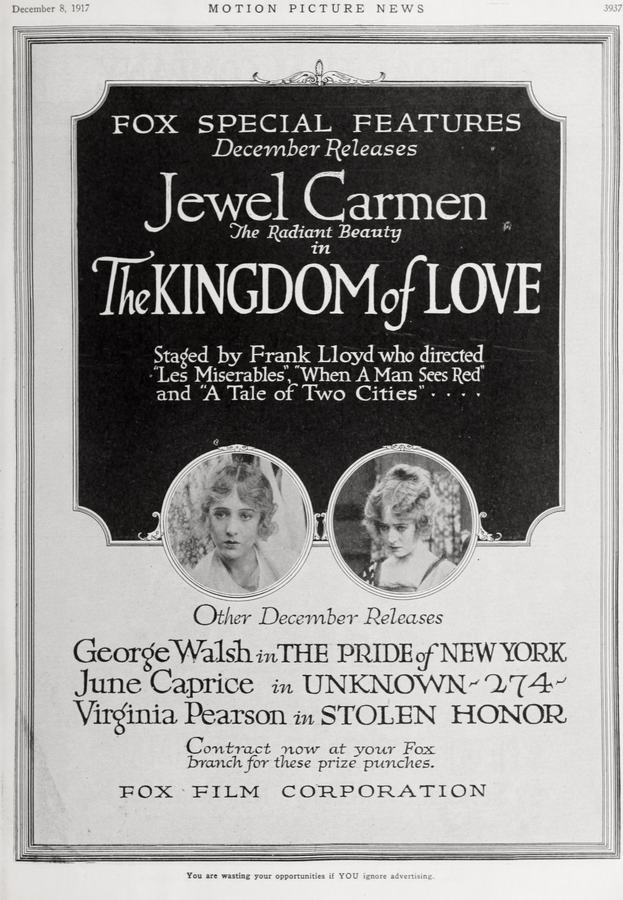
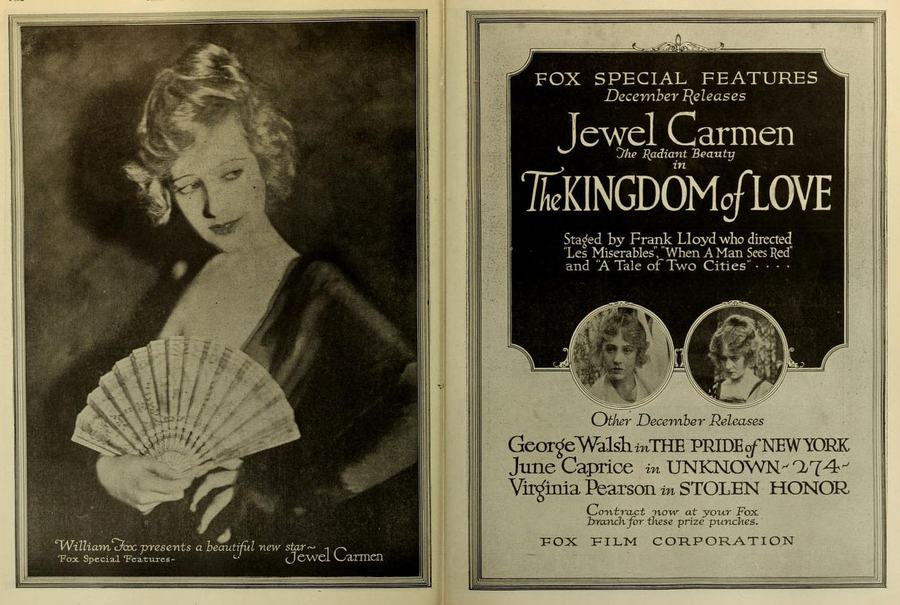
Unhappy with her shotgun marriage to Southern aristocrat Arthur Heatherway, Valerie Marchmont leaves her new husband and, after giving her infant daughter to a Virginia family, goes to Alaska to work in a dance hall. Years later, the daughter, Adrian Gardiner, wants to marry Richard Carver. Richard's father Robert, refuses them to marry because Adrian cannot provide any information about her parents. Following a hunch, Richard goes to Alaska to find the mother Adrian never knew, but just after locating Valerie, he is shot by saloon owner Jim McNeil. When Adrian and Robert go to Alaska to be with Richard during his recuperation, Robert recognizes Valerie as the wife of his old friend Arthur. As a result, he approves of the marriage, but the celebration accompanying the news is cut short when Valerie and Jim kill each other in a fight.
View Details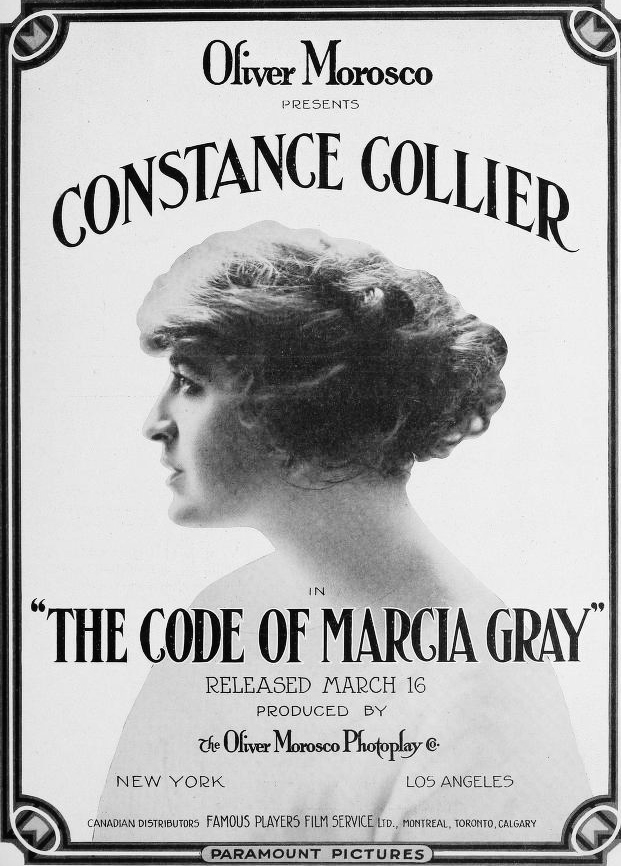
Analysis relative to The Invisible Power
| Film Title | Atmosphere | Complexity | Similarity |
|---|---|---|---|
| The Price of Silence | Surreal | Dense | 88% Match |
| The Gentleman from Indiana | Gritty | Layered | 95% Match |
| The Kingdom of Love | Surreal | Dense | 86% Match |
| Les Misérables | Surreal | Abstract | 95% Match |
| The Making of Maddalena | Gothic | High | 97% Match |
This guide was algorithmically generated using the cinematic metadata of Frank Lloyd's archive. Last updated: 8/17/2026.
Back to The Invisible Power Details →