
DbcultAccessing Vault...
Recommendations
Senior Film Conservator
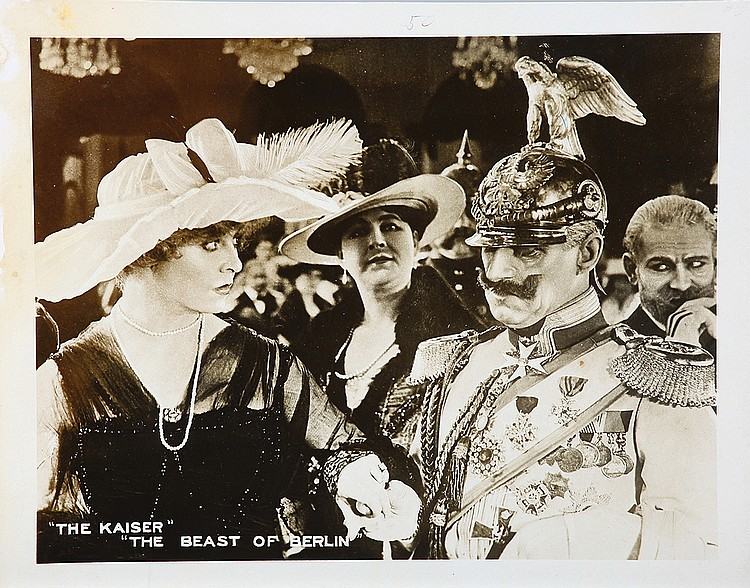
Since its 1918 debut, The Kaiser, the Beast of Berlin has maintained a unique vision status, the legacy of The Kaiser, the Beast of Berlin is a beacon for those seeking the unconventional. Our criteria for this list were simple: only the most unique vision and relevant titles.
The 1918 landscape was forever altered by the arrival of to sustain a sense of mystery that persists after the credits roll.
A propagandistic view of the First World War, showing the political greed of the German Kaiser Wilhelm, the resistance of some of his own soldiers, and fanciful prediction of the nature of the war's end.
Critics widely regard The Kaiser, the Beast of Berlin as a cult-favorite piece of cult cinema. Its unique vision is frequently cited as its strongest asset, solidifying its place in United States's film legacy.
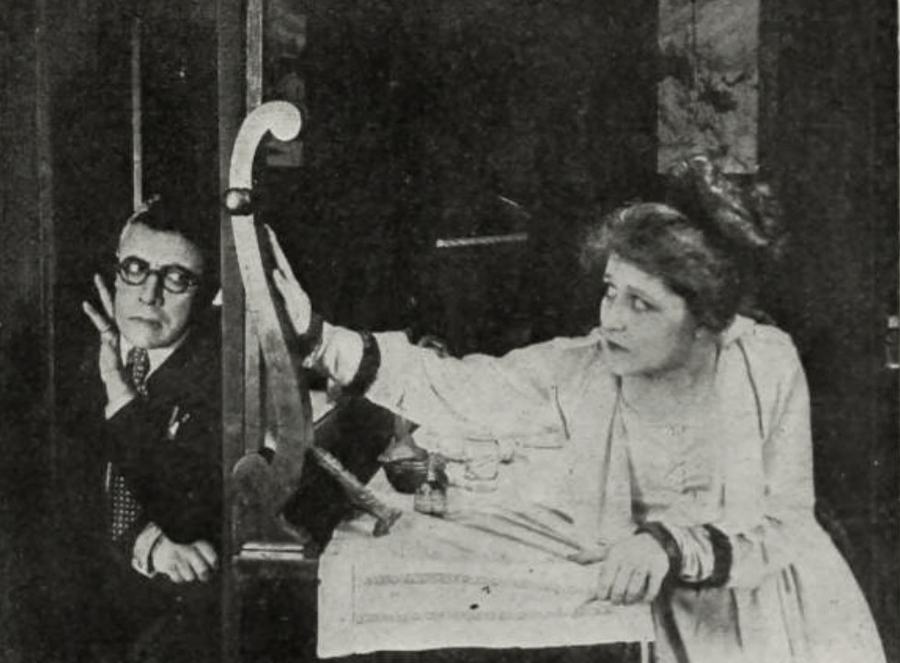
Based on the unique unique vision of The Kaiser, the Beast of Berlin, our vault has identified these titles as the most compelling follow-up experiences for fans of cult cinema:
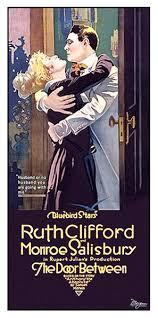
Dir: Rupert Julian
Anthony Eckhart, a student of Oriental music, meets Crocker in a Geisha house where he extricates the intoxicated man from the results of an attack upon a waiter. Crocker explains that his wife has left him and there is only drink left. Anthony discovers a woman with marvelous voice at the hotel and falls in love with her before he finds that she is Crocker's wife. He confesses to Crocker and offers to leave if Crocker will leave her alone. Crocker promises an answer, but comes to kill his wife. Anthony prevents him and at last Crocker proves a man.
View Details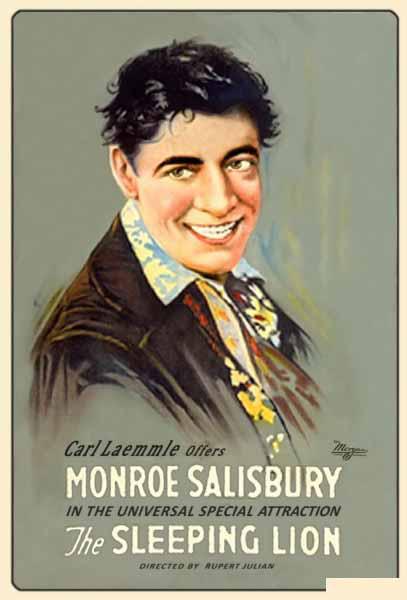
Dir: Rupert Julian
Italian potter Tony Varralo adopts a waif named Little Tony, and they leave New York City for a ranch out West, with the promises that Tony will send for his fiancée, Carlotta, after he has established himself. Once settled in the Western town, Tony manages to make an enemy of Durant, the town's chief gambler, by refusing to drink whiskey and by freely admiring dance-hall queen Kate Billings, who Durant has claimed for himself. A year later, Tony is well-adapted to life as a cowboy. While he is away from home one day, Durant shoots at a shadow in the window that he believes to be Tony. However, the bullet strikes Little Tony, who is stunned with a mild injury. Tony gets his revenge on Durant and inadvertently wins the love of Kate. After Tony learns that Carlotta has married one of his rivals, he and Kate are free to marry.
View Details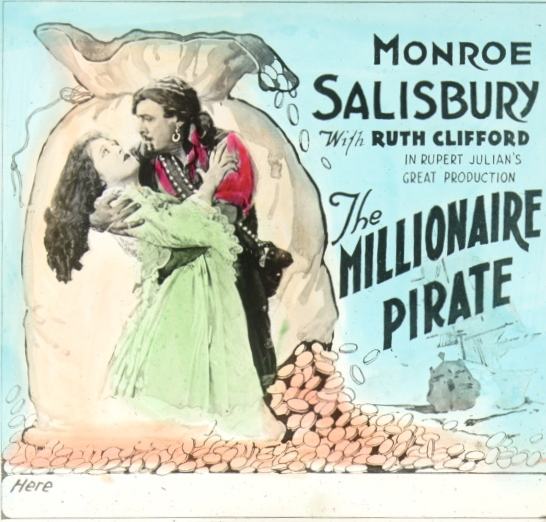
Dir: Rupert Julian
In modern times Paul Winthrop visits an island and paints a picture of Joe, a picturesque pearl diver. He dresses him in pirate garb and when the picture is done Joe cannot take his eyes from it. The two men instinctively recognize each other. Joe is another Jean Lafitte, Paul is his antagonist of the years before. Later Joe stumbles across a case of pirate treasure buried along the shore. By a plate on the box he reads the name of the one-time owner, Jean Lafitte. With this treasure he is enabled to visit the United States, where in New York he again finds Paul Winthrop. Paul is in love with Lily Demorest, but her parents have signified their desire that she marry Robert Spurr, a millionaire. Joe is immediately attracted to her and decides to kidnap her. First his motive is charitable. He intends turning her over to Paul, who is timid about such action himself. Then he decides to keep her for himself, but Lily cries out for Paul and then to the pirate descendant dawns the true meaning of the curse fastened on his ancestor by the woman he coveted. So he returns her to Paul, and though it is difficult he finds some happiness in the thought of their reunion.
View Details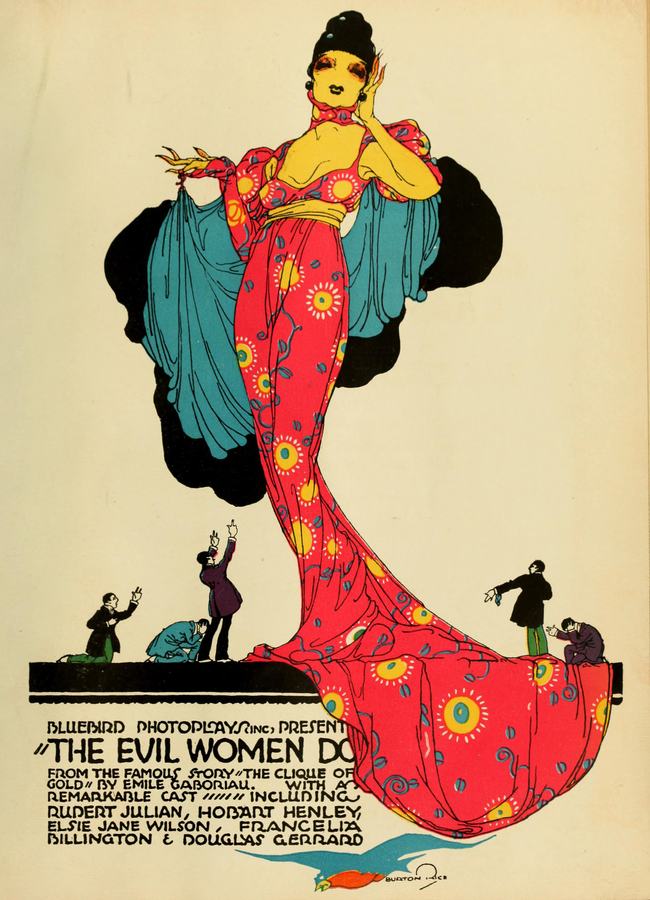
Dir: Rupert Julian
Ernestine Bergot is a child of the Paris streets. One day she begs a few sous from a student of the Latin quarter. He becomes interested in her, takes her to his studio, and declares he will adopt her. Later she meets Justin Chevassat, another artist, and a mutual infatuation springs up. Gradually Ernestine becomes a beautiful "vampire," hardened to any crime. One day she shoves her benefactor out of the studio window after robbing him of a large sum of money. When he dies as a result of the fall, Ernestine and Justin leave the Latin quarter. To further their schemes they take into partnership Sir Thomas Elgin, who poses as Ernestine's uncle. The woman changes her name to Sarah Brandon her reckless adventures soon make her known as the most evil woman in the city. Malgat, a banker's clerk who has access to the funds, is her first victim. Sir Thomas Elgin, acting as Sarah Brandon's decoy, feigns illness one day while walking in Boise de Bologne and attracts the attention of Count Ville Handry, who assists the supposed sick man to Sarah Brandon's home, where the woman proceeds to practice her wiles upon the old nobleman. In the end Count Handry asks her to marry him, and their engagement is announced. The Count's daughter Henriette objects, especially when Daniel Champcey, her betrothed, a French naval officer, informs her of Sarah Brandon's reputation. The Count persists, Daniel is ordered to China, and Henriette is left alone in her father's home with the mistress of the house and all the servants (by Sarah's conniving) turned against the daughter. Before leaving Daniel has mistakenly entrusted Henriette to the "tender" mercies of Chavessat, tool of Sarah. When Henriette is no longer able to endure the humiliation she suffers in her father's home, she begs Chavessat to take her away to some quiet spot where she can live respectably until she can get word to Daniel in China. Chavessat's treachery imprisoned Henriette in a house of ill repute, where he threatens, by starvation, to compel the girl to submit to his will. In the same building where Henriette is confined lives Malgat, the banker's clerk Sarah ruined, and it is through his discovery of Henriette's identity and his further activities in association with the Parisian police that Sarah is finally exposed at the moment when Count Handry, ruined by her iniquity, is about to commit suicide. Daniel has hurriedly returned to Paris in response to Henriette's appeal, and with Malgat and the girl, faces Sarah Brandon in Count Handry's home. Rather than submit to arrest Sarah Brandon drinks from a vial of poison and falls dead, as the police lead away to prison Chavessat and her other accomplice, Sir Thomas Elgin.
View Details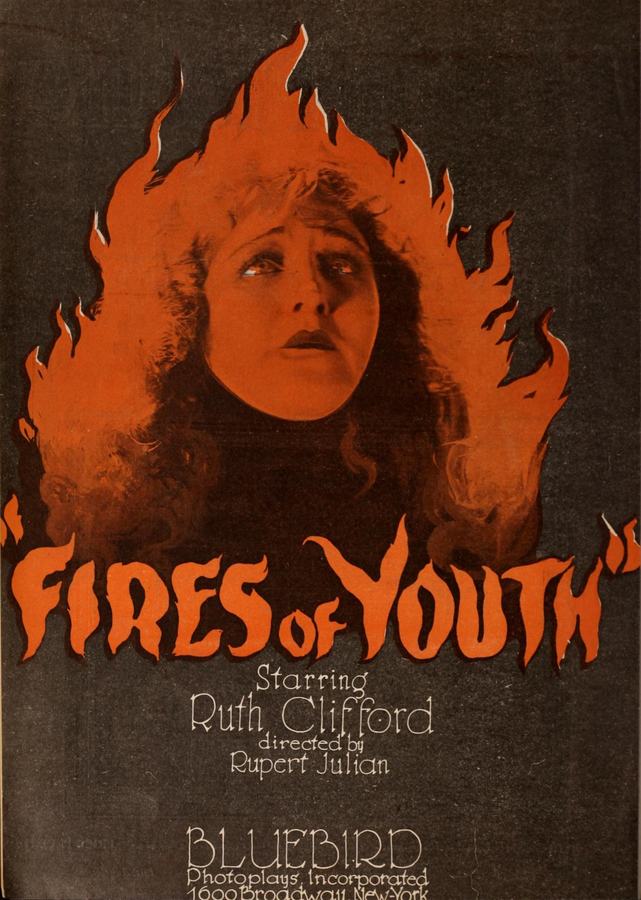
Dir: Rupert Julian
Lucille, a beautiful and romantic young woman, marries John Linforth, a wealthy businessman, who is twice her age, and too distracted by his business affairs to give her the attention she craves. John is pleased when she takes a liking to his young friend, Ronald Standish. After the friendship has grown to romance, however, John tries to keep the two apart. As he is about to depart on a short trip, John orders Ronald from the house. Later that night, Ronald asks Lucille to elope with him, but before they leave, they realize that an illegal union would only lead to unhappiness, and Ronald returns home. A burglar, who, in stealing certain securities from John's desk, witnesses the couple in an embrace, blackmails Ronald into purchasing the bonds. To save her lover, Lucille confesses everything to John, who promises to give his young wife her freedom. A year later Lucille and Ronald marry.
View Details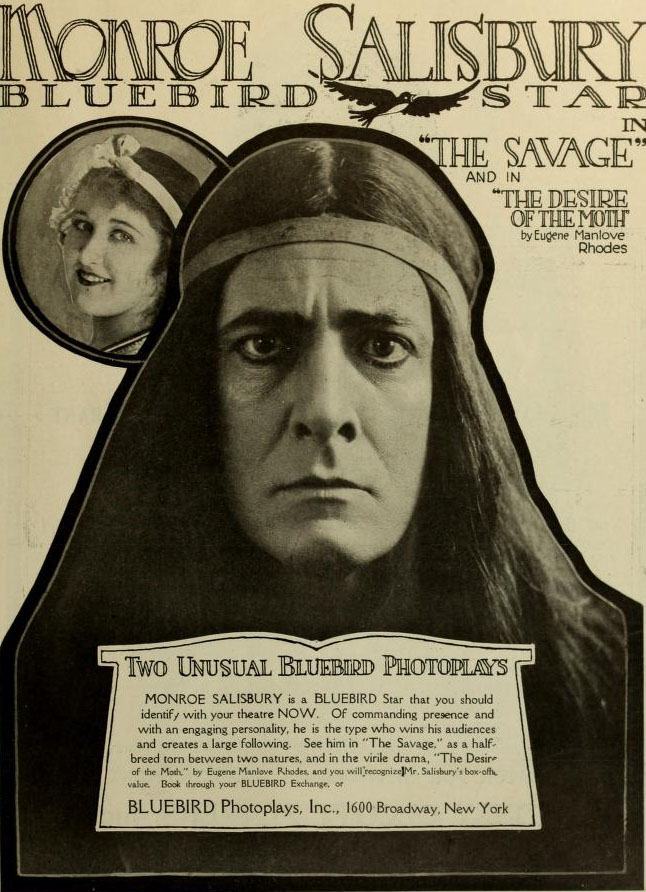
Dir: Rupert Julian
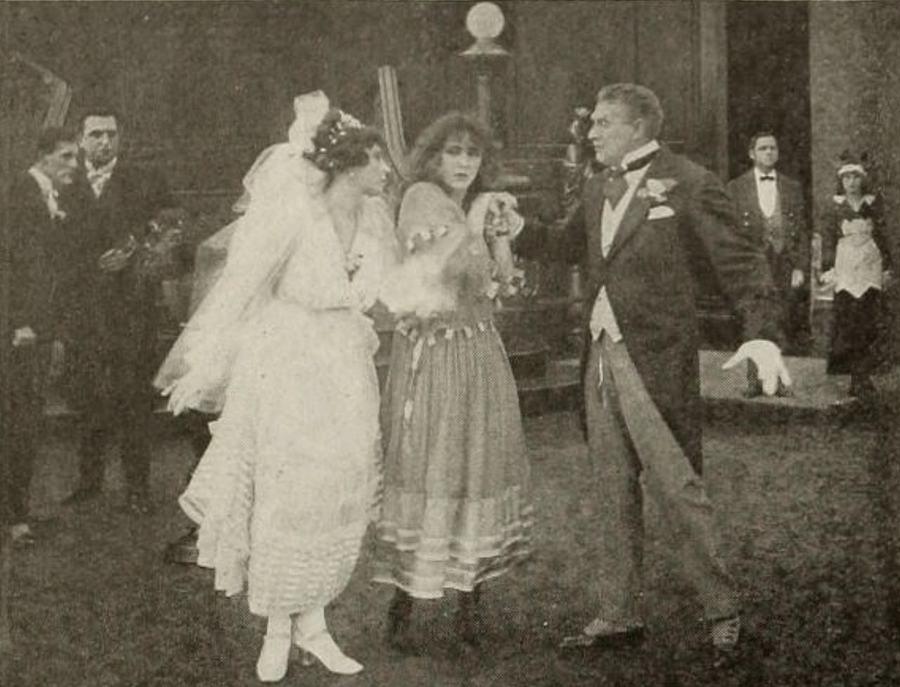
When Marie Louise, the daughter of the town factor, returns home from school, Julio Sandoval, a reckless young half-breed ruled by his animal instincts, develops a passion for the girl, even though she is engaged to Captain McKeever of the mounted police. Meeting Marie when she is alone in the woods one day, the half-breed carries her to his cabin on the mountain top where he collapses from an attack of mountain fever brought on by overexertion. Taking pity on Julio, Marie nurses him back to health, and when the rescue party arrives, she does not betray him. Upon her return to town, Marie learns that McKeever has been taken prisoner by the outlaw Joe Bedotte. Marie pleads with Julio to rescue the captain, and in gratitude, he goes to the mountains, frees the captain and surrenders his own life as a consequence.
View Details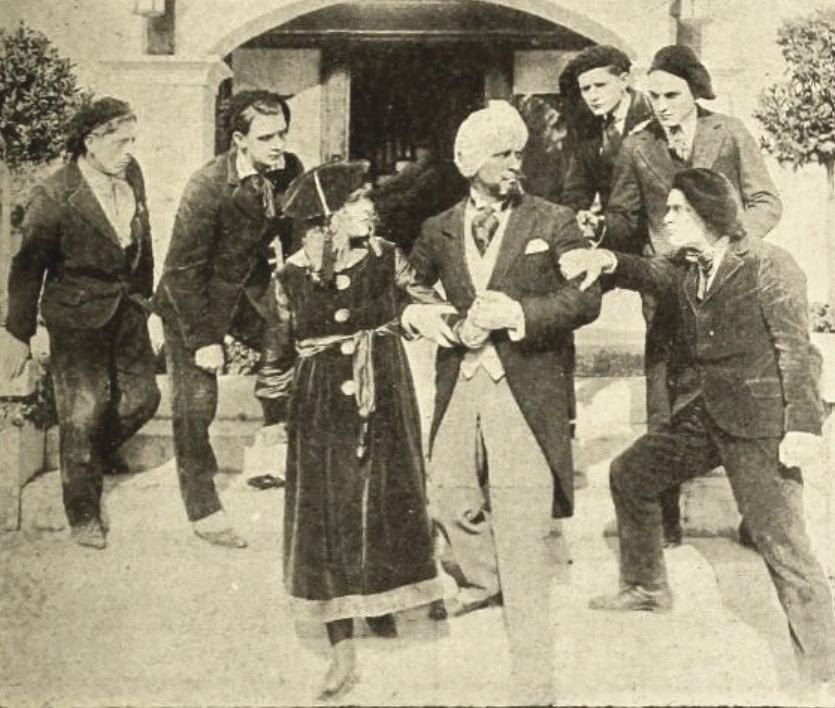
Dir: Rupert Julian
While Major Abercrombie and wife were hurrying through a Persian forest, in order that Mrs. Abercrombie might reach an English settlement to bear her child, a tent was hurriedly pitched, and there a little girl was born. The mother surrendered her life and Major Abercrombie went mad with grief. He ran into the forest and was killed by lions. Usun Hassan, while passing with his huntsmen, discovered the tent and sent Malec, his secretary, to investigate. Malec found the dead body of Mrs. Abercrombie and heard the faint cry of her baby. The body of the woman was buried and the babe was carried to Hassan's harem. There she grew to become a beautiful girl, with Malec acting as her tutor. They called her Rokaia. Hassan having decided she should marry a merchant whom she loathed, Rokaia readily listened to Malec's proposal that she go with him to France. Having provided her with clothes, money and tickets, Malec was detected while helping the girl escape. Malec hid himself away to save his head, while Rokaia proceeded to France. Arriving at Marseilles the girl was robbed of her purse, thus becoming easy prey for a young gallant who made her acquaintance and started to take her to his apartments. Rokaia was struck by an automobile and her admirer found safety in flight. The motor was owned by Marquis De Tonquin, who helped Rokaia into the tonneau and drove her to his home. There she was found to be little hurt. The Marquis about this time received a letter from the Parisian college where his son, Marcel, was being educated, stating that the boy was incorrigible. Believing that there must be a "woman in the case," the Marquis prevailed upon Rokaia to go to Paris as his son's companion. Marcel did not look upon the girl as his father would have him, but secured separate lodgings for her, where he lived, and treated her with utmost respect. The day Rokaia arrived in Paris she halted before a Persian bird-vendor and asked the directions to Marcel's lodgings. It so happened that Malec had just arrived from Persia and lived at the Asiatic lodgings where the bird-vendor stopped. He heard the man's gossip about the girl who spoke in his own tongue and bought his birds. Malec believed he was on the trail of the girl be sought, and went to the address the bird-vendor gave him, and there found Rokaia. Through hypnotic influence he controlled the girl so far as to cause her to go away with him. Marcel was informed by his fellow students, when he returned, after a brief absence from his lodgings, that Rokaia had just departed, and the note she left for him confirmed the story. When a drayman called for Rokaia's trunk, Marcel learned her address, and leading a party of students, went to her rescue. The happy ending was attained when Marcel and Rokaia were married.
View Details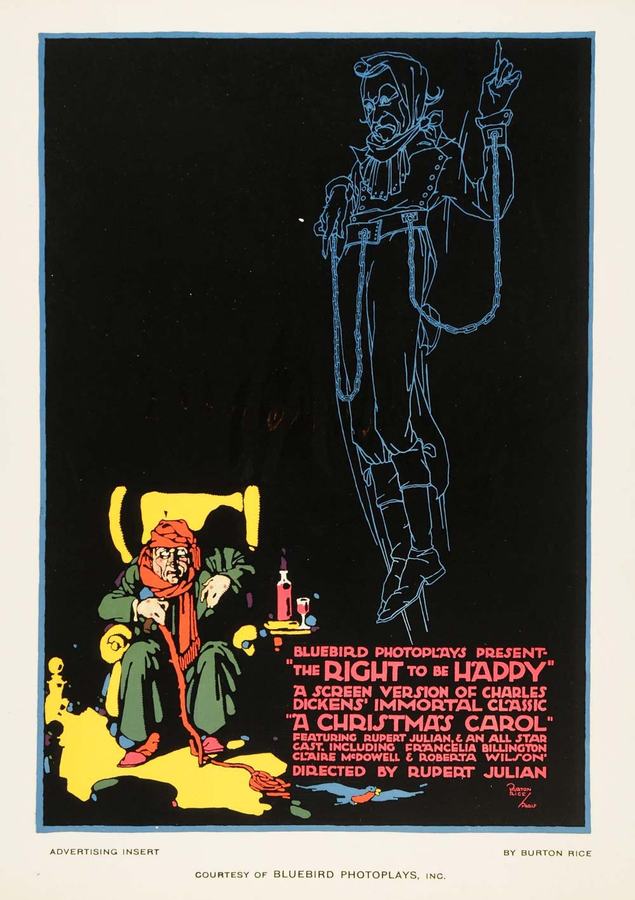
Dir: Rupert Julian
A heartwarming retelling of Charles Dickens' 'A Christmas Carol' where Ebeneezer Scrooge is visited by three spirits in an attempt to save his soul.
View Details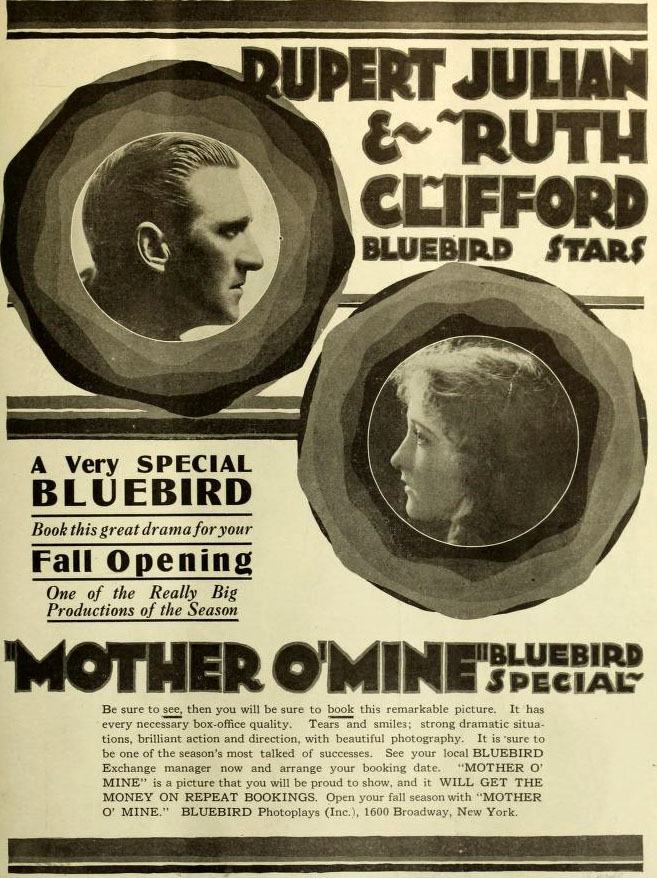
Dir: Rupert Julian
Mrs. Standing, an old-fashioned country mother, sacrifices to put her son John through college so he can have a better life. Upon completing school John goes to the city, where his financial success blinds him to the basic values his mother taught him. During an important social event one evening, Mrs. Standing comes to her son's house carrying wicker basket full of homemade jams. Ashamed, John tells his wealthy fiancée, Catherine Thurston, that the old lady was his childhood nurse. Mrs. Standing overhears her son's deception and goes home devastated. John, remorseful, follows with the firm resolution to devote future years to the care of his mother. Learning the truth, Catherine, accompanied by her own mother, visits the Standings' country home and all is forgiven.
View Details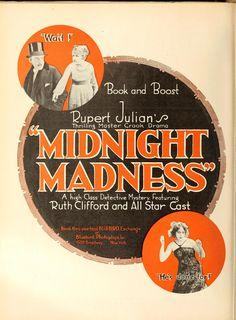
Dir: Rupert Julian
In the act of robbing a set of rare jewels from a museum, a robber is wounded in the hand. Prentice Tiller, while dressing a wound in his hand, overhears the woman in the next hotel room, Gertrude Temple, telephoning Aaron Molitor, to whom she is to deliver some jewels. Posing as Molitor, Prentice calls on Gertrude but disappears when Molitor, who also has been wounded in the hand, suddenly arrives. Molitor's men capture Prentice, who narrowly escapes death in the ruins of an old church and then continues to track Molitor. Gertrude accompanies Molitor and her uncle, Simon Temple, to Paris, where they are met by master crook Chevat and the woman who loves him, Lola Montez. Lola becomes jealous of Gertrude and tries to kill her, but Prentice rescues her. Through a ruse, Prentice, who finally is revealed as a detective, captures Chevat and his gang, returns the jewels to their rightful owner and then proposes to Gertrude.
View DetailsAnalysis relative to The Kaiser, the Beast of Berlin
| Film Title | Atmosphere | Complexity | Similarity |
|---|---|---|---|
| The Door Between | Surreal | Dense | 87% Match |
| The Sleeping Lion | Surreal | High | 88% Match |
| The Millionaire Pirate | Ethereal | Abstract | 87% Match |
| The Evil Women Do | Gritty | High | 89% Match |
| Fires of Youth | Gritty | Dense | 95% Match |
This guide was algorithmically generated using the cinematic metadata of Rupert Julian's archive. Last updated: 8/16/2026.
Back to The Kaiser, the Beast of Berlin Details →