
DbcultAccessing Vault...
Recommendations
Senior Film Conservator
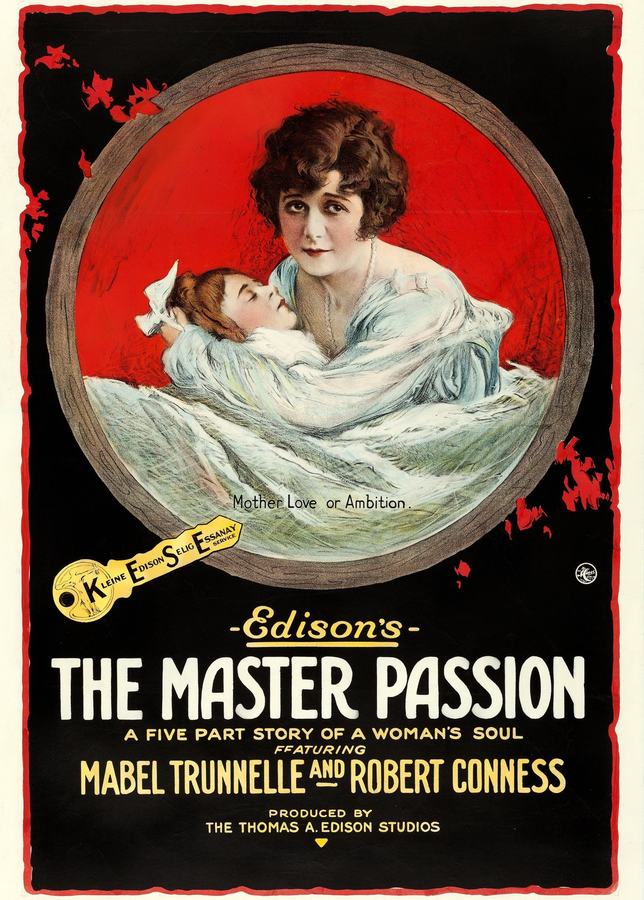
Navigating the complex narrative architecture of The Master Passion is a cult status experience, the emotional payoff of the 1917 classic is what fans crave in similar titles. The following gems are essential viewing for anyone captivated by The Master Passion.
The artistic audacity of The Master Passion ensures it to define the very concept of cult status in modern film.
Goaded by ambition for wealth, and the pleasure of her mother. Julia Long breaks her engagement with Jack Carter and marries George Bender, president of the National Bank. Her first years of married life are filled with happiness. Julia possesses a voice of more than usual merit, and Bender engages Prof. Alberto Martino to instruct her. Martino becomes a frequent visitor, while Julia makes rapid strides with her singing. Bender, occupied with his work, seems to be unable to fulfill his duties to the home. Martino, taking advantage of Julia's loneliness, paints the great future that she might win through her wonderful voice. If she will but flee to Paris with him, he promises, the world will be at her feet. Threatened by the father of a girl whom he has wronged. Martino is forced to flee, and Julia leaves her home and little daughter, Cora, to seek fame with the musician. Time passes and Julia is in Europe, alone and penniless, deserted by Martino. She is picked up unconscious on the steps of the Opera House where she has been seeking an engagement, and is carried into the dressing room of Marie Jardin, a famous prima donna. Mme. Jardin listens to her story and makes Julia her protégée. Under her teaching Julia's voice develops rapidly and she commences to achieve success. Eighteen years later, in America, Ralph Carter, the son of Julia's first sweetheart, and Cora Bender, Julia's daughter, whom she has deserted, are in love. Bender refuses to consent to the marriage and in an effort to make Cora forget, he arranges a trip to Europe. Julia, known as Julia Marina, a world-renowned prima donna, lives in Paris. She has carried on an affair with the Duc de Lac, and has wearied of paying his gambling debts. At Monte Carlo the Duc meets Bender and his party. Due to the workings of Julia's mother, Cora is forced to accept the Duc de Lac as her fiancé. The Duc hastens to Julia to tell of his engagement to a rich American girl. While out walking, Julia sees Bender with her mother and a young girl and realizes the girl must be her own daughter. She awaits an opportunity to meet Cora alone and confirm her identity. Cora, impressed by the talented lady, accepts her invitation to call. Cora's visits to Julia's dressing room become more and more frequent. Bender finds Julia's card in Cora's room and goes to the theater. Julia, unable to restrain herself, tells Cora that she is her mother. Bender, coming into the room, finds them embracing each other. At first wrathful, he cannot withstand Cora's pleas, and he and Julia are reconciled. Julia discovers the rich American girl of whom the Duc spoke is her daughter. She orders him to break his engagement. In order to prevent the marriage, she threatens to reveal the relations that have existed between them. The Duc is defiant. Julia sacrifices herself and tells Bender the truth; Bender wreaks his wrath upon her, and, taking Cora, returns to America. Julia seeks solace in her art, but in a quarrel with the Duc she loses her voice. Months pass and Bender, repenting his hasty action, returns to take Julia back home again.
The influence of Richard Ridgely in The Master Passion can be felt in the way modern cult films handle cult status. From the specific lighting choices to the pacing, this 1917 release set a high bar for atmospheric immersion.
Based on the unique cult status of The Master Passion, our vault has identified these titles as the most compelling follow-up experiences for fans of cult cinema:
Dir: Richard Ridgely
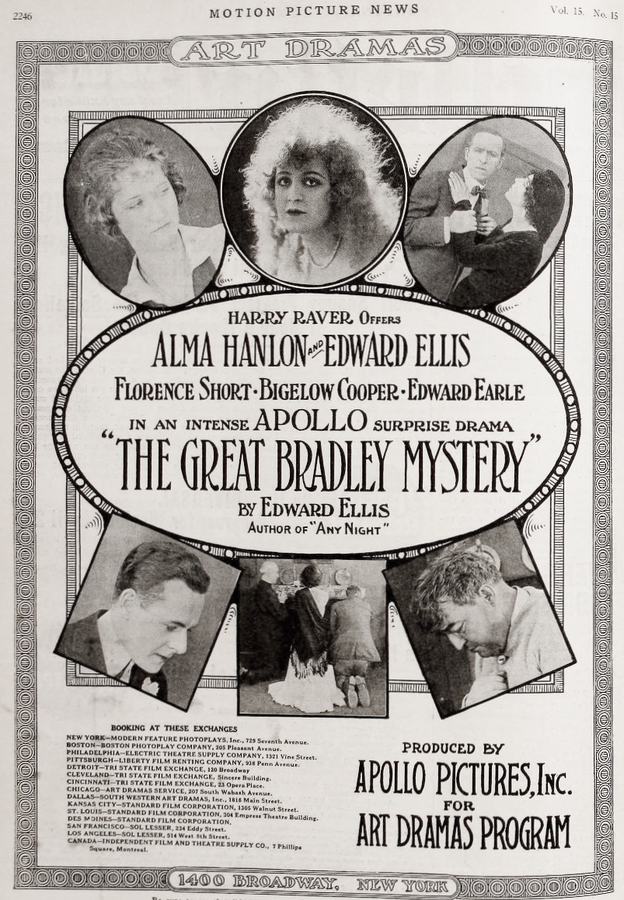
Two business partners, Bradley and Collier, are in love with Mary. Bradley gives Collier to understand that he is engaged to her, and it is this only that prevents Collier declaring his love. Lola, a young Italian girl whom Bradley has betrayed, comes to the office to beg him to marry her. Mary hears the girl's plea, and comes into the office. Here she sees Collier talking to the girl. He has come, not knowing the situation, and Bradley has slipped out another door. Mary believes that Collier is the guilty man, and refuses to speak to him. Bradley encourages her in this idea and begs her to marry him. Collier, heartbroken, has left for the west, in order to recover his lost spirits. Bradley has a fake telegram sent to him announcing Collier's death, for he knows that he has no chance with Mary as long as his rival is alive. After some time Mary marries him. But almost immediately afterward she meets Lola, who is dying in a hospital. Lola begs her to care for Bradley's child, and she learns too late that her husband deceived her. She returns and denounces him. He, knowing that the scandal is sure to get out, orders her to prepare for a trip to Europe. He sells his, as well as Collier's, share in the company. Lola's father, crazed by his daughter's death, comes to Bradley's office and sneaks in through the basement window. The next day Bradley is found dead. Tony is arrested. Collier returns and meets Mary. Together they go to the police and ask for the release of Tony. Collier tells of his arrival the night before and his knowledge of the sale of the company. He went to confront Bradley, and they struggled. Bradley drew a revolver, which went off in his hand, killing him. Collier had tried to make the case look like suicide, until he learned that Tony was being held. The police assure Collier that his innocence will be easily established, and he and Mary face the future with the knowledge that a long-deferred happiness will be theirs.
View Details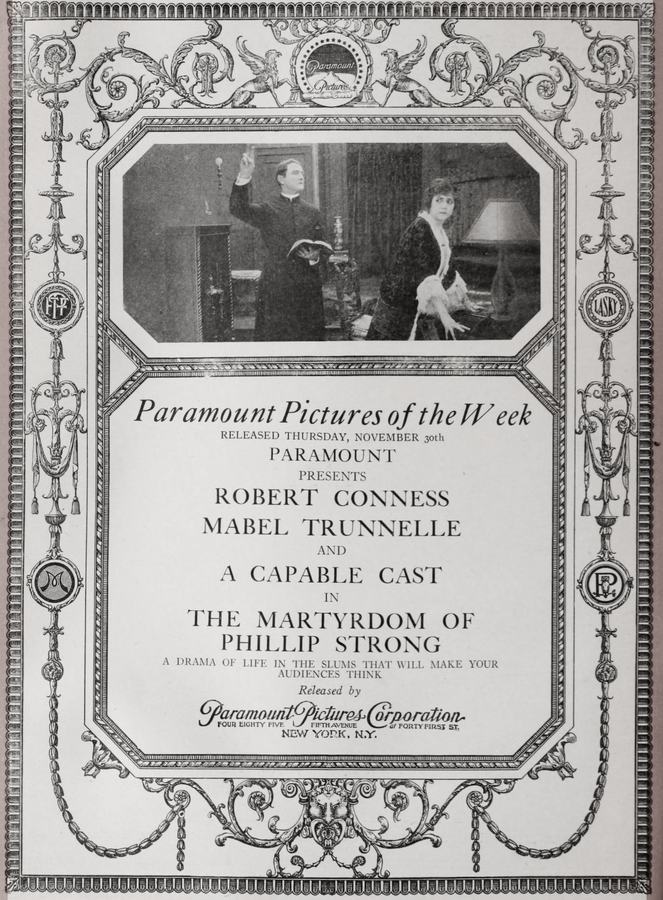
Dir: Richard Ridgely
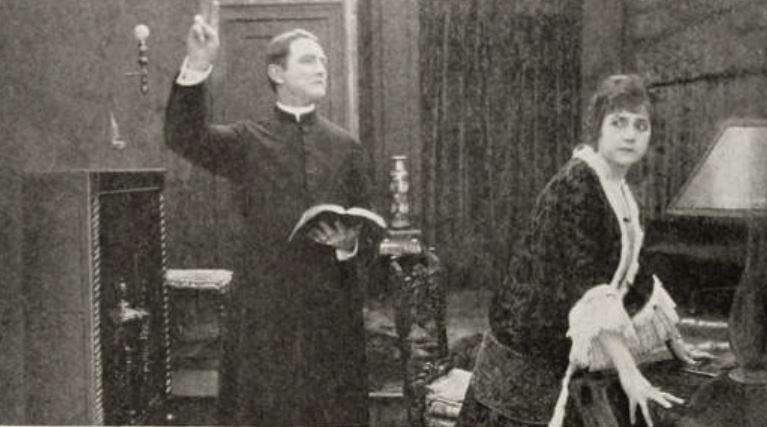
"Man, you are a living lie." Thus is Philip Strong, the rising young pastor of a fashionable Calvary Church, addressed by Brother Man (symbolizing the Spirit of Christ on earth). Surrounded by luxury, lionized by a wealthy congregation, Philip Strong suddenly realizes the force of these words. He has been preaching the doctrines of Christ, but his work has been the work of bare words only. To prove the truth of what he says. Brother Man leads Philip to the slums, and shows him the misery and squalor of a world which he has never known. The starving women and children, the kitchens of Hell where whiskey ruins the lives of men, impresses Philip deeply. He sees his real mission in life. He must help the downtrodden. Sarah, Philip's wife, wrapped in her social ambition, is horrified when Philip announces his determination. She refuses to permit her little daughter, Irma, to play with an orphaned child of the slums, whom Philip has brought home to shelter. She pleads with Philip to give up his new work. It means ruin and social ostracism. She scolds and bursts into a rage of fury, but Philip is firm. Goaded on by her mother, who pictures the disgrace of Philip's close association with the slums, Sarah leaves the home, taking Irma with her. Time finds Philip living in the slums, immersed in his work. Fighting the battle of the downtrodden, he arouses the hate of powerful forces. The rich of his congregation, owning the properties which house saloons, and the owners of these saloons, combine to bring about his downfall. Undaunted by threats of personal harm, he wages his war. Cheered by Brother Man in the moments when things seem most hopeless, he fights his battle with new energy. His friends gone, his little daughter dead, the wife whom he loves opposing him, he fights on. Scenting an opportunity to discredit him, the interests cause Sarah to believe that Loreen, a consumptive derelict, whom he has redeemed and sheltered in his home, is his mistress. The story is disproved and Sarah relents, but too late. The body bearing the spirit of Philip is not equal to the task. Wrecked by worry and ill-health, he gives up his life and his soul passes to the One Whose work he has been doing, and like Whom he has been crucified.
View Details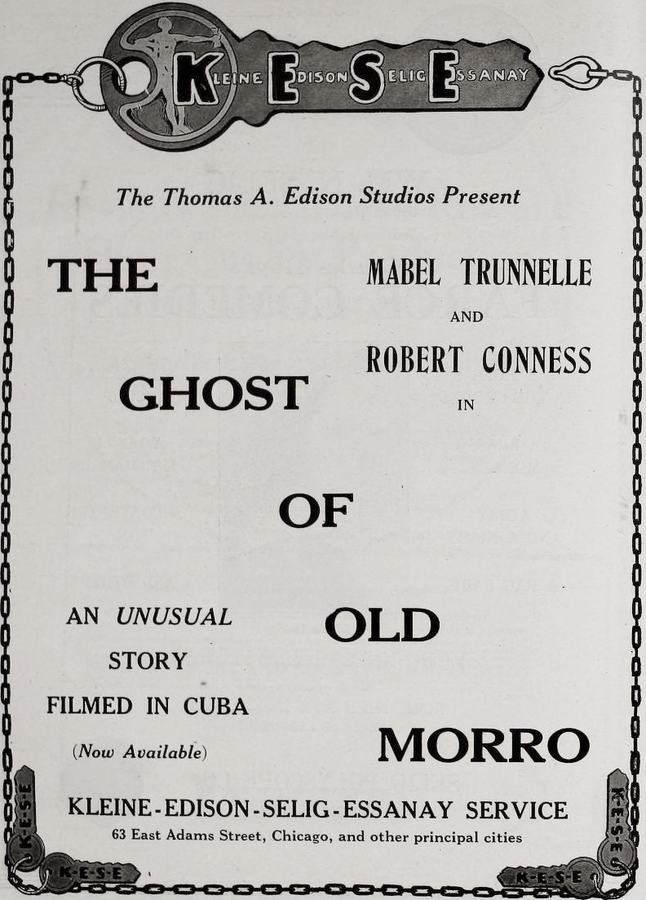
Dir: Richard Ridgely
The nefarious Mother Morro is a disreputable innkeeper who charges smugglers protection money. After she procures an innocent young girl for Capt. Jose's pleasure, the girl's father puts a curse on the old woman. Soon after, Morro's beloved convent reared daughter Mercedes falls in love with the lecherous Jose. To avenge her daughter's stolen innocence, Morro arranges for Amadio to kill Jose, but Mercedes overhears the plan and offers her life to save Jose's. Upon learning that her daughter's body has been thrown over the cliff, Morro becomes demented and falls to her death. On moonlit nights her ghost haunts Morro Castle.
View Details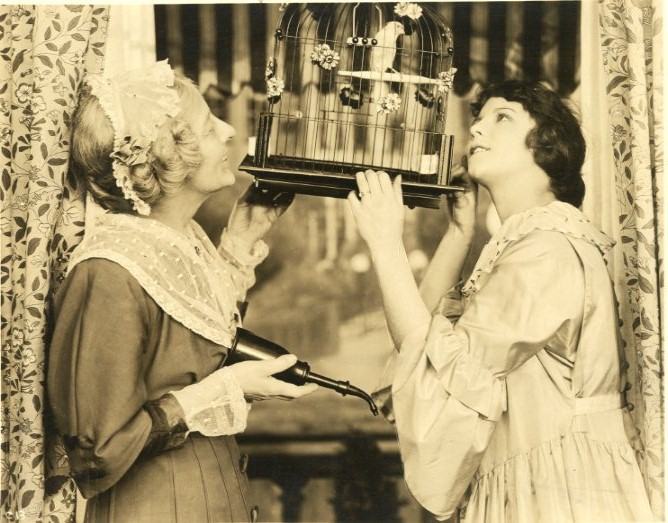
Dir: Richard Ridgely
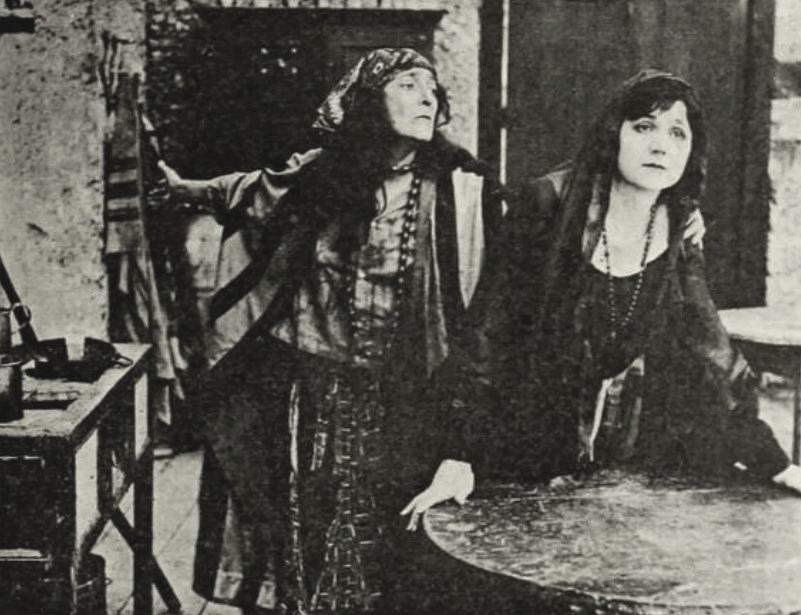
Escaping from "Pride," Eve Leslie next is tempted by the sin of "Passion." Eve goes to Coney Island and there sees Leonidas, a handsome strong man who is appearing in an athletic exhibition which includes a number or diving girls. In spite of Adam Moore's protests, Eve contrives to meet Leonidas, who employs her as a member of his troupe. Leonidas is a despicable person always posing, but Eve does not realize that. She does not know, either, that Leonidas is married and that he has practically deserted his wife. Eve finds herself in rough company. She thinks she loves Leonidas and she is blind to real conditions. She surmounts one difficulty after another, she passes through a series of thrilling scenes culminating with the evening at Madison Square Garden when Leonidas defeats the world's champion wrestler in a grueling battle. Through Adam's aid, Eve, who has unconsciously got herself into a terrible predicament, is saved from herself just as she was about to marry Leonidas, who had cast off his wife.
View Details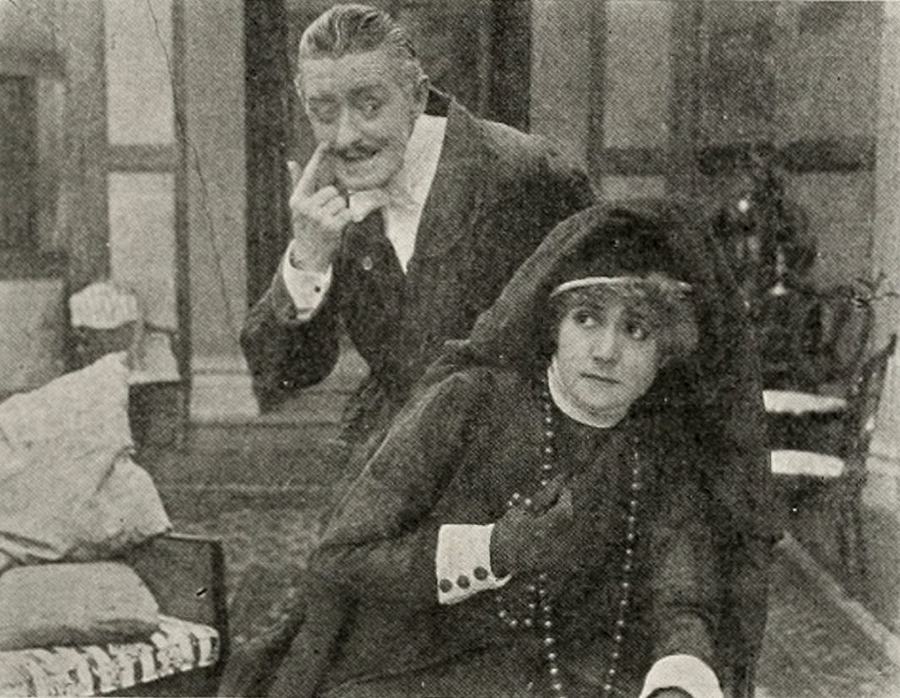
Dir: Richard Ridgely
Mary Fitz Allen has three suitors, Arthur Barton, a young soldier, Robert Jardon, a barrister, and Lord Lester, already past middle age, but devoted to her. Her heart, however, is wholly Barton's, and while, being very gracious with Lord Lester, has an ill-concealed dislike for Jardon. Her mother is purse-proud and favors the suit of Lord Lester. Jardon sees Mary and Barton talking together in the garden, and from her words, gathers something of what has passed between them. Later, in the village inn, he makes a remark against Mary's character that Barton overhears and the young soldier knocks him down. Barton returns to the barracks, but is told that in falling Jardon had been struck on the head and is now dead. Advised by his companions to leave the country at once, Barton sends a note to Mary, assuring her that "he will never desert her," but will send for her as soon as he is safe in another land. Receiving the letter, Mary falls in a swoon. Mrs. Fitz Allen tells Lord Lester that she is taking Mary to the continent for a visit, and that the girl will probably be more willing to do her bidding and marry Lester on their return. Then she takes Mary to the home of an old family servant of the Fitz Allen's, and there Mary's child is born. The mother makes the old woman swear to keep from Mary the fact that her child is alive, and, later, when they return to their home, Mary has the double grief of believing her child dead, and her lover unfaithful to her, for Mrs. Fitz Allen takes possession of the three letters that Barton has written to her during her absence. It is now that Mary consents to marry Lord Lester. Meantime Barton has shipped aboard a vessel bound for America, but in a quarrel with one of the seamen, has been thrown overboard and drowned. Fifteen years later, Mary, now Lady Lester, is living happily with her husband, whom she has learned to truly love. Jardon is living in bachelor quarters, and Babette, a young French woman, who is infatuated with him, is an inmate of his house. All these years, Mrs. Fitz Allen has been paying for the care given the child by the old servant. Jardon, calling on Lord Lester, picks up and carries away with him a letter addressed to Mary's mother, written by the child's guardian, requesting more money with which to purchase clothes for her. Reading this at his home, Jardon immediately realizes the truth, and determines to compel Mary to listen to his protestations of love by threatening to expose her past life. Meantime, Jardon has turned the French woman out of his house, and she, suspecting that Lady Lester is her rival, obtains a position as maid in her house, in order to spy upon her. On the night that Jardon makes it thoroughly plain to Lady Lester that he knows her secret, he is visited, at midnight, by Lady Lester herself. He pleads with her, and finally threatens her, but she leaves him after declaring that she will tell her husband everything of her own accord. As she leaves the house, Babette enters, and goes to Jardon's bedroom. He orders her out, and in the quarrel which follows, she draws a revolver and shoots him dead. When the crime is discovered, Lady Lester's handkerchief is found in Jardon's hand, and she is suspected of being the murderess. Overhearing the detective talking with Lord Lester, she writes a note of farewell to her husband and goes away to the farm where her child is living. Almost at the moment that her note is handed to Lester, a telephone message to the effect that Babette has confessed to being the murderer, is received. Lord Lester, learning of his wife's whereabouts, sends his housekeeper after her with a message that he wants, not only his wife, but her child, to come to him.
View Details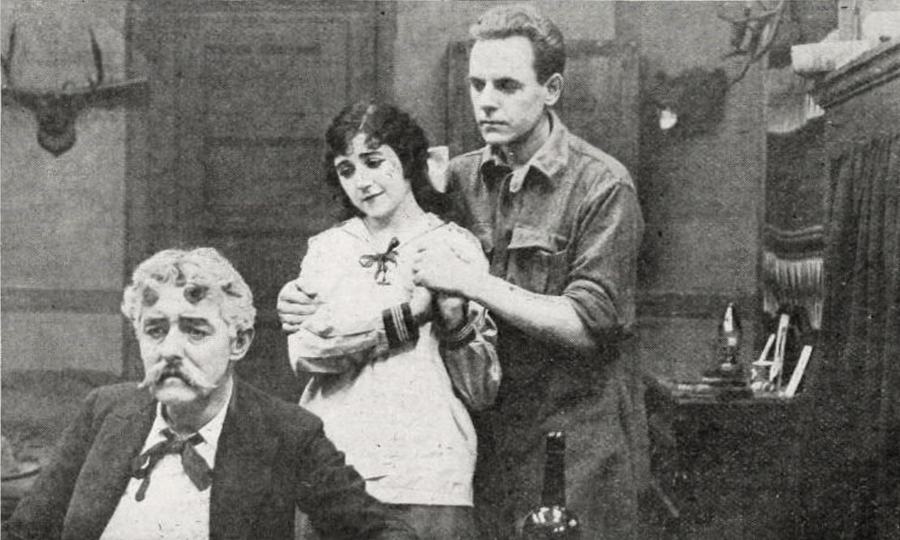
Dir: Richard Ridgely
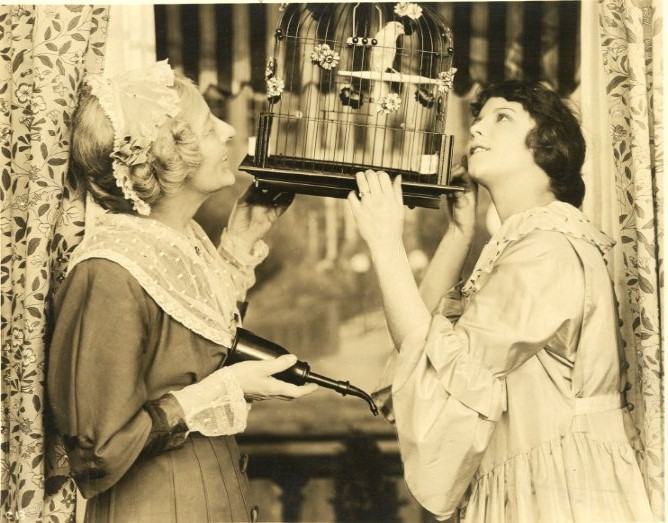
Filled with memories of the Philippine campaign, Lieutenant Ranson returns to the United States. After a month or two in Washington, he tells his father that he must have a change, and a chance to see some excitement. General Ranson writes and arranges to have him go to Fort Stanton, Texas, an Army post commanded by an old friend. Arrived at the railroad town nearest to the post, Ranson is conveyed to the post by stagecoach. A prairie fire is in progress a few miles away from Fort Stanton, and Ranson joins the soldiers and others in fighting it. Incidentally, he is successful in rescuing Mary Cahill, the daughter of the post-trader, Patrick Cahill. Ranson is received into the life of the fort and becomes a leader among the younger men. Ranson talks of the "big doings" out in the Philippines, and is "bored to death" with the dull routine of the fort. When one of the men calls his attention to a placard announcing a large reward for the capture of "The Red Rider," Ranson declares that it is nothing at all to hold up a stage; that anyone can do it and get away with it; that on a $50 bet, he himself, will hold up the stagecoach that night with a pair of shears. His brother officers ridicule the idea. Ranson insists that he can, and will, do it. Meantime, at the railway town, the coach has already started when Lieutenant Patten, the paymaster, arrives, carrying a bag containing $10.000 with which to pay off the soldiers. Finding the coach gone, he engages a man with a buckboard to drive him to the fort. Ranson successfully holds up the stagecoach. He is polite to the two lady passengers and takes nothing from anybody except a souvenir from one of the ladies, in the form of her photograph, this being sufficient proof to show his brother officers. He then rides back to the post. Meantime, Lieutenant Patten, hurrying along in the buckboard, is held up by a masked man dressed almost exactly as was Ranson. In a fight that ensues, the highwayman shoots and kills the driver of the buckboard, and wounds the lieutenant in the shoulder. The robber then gets possession of the bag of money and makes good his escape, but not before he has been himself shot in the hand by the paymaster. At the post, the news of the robbery arrives with the return of the detachment of men who have been sent out to escort the paymaster. They bring Lieutenant Patten with them, and he tells of the robbery and of having wounded the robber in the hand. As an outcome of the whole affair, Ranson is arrested, charged with having held up both stage and the pay-train. He is confined to his quarters, awaiting court martial, and there he sends for Mr. Cahill, with whom he wishes to speak in regard to Mary. He notices that Cabin's hand is bandaged, but Cahill tells him that his pony bit him while he was bridling her. Mary enters, and in the course of the conversation tells Ranson that her father has told her that he shot himself in the hand while fooling with his revolver. Ranson is at once suspicious, and when Mary goes out he accuses Cahill of being the real "Red Rider." Finally Cahill confesses that it is true. Ranson tells him that no matter what happened, he will stick by his daughter. He urges Cahill to hurry away to Fort Worth on the pretext of buying an engagement ring. Cahill says he will do so and that he will write a letter of confession exonerating Ranson, after he is safely in Canada. But hardly has he entered the other room when Ranson hears a shot. Rushing in, he finds Cahill lying across the table, a bullet through his brain. By his hand is a brief note of confession, which he has hastily scribbled. As Mary rushes in, Ranson draws her back but she has guessed the truth. Her father has paid for his long-concealed life of crime, and now she gives herself wholly into Ranson's keeping, knowing that her father's wish was to have them marry and be happy.
View Details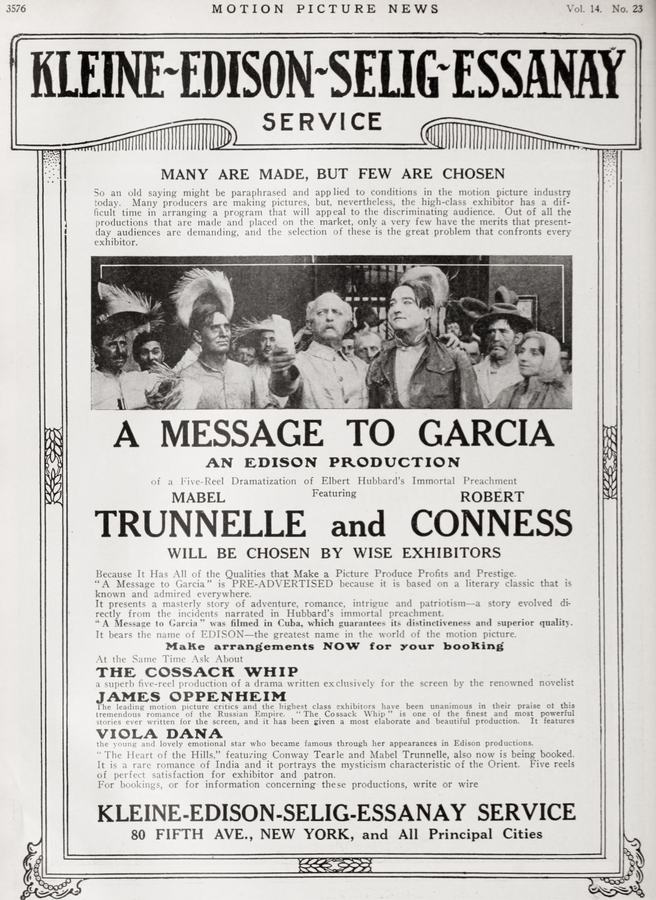
Dir: Richard Ridgely
Spanish soldiers arrive in Cuba and raid the farm of Dolores' father. Father and brother, attempting to protect their home, are arrested and held for court-martial. Captain Hernandez listens to Dolores' plea for their release and taken by her beauty, promises to set them free. His advances to her are interrupted by the sound of a rifle volley. Through the open window, Dolores sees her father fall before the firing squad. For this she kills Hernandez. Running to his home in the mountain fastnesses, she tells Garcia, Cuba's savior, of her act. Political unrest finds the Maine anchored in the Harbor of Havana. Jose, Dolores' brother, hiding from the troops who have killed his father, seeks revenge. Prowling about, he enters a subterranean vault where he sees an officer exhibiting to some visitors, the switch which controls the mines laid in the harbor. The officer and his friends depart, and Jose throws the switch which sends the Maine and its crew to the bottom. Garcia's whereabouts are unknown and President McKinley seeks a man who can deliver a message addressed: General Garcia, Somewhere in Cuba. Of the many who are called, Lieutenant Rowan alone is chosen. Mme. Gonzalles, a spy in America, employed by the Spanish government, is instructed to ascertain the attitude of the United States government, after the sinking of the Maine. She discovers that Rowan is sailing for Cuba with a message for Garcia. Determining that the message must not reach its destination she follows Rowan on his trip across, arranging by wire for his arrest upon his arrival in Havana. A soldier, stopping at a well near Dolores' home, drops a message addressed to Captain Gonzalles, Mme. Gonzalles' brother, informing him that she has arranged for the American's capture. Dolores rushes to Garcia with the news. On board ship, Mme. Gonzalles makes several efforts to get the message, but each time is foiled by Rowan. He learns of the fate that awaits him and when the boat docks, escapes the pursuing soldiers by jumping overboard. Rowan swims ashore and eludes the pursuing Spaniards. Meeting one of the soldiers single-handed, Rowan overpowers him. exchanging his own wet clothes for the man's uniform. Thus, clad as a soldier of Spain, Rowan sets out to roam the wilderness for Garcia. He meets Dolores who, at first frightened because of the uniform he wears, shows her relief and joy when she learns that he is "Americano." He manages to make her understand that he is seeking Garcia. "Butcher" Weyler, Governor-General of Cuba, upbraids Mme. Gonzalles for her failure in effecting Rowan's arrest. Fearful lest Weyler wreak his wrath upon her, Captain Gonzalles, her brother, offers to assume personal responsibility for the immediate capture of Rowan. From the brow of a hill, Rowan and Dolores sight the pursuing party. Capture is imminent and Rowan entrusts his message to Dolores. They part ways and soon Rowan is made a prisoner. Dolores, however, manages to set him free. Again, they start on their journey, but the pursuers soon take up the trail and before long they find themselves ambushed. All hope seems lost. Dolores parts the bushes and reveals in the distance, the house of Garcia. She returns the message to Rowan and bids him hasten on, while she remains behind with his rifle, holding off the attacking troops. Rowan delivers the message, but on his return he finds the bullet-riddled body of Dolores, mute witness to her great heroism. As a sacred memory of the one who made the delivery of the message possible, he takes back home with him Dolores' lace scarf. Back in the barracks the boys are rejoicing at Rowan's success. He is greeted amid wild shouts and cheers, and when the lace scarf comes to view his friend turn to him with an all-knowing smile. But the story of Dolores' sacrifice soon makes them understand and when the call to arms is sounded they march away cherishing the name of the unknown "little Cuban."
View Details
Dir: Richard Ridgely
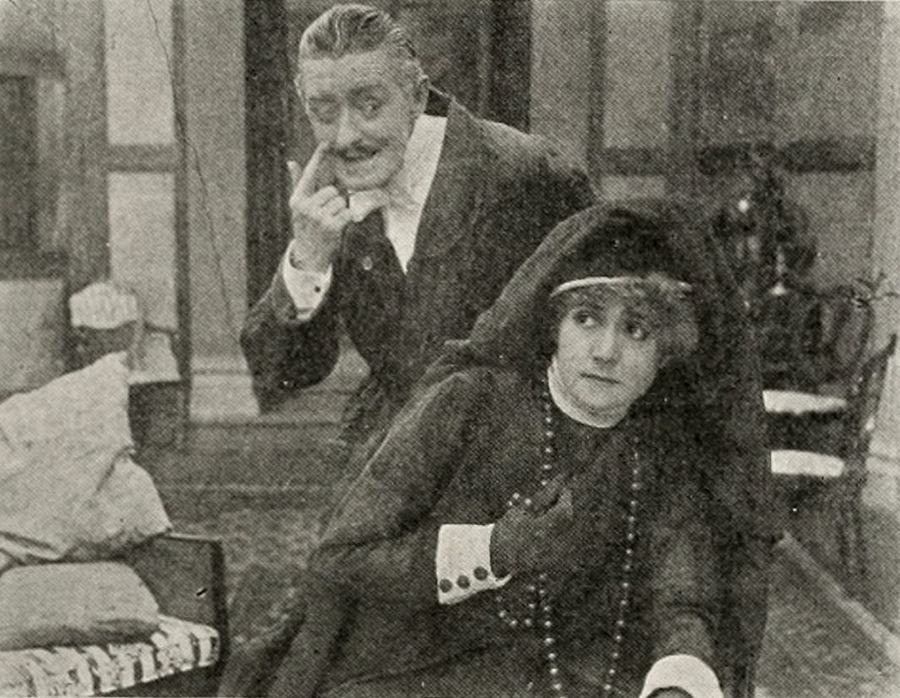
Eve Leslie is a poor country girl who wishes she could have fine clothes, motors, and wealthy friends. The person she envies most is famous actress Betty Howard, not knowing that Betty's life has been full of sorry--for years she sought a certain man, and when she found him he was a a desperate criminal who, misunderstanding her kindnesses, tried to blackmail her. Her hard work, too, has affected her health and her physician has ordered her to give up the stage to take a long rest. Betty longs for just the sort of life that Eve has and doesn't seem to appreciate. Through Adam Moore, son of a rich man, Eve hears much of Betty Howard, who is a "pal" of Adam's. One day Betty is motoring with Stanton Skinner, an unscrupulous man who wants her to marry him. Betty collapses and is taken to Eve's home, which is nearby; they become friends. Rocco Erwin, the man Betty has been seeking, attempts to rob Skinner, is caught, and is released only upon Betty's pleas. She tells Skinner who Rocco is. Rocco, himself, does not know. Rocco later comes to Betty for more money, is refused, and throttles her and flees, leaving her for dead. Skinner, who has fallen in love with Eve, invites her aboard his yacht. Rocco follows Skinner to the yacht, where Eve has gone. Rocco asks Skinner to help him escape. Skinner refuses and Rocco attacks him. Rocco learns that Betty is his sister, and attempts to slay Skinner, while Eve crouches nearby frantic with terror. Betty recovers, learns where Eve has gone, and, with Adam to help her, follows to the yacht. In exciting scenes Adam and Betty rescue Eve from her peril and she rests securely in Adam's arms, envious no longer.
View Details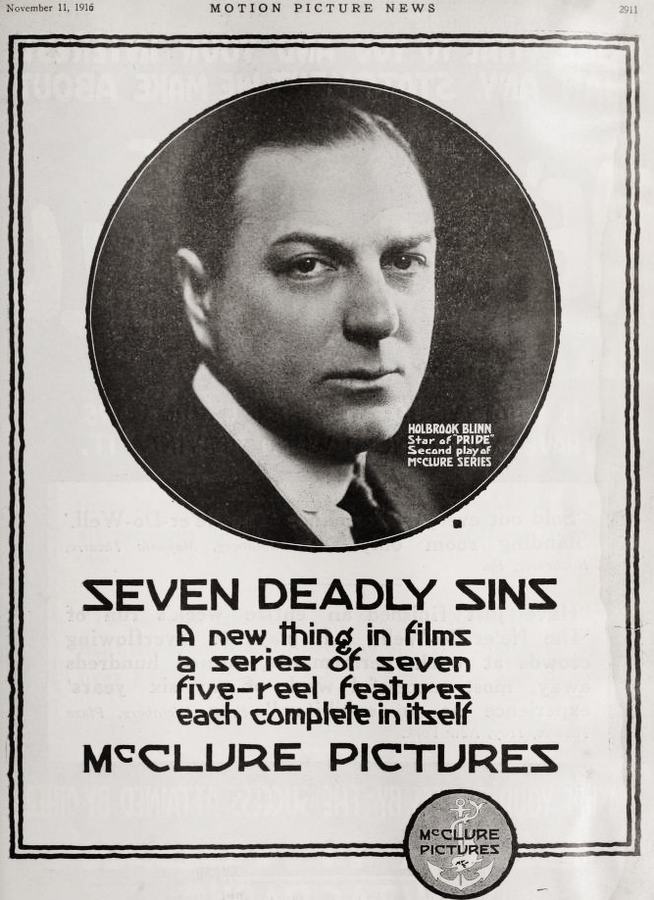
Dir: Richard Ridgely
Eve Leslie is sent to boarding school. Proud of the fortune that has come to her she feels herself above Adam Moore, who loves her. Eugene D'Arcy, a powerful banker, who also suffers from pride and arrogance, meets Eve and wants her. In order that her pride may be further satisfied, she decides to marry a count. They elope, after eluding D'Arcy in an exciting chase, and board an ocean liner, bound for Europe. D'Arcy manages to catch the liner, as does Adam Moore, who stows away, hoping to protect her. Aboard the liner Adam manages to expose the bogus count and frustrate D'Arcy. Adam wins back his sweetheart after she has learned from bitter experience that a fall always follows pride. A fitting end comes to D'Arcy, who pays for his evil machinations that resulted from his false pride.
View Details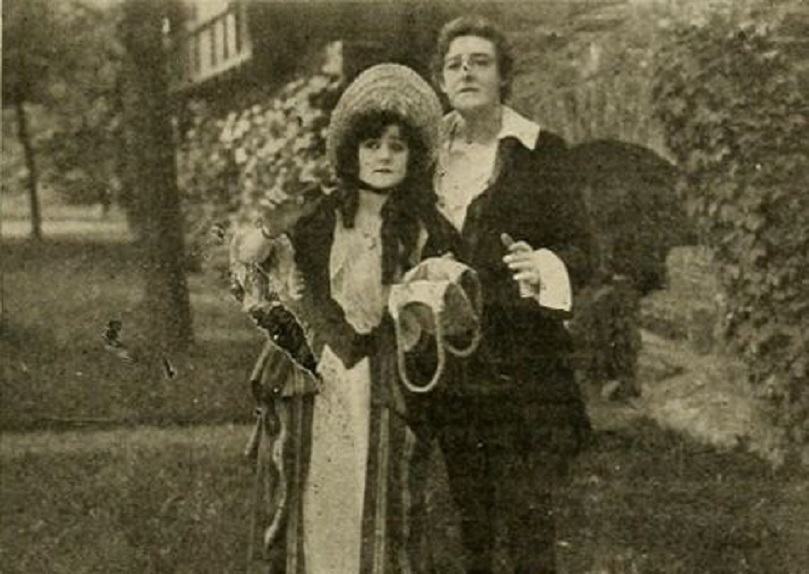
Dir: Richard Ridgely
Eugene Aram, devoid of opportunity as far as scholasticism is concerned, is ambitious to learn, and his labored course. of study is a source of merriment to Housman, a degenerated distant relation. Housman chances to read a letter written by a man known as Clark to his son, Walter, at Grassdale, England, to the effect that he is about to return to him with a quantity of jewels and sundry valuables, given him as a reward for saving a person's life in India. Housman sees many of the jewels and rarities and determines to rob Clark. He persuades Eugene to go in on the job with him. Clark is attacked by Housman and felled by a blow, as Eugene comes up. Clark seizes the tatter's hand as Eugene prevents another blow from being struck. Clark is killed, however, and Eugene, refusing to accept any of the money, dismisses Housman after the body has been covered up with leaves. At Grassdale, Walter is in love with Madeline, who treats him with pronounced apathy in consideration of her sister, Eleanor, who loves Walter extremely. Five years pass and Eugene is a schoolmaster in Grassdale. His mind is tortured by the vision of Clark which he continues to have. Even his pupils, with the aid of significant poems and verses, seem to be conspiring to add to his discomfort. Eugene has met Madeline and they are enamored of each other, their association firing the jealousy of Walter, who warns Madeline against Eugene. Housman and his associates force entrance into the Lester home and Eugene, who happens to be there at the time, shoots Housman, but not fatally. They recognize each other, and Eugene promises to meet Housman at the glen the next day. At the meeting Housman demands a large sum to keep from Eugene's friends the particulars of Clark's death. Subsequently Eugene goes to Housman's hovel in London and gives him the money and receives the assurance that Housman will leave the country. Walter continues to disparage Eugene in Madeline's eyes. Housman receives word that his child, Ann, is dying and holds up Walter, who is on a trip to London, and relieves him of his fleet horse. Housman arrives to find his beloved daughter dead. He enters an inn and soon is intoxicated. Some strangers are discussing the unearthing of a skeleton, supposed to be that of Clark, who disappeared five years before. Walter enters the inn and listens. Housman interrupts by stating that they are wrong, as he can show them Clark's skeleton. He goes to St. Robert's cave and shows him Clark's bones. He then tells Walter that Eugene Aram committed the murder. Eugene is arrested, tried and adjudged guilty on the strength of Housman's testimony. Walter implores Eugene to confess, promising him forgiveness, and Eugene gives the exact account of the robbery and murder. Walter believes and shows great gratitude and friendship. Madeline is approached by the now repentant Walter and is told the verdict. She crushes to her bosom the rose given her by Eugene and dies, the shock killing her. The closing scene shows Eugene on the gallows, expiating a crime that he did not commit.
View DetailsAnalysis relative to The Master Passion
| Film Title | Atmosphere | Complexity | Similarity |
|---|---|---|---|
| The Great Bradley Mystery | Tense | Dense | 85% Match |
| The Martyrdom of Philip Strong | Ethereal | High | 90% Match |
| The Ghost of Old Morro | Surreal | Abstract | 91% Match |
| Passion | Gritty | Dense | 97% Match |
| Shadows from the Past | Gothic | High | 93% Match |
This guide was algorithmically generated using the cinematic metadata of Richard Ridgely's archive. Last updated: 8/17/2026.
Back to The Master Passion Details →