
DbcultAccessing Vault...
Recommendations
Senior Film Conservator
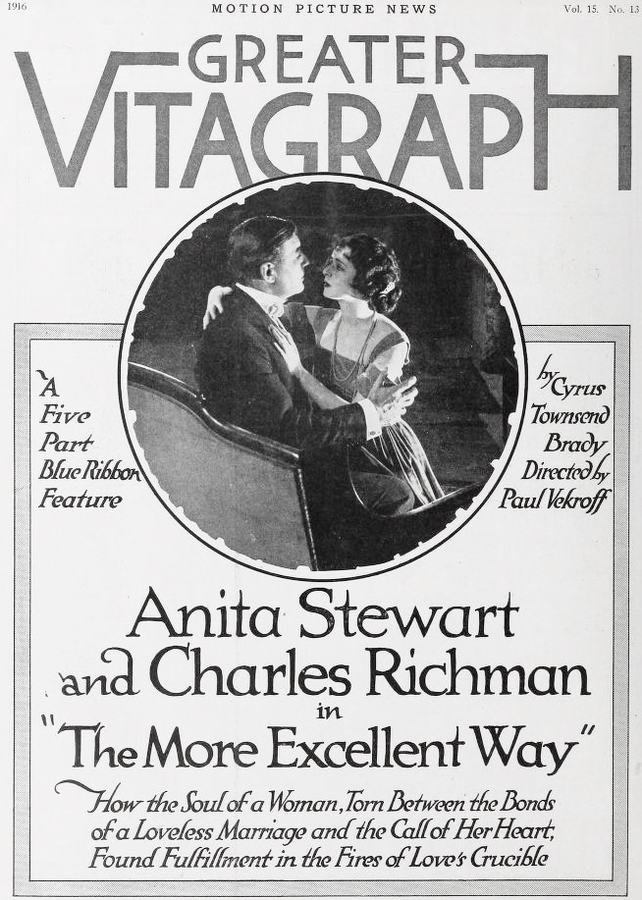
The cinematic DNA of The More Excellent Way (1917) is truly one of a kind, the search for similar titles reveals the deep impact of Perry N. Vekroff's direction. Our cinematic experts have identified several titles that reflect the spirit of 1917.
As a pivotal work in United States cinema, The More Excellent Way to capture the existential zeitgeist of 1917.
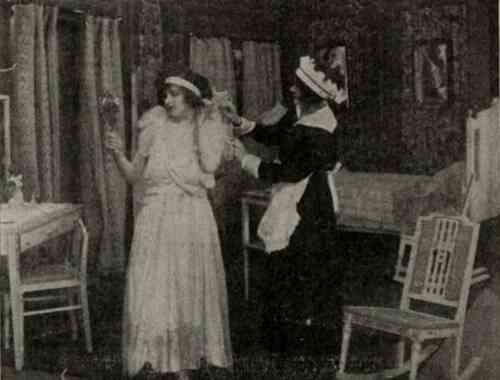
Chrissey Desselden, the ward of John Warburton, promises to marry him. Opposed to him is Robert Neyland, but he is not worthy of Chrissey's love. The girl, however, is fascinated by him, and not until his misconduct dismays her does she turn from him to John. After the wedding she recoils from her situation and pleads with her husband to treat her still as a child until she knows her own heart. This he consents to do. Meantime Neyland goes quickly to the bottom of the social ladder, but despite this Chrissey decides she loves him. With Warburton's consent she outrages her marriage vow by going to Reno to secure a divorce, Neyland remaining to plot against Warburton to ruin him financially. To effect this he needs money from Chrissey, which she wires him permission to use. However, she learns at the last moment what a treacherous purpose he plans with it. She throws over Neyland, who, through a culmination of other troubles, does the one graceful deed of his life by ending it. She returns to Warburton to be his wife in fact.
The influence of Perry N. Vekroff in The More Excellent Way can be felt in the way modern cult films handle cult status. From the specific lighting choices to the pacing, this 1917 release set a high bar for atmospheric immersion.
Based on the unique cult status of The More Excellent Way, our vault has identified these titles as the most compelling follow-up experiences for fans of cult cinema:
Dir: Perry N. Vekroff
A prologue introduces author Charles K. Harris at his window, viewing a crowd that has gathered around an ambulance. Harris says to his clerk, "Only an abandoned child," and then dictates the following story. Richard Hartley, a millionaire's son, marries Vera Walton, a musical comedy dancing girl, while he is intoxicated at a party. Richard regrets this rash act when he becomes sober, and because he is under twenty-one, his father is able to have the marriage annulled. Richard goes abroad, during which time Vera gives birth to their son, whom she then deserts. When Richard returns, he weds his former fiancée, a respectable girl from his own set. Childless, the couple adopts Victor, Vera's child, unaware of his parentage. Twenty years later, Victor, a physician at a New York hospital, is engaged to Muriel Worth. Meanwhile, Vera, who has trained to be a nurse to be near Victor, is recognized by Richard's father, at the hospital after an accident. When a rival for Muriel's affection tells the Board of Governors of an exclusive club that Victor is trying to join that his father's a crook, Vera discloses her secret to them but keeps silent to Victor. Richard, whose wife died years earlier, learns about Vera's devotion, and marries her.
View Details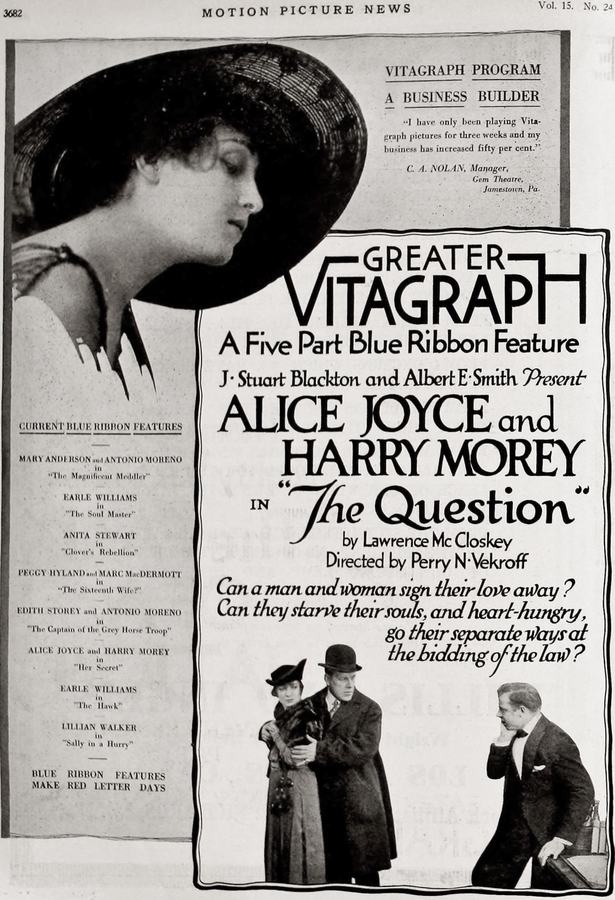
Dir: Perry N. Vekroff
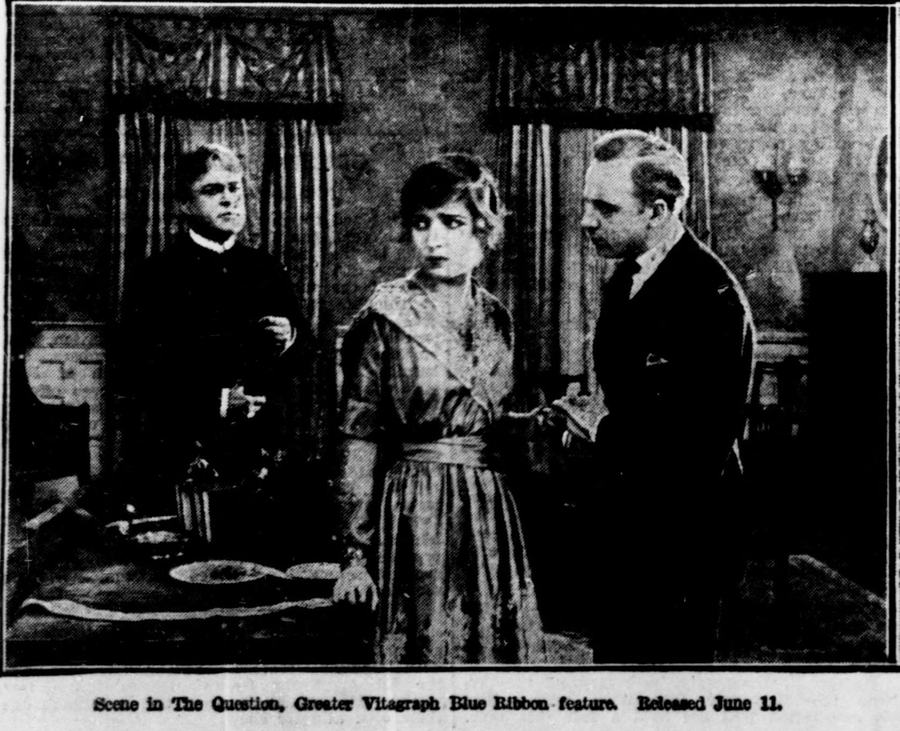
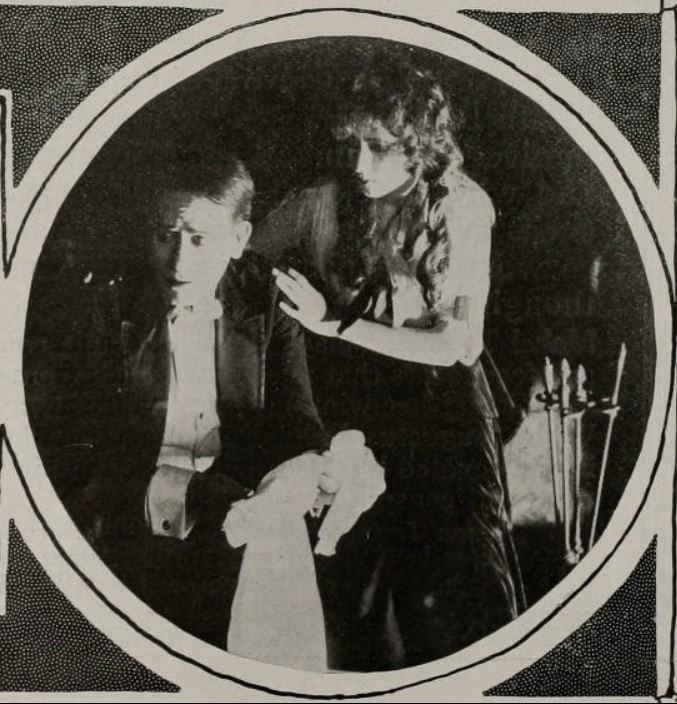
Dr. Rundel has devoted his life to developing a formula that will revolutionize the medical world. Fearing that the romance of his assistant, John Stedman, with Martha Wainwright will impede the progress of the formula, Rundell forces Stedman to sign an agreement stipulating that he will postpone marriage until after the completion of the formula. After Rundel's death, Stedman is bound by the agreement, and Martha's father insists that his daughter wed wealthy Allen Cosgrove. When Martha sends Stedman a note that he must give her up, he suffers a breakdown. Martha comes to Stedman's aid and agrees to live with him, thus creating a scandal, which causes a confrontation between Cosgrove and Stedman. The problem is resolved as Dr. Rundel awakens from his dream and destroys the agreement.
View Details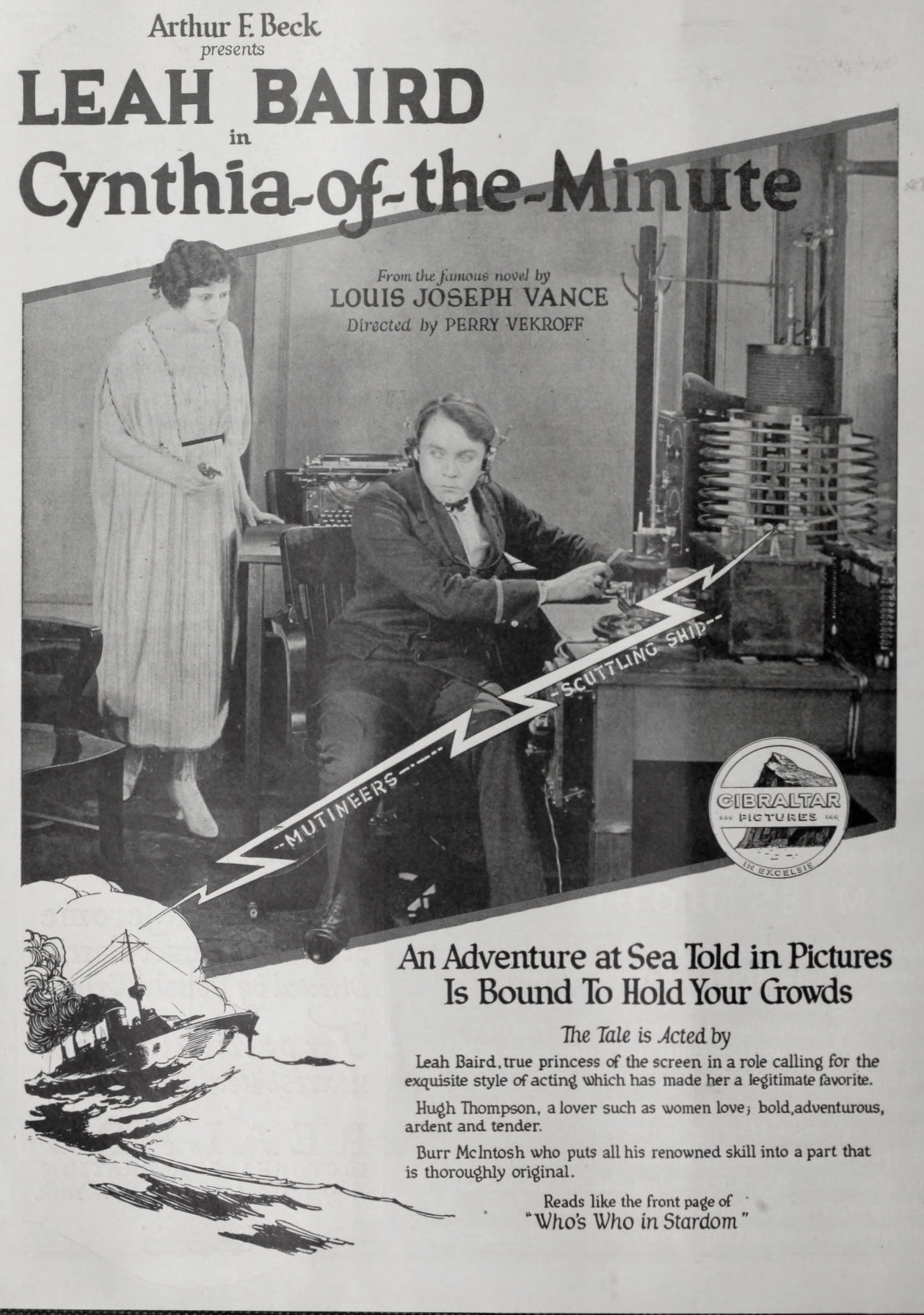
Dir: Perry N. Vekroff
While in New York seeking work, Cynthia, a young English girl, meets Bruce Crittenden and George Rhode who introduce her to Madame Savarin, a wealthy woman seeking a companion for a sea voyage. She hires Cynthia, and while at sea, Cynthia discovers that Bruce is the ship's purser. Cynthia's father was a famous wireless expert who taught her how to read code, which enables her to overhear a plot to sink the ship and steal Mrs. Savarin's jewels. Soon after, the crew mutinies, and while Rhode and Bruce fight the crew, Cynthia sounds the alarm. As he is attempting to foil the jewel thieves, Bruce falls overboard, and Cynthia swims to his rescue with the jewels strapped to her back. They are rescued by a government patrol boat and taken back to New York where Cynthia and Bruce are married.
View Details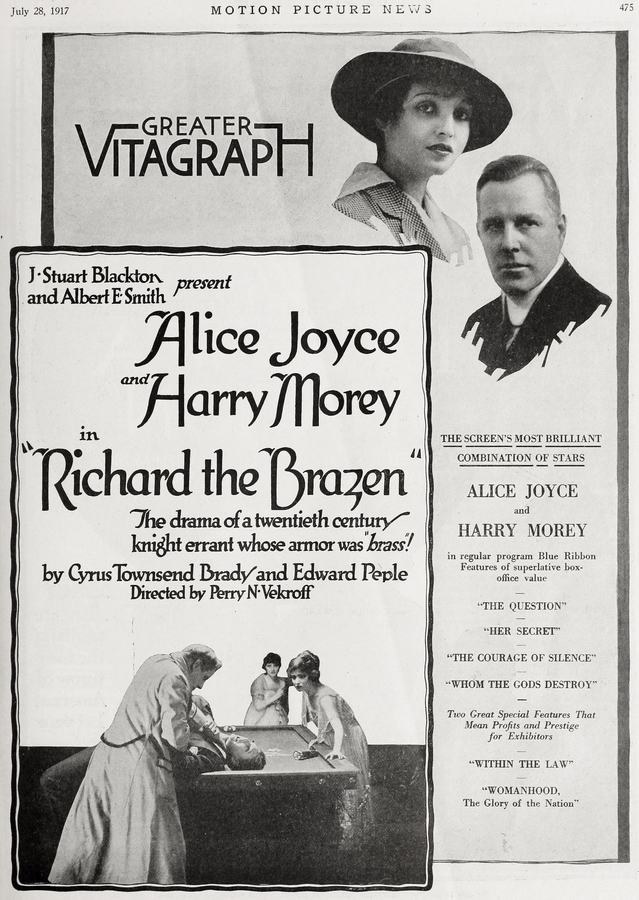
Dir: Perry N. Vekroff
"Richard the Brazen" is the romance of a modern knight who has all the flourish and daring of the knights of old, although he happened to be born in Texas in the 20th century. While traveling with his chum, an English peer, an accident forces him to assume his friend's title, valet, and monocle and leads to a meeting with a girl whom he had worshipped from afar in England. He is obliged to court her under false pretenses, and the complications growing out of this false situation culminate in a stirring fight with a burglar in which the true state of affairs is revealed and Richard restored to his rightful title as scion of a Texas family. - New York Dramatic Mirror, July 28, 1917.
View Details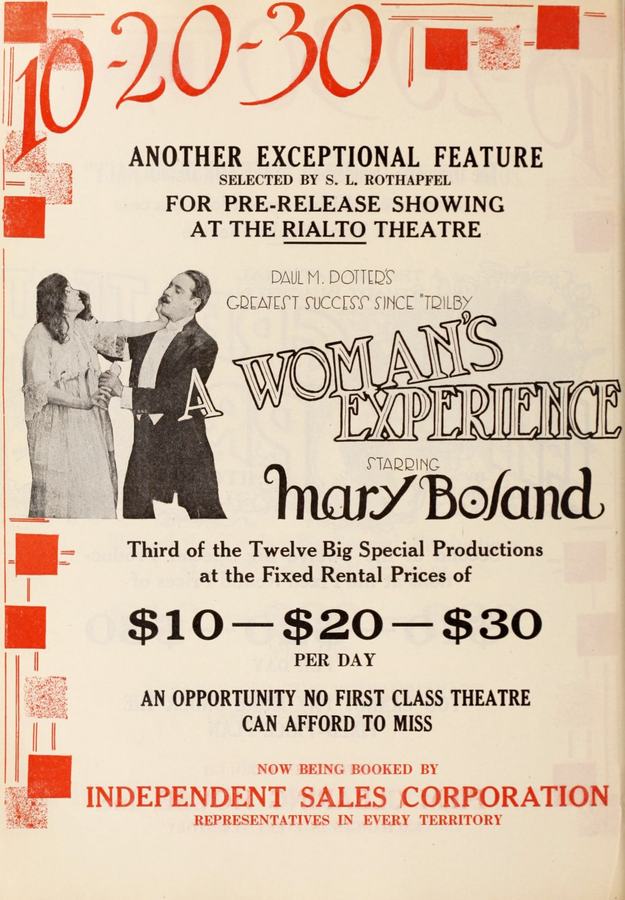
Dir: Perry N. Vekroff
George and Alice Roydant live in the country with her wealthy uncle Nicholas Barrable, who wants to keep them from the city's temptations. After they become bored and move to New York, George neglects Alice as he successfully speculates on the market. He becomes involved with Attlie Damuron, an adventuress who soon begins to blackmail him. After George, upset at his situation, angrily rebukes Alice, she decides to accept the advances of Lord Sulgrave, a guest in their home. She sends him a note to come to her bedroom, but when he knocks, she regains her self-respect and refuses to allow him to enter. Sulgrave forces his way in, and after struggling with her, accidentally drinks her sleeping potion and dies. After George confesses his trouble with Attlie, Alice makes it appear that Sulgrave poisoned himself in his own room. Finally, Barrable arrives and helps them financially, they return to the country, and vow never to stray again.
View Details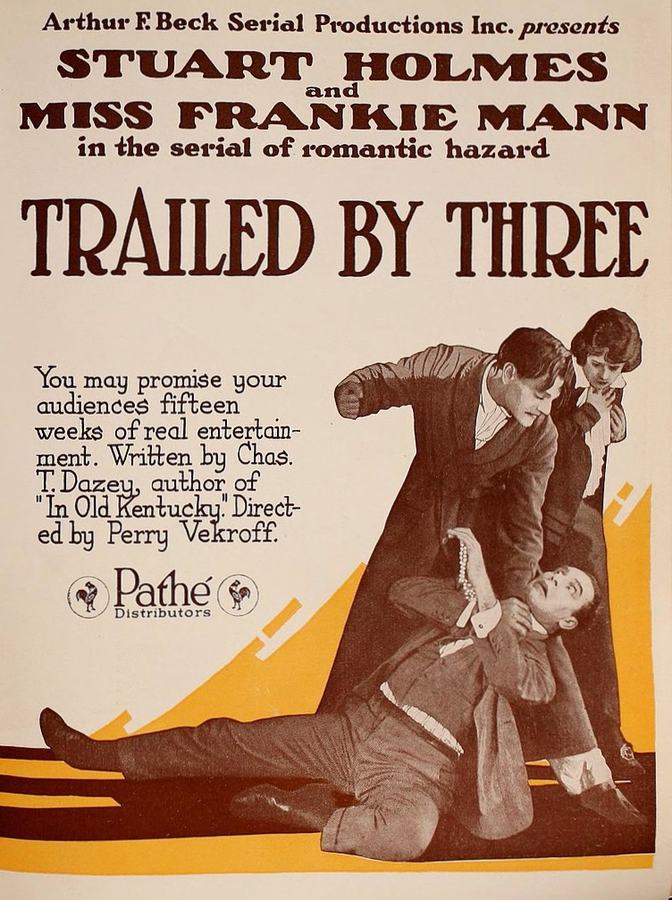
Dir: Perry N. Vekroff
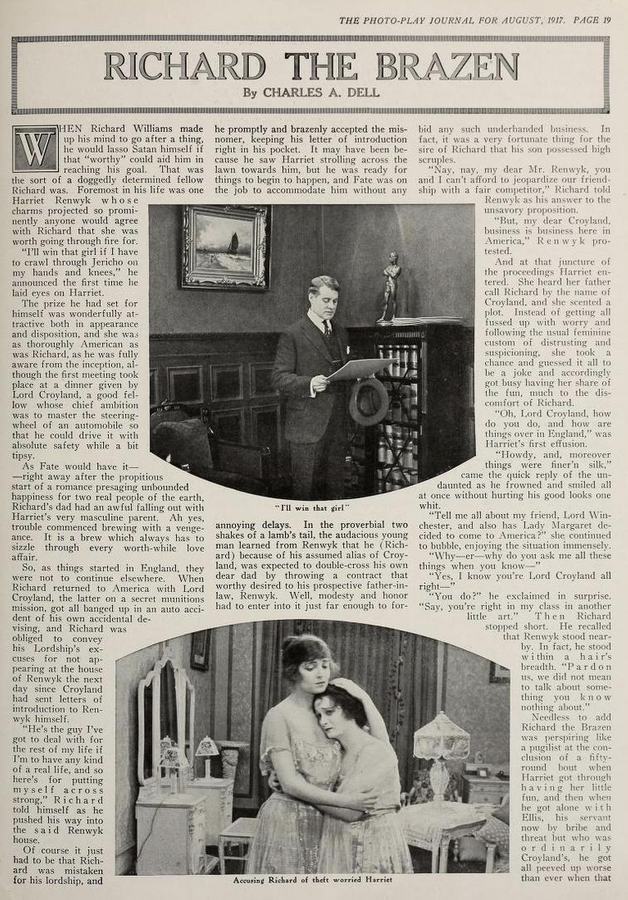
From an original trade paper advertisement: "The story of a girl who for months was in perpetual peril; on land, on sea, everywhere, Orient, Occident, and the Antipodes. And because of that peril and her narrow escapes it is always exciting, and will furnish gobs of entertainment for your patrons."
View Details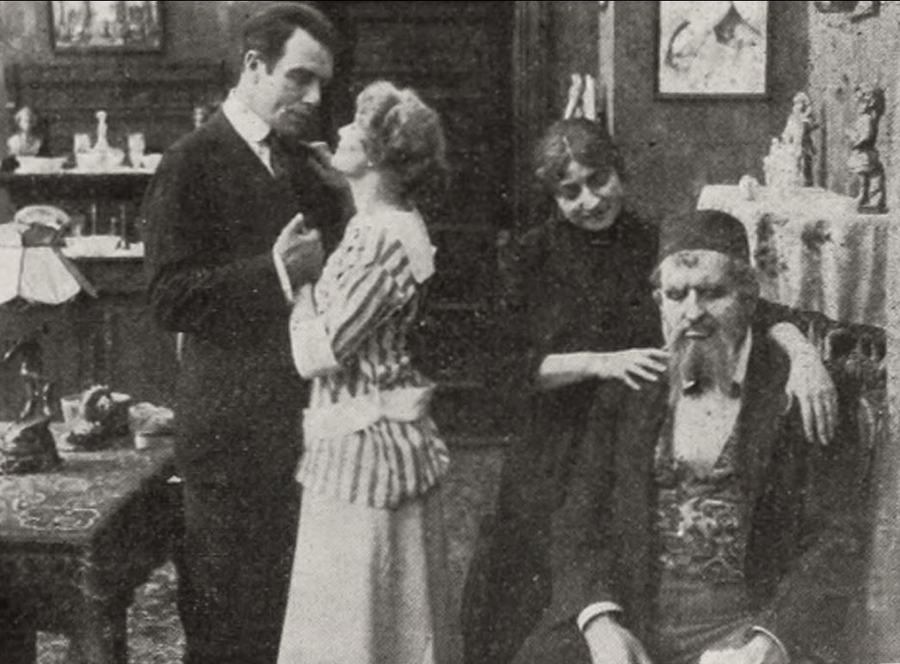
Dir: Perry N. Vekroff
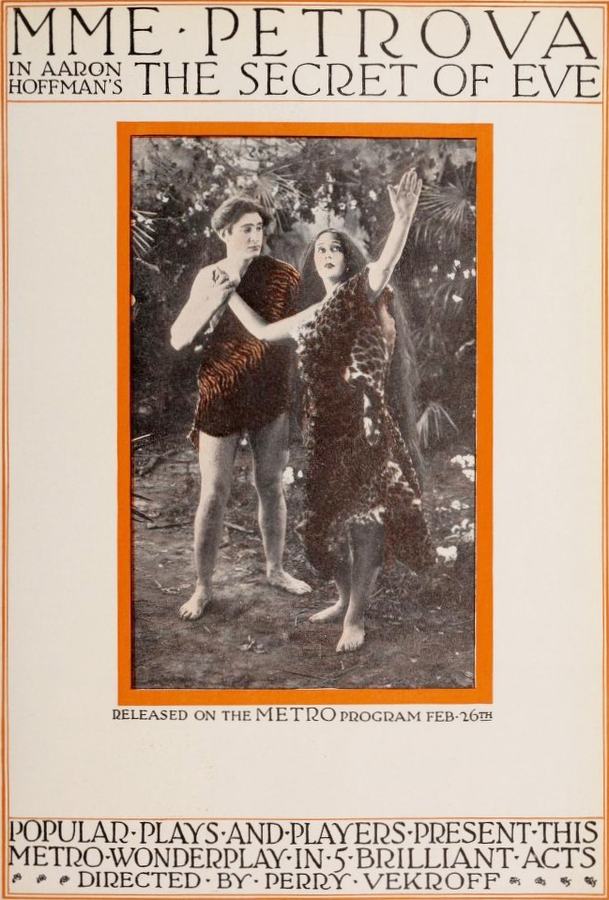
Hagar, a gypsy woman, is determined that her child, Eve, shall have a better chance for happiness than her wandering life has afforded her. She leaves her baby on the doorstep of a Quaker family, the Fothergills and little Eve is brought up as their daughter. The ways of the Quakers pall upon Eve when she grows up. She sees merrymaking in the home of the Brandons one evening, and lured by the lights, peers in at the window. The gay crowd notice the Quaker girl, draw her into the house, and amuse themselves by dressing her up in finery. She confesses her loneliness to Arthur Brandon, who tells her of the fascinations of a great city. As their friendship grows, he asks her to marry him. She consents, and for a time revels in gaiety. But it finally becomes clear to her that there is no real happiness in such a life. Brandon is a factory owner, and he is conscienceless in his treatment of his workers. Eve is humiliated by the denunciations of her husband that appear in the newspapers. He also drinks heavily. Richard Blair, a young philanthropist, starts an investigation. While he is visiting Brandon's factory an Italian child, Rosa, is blinded by an accident. Rosa is granted a miserable pittance in compensation for the accident, and Blair tries to force Brandon to do more for her. He refuses. Blair finds work for Beppo, Rosa's father, and sends the child to an institute for the blind. Eve admires the nobility of Blair's nature. Brandon, misunderstanding the friendship of the two, insults her in the presence of Blair, who knocks him down. Eve offers to go away with Blair. He says he loves her. but he will not take her unlawfully. She will not return to her husband, so she goes to the city to fight her own way. She soon finds out, however, that she is unfit for the rough work she undertakes. Deciding that suicide is her only way out, she goes to a park lake intending to drown herself. She hears a girl calling out in distress, and sees the child, who is blind, walking toward the lake. Eve goes to her and finds it is Rosa, who has wandered away from the other children. Eve takes her back to the Institute. Beppo has never ceased to seek for revenge against Brandon. He follows him on board his motorboat, and when the boat is well away from shore he attacks Brandon and tries to kill him. An oil lamp is overturned. It sets fire to the boat, and both men, fearfully burned, sink to the bottom of the bay locked in a death grasp. Blair goes to Eve and tells her the news of her husband's death, saying that the way is now open for them to marry. But Eve's heart is bound up in the welfare of the blind children among whom she has cast her lot. She accepts a position as an attendant at the institute, to give her life to the little ones through whom she has at last discovered the secret of true happiness.
View Details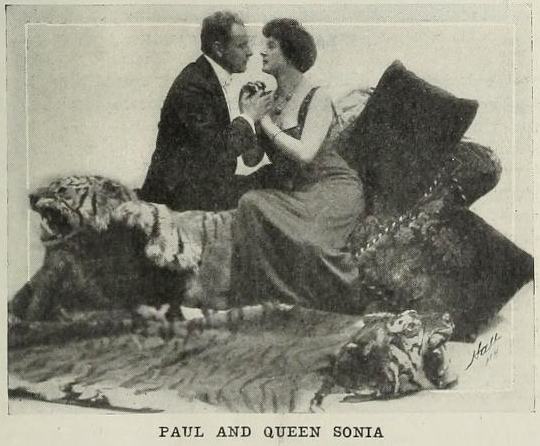
Dir: Perry N. Vekroff
A young English nobleman is sent to Switzerland by his parents, where he meets a mysterious older woman with whom he has a torrid three-week romance.
View Details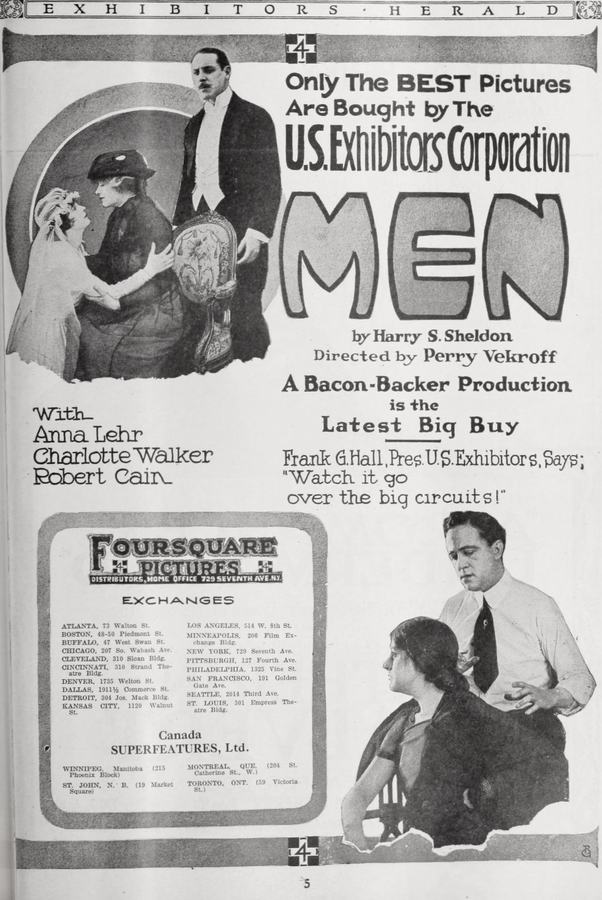
Dir: Perry N. Vekroff
Poverty forces Mrs. Burton to allow the wealthy Mr. Fairbanks, whose wife has become deranged since her baby's death, to adopt Alice, one of her two little girls, while the other, Laura, stays with her mother. Kept in ignorance of each other's existence, the girls grow to womanhood and unknowingly become involved with the same man: vain, wealthy Roger Hamilton. Roger becomes intimate with Laura by promising to marry her, but Alice's wealth soon becomes irresistible to him, and when she quarrels with her fiancé, Tom Courtney, Roger presses his suit with ardor. On the day that Roger is to marry Alice, Laura tells her mother of her own affair with him; Mrs. Burton rushes to the church and publicly denounces the villain. Alice returns to Tom, while Laura is married to artist Anthony Gerard, who loved her all along.
View DetailsAnalysis relative to The More Excellent Way
| Film Title | Atmosphere | Complexity | Similarity |
|---|---|---|---|
| When It Strikes Home | Gritty | High | 86% Match |
| The Question | Gritty | Dense | 95% Match |
| Cynthia of the Minute | Surreal | High | 91% Match |
| Richard the Brazen | Surreal | High | 92% Match |
| A Woman's Experience | Ethereal | High | 96% Match |
This guide was algorithmically generated using the cinematic metadata of Perry N. Vekroff's archive. Last updated: 8/16/2026.
Back to The More Excellent Way Details →