
DbcultAccessing Vault...
Recommendations
Senior Film Conservator
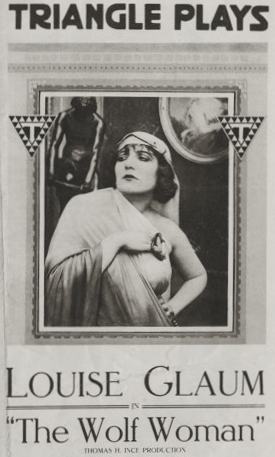
For cinephiles who admire the cult status within The Wolf Woman, its lasting impact ensures that its spirit lives on in modern recommendations. Each of these movies shares a piece of the cult status that made The Wolf Woman so special.
At its core, The Wolf Woman is a study in to provoke thought and inspire awe in equal measure.
An narcissistic woman with the ability to charm, Leila Aradella reaps delight from preying upon weak men. Her first victim is John Morton, a talented lawyer, whom she ruins both morally and financially. Her second victim, Rex Walden, the generous son of society matron Mrs. Walden, becomes her complete slave. Mrs. Walden sends her elder son Franklin to try to dissuade Leila from toying with Rex's affections. Franklin, however, also falls under Leila's spell, and Rex is driven to suicide by her callous behavior. Desperate, Mrs. Walden enlists Adele Harley, a girl of strong moral character, to fight Leila for Franklin's affections. Adele's determined victory causes Leila to lose her confidence, and in a drunken state, she cuts her own face with a shard from her shattered mirror. Permanently disfigured, Leila ends a broken and lonely woman.
Based on the unique cult status of The Wolf Woman, our vault has identified these titles as the most compelling follow-up experiences for fans of cult cinema:
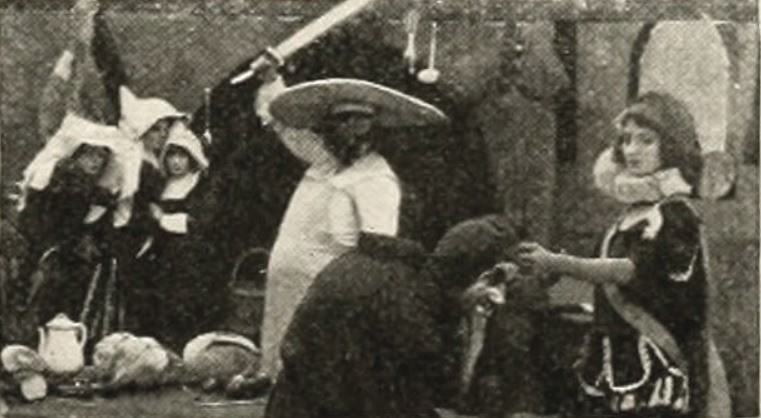
Dir: Raymond B. West
Rumpelstiltskin, a wicked little dwarf with magic power, covets the miller's daughter, Polly. He offers the miller two bags of gold for her and is angrily kicked out of the mill. The dwarf vows eternal vengeance. The King, whose coffers are empty, having heard of the magic power of the dwarf, sends for him and commands him to refill his coffers. The dwarf, in vengeance, tells the King that the miller's daughter can spin straw into gold. The King sends for Polly, places her in a room full of straw and commands her to spin it into gold before dawn, else she, her father and the dwarf will lose their heads. The dwarf tells Polly he will spin the straw for her if she will promise him her first born, if it is a girl. Polly, in order to save her father, promises. Prince Cole, disguised as a hunter, seeks a girl to love. He sees Polly and falls in love with her. She agrees to meet him in the forest, but is captured by the dwarf and taken to his cave, where the Dragon is set to watch over her. With the assistance of the Good Fairy the Prince rescues Polly. The King places the Prince in a dungeon because of his love for Polly. The Good Fairy helps Polly to liberate him and he and Polly step on the magic carpet which the Good Fairy has given Polly and wish themselves far away. They are transferred to the woods, where they are married and a baby girl is born to them. The dwarf searches for Polly and the Prince, finds them and steals their child. The Good Fairy again comes to their assistance and the child is restored to them. The King, whose treasure is exhausted in the search for his son, commands the miller again produce his daughter so that she can spin some more straw into gold for him. The Prince and Polly appear before the King, by whom they are joyfully welcomed. They tell the King the story and the dwarf is condemned to spinning straw the rest of his natural life.
View Details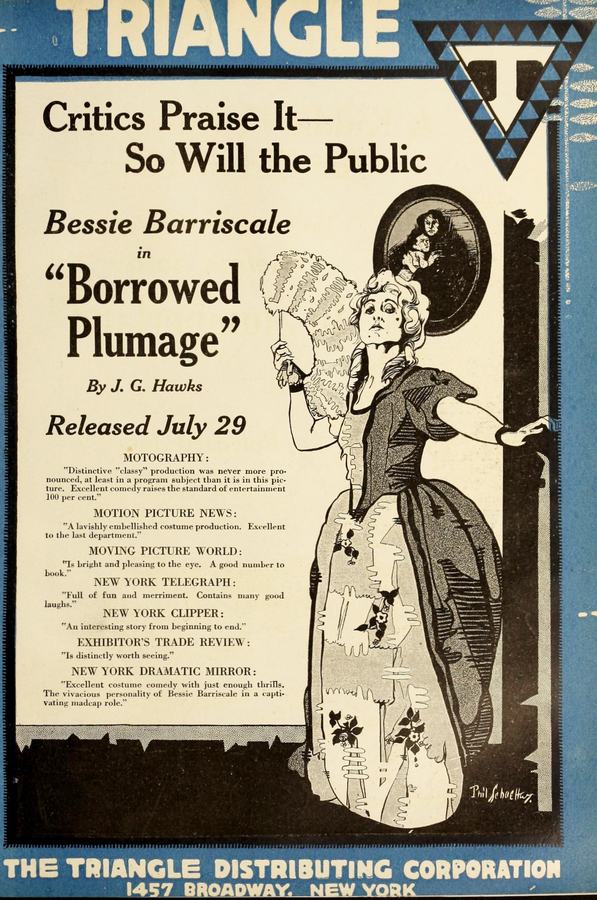
Dir: Raymond B. West
The Earl of Selkirk and his family learn of the impending arrival of American pirate John Paul Jones, they flee their castle, leaving behind Nora, the kitchen maid. Left alone in the house, Nora dons the clothes of her mistress and parades herself about the castle until the arrival of the king's light infantry. Because they mistake her for the lady of the house, she invites them to be her guests. Meanwhile, on board the pirate ship, third officer Darby O'Donovan recognizes the little island as his former home. Sent ashore by the commanding officer to investigate, Darby sees Nora, his old sweetheart, seated at the table with the redcoats and, impersonating an Irish gentleman, he interrupts the gathering. Later, a fisherman exposes Darby's true identity and he is arrested. Nora, determined to save her lover, disguises herself as a soldier and signals the pirate ship for help. After a thrilling battle between the pirates and the soldiers, the pirates escape and Darby sails to America accompanied by Nora.
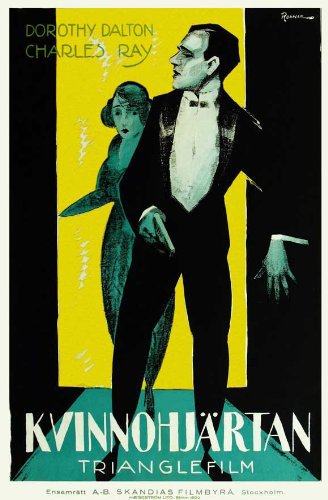
Dir: Raymond B. West
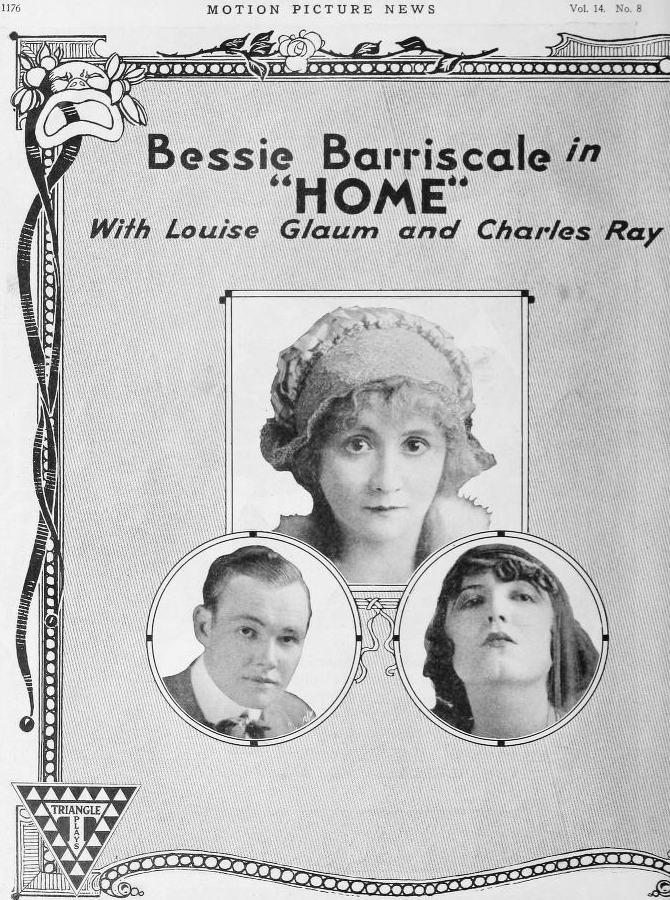
Jack Harding, a wealthy ne'er-do-well, becomes involved with a Broadway vamp. When she is murdered, Jack is falsely accused of the crime and must turn for help to his lawyer--his wife.
View Details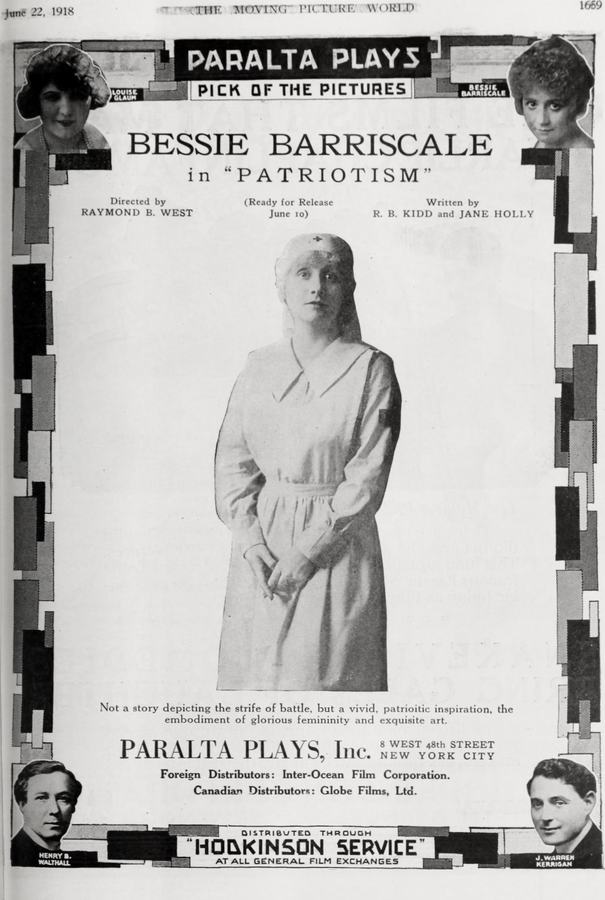
Dir: Raymond B. West
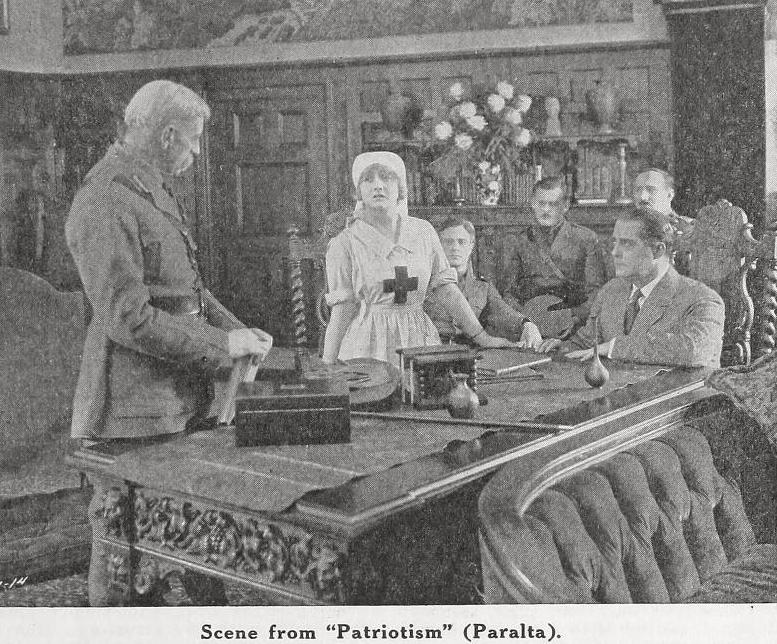
Robin Cameron transforms her home on the Scottish seacoast into a hospital for convalescing soldiers. Sidney Carson, who owns the adjoining estate, and Dr. Hyde both love Robin, but she gives her heart to John Hamilton, an American soldier whose ship was sunk off the coast. When several Allied officials are sent to investigate reports of German spy activities in the area, an air raid occurs, and one of the officers is almost killed. Carson accuses John, and Dr. Hyde, jealous of the American's success with Robin, supports Carson's claim. However, with aid from a little Belgian girl named Mimi, Robin discovers that Carson had sent nightly messages to a fleet of German submarines. Exonerated, John departs for the front, and Robin, although her younger brother Donald has just lost his life in battle, bravely bids him farewell.
Dir: Raymond B. West
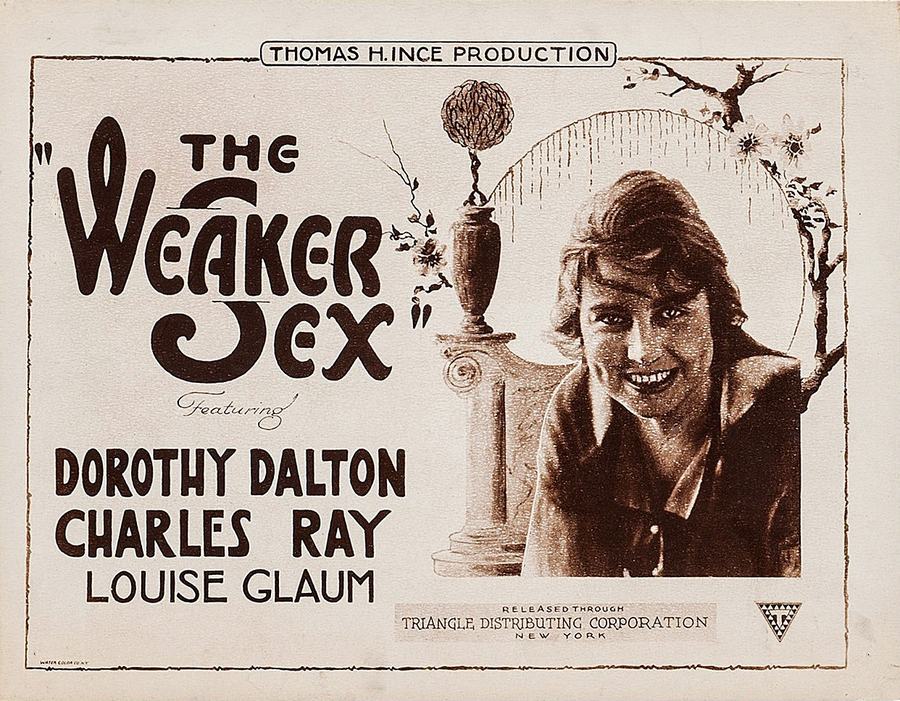
Bessie Wheaton returns from Europe to find that her nouveau-riche family has adopted and magnified the worst characteristics of the upper class. Her father spends all of his time at the club, her mother cultivates snobbishness, and her sister thinks only of marrying into royalty. To shake them out of their aristocratic poses, Bessie decides to reflect all of their faults, becoming as lazy as her father and as status conscious as her mother. She even rejects her own sweetheart, Allan Shelby, to lure Count d'Orr away from her sister. Finally, her family members confront her and she angrily tells them that she was only mirroring their behavior. She then runs away, but Allan, with whom she quickly reconciles, brings her back, just as her family acknowledges their recent burlesque of the upper crust.
View Details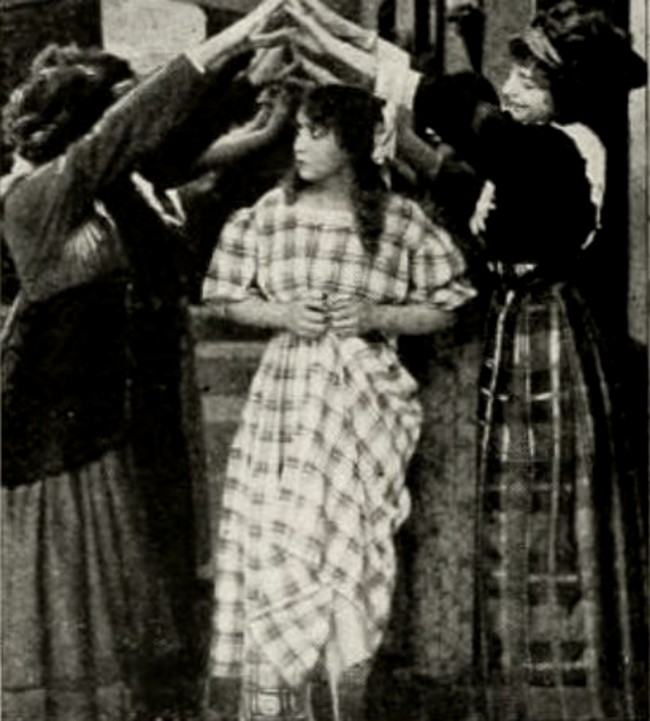
Dir: Raymond B. West
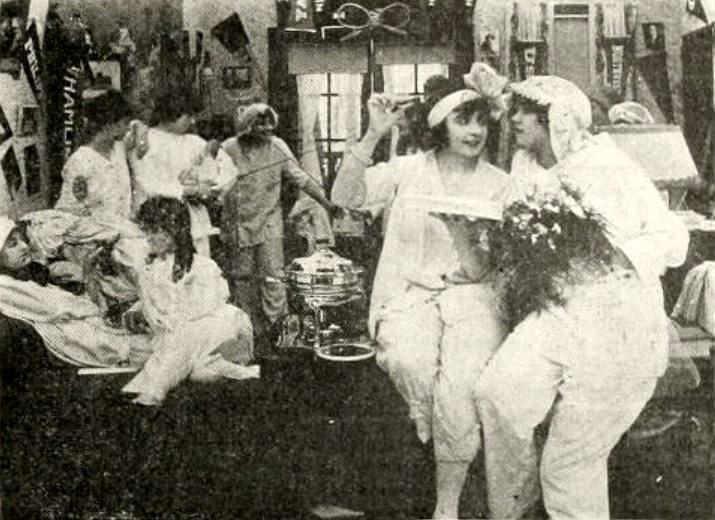
Doris Willard, the daughter of a village minister, achieves the realization of her great dream, a year at college. Doris, although a sweet and pretty girl, is greatly handicapped by her clothes. On her arrival at college she is eyed by the other girls with concealed amusement and curiosity and soon realizes that she "doesn't belong." The girls snub her at every opportunity and she is desperately lonesome and longs for companionship. The Saturday before Thanksgiving when everyone else has gone to the big Princeton-Yale game, Doris sits alone in her room. She picks up the newspaper and sees in it a picture that greatly appeals to her. It is a newspaper cut of "Bullet" Dick Ames, the universal choice for the '"All-American Eleven." She conceives a desperate plan. She thinks nobody at her college knows Dick and decides she will make the girls think he is in love with her. She writes a note to herself to which she signs Dick's name. The note is a proposal of marriage. This she drops on the porch of the girls' hall and it is picked up by one of the girls who reads it to the bunch. Daisy Arnold, the undisputed ruler of the "Beauty Squad," will not believe that Dick knows Doris, and writes to his sister, Eleanor, asking both her and Dick down for the holidays. In her letter she tells Eleanor about Doris claiming Dick has asked her to marry him. Dick sees the letter and he and his sister accept the invitation. When Dick sees Doris, he decides to help her out in her deception. Doris is panic-stricken on the night of the reception given in Eleanor's and Dick's honor, but when she is introduced to Dick he says, "Why sure, we are old friends," and Daisy and her friends are much disappointed, their plan for humiliating Doris having fallen through. After meeting Dick, Doris is unwilling to carry out the deception, but he insists, and before his visit is over they are much in love with each other. Doris, however, refuses to marry Dick, thinking he has asked her out of pity, but through Eleanor's efforts he manages to make her understand that he really loves her.
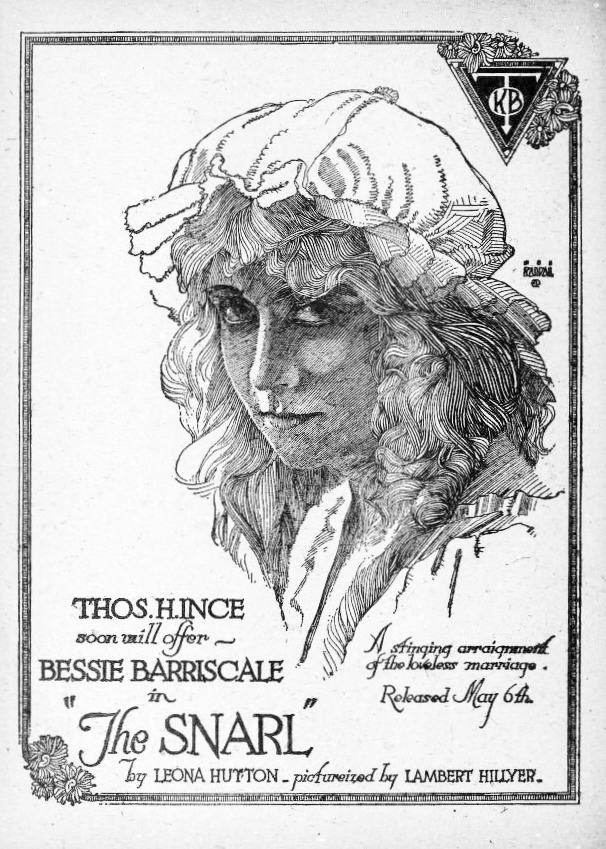
Dir: Raymond B. West
Identical twins in appearance only, sisters Helen and Marion Dean have totally different temperaments: Marion possesses a self-sacrificing character, while Helen is vain and heartless. When Marion, a wonderful singer, is crippled by a car accident just before she is to open at the grand opera, the manager of the opera conceives of the idea of presenting Helen on stage while Marion sings the music behind the scenes. A young millionaire, Monte Bruce, watching from the audience, is captivated by Helen and the two are married. Marion accompanies them on their honeymoon cruise, and when an explosion blinds Bruce, Helen begins to flirt with fellow passenger Jack Mason, leaving her crippled sister to take her place at Bruce's side. Helen's scheme goes awry when Bruce recovers his sight but keeps his recovery secret, thus discovering Helen's duplicity. When a fire breaks out on ship Helen and Mason are drowned while attempting to escape, freeing Bruce to marry Marion, who has recovered the use of her legs.
View Details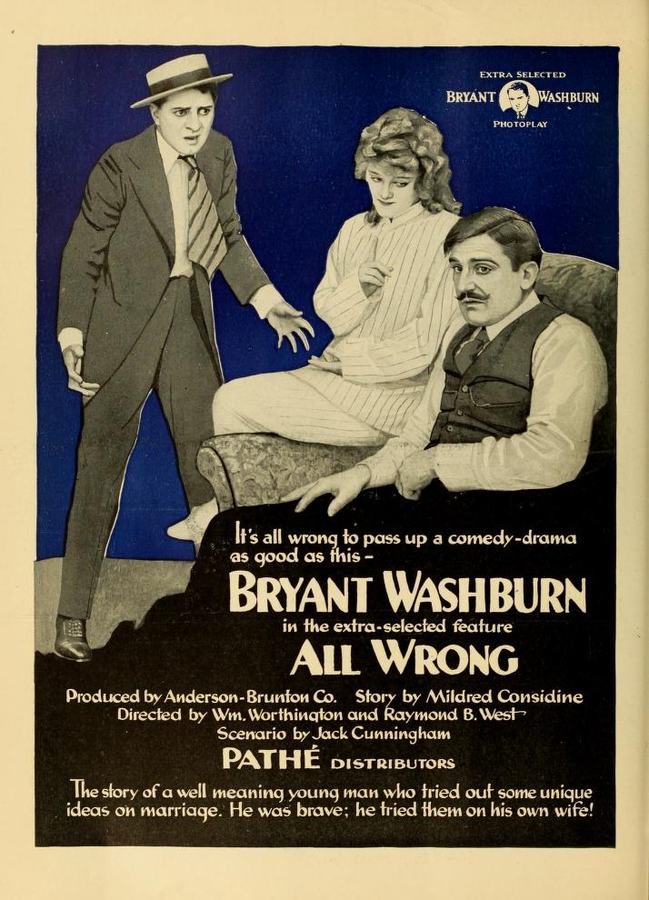
Dir: Raymond B. West
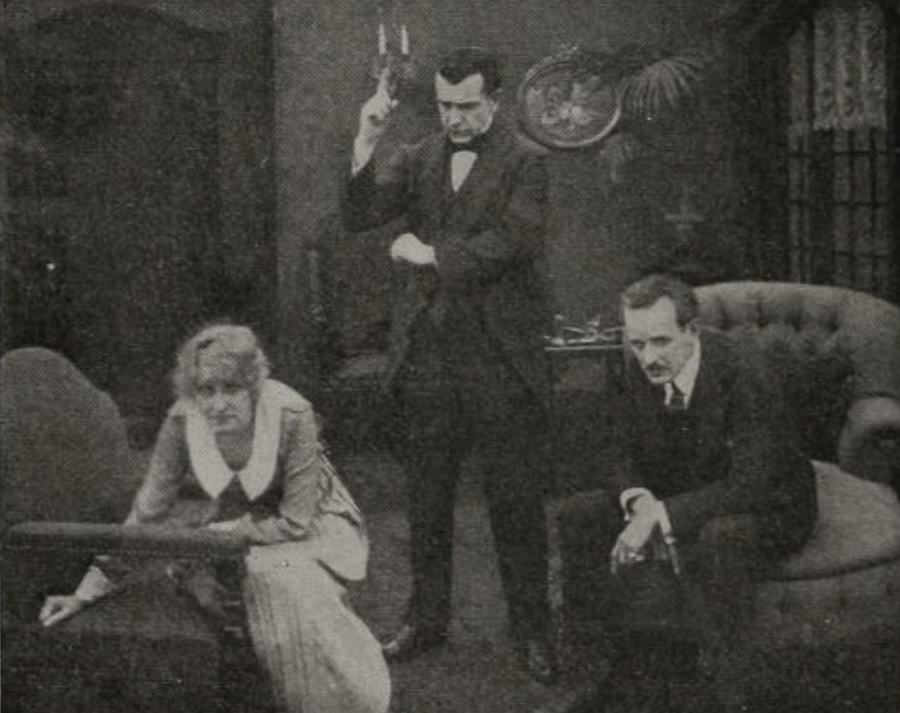
Salesman Warren Kent develops the idea of "The Unending Courtship" and manages to convince his new wife Betty of his theory, which entails their living separately and only meeting on Wednesday evenings, as they did while they were engaged. Warren's boss, however, who was never enamored of the idea, fires him when he bungles an account and loses the company a large order. On top of that, through a series of misunderstandings Warren comes to believe that his wife is pregnant and his mother-in-law believes that Warren is having an affair with Betty's friend Ethel. Things go downhill for Warren from there.
Dir: Raymond B. West
Scott Winthrop is a wealthy, matter of fact businessman who cannot conceive an undeniable right in another man's attempt to break up his home because he has happened to take a fancy to his wife. But Amy Winthrop, a romantic young woman with more spare time than is good for her, takes up with the notions of a so-called liberal organization and is in the arms of its leader on her wedding anniversary when her husband comes home with a costly present for her. She stubbornly announces that Mackley Stuart is her "elective" mate and that they are going away together. Unable to dissuade her, the husband sends word to the newspapers that he is relinquishing his wife to Stuart at their request. The publicity that follows practically forces them to wed. Later, while touring Europe, Winthrop runs across the couple in a Naples café. He manifests great pleasure and greets them as old friends. He congratulates them on their happiness and fills his former wife's ears with the same kind of twaddle that had lost her to him. With pitiless cruelty he pursues his campaign and the result he seeks is not long in coming. Amy throws herself at his head and he apparently is content. Stuart, furious, now finds himself in the position in which he had placed Winthrop. The three discuss the situation. Amy repudiates her husband and offers to leave him to return to her first love. Winthrop leads her to believe that he will take her back and then spurns her. Thus he proves to them that the fabric of morality cannot be lightly destroyed and is satisfied that he has ruined their lives as they ruined his.
View Details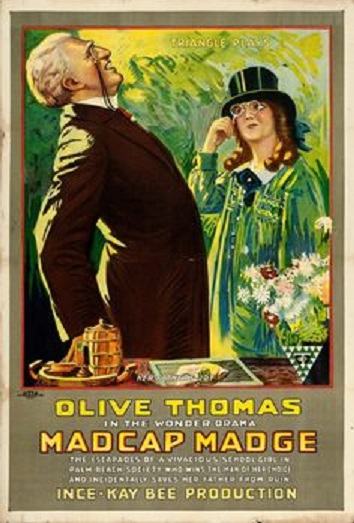
Dir: Raymond B. West
The social climbing Flower family is comprised of Mr. Flower, a banker who has overextended himself financially, Mrs. Flower, a socially ambitious mother, Julia Flower, a marriage-minded elder daughter and Madge Flower, a high-spirited younger daughter. When Madge is expelled from boarding school for her practical jokes and pranks, she joins her mother and sister in Palm Beach, where they are wintering, in hopes of snaring a titled husband for Julia. Julia, fearful that her little sister will impair her success on the marriage market, forces Madge to dress as a child of ten. Julia has her sights set on the Earl of Larsdale, but after a series of misadventures, Madge elopes with the young man who turns out not to be an earl at all, but a prosperous young American who is holding her father's notes. Thus, she saves the day for the Flower family.
View DetailsAnalysis relative to The Wolf Woman
| Film Title | Atmosphere | Complexity | Similarity |
|---|---|---|---|
| Rumpelstiltskin | Gritty | Linear | 92% Match |
| Borrowed Plumage | Surreal | High | 92% Match |
| The Weaker Sex | Gritty | Linear | 94% Match |
| Patriotism | Gothic | Dense | 94% Match |
| Home | Gothic | High | 87% Match |
This guide was algorithmically generated using the cinematic metadata of Raymond B. West's archive. Last updated: 6/26/2026.
Back to The Wolf Woman Details →