
DbcultAccessing Vault...
Recommendations
Senior Film Conservator
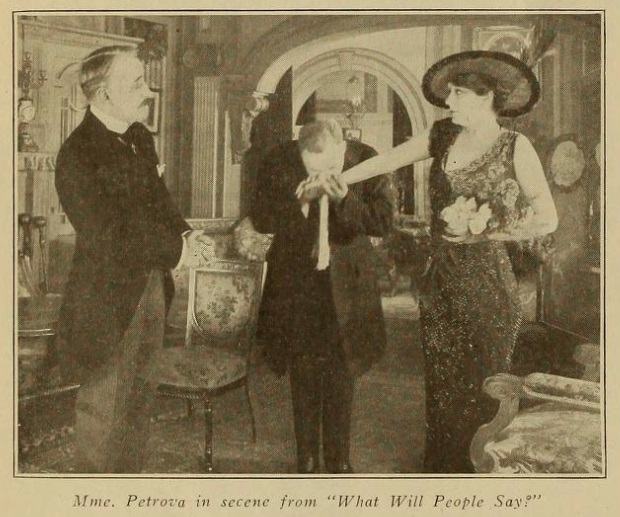
If the cinematic excellence of Alice Guy's work in What Will People Say? left an impression, the juxtaposition of cinematic excellence and narrative makes it a cult outlier. Experience the United States influence in these recommendations that echo What Will People Say?.
By merging cinematic excellence with cult tropes, it to elevate cult to the level of high art.
Persis Cabot, daughter of a multi-millionaire meets a young officer, Harvey Forbes, coming from the Philippines and they fall in love. Owing to her father's financial reverses, it is impossible for her to marry Harvey Forbes. She contracts a marriage with Willie Enslee, whose immense fortune makes it possible for her to reinstate her father and give her all the luxuries she has been used to. The marriage is a failure. Persis meets Forbes at a reception given by the Ambassador and they both confess their love to each other. Persis discovers a liaison of her husband with a former mistress and decides that she has a right to take the love which Forbes offers her. On the first occasion of their being alone together, Willie Enslee discovers them and accuses Persis of infidelity. Forbes commands her to choose between them. Persis refuses, and Forbes leaves her in desperation. Left alone together Willie, maddened by jealousy, stabs his wife. A newspaper reporter visits the house and gains information which leads him to believe that Forbes is implicated in the attempted murder. He also visits Forbes and informs him of the fact that Persis has been stabbed by her husband. Forbes hurries back to the Enslee home and tells Persis that he will take her with him, even though she is not willing to go, as they are mated to each other. After the necessary divorce proceedings have been obtained, Persis marries Harvey Forbes.
Based on the unique cinematic excellence of What Will People Say?, our vault has identified these titles as the most compelling follow-up experiences for fans of cult cinema:
Dir: Alice Guy
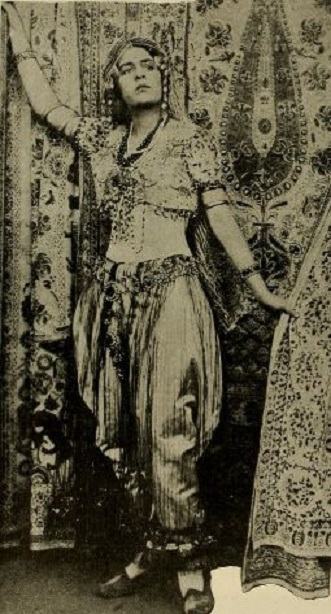
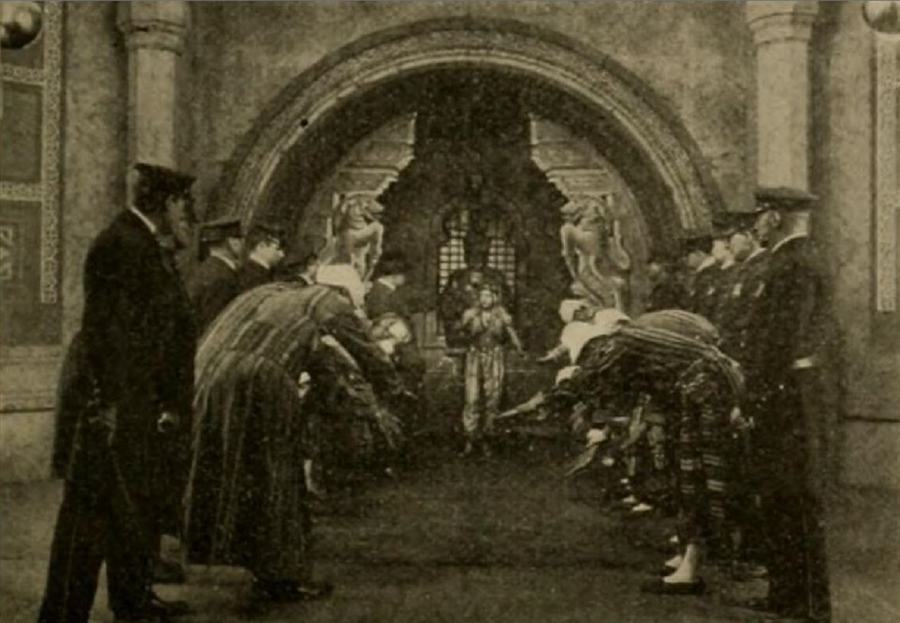
Norma, a dancer, receives many presents from admirers. Among them she finds a peculiar looking box, out of which spring several poisonous snakes. Nelson, a detective, is called upon to solve the mystery. On the box he finds a peculiar trademark, which he seizes as a clue. At his home he finds the same odd mark on an ashtray bought by his mother in a Hindu curio shop, and he learns that the box containing the snakes was purchased by a Hindu woman. Calling upon the woman, he is surprised to find himself in the home of a Priestess of Buddhism. The Priestess tries to fascinate him with her beauty and, not succeeding, drops a powder into an incense burner, the fumes of which begin to throw him into a stupor. He fights his way to a window, blows a police whistle, and is attacked by three giant Hindu attendants. But the police arrive in time to save his life, and the Priestess is arrested and thrown into prison. The dancer, Norma, is attracted to Nelson by his bravery, and they become friends. Meanwhile, the Priestess succeeds in working a psychic miracle in which she goes into a trance and, while her earthly form remains in prison, her soul is freed and appears before the horrified detective in his study. His nature is changed immediately by the Priestess's mystic influence, and his face becomes the face of a hardened criminal. Changing his clothes for one of the rough suits used in his detective work, he visits a den of crooks and aids them to rob a bank, the plans of which he has been entrusted with in his professional capacity. Later he is called to the bank to investigate the robbery and, not knowing of his dual personality, makes every effort to find the man who had committed the crime. He finds his own scarf among the scattered papers taken from the safe. A threatening letter, which he receives from the followers of the Priestess, is seen by Norma, who is so greatly concerned for his safety that when he asks her to marry him, she quickly consents to an engagement, so that she can do all in her power to protect him. His old mother is puzzled by seeing him leave his own house through the window, when he is again visited by the spirit of the Priestess and influenced to aid the same band of crooks in the robbery of his own home. When his real personality returns, he finds himself in his own office, where he has been discovered by his mother, sleeping in a chair, dressed in his old clothes. Upon discovery that his house has been robbed, he calls the chief of police and is seen by the companions of his criminal personality, who thinks that he is acting as an agent of the authorities merely to place them in the hands of the law. When he is again transformed toy the spirit of the Priestess and returns to the thieves' den, they regard him as a spy and plan to do away with him, leaving him bound and gagged in the care of an old hag, while they celebrate his capture. But Norma, who, with his mother has been watching him, follows him to the den of thieves and, overpowering the old woman, helps him to escape. Meanwhile, the followers of the Priestess succeed in rescuing her from her prison cell and are speeding away in an automobile when Nelson, who still retains his criminal personality, asks them to assist him to escape from the crooks, who are closely upon his trail. Thus, he unwittingly places himself and his fiancée in the power of the Priestess, who makes them prisoners in a temple of Buddha. Norma faints, and when Nelson's real personality returns, he finds himself bound hand and foot in the temple. Norma quickly explains the situation to him and, by burning the ropes that bind his wrists with the fire in the incense burner, he frees his companion and makes his way to the roof by the aid of a heavy chain from which a large oriental lamp is swung from the ceiling. He succeeds in helping Norma to the roof by the same method and they reach the ground with the aid of a large tree. The chief of police, who has been summoned by Nelson's mother, overtakes the crooks and arrests them after a desperate struggle. But the Priestess cheats the majesty of the law by the aid of a poisoned ring with which she does away with herself during one of her wild fanatical dances. Her death marks the end of her influence over Nelson, and he at last feels free to marry Norma.
View Details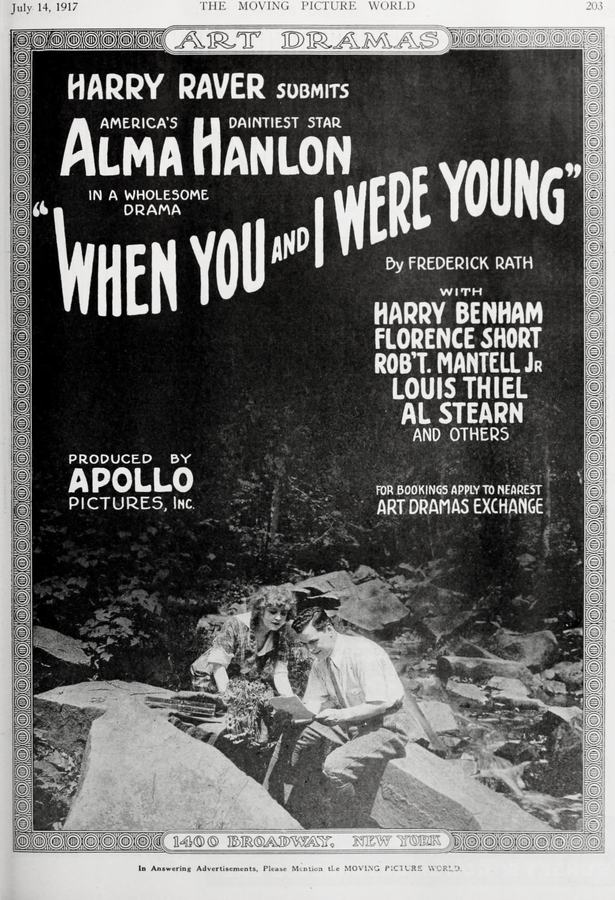
Dir: Alice Guy
Farm girl Dorothy Miller dreams of becoming a writer, much to the chagrin of her old-fashioned father, who believes that a woman's place is in the home. While in the fields one day, Dorothy meets a young artist who has come to the country to paint landscapes. Attracted by her beauty, the artist urges Dorothy to visit him in the city. After his departure, Dorothy decides to run away to the city in order to realize her ambitions. There she and the artist fall in love and Dorothy becomes one of a settlement of artists residing in the Latin quarter where she writes the story of her experiences. The book, with accompanying illustrations by the artist, is accepted by a well-known publishing house whose head is the father of the artist, estranged from his son because he insisted upon pursuing a career in art. As he reads Dorothy's book, and later as Dorothy's father reads his daughter's book, both parents come to understand the motivations of their children and reconciliations are effected.
Dir: Alice Guy
A fascinating piece of cinema that shares thematic elements.
View Details
Dir: Alice Guy
A Parisian doctor, infatuated with the wife of his benefactor, drugs and kidnaps her, and tries to convince the husband that she is dead.
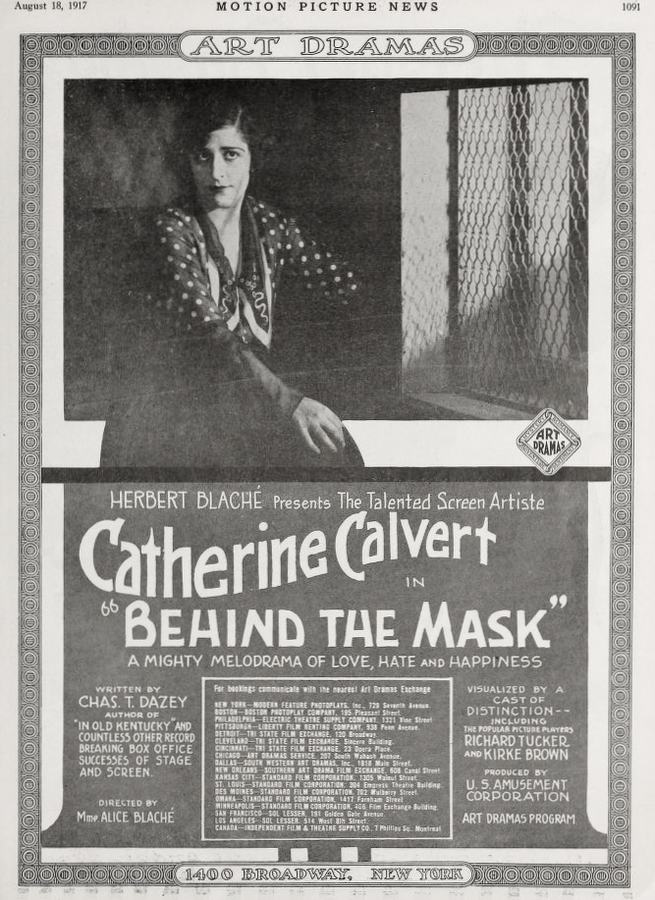
Dir: Alice Guy
Financier Mark Harrold is responsible for the financial ruin and subsequent suicide of Stanton. Following his death, Stanton's daughter Margaret, seeking revenge, goes to work for Harrold's beloved daughter Helen. The latter plans to marry the dashing Lord Strathmore and thus attain her social ambitions, but Margaret, to avenge her father's death, wins Strathmore away from her by deception. After their marriage, Margaret leaves Strathmore, claiming that she never loved him. With the birth of their child, Margaret becomes ill and blind, but Strathmore finds her and gives her money under an assumed identity. Following an operation that restores her sight, Margaret recognizes her husband as her benefactor and realizes that she loves him.
View Details
Dir: Alice Guy
A story of a female motorist that is brought to a resort in the Airondacks. Once brought in to heal from her wounds the male patrons find out that she has a rather bewitching way with men with total disregard of her ways.
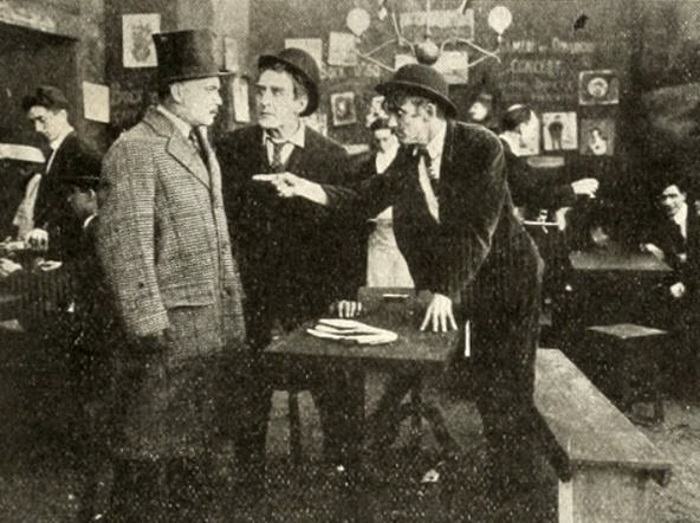
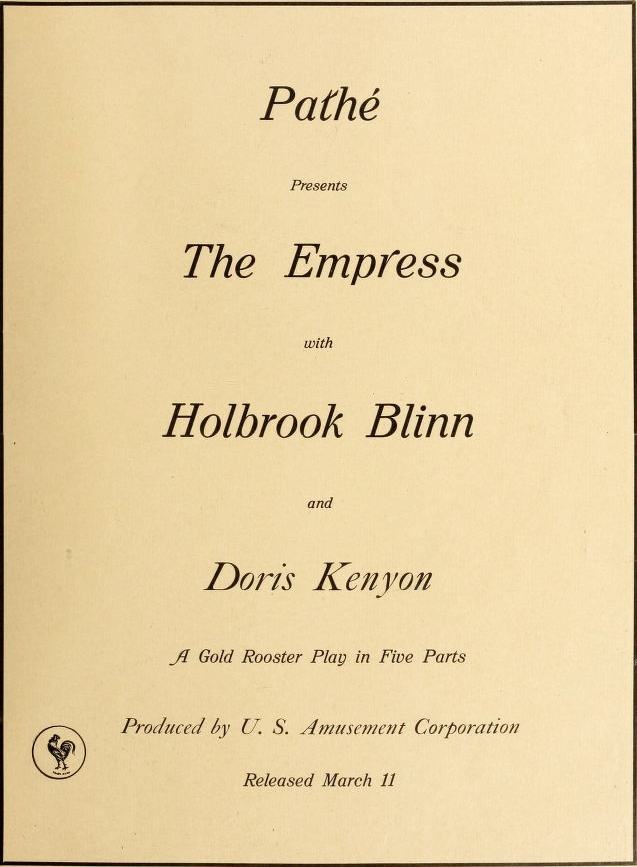
Dir: Alice Guy
To celebrate the sale of his painting "The Empress", Louis de Baudry invites his model, Nedra for a holiday in the country. After de Baudry has forced his way into Nedra's room, the hotel owner, Peters, photographs the two of them smiling. A year later, Nedra is married to rich Eric Bruce. Peters has blackmail on his mind.
View Details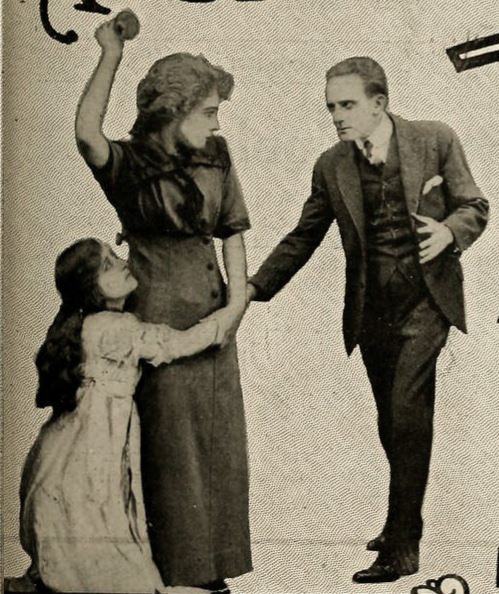
Dir: Alice Guy
Charlotte Baker is drugged and taken to a brothel by Paul, her fiance, who in reality is a pimp. To find her, Charlotte's family contacts the celebrated detective Bob Macauley whose sweetheart Sylvia is a struggling salesgirl and the sole support of her ailing mother. When she is turned down for promotion by her boss, Sylvia applies for a position with a kindly woman who has offered her help. To her horror, Sylvia soon discovers that the woman is a madame and has lured her to the same house of ill repute in which Charlotte is being held captive. Meanwhile, searching for Charlotte, Bob visits the brothel disguised as a gasman and discovers that Sylvia is a resident. Thinking that she is there willingly, Bob upbraids her, but upon discovering the truth he rescues her as well as Charlotte and delivers Paul to the authorities.
Dir: Alice Guy
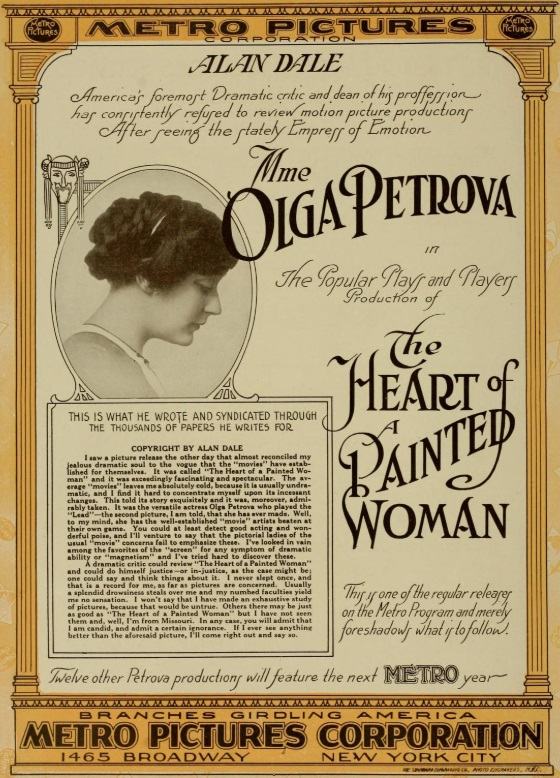
Young Martha Redmond, a poor girl from a small town, leaves to find a singing career in New York City. She doesn't find success as a singer, but finds a job as a model for a prominent artist, and soon becomes his mistress. When her lover throws her over to marry the daughter of a wealthy man, she becomes a "fallen women", a plaything for wealthy playboys. She meets Barrett, a millionaire's son, and begins to wonder if she might have a future with him, but it seems like he'll turn out to be just like "all the others".
View Details
Dir: Alice Guy
Robert, a poor artist, has a vision of a wonderful Madonna. He seeks a model vainly, until he meets, accidentally, the beautiful Lucille, a woman of the demimonde. She is drawn to the shabby artist, and forsaking her fashionable acquaintances, goes to pose for him. The two fall in love and Robert paints a wonderful picture of the Madonna, using Lucille as his model. Unknown to Robert, Lucille persuades an art merchant she knows to purchase the picture, which speedily brings Robert fame and fortune. The artist and his model are married, but with the access of wealth Robert grows cold in his devotion. Robert meets the Baroness, a woman of the world, who comes to sit for her portrait, and spends most of his leisure with her. Later he meets the Baron, her husband, who has known Lucille before her marriage, and is delighted at Robert's interest in his wife, to whom he is quite indifferent, because he thinks he can thus win Lucille's affections. Robert comes to keep an appointment with the Baron at his house and finds him lying dead in the hall, having just been killed by a workman whom he had wronged. He picks up the knife with which the crime has been committed just as the Baroness and her servants enter. Convinced that he is responsible for the death of her husband, the Baroness accuses Robert. He is convicted and sentenced to life imprisonment. Lucille, whose devotion to Robert remains undiminished, and who resolutely believes in his innocence, becomes a charity worker, devoting her wealth and talents to the poor. A dying workman confesses to her his guilt in the death of the Baron and Lucille takes his deathbed statement in the presence of a notary and the police officials. Robert is freed, but does not seek his wife, believing that she no longer cares for him. Broken in spirit, he goes to the church for consolation, where his painting of the Madonna is hung, seeking solace for his hungry heart in viewing the portrait of Lucille. There the two meet and are reunited before the Madonna.
View DetailsAnalysis relative to What Will People Say?
| Film Title | Atmosphere | Complexity | Similarity |
|---|---|---|---|
| The Woman of Mystery | Gritty | Linear | 90% Match |
| When You and I Were Young | Ethereal | Dense | 87% Match |
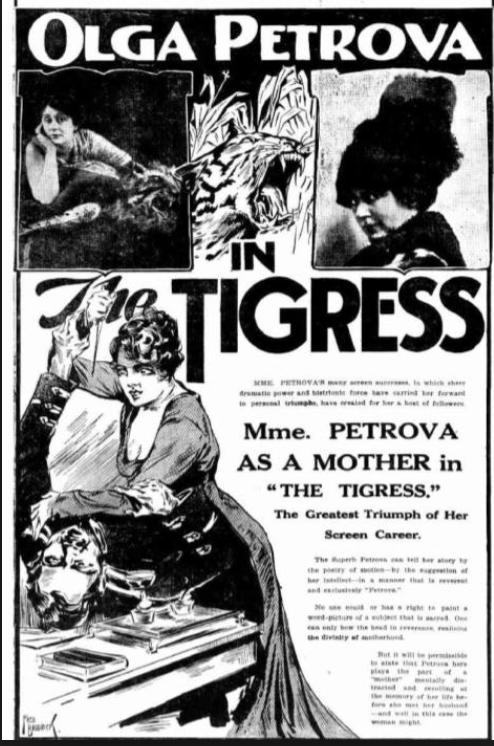
| The Tigress | Ethereal | High | 91% Match |
| Shadows of the Moulin Rouge | Tense | High | 97% Match |
| Behind the Mask | Ethereal | Dense | 93% Match |
This guide was algorithmically generated using the cinematic metadata of Alice Guy's archive. Last updated: 6/22/2026.
Back to What Will People Say? Details →