
Cult Cinema
The Midnight Reliquary: Unearthing the Primal Transgressions and Eccentric Shadows of Cinema’s First Rebel Wave
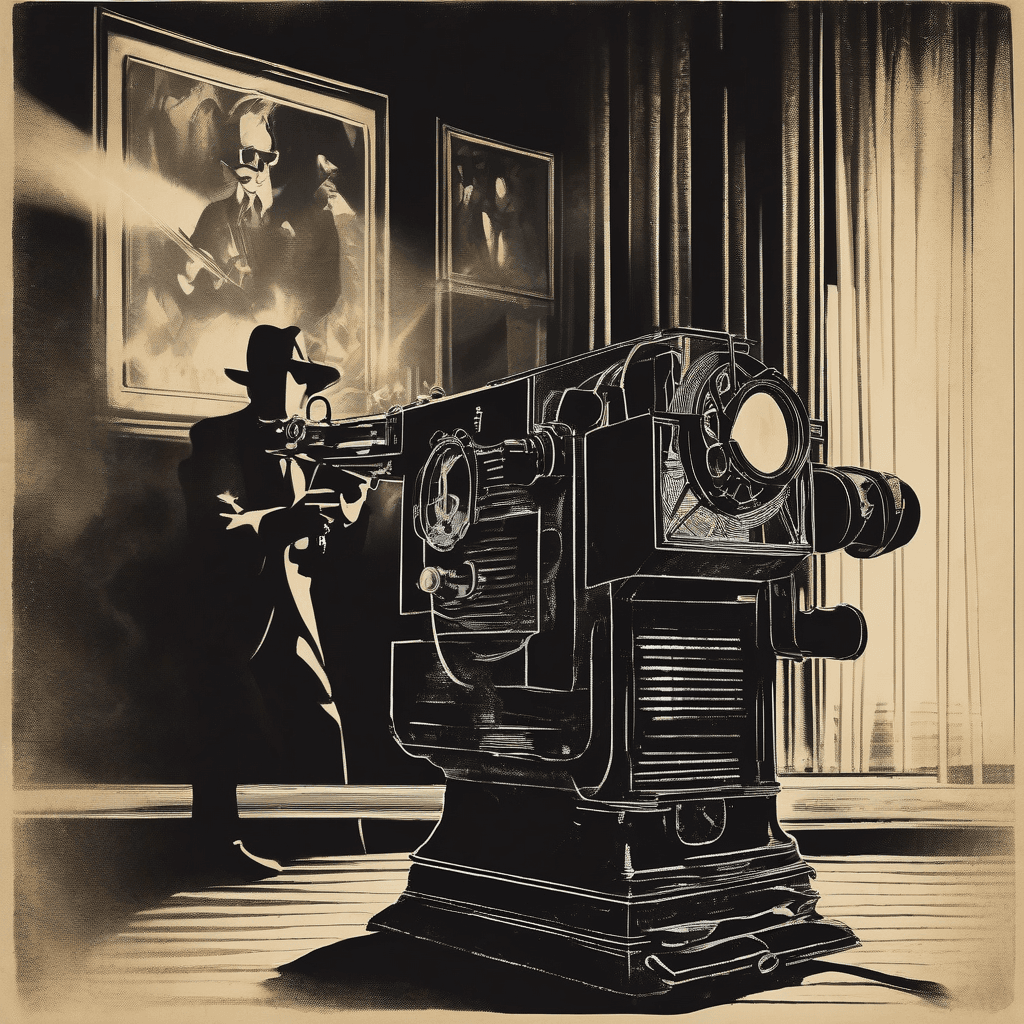
“Journey into the forgotten fringe of early film history to discover how silent-era outcasts and transgressive narratives forged the enduring soul of modern cult cinema.”
The history of cinema is often written by the victors—the massive studios, the box-office titans, and the polished epics that defined the golden age of Hollywood. However, beneath the surface of the mainstream lies a darker, more eccentric undercurrent that film historians are only now beginning to fully appreciate. This is the Midnight Reliquary, a collection of celluloid ghosts and fringe narratives that refused to adhere to the social or artistic norms of their time. Long before the 1970s birthed the 'midnight movie' as a marketing category, the silent era was already experimenting with the transgressive, the meta-fictional, and the socially taboo, creating the genetic blueprint for what we now call cult cinema.
The Social Outcast: Forging the Cult Hero
Cult cinema has always been a sanctuary for the 'other.' In the early 1900s, filmmakers were already exploring themes of social ostracization and the friction between tradition and individual identity. A primary example of this is The Bronze Bride, a film that challenged the racial and social hierarchies of its day by depicting the union between a white fur-trapper and an Indigenous woman. The disapproval they face upon returning to 'civilization' mirrors the very rejection that cult audiences often feel toward mainstream society. This theme of being an outsider is the heartbeat of cult devotion.
Similarly, the 1920 film Die Geächteten (The Outcasts) dives deep into the horrors of superstition and mob mentality. By focusing on the persecution of a minority group through the lens of ritual murder rumors, the film creates a visceral sense of dread and injustice. This isn't just a historical drama; it is a primal exploration of the human shadow. Cult films often thrive on this sense of righteous indignation, positioning the viewer alongside the marginalized and the misunderstood.
The Anarchy of the Fringe: Breaking the Fourth Wall
One of the most defining characteristics of modern cult cinema—from *The Rocky Horror Picture Show* to *The Room*—is its self-awareness and its willingness to break the 'fourth wall.' We see the origins of this meta-textual rebellion in the early animation and experimental shorts of the 1910s and 20s. In A Fisherless Cartoon, the creator Bud Fisher is literally called away from his desk, leaving his creations, Mutt and Jeff, to finish the cartoon themselves. This deconstruction of the cinematic medium was radical for its time. It invited the audience to peek behind the curtain, fostering a sense of community between the viewer and the 'unfinished' or 'raw' nature of the art.
The 1921 short Fishing takes this a step further. The Inkwell Clown is pulled into a cartoon fishing hole, only to emerge and cause 'real-world' havoc. This blurring of reality and fiction is a hallmark of the cult experience. When a film acknowledges its own artifice, it creates a unique space for the audience to inhabit—a space where the rules of logic are suspended in favor of a dreamlike anarchy. This is why films like *Everything for Sale* or the absurdist comedy of *Chumps and Cops* resonate with those who seek more than just a linear narrative; they seek a subversion of the very act of watching.
Forbidden Desires and the Architecture of Taboo
If the mainstream exists to reinforce moral certainties, cult cinema exists to dismantle them. The early 20th century was rife with films that pushed the boundaries of what was considered 'proper' or 'moral.' Take Sapho (1913), which tells the story of a woman with a notorious past who enchants a young student. It is a narrative of seduction and social ruin that captivated audiences by leaning into the forbidden. This fascination with the 'fallen' woman or the 'notorious' past is a recurring motif in the cult psyche, where the villainess is often more compelling than the heroine.
Even more provocative is the 1916 film Race Suicide. By connecting a jilted prehistoric suitor’s crime to the moral decay of the Roman Empire, the film presents a cyclical, almost nihilistic view of human history. It deals with infanticide and betrayal with a grim intensity that would make modern grindhouse directors blush. Cult cinema often acts as a moral laboratory, allowing audiences to explore the darkest corners of human behavior from the safety of a darkened theater. Films like *The Weakness of Man* and *A Slave of Vanity* further this exploration, showing protagonists trapped between their desires and the suffocating expectations of their class and gender.
The Hypnotic and the Weird: Aesthetic over Narrative
In the realm of the cult, atmosphere often trumps plot. The visual language of the early silent underground was frequently one of shadows, distorted perspectives, and hypnotic rhythms. The Hypnotic Violinist is a quintessential example of this. The story of a gypsy orchestra leader who uses his music to mesmerize a doctor’s wife taps into the primal fear—and allure—of losing control. The film uses the violin as a catalyst for transgression, suggesting that art itself can be a dangerous, seductive force.
We see this same dedication to 'the weird' in Die Insel der Glücklichen (The Island of the Blessed). These films weren't just trying to tell stories; they were trying to create a specific emotional state—a sense of 'otherworldliness' that stayed with the viewer long after the lights came up. This is the essence of the midnight movie soul: the feeling that you have stumbled upon a secret frequency that the rest of the world is too distracted to hear. Whether it is the mystery of *The Man Unconquerable* or the biblical epic of *Das Buch Esther*, these films prioritize the grand gesture and the visual spectacle over the mundane details of daily life.
The Genre Rebels: Anarchy in the Archive
Perhaps the most 'cult' aspect of early cinema is its refusal to stay within the lines of a single genre. The 1921 film Der Streik der Diebe (The Strike of the Thieves) is a perfect example of this genre-bending anarchy. It is a social satire, a crime caper, and a political allegory all rolled into one. When a guild of thieves goes on strike because their leader was denied the hand of the prime minister’s daughter, the film subverts the traditional roles of 'law' and 'crime' in a way that is both hilarious and deeply cynical. This subversive wit is a direct ancestor to the counter-cultural satires of the 1960s.
Then there are the films that defy classification altogether, such as The Land of the Pygmies, a short documentary that brought the 'exotic' and the 'unknown' to Western audiences, often blurring the line between ethnographic study and sensationalist spectacle. This hunger for the 'unseen' is what drives the cult collector. Whether it is the Western-mystery hybrid of *Alias Phil Kennedy* or the historical tragedy of *Anna Karenina*, the cult audience is always looking for the anomalous detail—the moment where the film becomes something more than its sum of parts.
Even the short comedies of the era, like A Close Shave or His Meal Ticket, often leaned into the grotesque or the absurd. In *His Meal Ticket*, a man disguises himself as a monkey to get close to a dancing girl—a plot point that is as bizarre as it is desperate. These films captured a sense of manic energy that would eventually evolve into the slapstick-horror hybrids of the modern era. They were the experiments that proved cinema could be a playground for the id, a place where the rules of the 'real world' were secondary to the logic of the gag.
Conclusion: The Perpetual Midnight
As we look back at the films of the 1910s and 1920s, we see more than just historical artifacts. We see the birth of a mindset. The films mentioned here—from the social rebellion of The Bronze Bride to the meta-fictional playfulness of A Fisherless Cartoon—are the pillars of a secret history. They are the Midnight Reliquary, the fragments of a cinematic soul that sought to challenge, provoke, and transcend.
Cult cinema is not defined by its budget or its era, but by its spirit. It is the spirit of the outlaw, the misfit, and the dreamer. It is the spirit of Marizza, the woman who flees a life of smuggling to find her own path, and the spirit of The Cradle Buster, who asserts his independence against all odds. These narratives of individual agency and aesthetic defiance are what keep us returning to the cinema in the middle of the night, searching for that one flickering frame that speaks directly to us. In the end, the history of cult cinema is the history of us—the ones who look for the light in the shadows.
Community
Comments
Log in to comment.
Loading comments…