
Cult Cinema Deep Dive
The Primal Undercurrent: How the Silent Era’s Genre Defiants Invented Cult Cinema
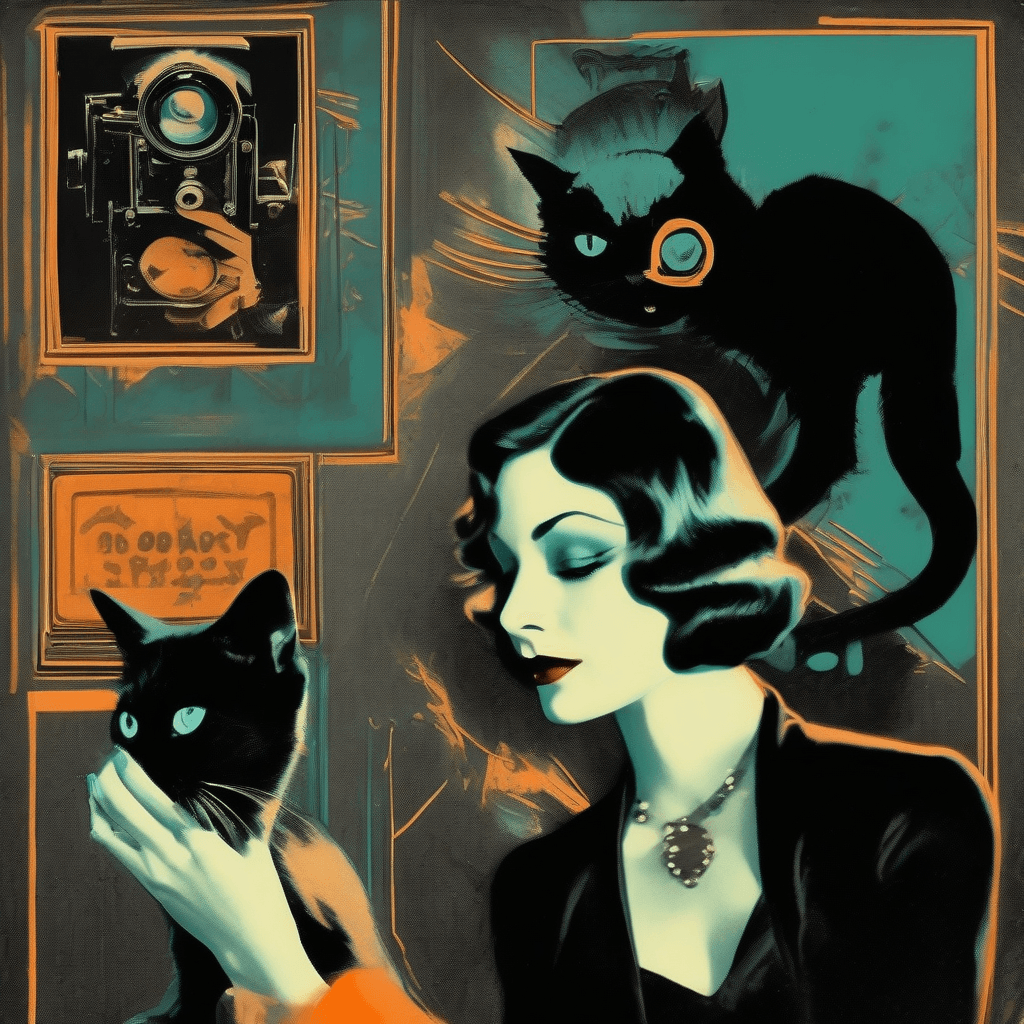
“Explore how the raw energy of the silent era—from drug-addled tragedies to surrealist animation—laid the groundwork for the modern cult movie obsession.”
Long before the term 'cult movie' was coined in the smoky midnight screenings of the 1970s, a subterranean current of rebellion was already flowing through the celluloid of the silent era. Between 1910 and 1925, cinema was a wild, unregulated frontier where filmmakers experimented with taboos, surrealism, and social outcasts. These early works, often dismissed by the high-brow critics of their day, contained the genetic markers of what we now celebrate as cult cinema: the transgressive, the weird, and the fiercely independent. To understand the obsessive devotion of modern fandom, we must look back at the genre-bending defiance of the early 20th century, where films like Les Vampires and June Friday first dared to step into the shadows.
The Genesis of the Transgressive: Taboos and Social Outcasts
Cult cinema has always been a sanctuary for the 'other.' In the early 1900s, this manifested in stories that challenged the rigid moral frameworks of the Victorian and Edwardian periods. Consider the 1915 drama June Friday. This wasn't merely a tragic tale; it was a visceral exploration of addiction and domestic brutality. By centering on a 'cocaine fiend' who drives his wife to suicide, the film tapped into a primal fear and fascination with the dark side of the human psyche. It was a precursor to the grit of 1970s New Hollywood, proving that audiences have always had a hunger for narratives that refuse to look away from the abyss.
Similarly, The Second Mrs. Tanqueray and Should a Husband Forgive? delved into the complexities of social exclusion and 'scandalous' pasts. These films weren't just entertainment; they were mirrors reflecting the anxieties of a changing world. In Should a Husband Forgive?, the protagonist is cast out by a wealthy family after an affair, a narrative beat that resonates with the cult trope of the misunderstood protagonist fighting against a monolithic, judgmental society. This theme of the 'outcast' is further amplified in The Water Lily, where a girl from the slums is labeled a 'gutter brat' by the elite, yet finds her own path. This friction between the fringe and the mainstream is the very heartbeat of cult cinema.
Surrealism and the Birth of the Cinematic Weird
If the transgressive dramas provided the soul of cult cinema, then early animation and physical comedy provided its sense of the absurd. The short film Felix Comes Back (1922) is a masterclass in the surreal. Felix the Cat’s journey to the Arctic after a sausage-related altercation with a butcher highlights the kind of 'cartoon logic' that would later influence everything from midnight psychotropic films to the works of David Lynch. The sheer weirdness of a cat capturing sausages and being exiled to the frozen north for it represents a break from reality that cult fans crave.
This absurdity extended into live-action as well. Buster Keaton’s The Scarecrow (1920) showcases two inventive farmhands who turn their shared living space into a mechanical marvel of efficiency. This kind of 'inventive weirdness'—where the mundane is transformed into the extraordinary through sheer human ingenuity—is a recurring motif in cult classics like Brazil or The Rocky Horror Picture Show. It’s about creating a world that operates on its own unique rules, a 'cinematic pocket dimension' that invites viewers to leave their logic at the door.
The Mystery of the Secret Society: Les Vampires and Beyond
No discussion of early cult influences is complete without mentioning Louis Feuillade’s 1915 serial Les Vampires. This was not a film about supernatural bloodsuckers, but a sprawling, anarchic tale of a secret criminal organization that terrorized Paris. With its iconic imagery of Irma Vep in her black silk catsuit, the film established the 'cool' factor of the cinematic villain. It wasn't just a movie; it was a lifestyle, a secret code for those who preferred the shadows to the light. This fascination with the 'underground' is mirrored in films like The Phantom, where a jewel thief known as 'Phantom' Farrell operates with a level of sophistication that makes the audience root for the criminal.
These films tapped into a collective desire for mystery and the 'unseen.' In The Red Circle (1922), a Sherlock Holmes mystery, the narrative centers on a lodger who vanishes, leaving behind a trail of curiosity and dread. This structure—the slow-burn reveal of a hidden truth—is a cornerstone of cult mystery. It forces the audience to become detectives, to watch and re-watch for clues, fostering the kind of deep engagement that defines obsessive fandom. Whether it's a secret society in Paris or a mysterious lodger in London, the allure of the 'unknown' remains a powerful magnet for those who seek more than just a surface-level story.
The Outlaw Ethos: Westerns and the Frontier Spirit
The Western genre, even in its infancy, provided a fertile ground for cult archetypes. The Gun Fighter (1917), starring William S. Hart, introduced the world to Cliff Hudspeth, an outlaw leader who gained his position through violence but lived by a strict, if brutal, code. This is the 'anti-hero' in its purest form—a character who exists outside the law but possesses a magnetism that the law-abiding cannot match. This archetype would evolve into the 'Man with No Name' and countless other cult icons who operate on the periphery of civilization.
Films like Wolves of the Border and The Mysterious Rider further explored this frontier tension. In The Mysterious Rider, we see the conflict between gratitude and true love, set against the harsh backdrop of ranch life. These aren't just 'cowboy movies'; they are explorations of the rugged individualism that defines the cult spirit. The 'girl who ran wild' in The Girl Who Ran Wild (1922) is another perfect example. M'liss, the unruly tomboy orphan, rejects the 'protection' of those who murdered her father, choosing instead a life of fierce independence. She is the spiritual ancestor of every 'final girl' and female rebel in modern cult horror and action.
Educational Anomalies and the Forbidden Reel
Perhaps the most fascinating precursor to the 'exploitation' branch of cult cinema is the 1919 film Fit to Win. Originally produced by the U.S. government to educate soldiers about venereal disease, it quickly became a sensation for its frank (and for the time, shocking) depictions of forbidden topics. This is the 'forbidden reel'—the film that people whispered about, the one you had to see to believe. It paved the way for the 'hygiene films' of the 1930s and 40s, which used education as a thin veil for showing audiences things they weren't supposed to see.
This 'forbidden' quality is essential to the cult experience. Whether it's the semi-documentary horrors of Lest We Forget, which focused on the 'iniquities of the German war machine' and the sinking of the Lusitania, or the political urgency of Dziga Vertov’s Kino-pravda no. 8, these films were designed to provoke. They didn't just want to entertain; they wanted to shake the viewer, to document a reality that was often too intense for the mainstream to handle. Vertov’s work, in particular, with its 'cinema-truth' philosophy, laid the groundwork for the avant-garde and experimental movements that would later be embraced by the cult community.
The Eternal Return: Hamlet and the Gothic Shadow
Even the classics were not immune to the cult touch. The 1910-1920 era saw numerous adaptations of Hamlet, each bringing a new visual language to Shakespeare’s ghost story. The presence of the supernatural—the sentinels on the battlements, the spirit of the dead king—connected early cinema to the Gothic tradition. This intersection of high art and the macabre is a sweet spot for cult enthusiasts. It’s why we see a direct line from these early silent tragedies to the stylized, gothic horror of the 1960s and beyond.
The visual anarchy of these early films—the deep basements of Grif starogo bortsa, the mountain Rose-garlands of The Mystery of St. Martin's Bridge, and the 'man-eating' socialites of The Man-Eater—created a rich tapestry of imagery that continues to inspire. These films were the original 'misfit masterpieces.' They were made by people who were still figuring out what cinema could be, and in that process of discovery, they stumbled upon the very elements that make a film 'cult': an uncompromising vision, a touch of the bizarre, and a soul that refuses to be tamed by the mainstream.
Conclusion: The Enduring Legacy of the Early Misfits
As we look back at the first century of cinema, it becomes clear that the 'cult' was never a modern invention. It was there in the cocaine-fueled tragedies, the animated sausage-thieves, and the silk-clad criminals of the 1910s. These films, from Sunny Jane's romantic delusions to the brutal duels of Should a Husband Forgive?, provided the blueprint for a century of cinematic rebellion. They taught us that a film doesn't need a massive budget or universal acclaim to be immortal; it only needs to speak to the outcasts, the dreamers, and the seekers of the strange.
The next time you find yourself at a midnight screening of a modern cult classic, remember the silent rebels who came before. Remember The Scarecrow's mechanical kitchen, Les Vampires' secret rooftops, and the 'girl from God's country' who survived the Canadian wilderness. They are the ghosts in the machine, the primal sparks that continue to ignite the fires of cult devotion in the hearts of cinephiles everywhere. The mainstream may forget, but the fringe always remembers.
Community
Comments
Log in to comment.
Loading comments…