Summary
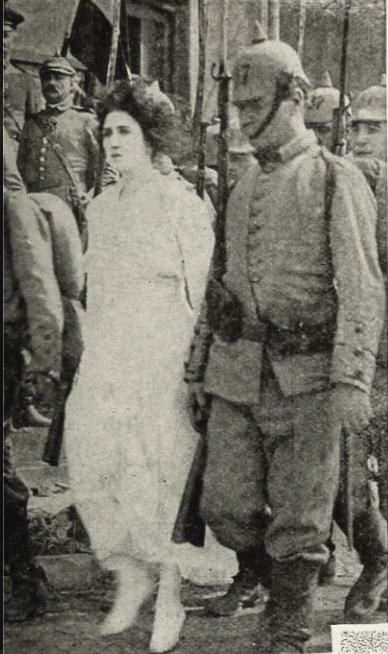
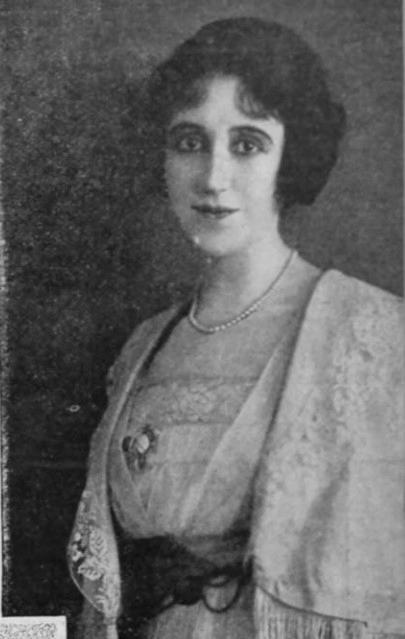
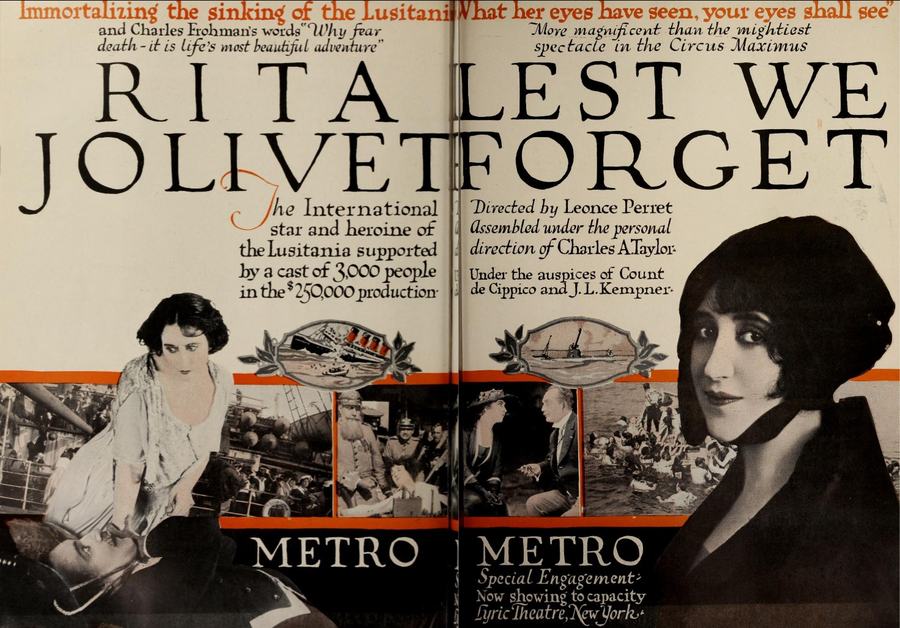
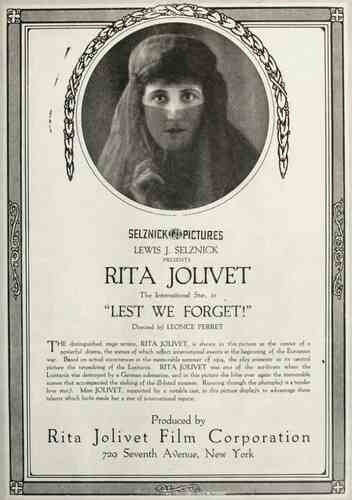
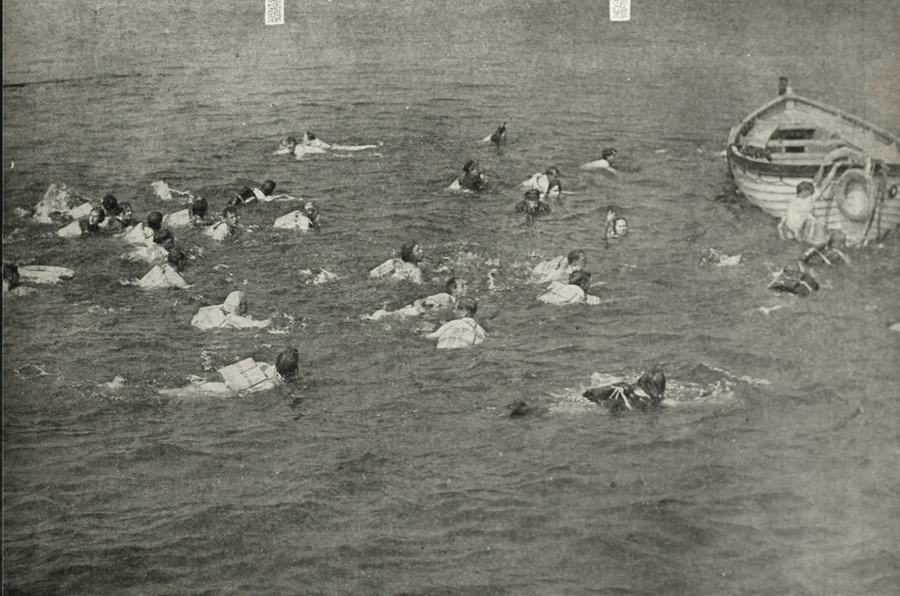
May 1915, and the Atlantic glints like a surgeon’s scalpel: aboard the Lusitania, gilded passengers drift through palm-court tea while a German U-boat prowls beneath, its periscope a single predatory pupil. In Paris, Hamilton Revelle’s idealistic American war correspondent intercepts coded wireless traffic that brands the liner a ‘legitimate target’; his dispatches, smuggled past Dolores Cassinelli’s velvet-gloved censor, ignite a transatlantic furor. Edward Gerstle’s Prussian submarine commander, a man who recites Schiller between torpedo settings, receives Berlin’s encrypted blessing to strike, and on a sun-splashed Friday off the Old Head of Kinsale the ocean erupts: 18 minutes, 1 198 souls, a children’s nursery tilting into brine. Rita Jolivet’s French sculptress—modeling a war-mothers’ memorial in clay—watches from an upper-deck library as the blast liquefies mahogany into shrapnel; her porcelain composure fractures only when she recognizes the U-boat’s number on a drifting life-ring. Back in Berlin, Kate Blancke’s socialist journalist confronts L. Rogers Lytton’s iron-jawed propagandist with eyewreck testimony smuggled in a corset stays; the scene dissolves into a harrowing montage of ink-stained newsrooms, ration queues, and a cathedral of shell casings glimmering like organ pipes. At the Imperial War Ministry, Cliff Saum’s maimed veteran—face a lunar map of trenches—pleads for unrestricted submarine warfare, while Gaby Perrier’s Red Cross nurse translates his slurred speech into casualty lists that outrun the Reich’s paper supply. The film’s nerve-center is neither battlefield nor ballroom but the Atlantic itself, shot as a liquid archive: glass-plate negatives of floating deckchairs, a child’s leather shoe curling like a comma, a wireless operator tapping CQD into nothingness. Parallels ricochet: a German kindergarten recites ‘Der Königgrätzer Marsch’ as British infants practice gas-mask drills; a Belgian priest hangs on barbed wire while a Hamburg cabaret croons ‘Zig-Zig, fröhliche Kugelfisch’. When Revelle finally confronts Gerstle in a fog-shrouded Irish prison camp, the dialogue is whispered through a shared oxygen mask—two enemies breathing the same metallic air, each accusing the other of inventing modern barbarism. The coda leaps to Versailles, 1919: Jolivet unveils her finished memorial—an bronze mother raising not a sword but a periscope, its lens cracked. The camera tilts up until the statue eclipses the sun, the word ‘Lest’ dissolving into the looming shadow of the next war.
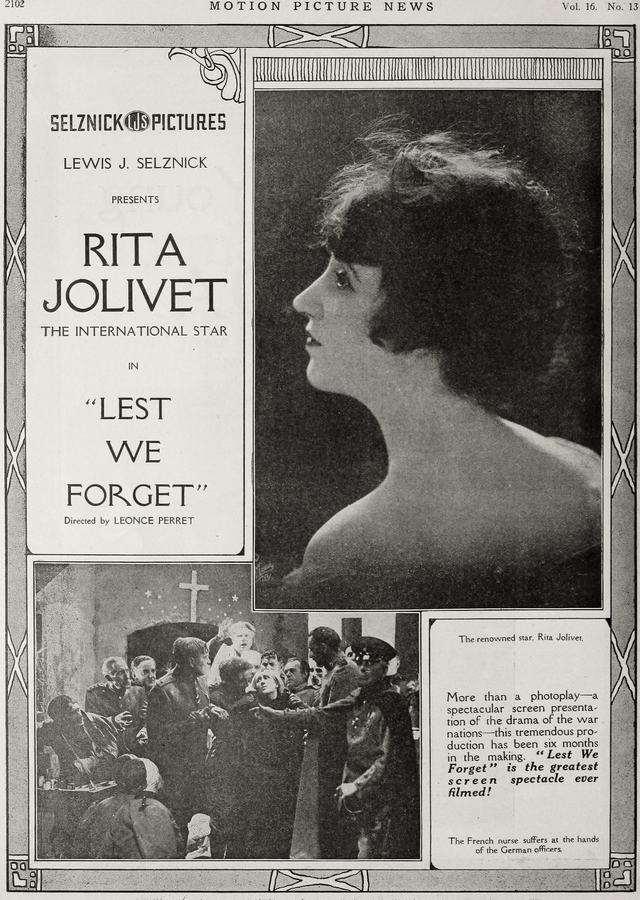
A story of the First World War, told in semi-documentary style, focusing on the iniquities of the German war machine, and with its dramatic center the sinking by a German U-boat of the passenger liner Lusitania in 1915.
Review Excerpt
"
The reels of Lest We Forget arrive like a blood-stained telegram from 1915, brittle nitrate hissing with every frame, yet its images detonate in the mind with a violence that feels exquisitely contemporary. Léonce Perret and Tom Bret do not merely recreate the sinking of the Lusitania; they interrogate the very grammar of civilization, asking how polished brass and orchestras on promenade decks coexist with torpedoes calibrated in Krupp laboratories.
Hamilton Revelle’s correspondent—equal par..."