Summary
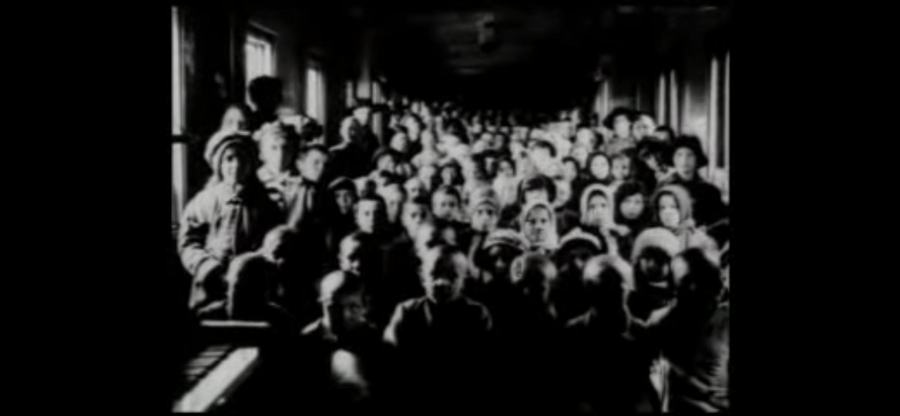
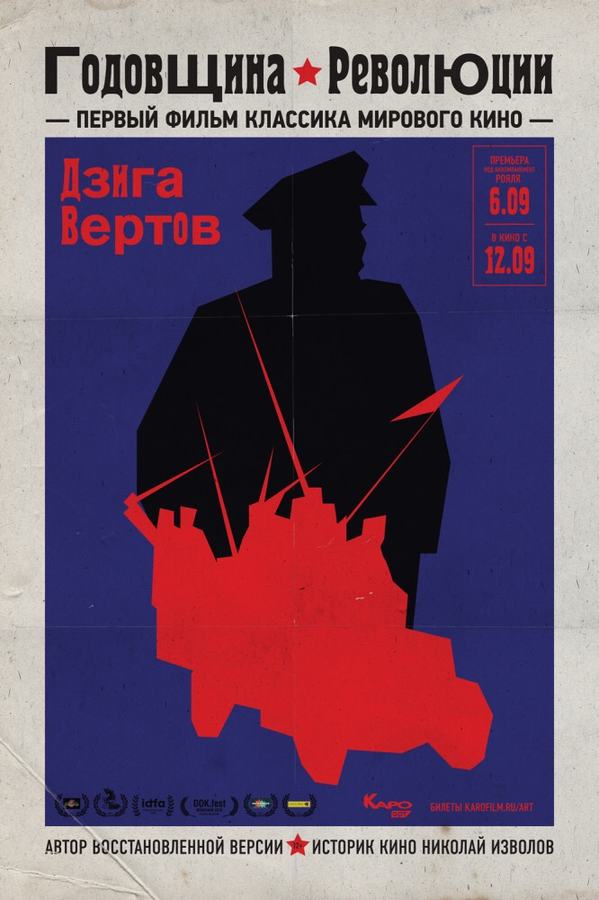
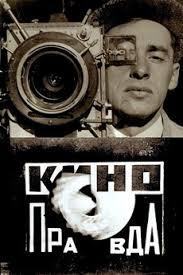
Metal horses belch soot across a bleeding horizon while Vertov, half-mechanic half-magus, bolts a camera to the flank of a locomotive that no longer carries grain but carries the alphabet of insurrection. Every station is a pulpit: banners snap like rifles, orators clamber onto crates, factory sirens translate speech into vibration, and the whirring crank of the Kinoglaz swallows faces—workers, widows, deserters—then spits them back enlarged, flickering, immortal. Between whistles the train itself debates history: a Red cavalryman argues dialectics with a Ukrainian anarchist, a pregnant telegraphist taps out Lenin’s telegrams in Morse that sounds like a heartbeat, and a child chalks HAMMER and SICKLE on the carriage wall until the letters resemble wings. The landscape outside mutates—snow becomes mud becomes sunflowers—while inside the darkened boxcar the projector throws white fire onto a sheet, turning propaganda into phosphorescent dust that settles on eyelashes. At each halt Vertov stages a resurrection: he films the local soviet chairman, develops the negative on the baggage car’s red-lit darkroom, and within the hour projects the still-wet image to the same crowd who now witness their own faces larger than icons, applaud themselves, and thus march forward changed. The climax is not a battle but a splice: the coupling of two reels—one showing the Tsar’s lifeless statue dragged through the streets, the other showing the same marble face re-edited so the eyes blink—creating an impossible temporal loop where monarchy dies and revives and dies again every twenty-four frames per second. When the train finally thunders toward Moscow, the camera turns on itself, revealing the apparatus in a mirrored panel; the lens stares at its own iris until the image burns white, a visual manifesto that history is no longer seen—it is machined.
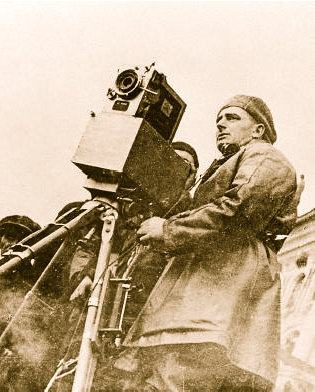
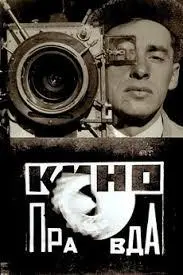
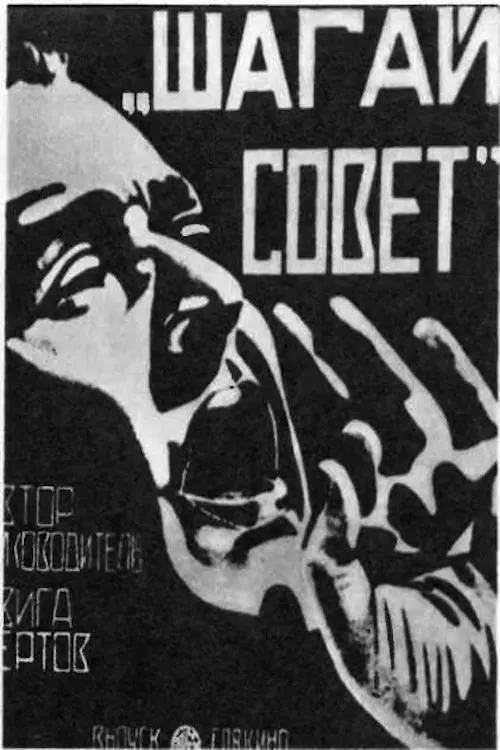
Director Dziga Vertov spreads the word of the revolution in Russia.
Review Excerpt
"
The twentieth century’s most lethal engine was not armored but celluloid. In the spring of 1921, a khaki locomotive—number plates ripped off, red star soldered to the chimney—pounded south from Petrograd, shunting flatcars that carried neither coal nor cannons but reels of nitrate poised to explode inside peasants’ retinas. Dziga Vertov, gaunt in a leather trench coat, crouched between the buffers, winding his Debrie Parvo with the same crank rhythm as the wheels, thereby fusing kinetics wit..."