DbcultAccessing Vault...
Cult Review
Senior Film Conservator
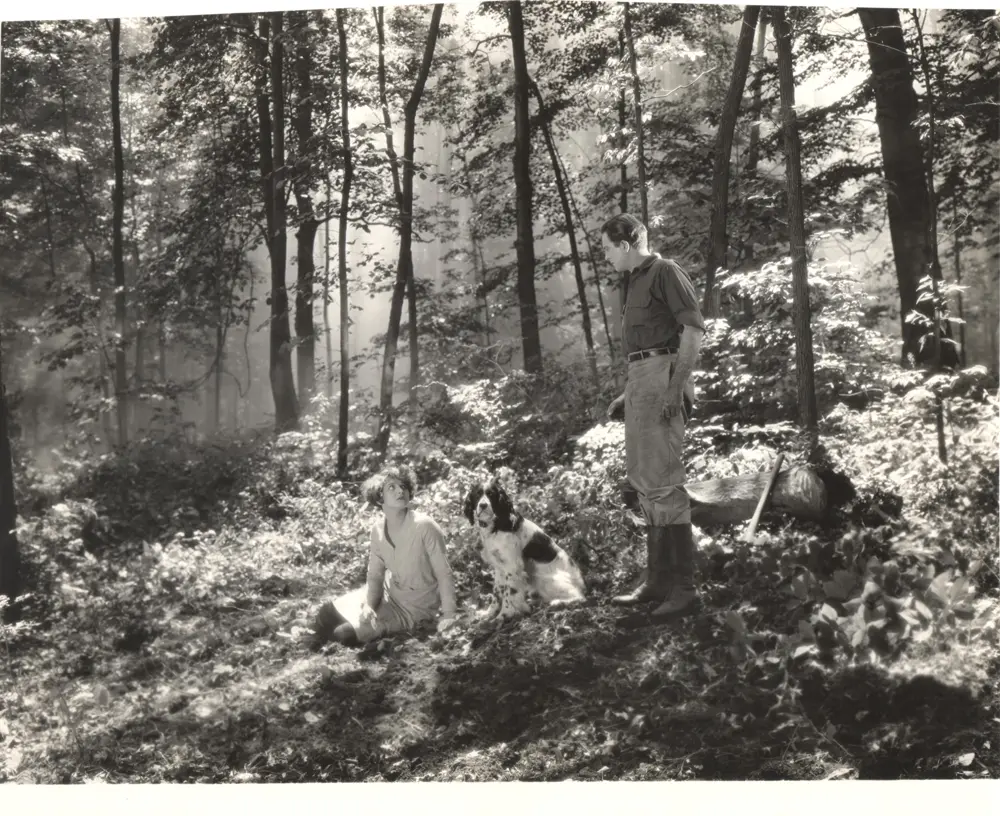
Is 'The Harvester' worth watching today? Short answer: yes, but with significant caveats. This silent-era drama, anchored by Orville Caldwell's stoic presence and Lola Todd's expressive vulnerability, offers a fascinating glimpse into early 20th-century storytelling, particularly for those with an appreciation for the historical context of cinema. However, its pacing and reliance on melodramatic conventions might test the patience of contemporary viewers accustomed to more rapid-fire narratives.
This film is unequivocally for cinephiles, silent film enthusiasts, and anyone curious about the foundational elements of American storytelling. It’s a journey back to a simpler, more visually driven form of narrative. Conversely, if you demand crisp dialogue, complex character arcs developed through verbal exposition, or modern production values, 'The Harvester' is decidedly not for you. It requires an active, empathetic viewer willing to meet it on its own terms.
Absolutely, 'The Harvester' holds a certain, undeniable charm for the right audience. Its narrative, while perhaps simplistic by today's standards, is delivered with a sincerity that cuts through the decades. The film serves as a vital historical document, showcasing the craft of early filmmakers and actors who had to convey entire emotional landscapes without the benefit of spoken words. It’s a masterclass in visual communication.
The film’s focus on themes of nature, purity, and the corrupting influence of urbanity feels surprisingly relevant, even if presented through a lens of romanticized idealism. Watching it is less about passive consumption and more about an active engagement with a bygone era's artistic sensibilities.
The narrative of 'The Harvester' unfolds with a deliberate, almost pastoral rhythm, mirroring the life of its protagonist, David Langston. He is not merely a character but an embodiment of the wild, a man whose hands are as weathered as the trees he tends and whose spirit is as free as the wind across his fields. The screen writers, Jeanette Porter Meehan, Gene Stratton-Porter, and Dorothy Yost, craft a world where nature isn't just a backdrop but an active force, shaping destinies and revealing truths. Langston, portrayed by Orville Caldwell, is introduced as a solitary herbalist, a man whose wisdom is gleaned from the earth, not from books. His existence is a testament to the purity of a life untouched by modern artifice, a theme that resonates deeply throughout the film.
The arrival of Ruth Jameson, played with delicate grace by Lola Todd, serves as the narrative’s primary catalyst. Ruth, a fragile blossom from the urban jungle, arrives in David's secluded world seeking not just a cure for her physical ailments but, implicitly, a balm for her soul. This juxtaposition of the sophisticated city dweller with the rugged frontiersman is a classic trope, yet 'The Harvester' manages to imbue it with a refreshing sincerity. The initial awkwardness between them, the clash of two entirely different worlds, is depicted with subtle visual cues and a charming lack of overt exposition, allowing the audience to infer their evolving relationship.
The film's thematic core lies in this push-pull between civilization and wilderness, artificiality and authenticity. Ruth's transformation, from a frail, dependent woman to one who begins to appreciate the quiet strength of David's world, is central to the story's emotional arc. It's a journey of self-discovery not just for Ruth, but for David too, as his hardened solitude is softened by her presence. The writers cleverly use the natural setting – the towering trees, the flowing rivers, the humble cabin – as metaphors for growth, resilience, and the unyielding power of love. One particularly striking moment sees Ruth, initially hesitant, tentatively touch a wild flower, a small gesture that speaks volumes about her burgeoning connection to nature and, by extension, to David.
The introduction of Mark Thorne, portrayed by Jay Hunt, injects the necessary conflict and melodrama. Thorne is the embodiment of the corrupting city, a slick, self-serving opportunist who views both Ruth and the natural resources of David's land as commodities to be acquired. His presence forces the idyllic narrative into sharper relief, highlighting the stakes of David's fight not just for Ruth, but for his very way of life. The climax, involving a direct confrontation between David and Thorne amidst the wilderness, feels earned, a visceral clash between opposing ideals. It's a straightforward narrative, certainly, but one that leverages its simplicity to deliver a clear, resonant message about integrity and the enduring value of what is truly natural.
In silent cinema, an actor's face and body are their entire lexicon. Orville Caldwell, as David Langston, masterfully navigates this challenge. His performance is defined by a quiet strength, a brooding intensity that speaks volumes without a single intertitle. Caldwell's eyes, often shadowed or distant, convey a lifetime of solitude and a deep, almost spiritual connection to his environment. He isn't demonstrative; rather, his power comes from his stillness. When he finally expresses emotion, such as a flicker of concern for Ruth or a flash of anger towards Thorne, it feels profoundly impactful precisely because of its rarity. There's a scene where he simply watches Ruth from a distance, his posture conveying a protective tenderness that is genuinely moving. It’s a performance that might be understated for modern audiences, but it's incredibly effective within its context.
Lola Todd, as Ruth Jameson, provides the perfect counterpoint to Caldwell's stoicism. Her performance is one of delicate vulnerability and gradual awakening. Todd uses her expressions to convey Ruth's initial fragility, her weariness from city life, and her slow, tentative embrace of the wilderness. Her character's arc is visually legible, from her initial paleness and hesitant gestures to a blooming vitality as she spends more time in nature. A standout moment is her reaction to Thorne's sudden reappearance; her face registers a complex mix of fear, resignation, and a dawning realization of her own strength, a testament to Todd's nuanced portrayal of internal conflict.
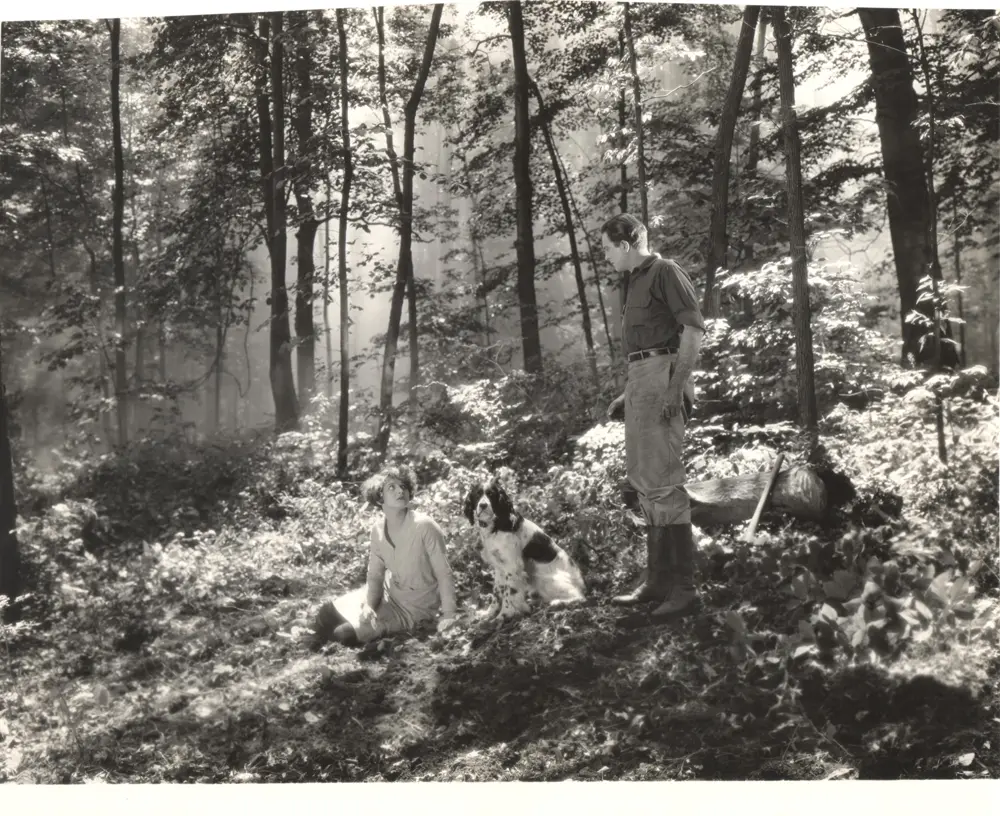
The supporting cast, including Jay Hunt as the villainous Mark Thorne, Marin Sais, Edward Hearn, Natalie Kingston, Will Walling, and Fanny Midgley, all contribute to the film’s rich tapestry. Hunt's Thorne is a delightfully despicable antagonist, his sneering expressions and arrogant posture clearly signaling his nefarious intentions. It's a performance that leans into the theatricality of the era, but it works, providing a clear foil for David's quiet heroism. Marin Sais, though in a smaller role, brings a certain gravitas, her presence adding weight to the communal aspects of the rural setting. The ensemble, under the guidance of the creative team, understands the unique demands of silent acting, delivering performances that are both broad enough to be understood without dialogue and subtle enough to convey genuine emotion. It works. But it’s flawed. The performances, while strong for the era, occasionally rely on archetypes that feel a little too on-the-nose now, particularly with the villain.
While 'The Harvester' doesn't explicitly credit a single director in the provided context, the visual storytelling, undoubtedly shaped by the writers Jeanette Porter Meehan, Gene Stratton-Porter, and Dorothy Yost, along with the uncredited filmmaking team, showcases a keen understanding of silent cinema's power. The cinematography, particularly the use of natural light and outdoor locations, is a significant strength. The film frequently employs wide shots that emphasize the grandeur of the wilderness, dwarfing the human figures within it, a visual motif that reinforces David's connection to nature and Ruth's initial alienation from it. These scenes are often breathtaking, capturing the serene beauty of forests and rivers with a timeless quality.
The camera work is largely static, typical of the period, but it is intelligently composed. Each frame feels like a carefully constructed painting, guiding the viewer's eye to the most important elements of the scene. Close-ups are used sparingly but effectively, primarily to highlight key emotional beats on the actors' faces, particularly during moments of intense feeling between David and Ruth, or to emphasize Thorne's villainy. For instance, a close-up on Caldwell's hand, calloused and strong, as it gently tends to a plant, speaks volumes about his character without any need for explanation.
One unconventional observation I have is the film's almost documentary-like approach to certain rural activities. There are sequences that depict David's work – harvesting herbs, chopping wood, navigating the forest – with an unadorned realism that feels ahead of its time. These moments ground the more romantic elements of the plot in a tangible reality, adding layers of authenticity to David’s character. This subtle blend of romantic drama with a touch of ethnographic observation is a surprising delight, setting it apart from more purely melodramatic silent films like The Clown's Little Brother or A Bedroom Scandal.
The visual narrative also excels in establishing mood. The serene, sun-dappled forests convey peace and purity, while the darker, more shadowed scenes of Thorne's machinations effectively build tension. The film's overall aesthetic is one of rustic beauty, carefully crafted to immerse the audience in David’s world. While not overtly flashy, the visual style serves the story impeccably, proving that effective direction in the silent era was less about elaborate camera movements and more about thoughtful composition and evocative imagery. This visual storytelling, even without a named director, feels incredibly cohesive and intentional.
The pacing of 'The Harvester' is undeniably deliberate, a characteristic shared by many films of its era. It's a slow burn, allowing scenes to unfold at a natural, unhurried rhythm that gives the audience ample time to absorb the visual information and emotional nuances. This can be a double-edged sword: for those accustomed to the rapid-fire editing and constant narrative propulsion of modern cinema, it might feel sluggish. However, for viewers willing to surrender to its cadence, this slower pace allows for a deeper appreciation of the subtle performances and the meticulously composed shots. It allows the audience to breathe with the characters, to feel the passage of time as it might be experienced in the quiet wilderness.
The tone of the film is predominantly romantic and earnest, tinged with moments of lightheartedness and dramatic tension. There’s an inherent sincerity in its portrayal of good versus evil, nature versus artifice. The melodrama, while present, feels earned within the context of the story and the conventions of silent film. The emotional beats are clear, often signaled by exaggerated gestures and expressions, which were necessary without dialogue. Yet, there’s also an underlying current of genuine human emotion that prevents it from descending into pure camp. The film asks us to believe in the purity of its intentions, and for the most part, it succeeds.
The silent score, though not provided with the film itself, is an integral part of the viewing experience for any silent film. When viewed with a well-composed, period-appropriate musical accompaniment, 'The Harvester' truly comes alive. The music acts as the film's emotional compass, guiding the audience through moments of tender romance, escalating tension, and ultimate triumph. Without it, the film's emotional impact is diminished. A skilled accompanist can elevate the film from a historical curiosity to a genuinely moving experience, enhancing the film's romantic tone and underscoring its dramatic moments. I would argue that a thoughtfully curated score is absolutely essential for appreciating the film's intended emotional resonance, much more so than for a film like The Show, which relies more on physical comedy.
'The Harvester' might not occupy the same hallowed ground as some of the undisputed giants of silent cinema, but it certainly contributes to the rich tapestry of the era. Its legacy lies not in groundbreaking technical innovation, but in its earnest storytelling and its strong thematic resonance. It’s a film that speaks to universal human desires: for connection, for authenticity, and for a life lived in harmony with the world around us. In an age increasingly dominated by digital noise and urban sprawl, the film's celebration of the natural world and a simpler existence feels surprisingly poignant and, dare I say, almost radical.
While it might not be a household name, 'The Harvester' serves as an excellent example of the craftsmanship and emotional depth that silent filmmakers were capable of achieving. It reminds us that powerful stories don't always need complex special effects or rapid-fire dialogue; sometimes, a compelling visual narrative, strong performances, and a clear moral compass are more than enough. Its relative obscurity is, in my opinion, a shame, as it offers a quiet, contemplative experience that many modern viewers, if they give it a chance, might find deeply rewarding. It’s a testament to the enduring power of narrative, regardless of its technological packaging, and certainly more impactful than many forgotten short comedies like Beach Nuts.
‘The Harvester’ is a beautiful, if somewhat slow, journey into a bygone era of filmmaking. It's not a film that screams for attention, but rather quietly invites you to immerse yourself in its world. While its narrative might feel familiar and its pacing deliberate, its sincerity, visual poetry, and the genuine performances from its lead actors make it a worthwhile watch for those willing to embrace the unique charm of silent cinema. It’s a film that proves the power of visual storytelling and the enduring appeal of simple, heartfelt narratives. It is a quiet triumph, a testament to the fact that profound emotional resonance doesn't require dialogue, only conviction and a clear vision. Unearth it, but bring your patience.
IMDb 7.2
1928
Community
Log in to comment.