Summary
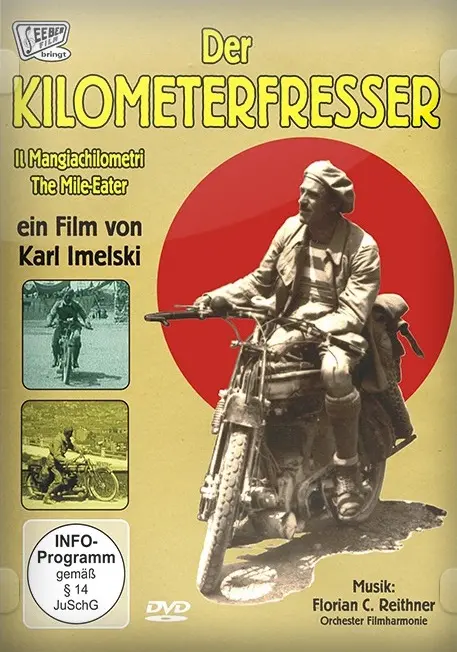
In the stark, echoing landscape of post-war reconstruction, Karl Imelsky's 'Der Kilometerfresser' introduces us to Klaus (Ernst Ganauser), a man whose very being is defined by an insatiable hunger for the road. He is a long-haul truck driver, not merely performing a job, but enacting a profound, almost ritualistic devotion to perpetual motion. Each kilometer consumed by his roaring engine is a deliberate evasion, a self-imposed exile from the emotional stasis and unresolved traumas that haunt his domestic sphere. His wife, Anna, a figure of quiet fortitude and mounting despair, endures his constant departures, their marital bond stretched thin by the vast distances and emotional chasm Klaus meticulously maintains. Their son, Peter, a silent witness to his father’s fleeting presence, embodies the poignant yearning for paternal connection. The narrative meticulously charts Klaus's solitary odyssey: the hypnotic drone of the diesel, the transient encounters in anonymous roadside havens, the desolate grandeur of highways that unfurl like an endless scroll. The road is his confessor, his sanctuary, a vast, indifferent canvas against which his internal turmoil plays out. A catastrophic accident, however, wrenches him from his mobile identity, grounding him in a forced stillness that is both terrifying and revelatory. Stripped of the illusion of perpetual escape, Klaus is confronted with the profound wreckage of his personal relationships, the emotional distances he has so diligently cultivated. This enforced immobility becomes a crucible, compelling him to dismantle the edifice of his relentless pursuit, to finally acknowledge the profound human cost of his ceaseless journeying. The film culminates not in a facile redemption, but in a fragile, arduous re-orientation, a tentative step towards bridging the chasm between his internal world and the yearning hearts he has left in his wake, suggesting that the most arduous and significant journeys are often those undertaken within the confines of the self.
Review Excerpt
"
In the annals of cinematic exploration into the human psyche, there are few works as singularly compelling and quietly devastating as Karl Imelsky's 'Der Kilometerfresser'. This is not merely a film; it is a profound philosophical treatise rendered in stark, moving images, a deep dive into the relentless human drive for progress, escape, and the ultimate, often tragic, cost of such an unwavering pursuit. At its core, the film presents us with Klaus, portrayed with an unnerving intensity by Erns..."