DbcultAccessing Vault...
Cult Review
Senior Film Conservator
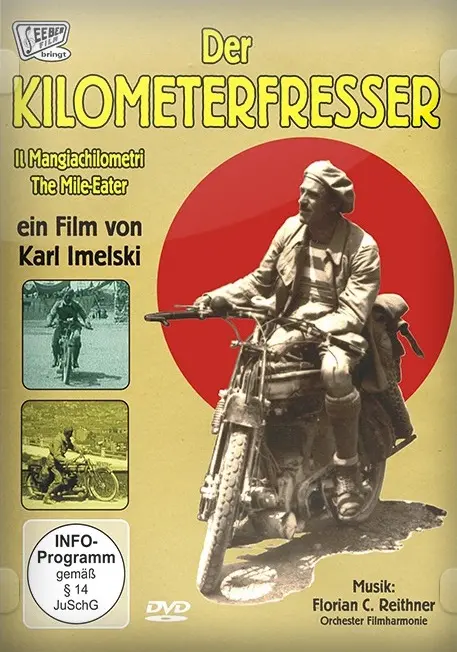
In the annals of cinematic exploration into the human psyche, there are few works as singularly compelling and quietly devastating as Karl Imelsky's 'Der Kilometerfresser'. This is not merely a film; it is a profound philosophical treatise rendered in stark, moving images, a deep dive into the relentless human drive for progress, escape, and the ultimate, often tragic, cost of such an unwavering pursuit. At its core, the film presents us with Klaus, portrayed with an unnerving intensity by Ernst Ganauser, a man whose very existence is a testament to the ceaseless motion of the post-war era. He is a long-haul truck driver, yes, but to label him simply as such would be to strip the character of his almost mythical dimensions. Klaus is an archetype, a modern Sisyphus, forever pushing his burden across an endless landscape, each kilometer a testament to a profound, almost pathological need to outrun, outmaneuver, or simply outlast the specters of a past he cannot, or will not, confront. The title itself, 'The Kilometer-Eater', speaks volumes, not just of a profession, but of a man consumed by consumption, devouring distance as a means to postpone an inevitable reckoning.
Imelsky's screenplay, a masterclass in nuanced character study, avoids the pitfalls of overt exposition, instead allowing the visual narrative and Ganauser's understated performance to convey the layers of Klaus's internal turmoil. The camera often lingers on Klaus's face, a landscape of stoic resolve and unspoken weariness, reflecting the desolate beauty of the roads he traverses. We see not just a man driving, but a soul in perpetual flight, a shadow cast across the vast, undulating tapestry of a recovering nation. The world outside the cabin window is a blur, a fleeting succession of towns and vistas, none of which truly register, for Klaus's focus is always on the next mile, the next destination, the next escape. This relentless forward momentum is both his purpose and his prison, a self-constructed cage of steel and asphalt. The film does not judge this impulse; rather, it meticulously observes it, inviting the audience to ponder the deeper motivations behind such an all-consuming obsession. Is it a coping mechanism for trauma, a reflection of the societal imperative to rebuild, or simply an innate, almost primal wanderlust taken to its extreme?
Ernst Ganauser's portrayal of Klaus is nothing short of mesmerizing. He embodies the character with a quiet gravitas that speaks volumes without uttering a single superfluous word. His eyes, often fixed on the distant horizon, convey a profound solitude, a man utterly alone even amidst the fleeting camaraderie of roadside diners or the occasional co-driver. Ganauser's performance is a masterclass in physical acting, his posture, his hands on the wheel, the subtle shifts in his gaze – all contribute to painting a portrait of a man meticulously carving out an existence defined by absence. He is present in body, but his spirit is forever chasing the elusive horizon. This dedication to his craft, this almost religious adherence to the road, casts a long shadow over his personal life, a theme that resonates with the poignant sacrifices depicted in films like A Soul for Sale, where characters often barter their personal happiness for a greater, often abstract, calling. Klaus's 'calling' is the road itself, and the price is his connection to humanity.
The domestic scenes, though sparse, are imbued with a haunting poignancy. Anna, Klaus's wife, exists in a state of quiet resignation, her love for him a fragile thread stretched taut across the vast distances he creates. Her face, often framed by the window as she watches his truck disappear into the dawn, reflects a profound loneliness, a woman tethered to a home that feels increasingly empty. Their young son, Peter, embodies the unspoken yearning for a paternal presence, his small gestures and hopeful gazes conveying more than any dialogue could. These moments, stark in their emotional honesty, highlight the profound human cost of Klaus's relentless pursuit. They serve as poignant counterpoints to the expansive, often impersonal landscapes of his journeys, reminding us that even the most ambitious individual exists within a web of human relationships, however frayed. The film masterfully uses this contrast to underscore its central themes: the tension between individual drive and familial responsibility, between the allure of the open road and the quiet comfort of home.
Imelsky's directorial vision is characterized by a stark realism, yet one imbued with poetic undertones. The cinematography revels in the bleak beauty of the German landscape, transforming ordinary roads and industrial sites into canvases for existential contemplation. The camera often adopts a detached, observational stance, much like the pioneering work seen in early documentary cinema such as Kino-Pravda No. 18, though here, the focus is on psychological depth rather than purely factual representation. This aesthetic choice enhances the sense of Klaus's isolation, making him a solitary figure against an immense, often indifferent backdrop. The sound design is equally crucial, with the omnipresent hum of the engine, the hiss of tires on wet asphalt, and the distant wail of train horns creating an immersive sonic landscape that mirrors Klaus's internal world. These sounds are not mere background noise; they are the rhythmic pulse of his existence, a constant reminder of his chosen path.
The pivotal moment arrives not through dramatic confrontation, but through a brutal, unexpected act of fate: a severe accident. This event, jarring in its suddenness, strips Klaus of his mobile identity, forcing him into an uncomfortable, terrifying stasis. Grounded, literally and metaphorically, he is compelled to confront the wreckage not just of his vehicle, but of his personal life. The enforced halt becomes a crucible, a painful reckoning with the emotional distances he has so meticulously maintained. Without the constant hum of the engine, without the endless horizon to chase, Klaus is left with nothing but his own thoughts, and the silent, yearning gazes of his family. This period of immobility is where Ganauser's performance truly shines, revealing the raw vulnerability beneath Klaus's stoic exterior. We see glimpses of a man haunted by regret, grappling with the profound emptiness that his relentless pursuit has wrought. It's a powerful echo of characters in films like The Reckless Sex, who, faced with the consequences of their actions, are forced into a period of introspection and difficult self-discovery.
The film's exploration of alienation is particularly potent. Klaus is an outsider, even when he is 'home'. His life on the road has rendered him incapable of true intimacy, of sharing the mundane yet profound moments that constitute a family's life. He is a ghost in his own house, his presence a temporary interruption before his inevitable departure. This theme of emotional detachment and the struggle for connection is a universal one, explored in various forms across cinema, from the enigmatic quest in In Quest of a Kiss to the societal estrangement depicted in The Girl from Bohemia. 'Der Kilometerfresser' distinguishes itself by grounding this alienation in the physical act of constant movement, making the very landscape a metaphor for the psychological distance. The vast, empty roads are not just pathways; they are extensions of Klaus's internal void.
The narrative’s strength lies in its refusal to offer easy answers or a saccharine resolution. Klaus's journey towards self-awareness is arduous and incomplete. The film suggests that some chasms, once created, can never be fully bridged, only tentatively approached. His final actions, a series of small, hesitant gestures towards his family, are not a grand declaration of change, but a poignant acknowledgment of the possibility of a different kind of destination – one rooted in connection rather than escape. It’s a testament to the film’s authenticity that it offers hope, but not a fairytale ending. The scars of his past, and the habits of a lifetime, are not easily erased. This nuanced portrayal of personal growth, fraught with setbacks and lingering doubts, elevates 'Der Kilometerfresser' beyond a simple drama into a profound character study, resonating with the complexities of real human experience.
Stylistically, Imelsky employs a visual language that is both austere and deeply expressive. The use of natural light, the long takes, and the deliberate pacing create an immersive experience, inviting the viewer to inhabit Klaus's world, to feel the monotony and the fleeting moments of beauty. The film's aesthetic aligns with a certain European sensibility, where internal landscapes are often mirrored by external ones. The choice to frame Klaus against expansive, often bleak, backdrops underscores his insignificance in the grand scheme of things, yet simultaneously highlights the monumental struggle occurring within his soul. This visual storytelling is powerful, conveying emotion and narrative progression through composition and atmosphere rather than relying heavily on dialogue. It’s a bold choice that demands patience from the audience but rewards it with a rich, contemplative experience.
The supporting cast, though given less screen time, contributes significantly to the film's emotional texture. The brief encounters Klaus has with other drivers, waitresses, or mechanics are fleeting glimpses into a transient world, providing momentary relief from his solitude, but never truly breaking through his emotional barriers. These interactions serve to emphasize his fundamental isolation, highlighting how even in shared spaces, Klaus remains an island unto himself. Anna, in particular, is a quietly powerful presence, her unspoken suffering a constant, aching counterpoint to Klaus's outward stoicism. Her resilience, her enduring hope against all odds, provides a moral and emotional anchor for the film, reminding both Klaus and the audience of the human connections that are being neglected. The unspoken narrative between them is as compelling as Klaus's overt journey, a testament to the depth of Imelsky's writing and the actors' performances.
Ultimately, 'Der Kilometerfresser' is more than a story about a truck driver; it is an allegorical journey into the human condition, a meditation on the nature of ambition, escape, and the elusive search for meaning. It asks profound questions about what truly constitutes 'progress' and whether the relentless pursuit of an external goal can ever truly satisfy an internal longing. The film's enduring power lies in its ability to resonate with anyone who has ever felt the pull of the open road, the desire to outrun their problems, or the quiet ache of a life lived in constant motion. It is a film that lingers long after the credits roll, prompting introspection and a deeper appreciation for the destinations that truly matter. It stands as a timeless piece of cinema, a poignant reminder that the most profound journeys are often those that lead us back to ourselves, and to the connections we have left behind.
The film’s thematic richness is further amplified by its historical context. Emerging from a post-war landscape, the relentless drive of Klaus can be seen as a microcosm of a nation’s collective effort to rebuild, to move forward, to forget the past through sheer industriousness. Yet, Imelsky subtly critiques this unchecked momentum, suggesting that such a singular focus, while necessary for societal reconstruction, can exact a heavy toll on the individual soul and the fabric of personal relationships. This duality – the necessity of progress versus the cost to humanity – is a recurring motif that imbues the film with an additional layer of socio-political commentary. It’s a narrative that explores not just personal demons, but the collective psyche of an era, making Klaus’s personal odyssey a reflection of a broader societal experience. The journey is not just his; it is a nation's, albeit seen through the intensely personal lens of one man's struggle. The film, in its quiet intensity, encourages us to consider what we consume – kilometers, time, relationships – and what we leave in our wake.
The emotional landscape of 'Der Kilometerfresser' is painted with broad, yet precise strokes. The sense of yearning, of unspoken regret, and of a fragile hope permeates every frame. Klaus’s internal struggle is palpable, even when he maintains a facade of indifference. This emotional depth is achieved through a combination of Ganauser's nuanced performance, Imelsky's evocative direction, and the stark beauty of the cinematography. The film doesn't rely on melodramatic outbursts; instead, it allows emotions to simmer beneath the surface, occasionally breaking through in a fleeting glance, a heavy sigh, or a moment of quiet despair. This understated approach makes the emotional impact all the more profound, allowing the audience to truly feel the weight of Klaus's burden and the silent suffering of those around him. It is a film that understands the power of the unsaid, and the eloquence of silence, creating a truly immersive and emotionally resonant experience for the viewer. It stands as a powerful testament to the art of storytelling, where every element contributes to a cohesive and deeply moving cinematic vision.
In conclusion, 'Der Kilometerfresser' is a cinematic achievement that transcends its seemingly simple premise. It is a haunting, beautiful, and ultimately redemptive film that delves into the profound complexities of human nature. Ernst Ganauser delivers a career-defining performance, embodying the film's central themes with remarkable depth and subtlety. Karl Imelsky's masterful screenplay and direction create a rich tapestry of emotion, observation, and philosophical inquiry. This is a film that demands to be seen, contemplated, and discussed, for its insights into the human condition remain as relevant today as they were upon its initial release. It is a timeless piece of art that reminds us of the distances we travel, both physically and emotionally, and the profound importance of finding our true destination not just on a map, but within the landscape of our own hearts. It’s a film that truly earns its place among the great character studies of cinema, offering a profound reflection on the enduring human quest for meaning and connection amidst the relentless march of life.
The allure of the open road, the freedom of movement, and the escape from stagnation are powerful themes that resonate deeply within the human spirit. Yet, as 'Der Kilometerfresser' so eloquently demonstrates, this freedom can also become a cage, a means to avoid confronting the very issues one seeks to outrun. Klaus's journey is a poignant reminder that true liberation often comes not from traversing vast distances, but from a courageous inward voyage. The film's exploration of the human cost of ambition and the profound impact of our choices on those we love is a universal narrative, one that invites us to examine our own 'kilometers' and the destinations we truly seek. It's a cinematic experience that stays with you, urging a re-evaluation of what truly constitutes a life well-traveled.
The film's masterful portrayal of solitude is one of its most striking features. Klaus's isolation isn't merely physical; it's a deep-seated emotional and psychological state. Even when surrounded by people, he remains an island, a testament to the profound loneliness that can accompany a life dedicated to a singular, all-consuming pursuit. This aspect of the film might subtly remind viewers of the solitary dedication seen in characters from other cinematic explorations, such as the focused, almost monastic existence portrayed in The Marconi Operator, where a character's life is defined by a singular task. However, Klaus's solitude is tinged with a tragic longing, a yearning for connection that he is ill-equipped to express or receive. This makes 'Der Kilometerfresser' a powerful meditation on the nature of human connection and the often-unseen barriers we erect around ourselves.
IMDb 5.7
1929
Community
Log in to comment.