Summary
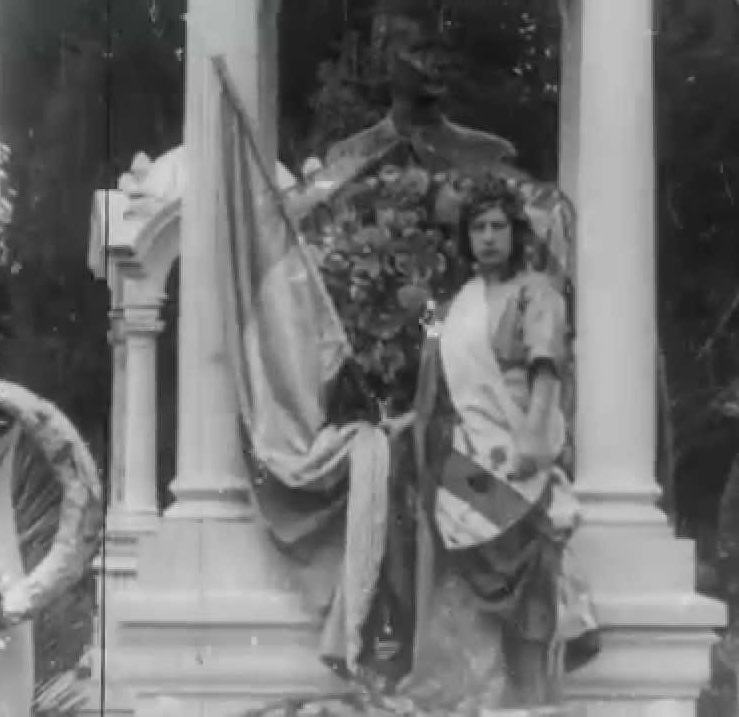
A spectral tribunal unfurls in the Bogotá twilight: one year after the treacherous October day when machetes met the cranium of Rafael Uribe Uribe—liberal titan, labor apostle, thorn in the planter class’s side—the celluloid resurrects the very streets that drank his blood. The camera, obstinate necromancer, drags the two assassins—Galarza the mestizo knife-fighter and Carvajal the mulatto carpenter—back to the scene of their infamy, forcing them to reenact the choreography of treachery: the alleyway ambush, the glint of the machete, the scurry across the Plaza de Bolívar as church bells tolled like a dirge. Yet the film refuses the comfort of a courtroom verdict; instead it splinters into prismatic subjectivities, each frame a confession soaked in kerosene and guilt. Galarza’s pupils dilate into black moons while Carvajal’s hands tremble like tuning forks, and through these involuntary tics the past becomes a palpitating organ sutured to the present. Intertitles—white letters on obsidian background—quote fragments of the actual trial, but the voices on the soundtrack are the murderers’ own, recorded in a barrack cellar, their whispers braided with cicadas, distant thunder, and the rattle of a cinematograph that itself seems on trial. The liberal leader’s ghost, meanwhile, is conjured only by negative space: empty chair, toppled hat, blood-darkened cobblestone that refuses to wash clean. In the final reel the camera performs a vertiginous 360-degree pan across the present-day crowd who have gathered to watch the reenactment; their faces, lit by magnesium flares, become a living fresco of a nation still hemorrhaging from that single incision. The film ends with a freeze-frame on a schoolboy—eyes wide as camera lenses—who will inherit the story but never its absolution.
Reconstruction one year later of the assassination of liberal leader Rafael Uribe Uribe; with the participation of the perpetrators: Messrs Galarza and Carvajal.
Review Excerpt
"
The first thing that strikes you is the smell—an imaginary whiff of damp stone and gunpowder that seems to seep from the very perforations of this 1916 nitrate strip. El drama del 15 de Octubre is not content to be a mere reconstruction; it is a blood transfusion between epochs, a forensic séance in which the murderers of Rafael Uribe Uribe become both puppets and puppeteers of their own atrocity.
A Crime That Refused to Stay in 1914
Colombia, October 15, 1914: liberal caudillo, indefatigable ..."