DbcultAccessing Vault...
6.5/10
Senior Film Conservator
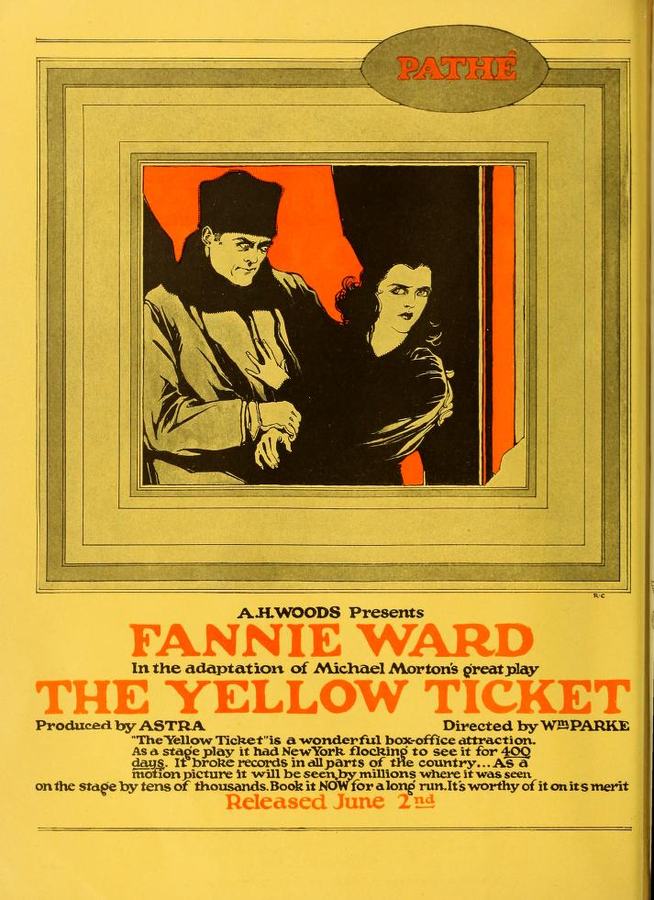
A definitive 6.5/10 rating for a film that redefined the boundaries of cult cinema. The Yellow Ticket remains a cornerstone of transgressive art.
In the annals of silent cinema, few films resonate with the visceral intensity and profound social commentary of The Yellow Ticket. This 1918 drama, a stark reflection of its tumultuous era, plunges viewers into the heart of Czarist Russia’s systemic cruelties, particularly those inflicted upon its Jewish populace. It's a cinematic cry against the suffocating bureaucracy and moral hypocrisy that defined a period teetering on the brink of revolution. From its opening frames, the film establishes a world steeped in prejudice and desperation, a narrative tapestry woven with threads of personal tragedy and broader societal injustice.
The story centers on Anna Mirrel, portrayed with heartbreaking vulnerability by Fannie Ward, a young Jewish woman whose filial devotion becomes her undoing. Her father, gravely ill, resides in St. Petersburg, a city notoriously restrictive for Jewish citizens. To gain entry and attend to him, Anna is forced into an unthinkable compromise: she obtains a 'yellow passport,' the infamous document that officially designates its holder as a prostitute. This isn't merely a plot device; it's a potent symbol of the state's institutionalized degradation, a weaponized bureaucracy designed to dehumanize and control. The very act of acquiring this passport immediately brands Anna, stripping her of dignity even as it ostensibly grants her passage. This initial sacrifice sets the stage for a tragic journey, transforming a hopeful pilgrimage into a descent into a morally compromised existence.
Upon her arrival in the grand, yet unforgiving, metropolis of St. Petersburg, Anna's hopes are cruelly dashed. Her father, the very reason for her perilous journey, has already succumbed to his illness. This devastating revelation leaves her adrift, a young woman now bereft of her familial anchor and burdened by the ignominy of her yellow ticket. The film masterfully conveys her isolation and despair, using stark visual contrasts between the opulence of the city and Anna's precarious existence. Her plight is a microcosm of the widespread suffering under Czarist rule, a silent scream against the indifference of power.
It is in this crucible of despair that Anna encounters Julian Rolfe, a compassionate and idealistic journalist, played by Milton Sills. Their meeting sparks a fragile alliance, built on a shared sense of outrage. Anna, now an unwilling expert on the state's cruelties, finds her voice, recounting to Rolfe the myriad injustices perpetrated against its citizens. This exchange is a pivotal moment, transforming Anna from a passive victim into an active, albeit reluctant, participant in the fight for truth. Rolfe, driven by a journalistic fervor that echoes the muckraking spirit of the era, sees in Anna’s story not just a personal tragedy, but a potent indictment of the entire system. His decision to publish her remarks is an act of courageous defiance, a direct challenge to the autocratic regime.
However, such defiance carries a heavy price. The publication of Anna's damning testimony quickly draws the ire of the secret police, leading to the inevitable apprehension of both Anna and Rolfe. They fall into the clutches of Baron Andrey, portrayed with chilling malevolence by Warner Oland, the sinister head of the police. Oland’s performance is a masterclass in silent film villainy, his every gesture radiating a predatory authority that makes him a truly formidable antagonist. Andrey embodies the corrupt and absolute power of the state, a man who views human lives as mere pawns in his cynical game of control. His presence casts a long, dark shadow over the film, creating an atmosphere of palpable dread.
The climax of The Yellow Ticket presents Anna with an agonizing dilemma, a moral abyss from which there seems no escape. Baron Andrey, reveling in his power, offers her a horrifying choice: submit to his desires, and both she and Rolfe will be granted their freedom. Refusal, he implies, will lead to their ruin, and perhaps their deaths. This is the ultimate degradation, a demand for personal sacrifice that mirrors the initial act of obtaining the yellow ticket, yet intensified by the direct, personal threat of a monstrous individual. Fannie Ward’s portrayal of Anna's internal struggle during this harrowing moment is nothing short of captivating, her expressions conveying a maelstrom of fear, defiance, and despair. The film, through this crucible, elevates Anna's story beyond mere melodrama, transforming it into a profound exploration of human resilience in the face of absolute tyranny.
The film's exploration of systemic anti-Semitism in Czarist Russia is particularly poignant, offering a rare cinematic glimpse into a historical reality often overlooked or sanitized. The yellow ticket itself serves as a tangible manifestation of institutionalized prejudice, a bureaucratic tool designed to marginalize and control an entire population. This theme resonates with other social justice dramas of the era, though perhaps few tackled the specific plight of Jewish communities with such directness. While other films like The Dawn of Freedom might have explored broader themes of national struggle, The Yellow Ticket zeroes in on the personal cost of state-sanctioned discrimination.
Director George D. Baker and writers Michael Morton and Tom Cushing craft a narrative that, despite its melodramatic flourishes typical of the era, never shies away from its grim subject matter. The pacing is deliberate, allowing the emotional weight of Anna's circumstances to fully settle. The cinematography, while constrained by the technology of the time, effectively utilizes lighting and framing to emphasize Anna's isolation and the oppressive atmosphere. Close-ups on Fannie Ward’s expressive face are used to great effect, allowing her to convey a complex range of emotions without the aid of dialogue. This reliance on visual storytelling and the nuanced performances of its lead actors is a testament to the power of silent film to communicate profound ideas.
The performances across the board are commendable. Milton Sills imbues Julian Rolfe with a quiet strength and moral conviction, making him a believable champion for justice. His character serves as the audience's moral compass, guiding us through the treacherous landscape of Czarist corruption. Warner Oland, as Baron Andrey, is a truly memorable antagonist. His portrayal is nuanced, avoiding caricature to present a chillingly plausible figure of authority whose power is absolute and corrupting. The supporting cast, including Nicholas Dunaew, Richard Thornton, and Anna Lehr, contribute to the rich tapestry of the film's world, each character, no matter how small, adding another layer to the narrative's authenticity.
Comparing The Yellow Ticket to other films of its period reveals its unique position. While films like The Man of Shame or The Married Virgin might have explored moral quandaries within personal relationships, The Yellow Ticket elevates the stakes to a societal level, examining how state power can fundamentally corrupt individual lives. Its focus on a specific persecuted group also sets it apart from more generalized dramas. The film's bravery in tackling such a sensitive political topic during a global war, just before the Russian Revolution irrevocably altered the landscape, is particularly noteworthy. It’s a film that bravely speaks truth to power, a quality that makes it resonate even today.
The narrative structure, while adhering to some conventions of melodramatic storytelling, consistently foregrounds the psychological toll of Anna’s ordeal. The writers, Michael Morton and Tom Cushing, don't merely present a series of events; they delve into the emotional landscape of their protagonist. Her journey is not just one of physical peril but of profound internal conflict. The symbolism of the yellow ticket itself is never far from mind, a constant reminder of the societal judgment and personal sacrifice that defines Anna's existence. It's a brand, a mark, a visual shorthand for her forced degradation.
The film also touches upon themes of journalistic integrity and the power of the press. Julian Rolfe's decision to publish Anna's story, knowing the risks, underscores the vital role of a free press in challenging oppressive regimes. This aspect of the narrative is particularly relevant, even in contemporary contexts, highlighting the enduring struggle between those who seek to suppress truth and those who endeavor to expose it. In an age where information control is a constant battle, Rolfe's actions serve as a potent reminder of the courage required to disseminate uncomfortable truths.
From an artistic perspective, The Yellow Ticket demonstrates the burgeoning sophistication of silent filmmaking. The use of intertitles is effective, providing necessary exposition and character thoughts without overwhelming the visual narrative. The set design, particularly the contrasting environments of Anna's humble beginnings and the imposing grandeur of St. Petersburg, effectively conveys the social stratification and the vast power imbalance. The film’s ability to evoke strong emotional responses purely through visual cues and the nuanced performances of its cast is a testament to the artistry of the silent era. It reminds us that storytelling doesn't require spoken words to be profoundly moving and impactful.
The film's legacy is complex. While perhaps not as widely known as some other silent epics, its unflinching portrayal of social injustice ensures its continued relevance. It stands as a valuable historical document, offering insight into both the political climate of early 20th-century Russia and the moral concerns of American filmmakers of the time. Its themes of oppression, resilience, and the fight for dignity are timeless, ensuring that Anna Mirrel's story continues to resonate with audiences who grapple with similar issues in their own societies. It's a reminder that the human spirit, even when faced with insurmountable odds, often finds a way to resist, to speak, and to endure.
In conclusion, The Yellow Ticket is far more than a historical curiosity; it is a potent piece of social commentary, a compelling drama, and a testament to the power of silent film. Fannie Ward delivers a truly remarkable performance, anchoring a narrative that is both heartbreakingly personal and broadly political. The film challenges viewers to confront uncomfortable truths about power, prejudice, and the price of freedom. Its enduring power lies in its ability to humanize the victims of systemic oppression, forcing us to bear witness to their struggles and triumphs. It's a film that deserves to be rediscovered, studied, and appreciated for its artistic merit and its unwavering moral conviction. Its dark orange, sea blue, and yellow hues, perhaps symbolic of the passion, despair, and glimmer of hope within its narrative, linger long after the final frame.
IMDb 5.8
1923
Community
Log in to comment.