DbcultAccessing Vault...
5.2/10
Senior Film Conservator
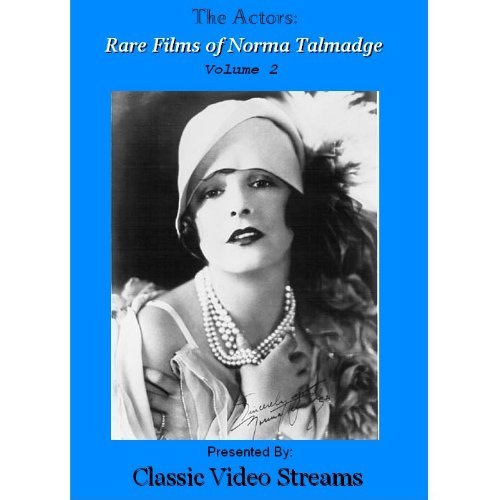
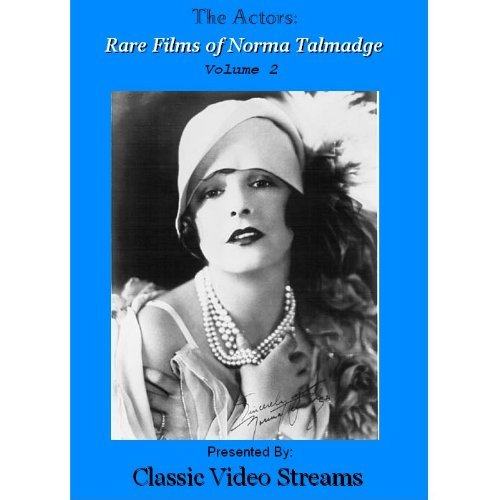
A definitive 5.2/10 rating for a film that redefined the boundaries of cult cinema. The Children in the House remains a cornerstone of transgressive art.
Stepping back into the annals of early cinema, one often encounters narratives that, despite their age, resonate with a surprising contemporary relevance. "The Children in the House," a five-reel feature from the Triangle-Fine Arts Company, directed by the collaborative C.M. and S.S. Franklin, is precisely such a film. Released at a time when cinema was rapidly evolving from mere spectacle to a powerful storytelling medium, this Roy Somerville creation unfurls a tale brimming with the timeless complexities of human desire, moral frailty, and the perennial quest for redemption. While it may not consistently grace the 'best of' lists from its era, its enduring appeal, particularly to audiences then and perhaps even now, lies in its unflinching portrayal of domestic discord and the dramatic consequences that spill over into the wider world.
At the heart of this intricate melodrama is Norma Talmadge as Cora, a performance that undoubtedly anchors the film’s emotional weight. Talmadge, a titan of the silent screen, brings to Cora a profound sense of quiet suffering and burgeoning strength. Her portrayal is not merely that of a neglected wife; it is a nuanced study of a woman grappling with the dissolution of her marital dreams. Wed to Arthur Vincent (Eugene Pallette), the son of a prominent bank president, Cora's life, on the surface, appears idyllic. Yet, beneath this veneer of societal approval, a profound emptiness festers. Vincent, a man evidently more captivated by superficial allure than genuine companionship, squanders his affections and his family's reputation on Jane Courtenay, a cabaret dancer whose charm is as potent as her mercenary instincts. Talmadge masterfully conveys Cora's growing isolation through subtle gestures and expressive eyes – a pensive gaze, a slight slump of the shoulders, the way she holds herself apart from the domestic tableau that should be her sanctuary. Her sorrow is palpable, drawing the audience into her plight with an empathetic pull that transcended the often broad theatricality of the period.
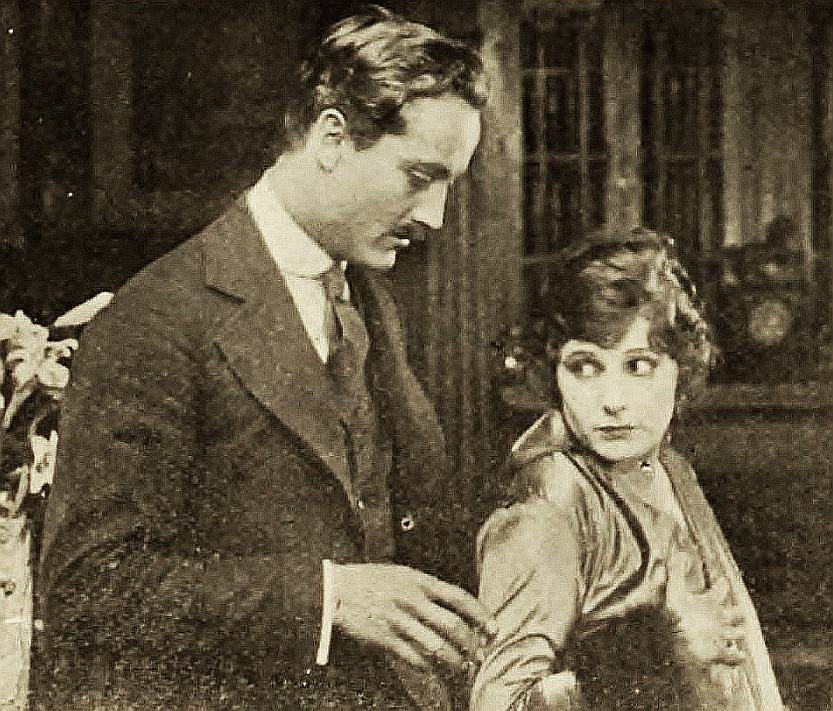
Eugene Pallette, in a role starkly contrasting his later comedic persona, embodies Arthur Vincent with a chilling blend of weakness and arrogance. Vincent is not merely unfaithful; he is a man seduced by the ephemeral glitter of the underworld, his moral compass irrevocably skewed by Jane Courtenay's insatiable demands. Courtenay, depicted with a seductive cunning by Jewel Carmen, represents the dangerous allure of vice, a stark foil to Cora's quiet virtue. Her willingness to grant Vincent her time is directly proportional to his capacity as a "good provider," a transactional relationship that lays bare the mercenary underbelly of some societal interactions. This dynamic is crucial, as it sets the stage for Vincent’s catastrophic choices. His attempts to placate Courtenay lead him to seek financial aid from his father, a plea that is, perhaps justifiably, denied. This refusal pushes him over the edge, compelling him to conspire with Courtenay's dubious associates to orchestrate a daring robbery of his own father's bank. It's a precipitous fall from grace, painted with bold strokes that emphasize the destructive power of unchecked desire and moral compromise.
Amidst this marital and moral decay, a thread of past affection re-emerges. Cora, in her profound loneliness, seeks solace with her sister, who is married to Fred Brown, a young detective. Living with them is Fred's brother, Charles, portrayed by William Hinckley, who works as a cashier in the elder Vincent's bank. Charles is no stranger to Cora; he was her first love, a connection severed when she chose Arthur Vincent, swayed by his family's wealth and prestige. This jilted affection has clearly left an indelible mark on Charles, a quiet longing that makes him a sympathetic figure. His presence introduces a romantic counterpoint to Cora's sorrow, hinting at a potential future beyond her current despair. However, this burgeoning hope is violently interrupted by the bank robbery. In a cruel twist of fate, Charles Brown, a man of integrity, finds himself unjustly accused and arrested for the crime. This segment of the film heightens the dramatic tension considerably, placing an innocent man in peril and underscoring the chaotic ripple effects of Vincent's transgressions. The injustice meted out to Charles is a potent narrative device, echoing themes of wrongful accusation found in other melodramas of the era, such as The Mystery of a Hansom Cab, where circumstantial evidence often traps the innocent.
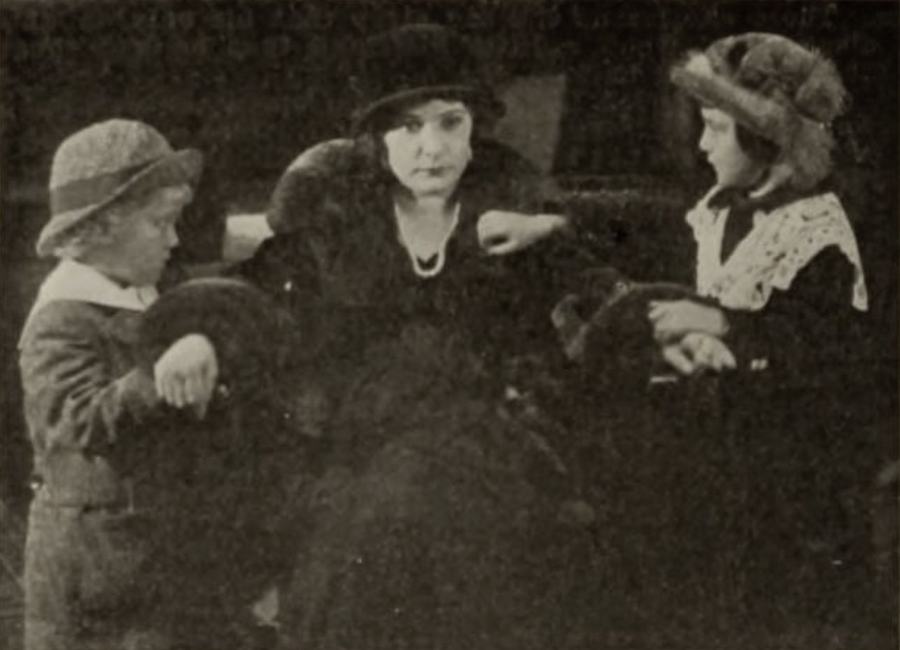
The resolution of the robbery plot provides the film's most action-packed sequence. The true culprits, Vincent and his confederates, are eventually tracked to their hiding place. What follows is a violent confrontation, a desperate escape attempt that leaves all but one of the robbers dead. This swift and brutal justice serves as a stark reminder of the era's dramatic conventions, where villains often met definitive, often fatal, ends. Vincent's demise leaves Cora a widow, a tragic yet ultimately liberating turn of events. The narrative then subtly implies a future for Cora and Charles, a "natural supposition" of a happy marriage. This conclusion, while perhaps a touch too neat for modern sensibilities, would have offered a satisfying sense of closure to contemporary audiences, particularly women, for whom the film was specifically noted to have "great appeal." It posits a triumph of enduring love and moral rectitude over superficiality and vice.
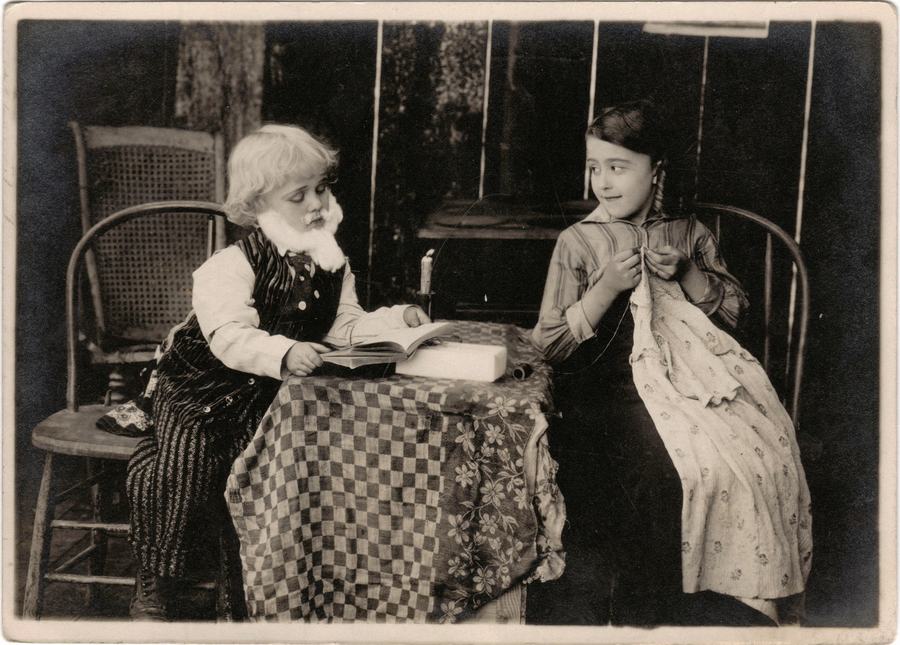
One of the most intriguing aspects of "The Children in the House" is its title, the relevance of which, as the original synopsis candidly admits, is "hard to say." This ambiguity invites speculation. Cora and Arthur Vincent have two children, yet their presence in the plot feels largely peripheral, almost an afterthought amidst the adult dramas of infidelity, betrayal, and crime. They are not central to the narrative’s driving force, nor do they serve as explicit catalysts for the characters' actions. One might interpret the title metaphorically, perhaps suggesting the 'children' represent the innocence lost within the household, or the vulnerable future generation caught in the crossfire of adult folly. Alternatively, the children could symbolize the underlying reason for Cora's resilience – a silent motivation to protect her offspring, even if this isn't overtly depicted. It's also possible that the title was chosen for its evocative power, hinting at a domestic sphere under threat, or simply as a marketing hook that didn't quite align with the final narrative emphasis. This deliberate vagueness, whether intentional or accidental, adds a layer of mystique to the film, prompting viewers to ponder its deeper significance long after the final reel. In an era where titles often directly mirrored plot points, this deviation is noteworthy, perhaps even avant-garde in its subtle defiance of literalism.
Under the direction of C.M. and S.S. Franklin, "The Children in the House" demonstrates a competent, if not groundbreaking, command of cinematic storytelling for its time. The Franklin brothers, known for their prolific output during the silent era, navigate the film's complex emotional landscape with a steady hand, ensuring that the melodrama, while heightened, remains engaging. Their direction of actors, particularly Norma Talmadge, allows for performances that transcend mere pantomime, conveying genuine emotion. The pacing, crucial in silent films to maintain audience engagement without dialogue, is generally well-managed, building tension effectively during the lead-up to the robbery and its aftermath. While the film may not possess the experimental flair or profound artistic statements of some of its contemporaries, it delivers a solid, commercially viable product. The visual storytelling, characteristic of the period, relies heavily on strong compositions, dramatic lighting, and intertitles to convey dialogue and exposition. The staging of the bank robbery and the subsequent chase, though perhaps rudimentary by modern standards, would have provided a thrilling spectacle for audiences accustomed to less sophisticated action sequences. The film’s ability to "get by because of its great appeal to women" speaks volumes about the Franklins' understanding of their target demographic, crafting a narrative that resonated with the emotional experiences and societal concerns of female viewers.
Roy Somerville's screenplay, while designed for popular appeal, inadvertently offers a fascinating glimpse into the societal anxieties and moral codes of the early 20th century. The film critiques the superficiality of wealth when divorced from integrity, embodied by Arthur Vincent. It champions the steadfastness of genuine affection over material gain, exemplified by Charles Brown's unwavering, if initially unrequited, love for Cora. The plight of the neglected wife was a resonant theme, tapping into the experiences and fears of many women who, despite societal expectations, found themselves in unfulfilling or abusive marriages. The film's resolution, where the errant husband meets a violent end and the virtuous woman finds happiness with her true love, provides a cathartic release and a moral blueprint that would have been deeply satisfying to its audience.
Comparing it to other films of the era, one can see echoes of its dramatic sensibilities. The focus on a woman's suffering and eventual resilience might draw parallels with films like The Truth About Helen, which also explored the trials and tribulations faced by female protagonists. The moralistic tone and the clear delineation between good and evil, virtue and vice, were common tropes, designed to both entertain and subtly reinforce societal norms. Even the theme of a man's downfall due to obsession with a 'femme fatale' figure, albeit in a nascent form, can be observed. The narrative's journey from domestic despair to a dramatic crime, and then to a hopeful resolution, encapsulates a popular storytelling arc that continued to captivate audiences for decades.
"The Children in the House," despite its seemingly conventional plot points, offers more than just a fleeting glimpse into early cinematic storytelling; it provides a window into the cultural fabric of its time. It highlights the power of star appeal, particularly that of Norma Talmadge, to elevate a narrative and draw audiences into the cinema houses. It showcases the evolving craft of screenwriting, where Roy Somerville skillfully weaves together romance, crime, and social commentary into a cohesive, albeit melodramatic, whole. The film’s capacity to "get by" is, in itself, a testament to its effectiveness. It fulfilled its primary purpose: to entertain, to provoke emotion, and to offer a satisfying narrative journey.
While it may lack the grand scale of an epic like Les Misérables, Part 2: Fantine or the intricate detective work of a Sherlock Holmes adaptation, "The Children in the House" excels in its more intimate, domestic drama. Its strength lies in its ability to tap into universal human experiences: love lost and found, the corrosive nature of greed, the pain of betrayal, and the enduring hope for a better future. The film, therefore, stands as a worthy artifact of its era, a testament to the enduring power of storytelling through moving images, even without the aid of spoken dialogue. Its characters, though products of a bygone cinematic age, grapple with emotions and dilemmas that remain remarkably pertinent, making "The Children in the House" a fascinating subject for any cinephile keen to explore the foundations of narrative film.
The film’s focus on the female experience, particularly Cora's journey from victimhood to potential agency, is a significant aspect often overlooked in broader cinematic histories. For women of the early 20th century, cinema offered not just escapism but also narratives that mirrored, and sometimes challenged, their own societal roles and expectations. Cora's eventual liberation from a morally bankrupt marriage and the implied union with a steadfast, loving partner would have resonated deeply, offering a vision of justice and emotional fulfillment that was perhaps not always attainable in real life. This powerful connection with its female audience underscores the film's cultural importance, positioning it as more than just a simple melodrama, but as a reflection of its time's aspirations and moral compass. The subtle commentary on class, the corrupting influence of easy money, and the stark contrast between appearances and reality further enrich its thematic tapestry, inviting a deeper reading beyond its surface drama.

IMDb —
1928
Community
Log in to comment.