DbcultAccessing Vault...
Cult Review
Senior Film Conservator
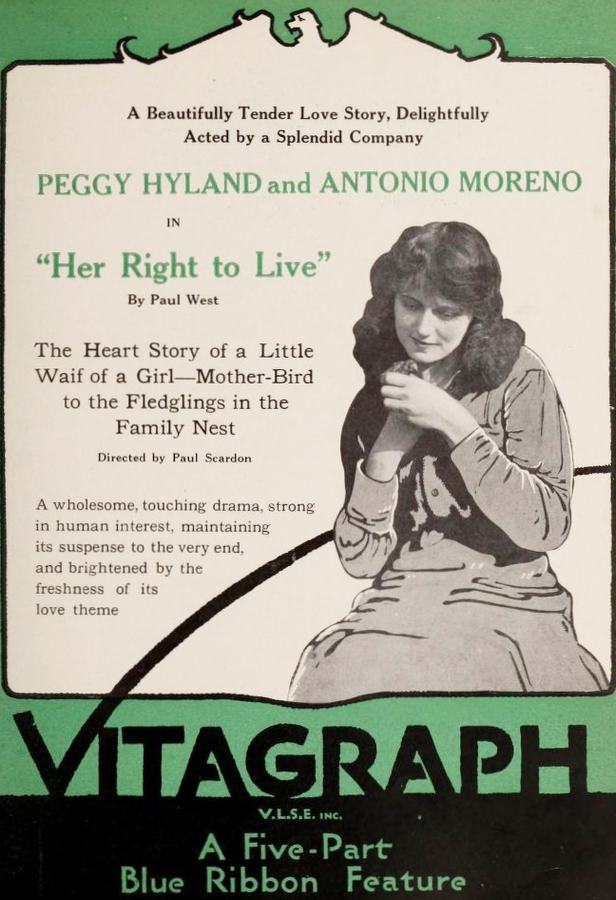
In the annals of early cinema, where narratives often relied on broad strokes of emotion and stark moral contrasts, certain films emerge not merely as historical artifacts but as resonant echoes of timeless human struggles. Her Right to Live, a compelling silent drama from the pen of Paul West, stands as a testament to the era's capacity for profound storytelling, weaving a tapestry of political intrigue, familial devotion, and an individual's unyielding quest for justice. It is a work that, even through the sepia-toned lens of a century past, speaks with an urgent clarity about the forces that conspire against the vulnerable and the courage required to confront them.
At its heart lies Polly Biggs, portrayed with a captivating blend of vulnerability and steely resolve by Peggy Hyland. Polly is not merely a character; she is the embodiment of nascent female agency in a world often dominated by male machinations and societal constraints. Her world is one of quiet sacrifice, tending to her younger siblings while her widowed mother toils tirelessly as a seamstress. This idyllic, if impoverished, domesticity is shattered by the death of her father, a void almost immediately filled by the sinister presence of Mayor Hoadley (John S. Robertson), her mother's brother. Hoadley, a figure of oily charisma and profound moral bankruptcy, offers condolences that ring hollow, his true nature glimpsed through Polly's intuitive distrust. His subsequent 'benevolence' in taking in the orphaned children after Mrs. Biggs's passing is nothing more than a thinly veiled charade, a performance for public consumption that belies the cruelty and neglect inflicted behind closed doors. This initial setup immediately establishes the film's thematic bedrock: the insidious nature of power, the hypocrisy of public figures, and the resilience of the human spirit in the face of systemic oppression.
The narrative gains momentum with the introduction of John Oxmore (Antonio Moreno), an artist and the son of a reform candidate challenging Hoadley's corrupt reign. John represents a beacon of hope and integrity, a stark contrast to the shadowy world Polly inhabits. Their paths intersect, first with a chivalrous act where John rescues Polly from the predatory advances of Hawkins, a ward boss whose unsavory dealings provide Hoadley with both power and vulnerability. This encounter not only sparks a nascent connection between Polly and John but also escalates the stakes, as Hawkins's threat to 'get' John is overheard by Hoadley, cementing a dangerous nexus of personal animosity and political leverage. The film masterfully intertwines these personal dramas with the broader political struggle, demonstrating how individual fates are often inextricably linked to the machinations of the powerful. The oppressive atmosphere of the Hoadley mansion, vividly conveyed through the children's palpable fear and Polly's quiet despair, culminates in their desperate escape to the poorhouse. This refuge, however, proves tragically temporary as it succumbs to fire, forcing Polly into another heroic act of saving her siblings from the flames. Their subsequent wanderings lead them to John's secluded bungalow, a sanctuary of sorts, where their presence becomes a critical, yet hidden, piece of a larger puzzle.
The plot thickens with Hoadley's fateful visit to Hawkins, resulting in a killing that Hoadley claims is self-defense. The weapon, tragically, is a cane inadvertently left at Hoadley's house by John. This narrative contrivance, while perhaps a touch melodramatic for contemporary tastes, serves its purpose in the silent era's storytelling, propelling John into the clutches of the law. His arrest for murder creates a profound moral dilemma: Polly and the children are his only alibi, yet revealing their presence would expose them as runaways, potentially implicating John further and jeopardizing his father's reformist campaign. The evidence against him is formidable, and the specter of his conviction looms large, threatening to dismantle not only his future but also his father's political aspirations. It is here that the film's title, Her Right to Live, truly crystallizes. Polly, having been sent away by the manipulative Hoadley, must return, not merely to save John, but to assert her own agency, to speak truth to power, and to reclaim her rightful place in a world that has sought to silence and diminish her. Her return is not just a plot device; it is a powerful statement of self-determination, a young woman's defiant stand against injustice, reminiscent of the strong female protagonists found in films like The Awakening of Bess Morton, where women navigate complex social landscapes to assert their moral compass.
The strength of Her Right to Live lies not only in its compelling narrative but also in the performances that bring its characters to vivid life. Peggy Hyland, as Polly, delivers a nuanced portrayal that transcends the often exaggerated gestures of silent film acting. Her eyes, her posture, her subtle movements convey a depth of emotion – fear, determination, sorrow, and hope – that resonates deeply. Antonio Moreno, as John Oxmore, exudes a quiet strength and earnestness, making his character a believable moral anchor in a sea of corruption. John S. Robertson's Mayor Hoadley is a masterful study in villainy, his smarmy charm barely concealing the malevolence beneath. The child actors, including Bobby Connelly, Mae Costello, and Helen Connelly, contribute significantly to the film's emotional weight, their vulnerability amplifying the stakes of Polly's struggle. Their performances, guided by the director's vision, speak volumes without uttering a single word, a true hallmark of effective silent film artistry.
The film, directed by an uncredited hand but guided by Paul West's intricate screenplay, demonstrates a keen understanding of silent cinema's unique strengths. The visual storytelling is paramount, with carefully composed shots and expressive intertitles guiding the audience through the emotional landscape. The use of contrast – between the opulence of the Hoadley mansion and the squalor of the poorhouse, between the darkness of political machinations and the innocence of the children – is particularly effective. The pacing, though deliberate by modern standards, builds tension gradually, allowing the audience to fully invest in Polly's plight and the unfolding drama. This methodical approach to narrative construction is a characteristic of the era, where every visual cue and dramatic turn had to be precisely calibrated to convey meaning without dialogue. Films like The Man Who Disappeared similarly leveraged strong visual narratives to engage audiences in mysteries and moral quandaries, emphasizing the power of non-verbal communication.
While specific directorial credits are often elusive for films of this vintage, the execution of Her Right to Live suggests a confident hand behind the camera. The visual grammar of the film is articulate, employing close-ups to emphasize emotional states and wider shots to establish the social environments. The scene of the poorhouse fire, for instance, would have been a spectacle for its time, designed to evoke maximum empathy and peril. The contrast between the stark, often shadowy interiors where Hoadley plots and the sunlit, albeit temporary, refuge of John's bungalow is a simple yet effective visual metaphor for the moral struggle at play. The film's ability to communicate complex character motivations and plot twists through purely visual means, aided by succinct intertitles, is a testament to the sophistication of silent film techniques. It’s a craft that demanded precision in acting, set design, and editing, ensuring that every frame contributed meaningfully to the overarching narrative arc. The dramatic tension surrounding John's arrest and trial, for example, is conveyed through the solemnity of the courtroom setting and the anxious expressions of the characters, building a palpable sense of impending doom without a single spoken word.
The thematic concerns of Her Right to Live resonate with a surprising number of its contemporaries, particularly those exploring social injustice and political corruption. The intertwining of personal melodrama with a larger critique of societal ills finds parallels in films like Scandal, which often delved into the moral failings of the elite, and The Tempting of Justice, where the integrity of legal and political systems is tested. The plight of the orphaned children and Polly's role as their protector echoes the sentimental dramas of the era, where the innocence of youth often served as a foil for adult depravity. Furthermore, Polly's journey from a passive victim of circumstance to an active agent of change, daring to challenge powerful figures, aligns with the burgeoning narratives of female empowerment seen in films like The Woman in 47, which often depicted women navigating complex social landscapes to assert their moral compass and personal autonomy. The narrative's reliance on a climactic revelation to expose the truth and bring about justice is a common trope in many early films, underscoring a societal desire for clear moral outcomes, a stark contrast to the more ambiguous endings favored by later cinematic movements. Even the dramatic escape from the burning poorhouse has echoes in other survival narratives, emphasizing the raw, visceral stakes of early filmmaking. The film's ability to blend these elements – political thriller, family drama, and a tale of personal courage – into a cohesive and engaging whole speaks to the versatility of silent cinema's narrative toolkit.
Ultimately, Her Right to Live is more than just a forgotten relic; it is a vital piece of cinematic history that offers a window into the cultural anxieties and moral compass of its time. It’s a story that, despite its silent presentation, speaks volumes about the enduring human desire for fairness, the courage to stand against corruption, and the profound bonds of family. The film's exploration of political malfeasance, the exploitation of the vulnerable, and the eventual triumph of truth remains remarkably pertinent, demonstrating that the struggles depicted a century ago continue to resonate in contemporary society. The film reminds us that the fight for one's 'right to live' – to live with dignity, truth, and freedom – is an eternal one. Its preservation and rediscovery allow us to appreciate the artistry of its creators, the power of its performances, and the timeless relevance of its message. It is a film that, like a flickering lantern in the dark, illuminates the path toward justice, reminding us that even in the face of overwhelming odds, the human spirit, especially when embodied by a figure as resolute as Polly Biggs, can prevail.
The raw emotional power, the clear delineation of good and evil, and the ultimate vindication of the innocent are all hallmarks of a storytelling tradition that sought to entertain, enlighten, and uplift. While specific details of its production might be lost to time, the impact of its narrative endures, a testament to the universal language of cinema. For those interested in the foundational works of American film, Her Right to Live offers a rich and rewarding experience, a poignant reminder of the power of early cinema to tackle complex social issues with both grace and dramatic force. It solidifies its place not just as a historical curiosity, but as a compelling human drama that continues to speak to audiences today, proving that its message of resilience and justice is truly timeless.
IMDb —
1924
Community
Log in to comment.