Summary
In the soot-stained, bureaucratic heart of post-Edwardian London, William 'Still' Waters—a man whose stoicism borders on the pathological—orchestrates a social stratagem that defies the era's rigid moral geometry. He offers Monica Trant, a stenographer of sharp intellect and dwindling means, the staggering sum of five hundred pounds to inhabit the role of his 'official fiancée.' This is no plea for affection, but a cold, transactional maneuver intended to insulate Waters from an impending, unwanted matrimonial alliance with a client's daughter. Driven by a fierce sisterly devotion to provide for her brother, Monica accepts the charade. The narrative shifts to the pastoral domesticity of the Waters family estate, where Monica must perform the masquerade of devotion before an audience of unsuspecting relatives. With an effervescent charm that masks her underlying resentment of the contract, she captivates Waters’ mother and the extended kin, inadvertently thawing the icy exterior of her employer. However, the friction between genuine human connection and the mercenary nature of their agreement eventually sparks a crisis of conscience. Monica, refusing to remain a mere line item in a ledger of convenience, retreats to the anonymity of London. It is only when the artifice is stripped away and Waters confesses the desperate commercial necessity behind his gambit that the performative engagement dissolves, making way for a sincere romantic reconciliation.
Synopsis
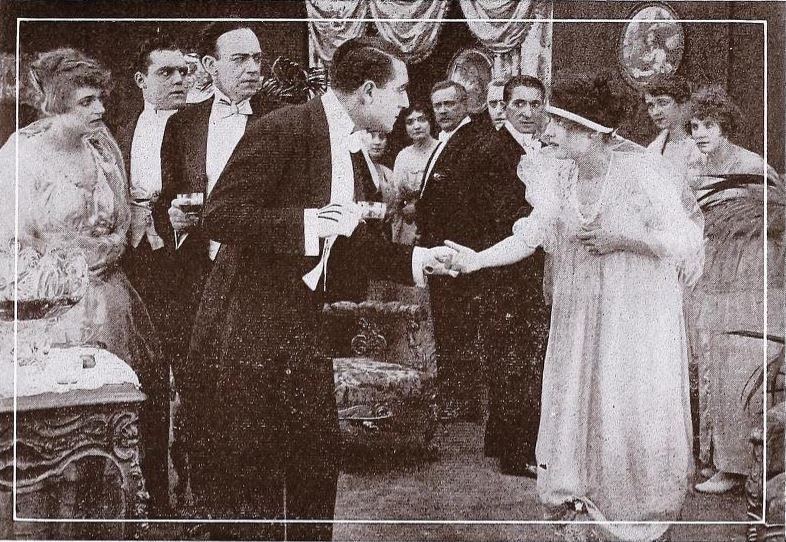
Without explanation, William "Still" Waters, the head of a London business, asks stenographer Monica Trant to be his "official fiancée" for 500 pounds. Monica agrees, in order to help support her brother. Monica is introduced to Waters' family at his home. She charms his mother and other relatives, and even wins over the reserved Waters, but she soon resents the business nature of their proposition and returns to London. Waters then explains the reason for the strange request: A foreign business client had selected him for the husband of his daughter and in order to secure the business deal Waters thought a prior engagement was the easiest way out. Monica forgives him and agrees to be his fiancée in earnest.
Review Excerpt
"
The silent screen has often served as a canvas for the most intricate of social negotiations, yet few films of the late 1910s navigate the precarious intersection of commerce and courtship with as much nuanced dexterity as His Official Fiancée. Directed with a keen eye for the performative nature of class, this 1919 gem offers a fascinating glimpse into a world where the heart is frequently secondary to the ledger. While many films of the era, such as The Railroad Raiders, focused on the exter..."