DbcultAccessing Vault...
5.1/10
Senior Film Conservator
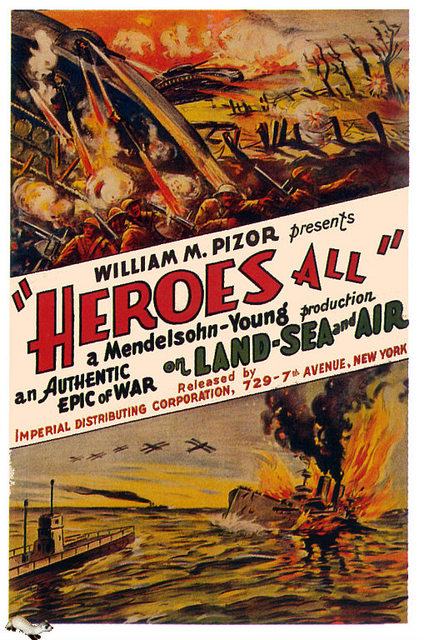
A definitive 5.1/10 rating for a film that redefined the boundaries of cult cinema. Heroes All remains a cornerstone of transgressive art.
In an era often dominated by grand narratives and burgeoning cinematic spectacle, Anthony Young's 'Heroes All' emerges as a singular, almost defiant artifact. It is not a film woven from intricate plotlines or the dramatic flourishes of fiction, but rather a stark, compelling tapestry stitched together from the very fabric of history itself. This seminal work, curated and written by Young, presents a breathtakingly intimate, yet agonizingly broad, panorama of World War I through the eyes of those who documented it in real-time: the intrepid newsreel companies and the often-unseen army cameramen. The genius lies in its unadulterated approach, offering audiences a direct, visceral conduit to the experiences of soldiers, stripped of the usual cinematic artifice. It’s a profound testament to the power of the moving image as a historical document, a raw, pulsating record of human endurance and suffering that resonates with an almost uncomfortable authenticity.
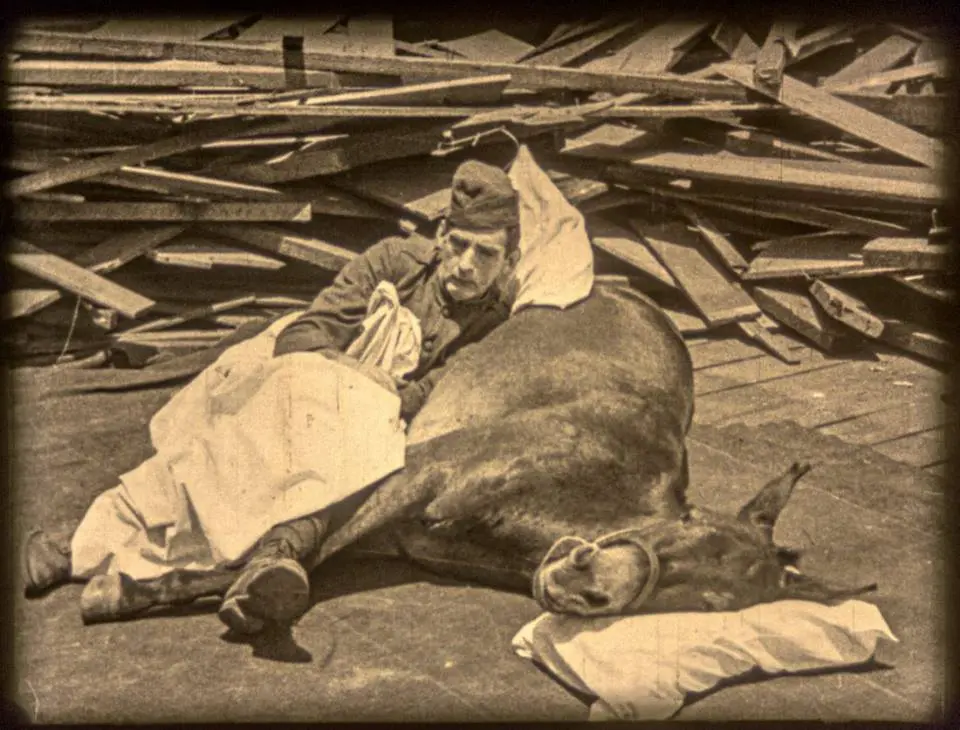
The film's very construction speaks volumes. By eschewing staged reenactments or retrospective commentary, 'Heroes All' plunges us into the immediacy of the conflict. We see not actors portraying soldiers, but genuine individuals grappling with the unimaginable conditions of trench warfare, the relentless monotony punctuated by moments of sheer terror, and the camaraderie forged in the crucible of shared peril. The frames flicker with an inherent graininess, a visual texture that underscores their provenance as genuine historical artifacts, each scratch and imperfection adding to their gravitas. This isn't merely a collection of clips; it's a meticulously assembled mosaic designed to evoke a profound emotional and intellectual response, forcing viewers to confront the human scale of the Great War in a way that mere textbooks or even fictionalized dramas often struggle to achieve.
What distinguishes 'Heroes All' is its commitment to the unvarnished truth, a quality that sets it apart from many contemporary cinematic endeavors. While films like The Birth of Patriotism might have sought to ignite nationalistic fervor through staged heroics and clear moral binaries, Young's compilation offers something far more nuanced and, ultimately, more devastating. There are no clear heroes or villains in the traditional sense, only men caught in an overwhelming maelstrom. The film captures the mundane – soldiers eating meager rations, writing letters home, mending uniforms – alongside the terrifying, such as artillery barrages and the grim aftermath of skirmishes. This juxtaposition creates a comprehensive, almost holistic understanding of the soldier’s existence, revealing that heroism often resided not in grand gestures, but in the sheer act of enduring another day.
Anthony Young, credited as both writer and the architect of this compilation, demonstrates an astute understanding of how to construct a compelling narrative without dialogue or conventional plot progression. His curatorial hand is evident in the pacing, the selection of footage, and the subtle thematic threads that emerge. We witness the evolution of warfare, from initial enthusiasm to weary resignation, from cavalry charges to the nascent horrors of chemical attacks. The film becomes a silent symphony of human experience, where the visual language speaks volumes. The expressive faces of the soldiers – tired, resolute, fearful, occasionally smiling – become the primary means of communication, conveying a depth of emotion that transcends the lack of spoken words. It reminds us that long before the sophisticated documentary techniques of later decades, there was an inherent power in simply pointing a camera at reality and letting it speak for itself.
The film also serves as an invaluable historical resource, offering glimpses into aspects of WWI that are often overlooked. Beyond the fighting, we see the logistical efforts, the medical camps, the support staff, and even moments of respite and humor that punctuate the pervasive despair. These are not merely soldiers; they are individuals with lives, families, and hopes, temporarily united by an unprecedented global conflict. The raw quality of the footage, often shaky or out of focus, only enhances its authenticity. It feels less like a polished production and more like a direct transmission from the past, a window into a world irrevocably altered by war. In this respect, it stands in stark contrast to the often-fantastical narratives of early cinema, such as A Message from Mars or Sweet Kitty Bellairs, which aimed to transport audiences to different realms; 'Heroes All' firmly roots us in a very specific, and grim, historical moment.
The lexical diversity of the visual storytelling is remarkable, despite its silent nature. Every gesture, every facial expression, every piece of equipment, and every expanse of ravaged landscape contributes to a rich tapestry of meaning. There's the grim determination of men advancing through mud, the momentary relief of a shared cigarette, the stark desolation of no-man's-land, and the sheer scale of military operations. The film captures the overwhelming sense of industrial warfare, where individual heroism often felt swallowed by the vastness of the conflict. This is a far cry from the more personal, character-driven dramas like A Soul Enslaved, where individual choices drive the plot. Here, the collective experience dominates, making the individual soldier a representative figure of a generation's sacrifice.
One cannot help but marvel at the courage of the cameramen themselves, who, like the soldiers they filmed, often operated under perilous conditions. Their perspective is inherently embedded in the footage; we sometimes see the lens shaking, the quick pans to avoid incoming fire, or the careful framing of a scene amidst the chaos. This imbues the film with an additional layer of authenticity, a meta-narrative about the act of documentation itself during wartime. It’s a stark reminder that the creation of these historical records was itself an act of bravery, making the film a tribute not just to the soldiers, but also to those who ensured their stories, however fragmented, would not be lost to time. The dedication of these early documentarians provides a powerful contrast to the more fantastical or escapist fare of early cinema, such as the adventurous tales of Daredevil Kate or Billy Blazes, Esq., emphasizing 'Heroes All's' grounding in gritty reality.
The film’s impact extends beyond mere historical record; it delves into the psychological landscape of war. While silent, the imagery itself evokes the cacophony of the battlefield – the distant rumble of artillery, the sharp crack of rifle fire, the shouts of commanders, and the groans of the wounded. The viewer is compelled to fill in these sensory gaps, making the experience deeply personal and immersive. This engagement with the unspoken and unseen elevates 'Heroes All' from a simple compilation to a profound meditation on conflict. It challenges the viewer to actively participate in constructing the experience, to imagine the sounds, the smells, and the fear that permeated every frame. Such active engagement is a hallmark of compelling cinema, regardless of genre, and Young masterfully achieves it here.
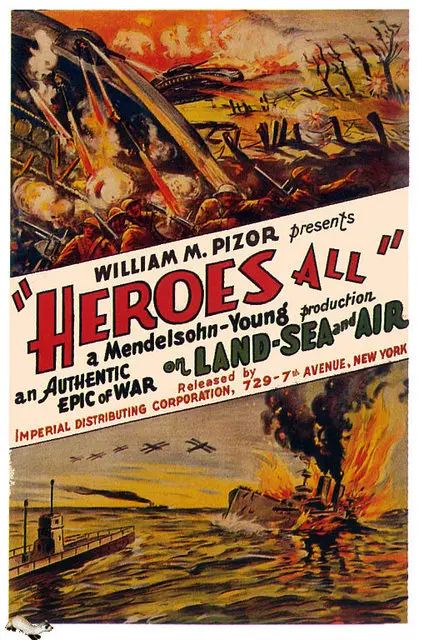
Anthony Young’s direction, or rather, his curatorial vision, is particularly striking in how he avoids sentimentalism. There are no overt appeals to emotion, no swelling musical scores (though one can imagine what accompaniment might have been played in early screenings). Instead, the raw footage is allowed to speak for itself, its inherent power needing no embellishment. This restraint amplifies the emotional resonance, making moments of quiet dignity or profound suffering all the more impactful. It's an approach that respects the gravity of the subject matter, refusing to exploit it for cheap dramatic effect. This integrity makes 'Heroes All' a timeless piece, one that continues to educate and move audiences long after its initial release. It’s a film that respects its subjects and its audience, presenting history not as a spectacle, but as a stark, undeniable truth.
The enduring relevance of 'Heroes All' cannot be overstated. In an age saturated with meticulously crafted CGI and high-definition recreations, the grainy, often imperfect footage presented by Young retains a unique power. It serves as a potent reminder of the genesis of cinematic documentary, demonstrating the medium's capacity to capture and preserve moments that would otherwise be lost to the mists of time. It’s a foundational text for anyone interested in the history of war journalism, the evolution of documentary filmmaking, or simply the unvarnished truth of one of humanity’s most devastating conflicts. Its legacy is etched not in grand cinematic innovations, but in its unwavering commitment to bearing witness. The film, in its quiet, persistent way, demands that we remember, that we acknowledge the sacrifices, and that we understand the profound human cost of war, a message as critical now as it was a century ago. It stands as a powerful counterpoint to films like Wanted - A Film Actress, which showcased the burgeoning artifice of cinema, by instead championing its capacity for raw, unmediated truth.
The meticulous selection and arrangement of these disparate visual fragments create a cohesive and deeply affecting whole. Young's vision transforms mere archival footage into a potent narrative, not of individual heroes, but of collective endurance. The title, 'Heroes All', becomes a poignant recognition not just of those who fell, but of every single person who faced the daily indignities and dangers of the front. It's a democratic acknowledgment of bravery, recognizing the quiet courage in ordinary acts amidst extraordinary circumstances. The film’s structure, flowing from scenes of preparation to combat, to the wounded, and to moments of fleeting peace, mimics the unpredictable rhythm of war itself. This ebb and flow, devoid of a specific protagonist, allows the viewer to project themselves into the collective experience, fostering a profound empathy.
Ultimately, 'Heroes All' is more than just a historical documentary; it is a profound act of remembrance. It ensures that the faces, the struggles, and the sacrifices of a generation are not relegated to dusty archives but are brought to life, flickering on screen, demanding our attention and respect. It’s a stark, powerful, and essential piece of cinema that continues to resonate with undeniable force, reminding us of the enduring power of the camera to capture truth and to shape our understanding of the past. Its directness and authenticity provide a much-needed grounding in reality, especially when compared to the more fantastical or melodramatic offerings of its time, such as Lilith and Ly or A Broadway Cowboy. Young's work stands as a stark, vital counterpoint, proving that sometimes, the most compelling stories are simply those that truly happened.
The film serves as an extraordinary educational tool, offering unparalleled insight into the daily lives of soldiers during World War I. Unlike a scripted drama, where every scene is carefully constructed, 'Heroes All' presents moments that feel unmediated and raw. We see the genuine expressions of fatigue, the fleeting smiles of camaraderie, and the stark reality of military operations. This unfiltered perspective is crucial for understanding the true nature of the conflict, moving beyond abstract statistics to the tangible human experience. Young's compilation, therefore, becomes a living archive, a dynamic historical record that continues to inform and impact viewers with its unwavering honesty. It's a masterclass in how to convey a vast, complex historical event through the power of meticulously selected primary visual sources, demonstrating a profound respect for both the subject matter and the audience's capacity for empathetic engagement.
The visual language employed by the original cameramen, and subsequently highlighted by Young's editing, offers a fascinating study in early photojournalism. From wide shots capturing the desolate landscapes of the Western Front to close-ups revealing the grime and exhaustion on a soldier's face, the footage is a testament to the nascent art of capturing unfolding history. These cameramen, often working under immense pressure and danger, were pioneers, shaping the very grammar of documentary filmmaking in real-time. Their work, preserved and presented in 'Heroes All', provides a foundational understanding of how visual media came to define our perception of major historical events. It is a stark contrast to the often-staged political spectacles such as Gira política de Madero y Pino Suárez, where the camera's role was to convey a specific, often controlled, message. In 'Heroes All', the camera is often an objective, albeit human, observer of chaos and order alike.
Furthermore, 'Heroes All' stands as a powerful argument for the preservation and accessibility of archival material. Without the diligent efforts of those who safeguarded these fragile reels, much of this invaluable insight into WWI would be lost forever. Young's work underscores the importance of such historical custodianship, transforming disparate fragments into a coherent and compelling narrative that transcends generations. The film serves as a vital bridge between the past and the present, ensuring that the lessons and sacrifices of the Great War continue to resonate. It is a profound reminder that history, when presented with integrity and care, can be an incredibly potent and moving experience, far more impactful than any fictionalized account. The sheer scope of its historical reach, documenting a global conflict, dwarfs the more localized or personal narratives of films like Zigeuneren Raphael or A Dolovai nábob leánya, emphasizing its unique contribution to cinematic history.
The film's impact is not just historical, but deeply human. It compels us to reflect on the nature of conflict, the resilience of the human spirit, and the enduring tragedy of war. The faces of the soldiers, captured in their youth and vulnerability, haunt the viewer long after the credits roll. They become proxies for the millions who experienced similar fates, a collective portrait of a generation irrevocably scarred. 'Heroes All' does not preach; it simply presents, allowing the stark reality of the images to convey its powerful message. This approach ensures its timelessness and its continued relevance in an ever-changing world. It's a film that demands to be seen, not just for its historical significance, but for its profound meditation on humanity under extreme duress. It challenges us to look beyond the spectacle and into the eyes of those who lived through it, making it an indispensable piece of cinematic history and a poignant memorial to the 'Heroes All'.
IMDb 5.7
1927
Community
Log in to comment.