Summary
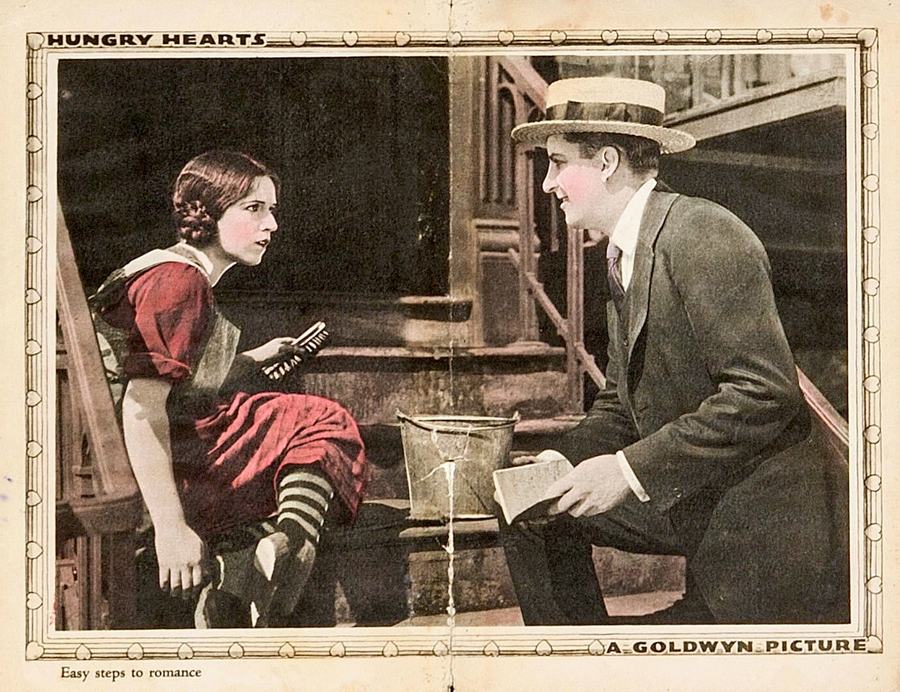
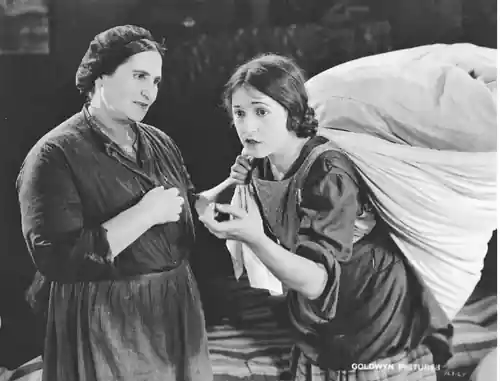
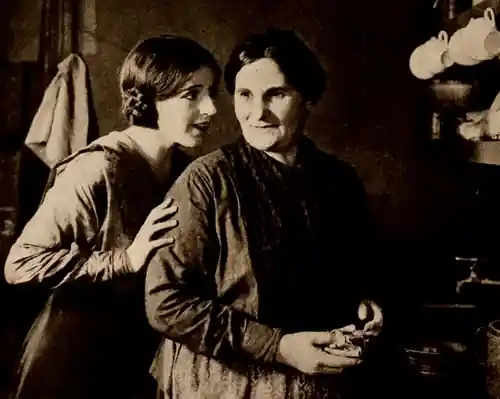
On a strip of Manhattan pavement where pushcarts clatter like broken hymns, the Levins—fresh from a shtetl that still smolders in memory—negotiate America’s promise with nothing but a coal stove, a Talmudic thirst for justice, and the stubborn glamour of dreams. Papa Levin, shoulders bowed from centuries he never lived, stitches sleeves in an airless sweatshop while Mama hawks fish heads to women who scrutinize every scale; their daughter Sara, eyes blazing like Sabbath candles, refuses the sweatshop’s gravitational pull, enrolling in night classes where English conjugations taste of emancipation. Between chalky tenement walls, hunger is not merely gastric but existential: a growl for autonomy inside marriages brokered by necessity, for voice inside a union hall that treats greenhorns as grist, for art inside a ghetto that romanticizes its own grime. Each chapter of the film—titled like fragile folktales ("The Fat of the Land," "Where Lovers Dream")—cuts laterally through time, letting us witness Sara’s rebellion against an arranged match, her brother’s drift into pool-hall nihilism, and the family’s cyclical eviction into ever-darker railroad flats. Cinematic shorthand—superimposed Ellis Island stamps, a repeated visual of the Statue of Liberty fading into a sweatshop foreman—renders the immigrant arc as fever dream. Romance flickers between Sara and Max, a pressman who quotes Emma Goldman between sneaked kisses; yet even love becomes commodity, bartered against rent hikes and factory fines. When Mama, delirious from consuming only coffee for three days, hallucinates a banquet set with her confiscated Shabbat candlesticks, the film tilts into expressionism: tables elongate, Hebrew letters drip like honey, the screen saturates with sea-blue luminescence. Later, a courtroom showdown—after Papa is falsely accused of pocketing garment wages—forces Sara to translate her father’s Yiddish rage into the King’s English, the camera pirouetting around her as language itself becomes contested terrain. Culminating during a Lower East Side strike where sewing machines thunder like artillery, the narrative crescendos in a single long take that follows Sara escaping a paddy-wagon, sprinting across rooftops, and thrusting a red union card into the lens—an emblem that dissolves into the flicker of a nickelodeon showing Charlie Chaplin, suggesting cinema itself as the next promised land.
A Hollywood adaptation of the short stories of Anzia Yazierska, the first writer to bring stories of American Jewish women to a mainstream audience, Hungry Hearts focuses on the hopes and hardships of the Levin family, Jewish immigrants from Eastern Europe living on New York City's Lower East Side.
Review Excerpt
"
There is a moment, near the midpoint of Hungry Hearts, when the celluloid itself seems to perspire: Mama Levin lifts a lid off a dented pot, expecting the usual potato steam, but instead a geyser of sea-blue light erupts, flooding the cramped kitchen until every cracked tile gleams like a fragment of Mediterranean sky. It lasts maybe three seconds, yet it detonates the film’s thesis—hunger so acute it bends physics. Critics who pigeonhole this 1922 silent as a quaint immigrant fable miss how d..."