DbcultAccessing Vault...
Cult Review
Senior Film Conservator
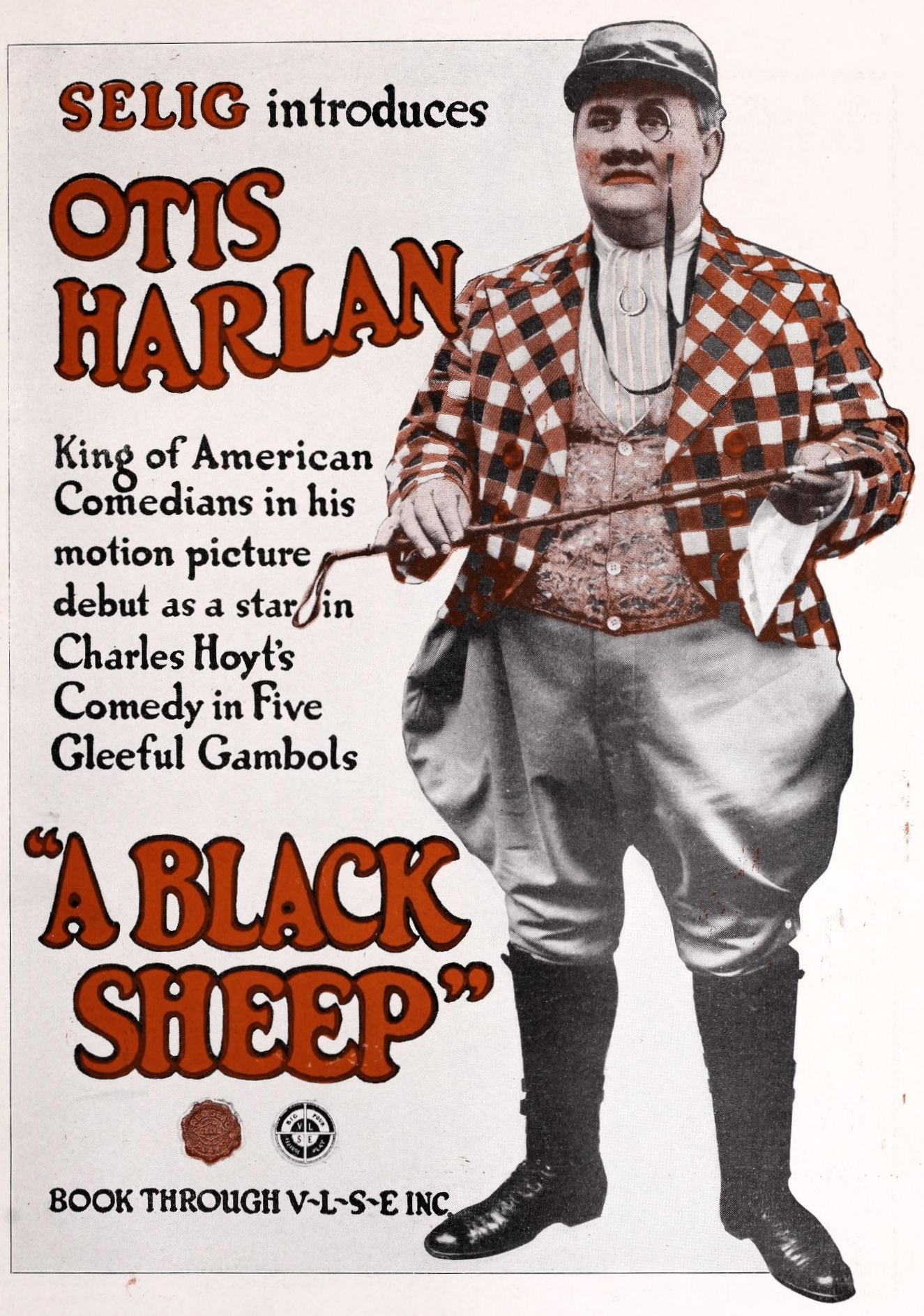
The 1920 one-reel expansion that history forgot, A Black Sheep, is less a Western than a confidence trick played on genre itself. Picture a saloon-door hinge that squeaks open to reveal not six-shooters but a vaudeville runway; a mining town whose veins of silver have been swapped for celluloid tinsel; a hero whose spurs are the creaks of a hammock strung between two dying saguaros. Tombstone—mythic cockpit of Wyatt Earp’s legend—here becomes a carnival midway where narrative rifles are loaded with blank cartridges of farce.
Goodrich Mudd—played by Otis Harlan with the porcine insouciance of a man who has never once met a consequence—slouches through the prologue like a discarded apostrophe between the words “can’t” and “be bothered.” The camera loves his inertia: every shrug registers as a tiny earthquake of flesh, every wink a semaphore of contempt for the Protestant work ethic. When the burlesque wagons roll in, their wheels painted the color of last night’s lipstick, the film’s palette literally brightens; tinting flares from umber to rose as though the desert itself is blushing at the prospect of cleavage and clarinet riffs.
Director Charles H. Hale, never one to let coherence slow a gag, stages the basket-hoist sequence as a tri-level opera: ground floor wine-soaked flirtation, mezzanine starvation among chorus girls, rooftop larceny. The camera tilts upward, revealing petticoats billowing like distressed parachutes while a single fried chicken—glistening with the sweat of narrative absurdity—ascends into the arms of petty larceny. The moment is silent, yet you swear you can hear grease crackling. Intertitles, normally stodgy traffic signs, here pirouette: “He lowered the cash box, contents: one bankruptcy and several gnawed bones.” The gag is so internally illogical it loops back around to Dada.
Once the will is read—inside Tombstone’s only barn equipped with mahogany and ennui—the film shape-shifts into a drawing-room predator. The Mudd mansion, realized by set designer Fred Morley as a mausoleum of Gilded-Age hubris, dwarfs its occupants with Corinthian columns that look borrowed from a bank that never forgives a loan. The ticking clock (99 days) is literalized in a grandfather clock whose pendulum swings like a silver guillotine blade. Marriage becomes not sacrament but hostile takeover; courtship dialogue is delivered in ledger-sheet close-ups where lips pucker to kiss the air above a dotted line.
Ada Steele—portrayed by Grace Darmond with the porcelain menace of a doll that knows it’s worth more intact than broken—embodies predatory femininity long before noir coined the term femme fatale. Her whistle, meant to summon Percy as cavalry, instead reverberates like a starter pistol for chaos. When Percy is waylaid by “The Spiders,” the film tips its fedora to pulp serials: two women in domino masks who could moonlight as editorial cartoons for suffrage gone rogue. Their ransom demand—$100,000 for a love letter—feels simultaneously quaint and prophetic in an age where private data is auctioned by algorithm.
Hale’s montage of the final night is a masterclass in elastic time. Intercutting among three ticking clocks—train depot, courthouse, bedroom—the sequence stretches eleven minutes of celluloid into what feels like an hour of viewer anxiety. Harold Lloyd would applaud the vertiginous tempo. Mudd, bedraggled from abduction, sprints through Chicago streets wearing one shoe and a grin that could sell soap. The camera hitchhikes on streetcars, clings to bootblacks, perches on gargoyles, all to remind us that destiny is merely geography at a sprint.
Otis Harlan’s Mudd is less acted than exhaled; he telegraphs interior monologue with the flicker of jowls. Watch how he deflates at word of the inheritance: shoulders sink, belly accordions, eyes blink Morse for “help.” Conversely, Grace Darmond’s Ada remains a statue of calculation—eyebrows arched like circumflexes accenting every betrayal. Between them, John Daly Murphy’s Underdog supplies elastic physicality, a warm-up act for Buster Keaton’s stone-face. In one throwaway gag he mines for gold with a tea strainer, finding only a single tooth; the tooth grins back, a totem of capitalist critique.
Cinematographer John Charles shoots Tombstone in high-contrast amber, as though every frame has been soaked in campfire. Chicago, by contrast, is rendered in icy blue tinting, a subliminal cue that the city’s fortunes are refrigerated. Note the repeated visual of staircases: characters ascend toward ambition, descend toward humiliation. Mudd’s final ascent into the mansion at 11:53 is filmed from the top step, forcing the viewer to tilt upward, implicating us in his tardy triumph.
For a 1920 audience fresh off suffrage’s victory, the film’s sexual politics are a Rorschach. The burlesque dancers weaponize charm as survival; The Spiders monetize voyeurism. Ada weaponizes marriage. Only Lida—played by Rita Gould with the weary warmth of a woman who has read the last page of every promise—opts for affection over speculation. When she accepts Mudd at the stroke of expiration, the film lands, almost by accident, on a feminist thesis: mutual need as the only contract that pays compound interest.
Cinephiles will sniff DNA strands of Beatrice Cenci in the inheritance entrapment, the same claustrophobic countdown that suffused The Black Chancellor. The picaresque graft of Tombstone onto Chicago skyscrapers anticipates the urban/rural whiplash of Only a Factory Girl. Meanwhile, its self-aware intertitles and clockwork suspense echo the narrative calisthenics of The Curious Conduct of Judge Legarde, though Sheep lacks that film’s baroque moralism.
Currently the picture languishes in the shadowlands of incomplete preservation. A 35 mm nitrate print—Spanish-language intertitles added for Mexico City distribution—was salvaged from a projection booth wall in 1987; it rests in the Library of Congress pending crowdfunding for 4K scanning. Enthusiasts hope for a Blu-ray tandem with Half Breed, another marginalized Hale curiosity. Until then, gray-market rips circulate among collectors, watermarked with ghosts that look suspiciously like fried chicken.
Should a repertory cinema dare program it, accompany with a ragtime trio that can pivot into hot jazz the moment the narrative train chugs Chicago-ward. Emphasize xylophone; its timbre mimics clattering cash boxes and rattling bones. End with a solo accordion during the wedding—squeeze-box pathos undercuts the happy-ever-after with the wheeze of impending hangover.
A Black Sheep is a shaggy dog story that accidentally bit off a chunk of American yearning—our national itch to reinvent the self via windfall, matrimony, or geographical uprooting. It is flawed, yes; continuity gaffes bloom like desert wildflowers, and the racial humor (a cringe-worthy minstrel cameo) reminds us that 1920 had its own toxic currency. Yet the film’s tonal whiplash—its willingness to pirouette from custard-pie nihilism to clock-ticking thriller—prefigures the polymorphous buffet of modern television antiheroes. Mudd’s arc from recumbent slob to accidental uxorious millionaire is not moral instruction but cosmic shrug: the universe loves a long shot, especially if the bet is rigged by love.
So here’s to the black sheep, the basket cases, the clock watchers, the whistle blowers. May their prints be found, scanned, and screened before the last reel of nitrate turns to dust and the only ticking left is our own impatient hearts.
IMDb —
1918
Community
Log in to comment.