DbcultAccessing Vault...
Cult Review
Senior Film Conservator
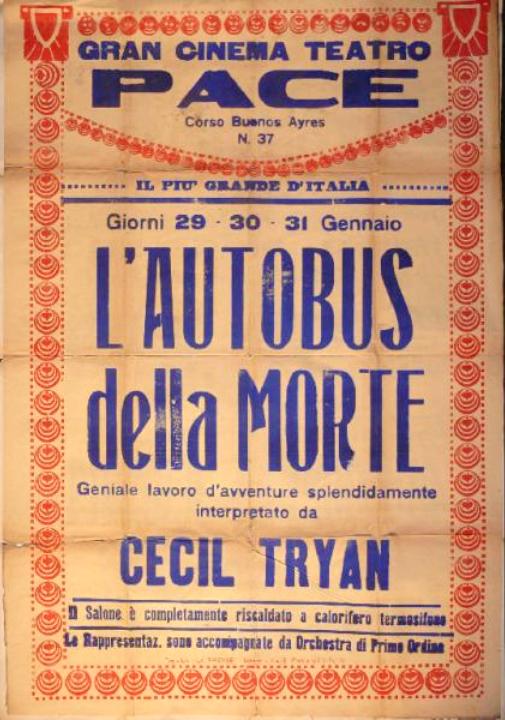
The first time I saw L’autobus della morte it was a 16 mm print spliced together with surgical tape, flickering inside a Neapolitan garage that smelled of motor oil and mothballs. The bulbous projector hiccupped every twenty seconds, yet those stroboscopic interruptions only intensified the film’s macabre magnetism—like someone nervously interrupting a confession they are terrified to finish.
There is, strictly speaking, no “plot” in the Aristotelian sense. Rather, the film unspools like a bureaucratic nightmare scrawled on damp parchment: a clandestine bus service for people who cannot confront the daylight world. The narrative engine is not cause-and-effect but existential centrifuge—characters hurled outward into their own private abysses while seated elbow-to-elbow.
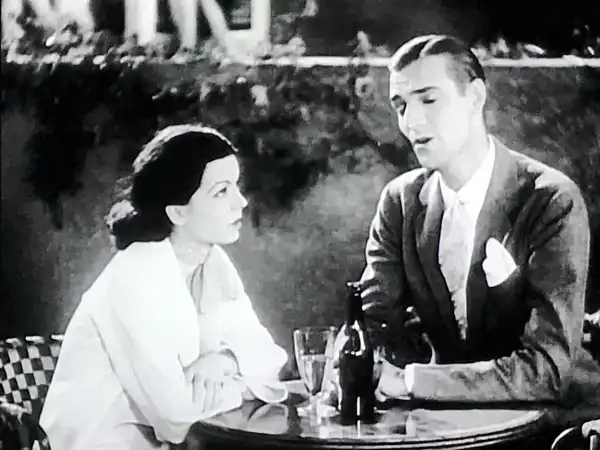
Director-writer (the auteur remains uncredited, another layer of ghostliness) paints each frame with tenebrous charcoal and cigarette-smoke haze. Notice how the headlights carve amber tunnels through mountain fog, recalling the existential roulette of The Car of Chance yet trading that film’s noir sheen for something far more cadaverous. Where American cinema glamorized the open road as possibility, this Italian curio renders asphalt a black tongue licking at the heels of the damned.
Cecyl Tryan, her cheekbones sharp enough to slice bread, embodies the national feminine unconscious—partisan, penitent, unbreakable. She spends half the runtime staring at her own reflection in the cracked window, and every micro-tremor of her eyelids writes a history textbook of betrayals, small and continental. Compare her wordless ten-minute close-up to Maria Casarès in Les heures – Épisode 4; both women weaponize stillness until it detonates.
Guido Trento’s cyclopean driver is less a character than a secular ferryman. His sole eye, milky as a blind moon, seems to look inside passengers rather than at the hair-pin road. Listen to the way he mutters kilometer markers—"Chilometro 114… 115…"—in a cadence halfway between liturgical chant and freight-car clack. The film hints that he tallies not distance but remaining heartbeats.
Renato and Riccardo Achilli’s card-sharp siblings riffle decks with the dexterity of gravediggers shoveling wet soil. Their poker game, staged in the aisle while the bus tilts perilously, externalizes the whole country’s moral gambling: everyone bluffing, everyone short-chipped, everyone all-in. When the elder brother wins a widow’s wedding ring off her trembling finger, the younger suddenly folds and exits into the night fog—a gesture so abrupt it feels like a moral epiphany until you realize he simply wants to lose himself faster.
Vincenzo D’Amore’s mute boy is the film’s moral tuning fork. Without a single line, he transmits more pathos than most talkie protagonists manage in career-spanning monologues. Watch how he offers his only possession—a tin toy bus—to the war-widow; the shot-reverse-shot sequence lasts perhaps four seconds, yet the toy’s crude paint job rhymes with the real vehicle’s peeling exterior, collapsing the boundaries between play and perdition.
Forget Morricone-esque grandeur; the soundtrack is an archaeological dig. Engine valves wheeze like dying accordions; wind hisses through bullet holes in the fuselage; periodically, a radio coughs up a Mussolini speech, the words garbled as though history itself is stuttering an apology. Cine-literati often compare the film’s aural strategy to the industrial groans in Life’s Blind Alley, yet here the noise is not modernist alienation but penitential chorus—a dirge for a nation learning its own shame.
The splice scars on my battered print mirror the film’s narrative lacerations. Mid-journey, the montage suddenly intrudes with newsreel footage: partisans hanged from olive trees, American tanks rolling up the ankle of Italy, a priest blessing collaborationists. These intrusions arrive without set-up or rebuttal, like telegrams from a parallel timeline. Traditional historiography would call them “anachronistic,” but within the bus’s hermetic cosmos they feel premonitory—history not as chain but as shrapnel.
At one point, the celluloid itself appears to melt—white-hot blossoms consume the frame—then we’re jarringly back inside the vehicle, as though the medium itself cannot stomach what it records. Self-reflexive? Certainly. Pretentious? Perhaps. Yet the gambit pays off because it externalizes Italy’s cultural combustion: memory blistering, narrative re-knitting under duress.
Place it beside Saffo’s decadent eroticism or The House of Glass’s brittle melodrama, and L’autobus della morte looks like a feral cousin—unkempt, politically septic, allergic to catharsis. It lacks the avant-garde pageantry of Faun, yet its stripped-bare aesthetic feels more radical because it refuses the comfort of formal beauty. Where Jungle Jumble seeks absolution through pratfall chaos, this film insists that absolution is a foreign currency.
Curiously, its DNA resurfaces in contemporary fare: the rolling microcosm of Snowpiercer, the penitential tourism of Bi Gan’s Kaili trilogy, even the bureaucratic purgatory of Inside No. 9. Yet none replicate the odor of diesel-drenched guilt that clings to every frame here.
Critics often dismiss Italian genre acting of the 1940s as “too operatic.” Not here. Tryan’s minimalism would make Bresson nod in approval. Notice how she smokes: not with femme-fatale languor but as if each drag is a medical injection against memory. When the mute boy curls against her coat, her hand hovers above his hair—never touching—afraid that tenderness might detonate buried ordnance.
Guido Trento reportedly stayed in character off-set, wearing a black patch even while dining. The resulting discomfort—cast and crew avoiding his cyclopean gaze—bleeds into the film; passengers avert their eyes when he recites mileage. Method acting? Maybe. Or perhaps the film’s curse infected its makers.
Unlike For the Freedom of the East, which brandishes crucifixes like ideological sabers, L’autobus della morte treats religion as residue. A rosary dangles from the rear-view mirror, swaying like a metronome counting down last rites. Yet no priest boards; no benediction is offered. When the vehicle finally rolls backward into the dawn, the rosary snaps—beads scatter like mercury—suggesting a country where faith has become detritus rather than doctrine.
Still, the film is drenched in ritual: the card game as black-mass offertory, the fog as baptismal font, the bus interior as roving confessional. Sacred and profane share upholstery; redemption and doom exchange bus tickets.
Shot in 1946, released haphazardly in 1948, the film sits in the temporal crevasse between Fascio’s fall and the Marshall Plan’s seduction. The bus traverses roads still cratered by Allied bombs; roadside billboards show half-peeled Duce visages, defaced with anarchist graffiti. The script never names ideologies—no partisan badges, no black-shirt insignia—yet the characters’ neuroses are geopolitical X-rays. The widow’s veil could be 1922 or 1945; the driver’s mileage mantra might tally military convoys or civilian evacuations. History is a stowaway beneath every seat.
In one haunting tableau, the bus halts beside a field where peasants harvest tomatoes. The camera lingers on crimson fruit squashed under cart wheels. Cut to Tryan’s face: a silent equation between blood and crop, between land that feeds and land that buries. No speeches, just juxtaposition—Eisenstein would applaud the associative montage.
The surviving prints are scarred with mildew and cigarette burns. Rather than detract, these blemishes augment the film’s thesis: history is a damaged reel, spliced by victors. High-contrast stock renders whites blinding and blacks bottomless; faces hover in chiaroscuro half-life. Note the moment Tryan’s tear catches a sliver of headlight—an iridescent bead that contains the entire chromatic spectrum. It’s a transient beauty that makes you gasp, then immediately dreads what moral bankruptcy earned such grace.
When the driver discovers the handbrake broken, the bus begins its eerie descent in reverse. Physics rebels; the mountain road becomes Möbius strip. Instead of panic, the remaining passengers grow eerily serene, as if retrograde motion is the only honest response to a century of carnivorous progress. One by one they step off—into fog, into off-screen oblivion—until only the driver remains, eyes wide, foot impotently flooring a pedal that no longer commands narrative.
Final shot: the bus, now driverless, continues rolling backward while dawn bleeds across the peaks. No title card, no swell of strings, just the mechanical sigh of an engine devouring its own exhaust. The metaphor is blunt yet inexhaustible: Italy retreating into a past it cannot fix, Europe backsliding into barbarism under the guise of reconstruction.
Prints languished in a Roman basement beneath a deconsecrated church. When floodwaters rose in 1966, cans oxidized into modernist sculptures. A 2017 restoration campaign crowd-funded by cinephiles retrieved a 78-minute fragment; even in truncated form, the film detonates. Streaming platforms shy away—too nihilistic for the algorithmic smile-button era. Yet The Vagabond Prince enjoys cult status while this masterpiece remains buried. The injustice feels cosmic, though perhaps fitting: obscurity is the last stop on the bus route.
I left that Neapolitan garage with celluloid dust on my cuffs and a buzzing behind the sternum. For weeks, I misheard bus brakes as whispered confessions. Friends recommended sunshine, gelato, therapy. None helped; none needed to. Some artworks aren’t meant to comfort but to colonize, to set up camp in your thoracic cavity and occasionally kick the ribs from inside. L’autobus della morte is that rare parasite you welcome, feed, refuse to exorcise.
If you do track down a bootleg stream or a repertory screening, heed this: sit on the aisle seat, let the flicker seep into your peripheral vision, and when the end credits fail to appear—because they were never filmed—take a moment before standing. The ground beneath may feel less solid, as if the entire auditorium is rolling softly, inexorably, backward into a dawn you never consented to witness.
IMDb —
1923
Community
Log in to comment.