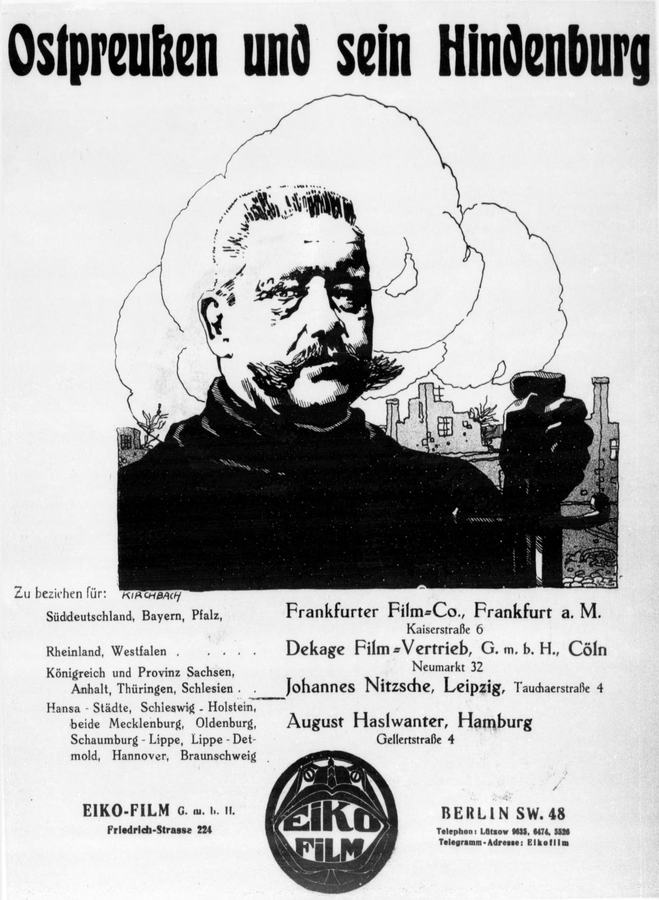
Imagine a film whose very emulsion seems steeped in iodine and peat smoke, whose intertitles flicker like sabre scars across the screen. Ostpreussen und sein Hindenburg is that rarity among survivors of the Teutonic silent era: a work which refuses to be either propaganda or elegy, instead spiralling into a hypnagogi...
Comparing the cinematic DNA and archive impact of two defining moments in cult history.
Richard Schott
Richard Schott
Community
Log in to comment.
" Imagine a film whose very emulsion seems steeped in iodine and peat smoke, whose intertitles flicker like sabre scars across the screen. Ostpreussen und sein Hindenburg is that rarity among survivors of the Teutonic silent era: a work which refuses to be either propaganda or elegy, instead spiralling into a hypnagogic interrogation of how nations hallucinate their heroes. Director-writers Richard Schott and Heinrich Lautensack—both barely 26 when the cameras rolled in Königsberg’s derelict hor..."
Deep dive into the cult classic
Discover similar cinematic experiences
A Directorial Spotlight on Richard Schott