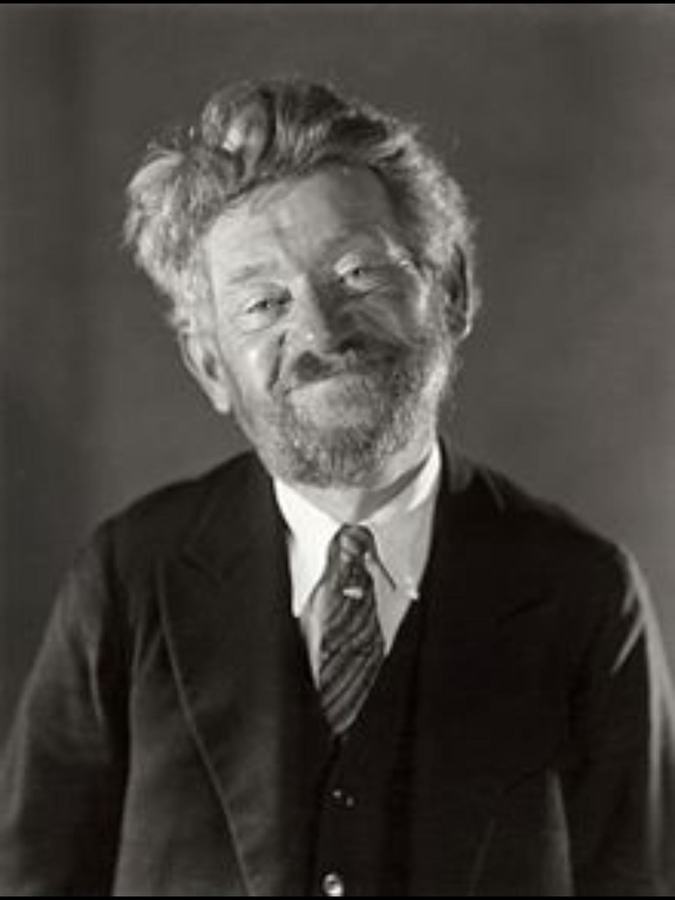
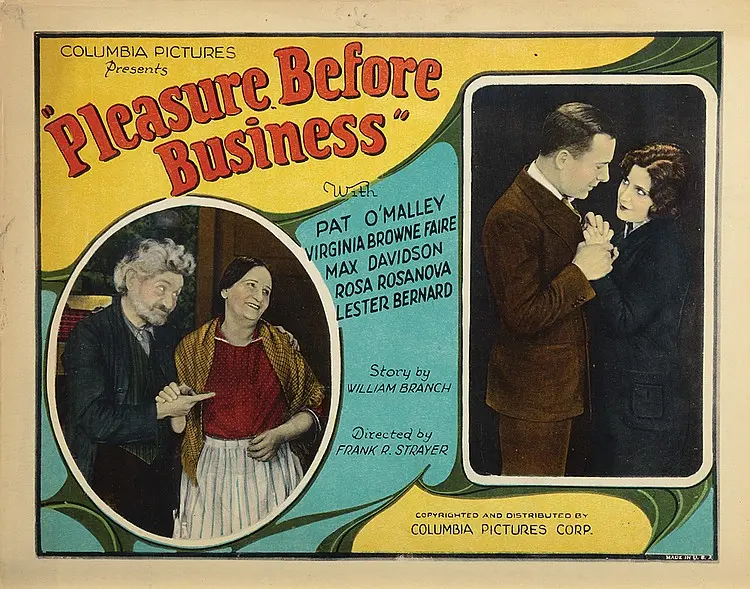
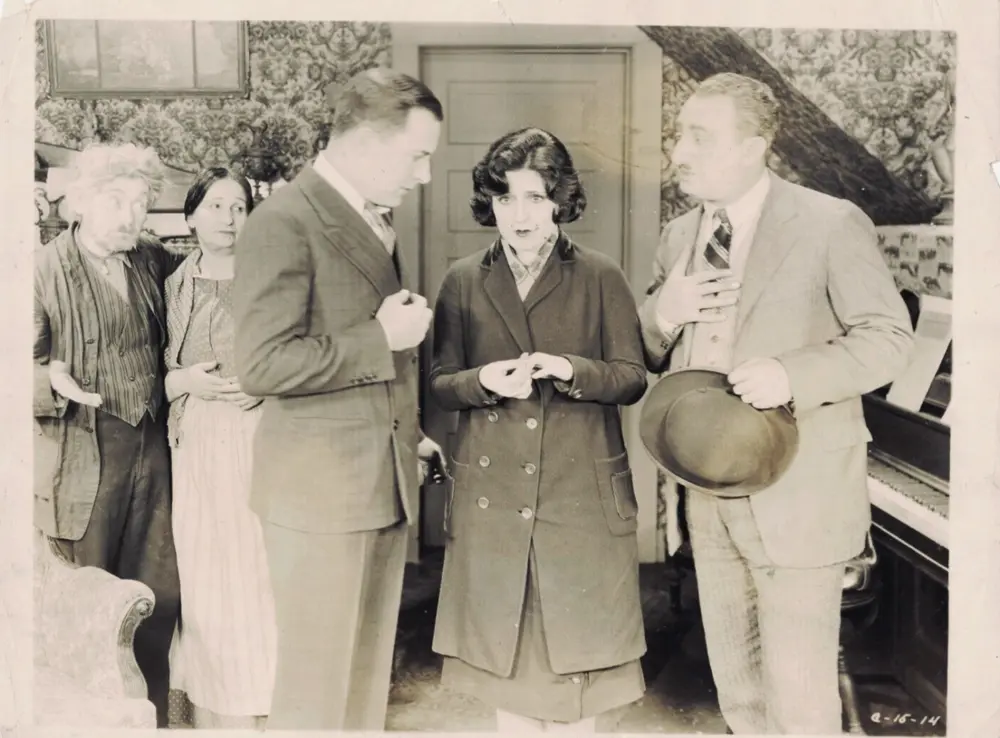
When an industrious cigar manufacturer, Sam Weinberg "Max Davidson", falls into bad health, his daughter Ruth "Virginia Brown Faire", uses up her dowry to keep him in the to which he become accustomed. The money is retrieved after a horse race during which the winning horse is coaxed by his jockey in Yiddish.

Is "Pleasure Before Business" worth watching today? Short answer: yes, but with a significant caveat regarding its historical context and the unique sensibilities of silent cinema. This film will strongly appeal to enthusiasts of early American filmmaking, particularly those interested in the comedic and dramatic styli...
still_frame
Comparing the cinematic DNA and archive impact of two defining moments in cult history.
Frank R. Strayer
Maurice Campbell
Community
Log in to comment.
"Pleasure Before Business" unfurls the poignant tale of Ruth Weinberg, whose unwavering filial devotion drives her to exhaust her own dowry. This drastic measure is taken to uphold the accustomed lavish lifestyle of her ailing cigar magnate father, Sam Weinberg, whose health crisis threatens to dismantle their world. The narrative culminates in a desperate gamble on the racetrack, where an unexpected linguistic intervention — a jockey's Yiddish-laden coaxing of a horse — miraculously restores the family's fortunes. It's a testament to sacrifice, chance, and the peculiar ways destiny intervenes, painting a vivid, if sometimes melodramatic, picture of familial love and a surprising stroke of luck.
"Is "Pleasure Before Business" worth watching today? Short answer: yes, but with a significant caveat regarding its historical context and the unique sensibilities of silent cinema. This film will strongly appeal to enthusiasts of early American filmmaking, particularly those interested in the comedic and dramatic stylings of Jewish-American cinema from the 1920s. However, it is decidedly not for viewers seeking modern..."
Henri Menjou
William Branch
United States
Deep dive into the cult classic
Discover similar cinematic experiences
A Directorial Spotlight on Frank R. Strayer