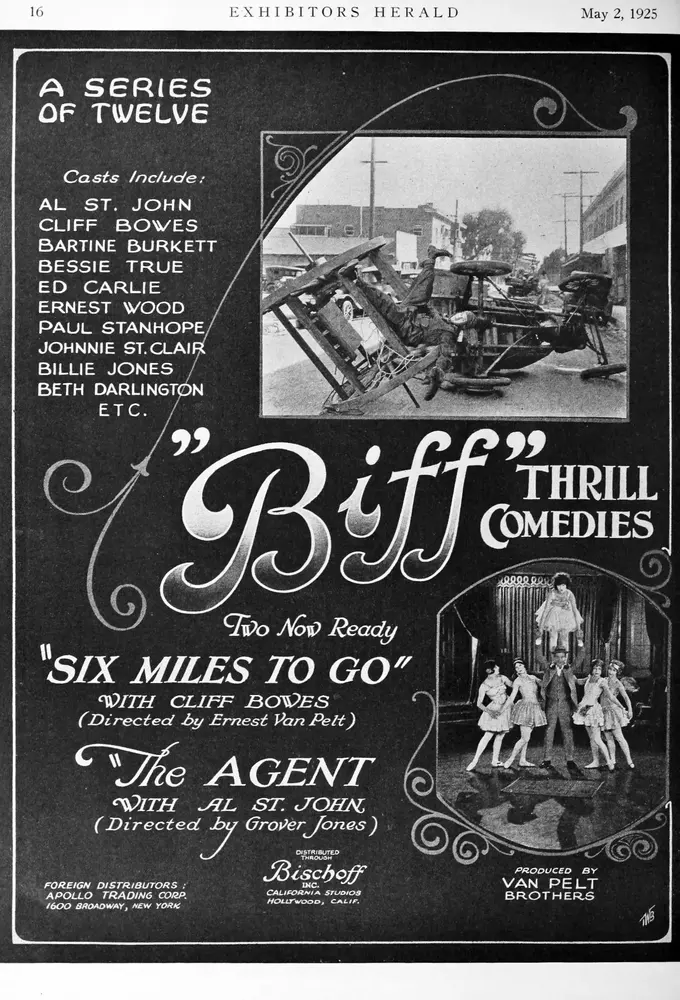
Is Six Miles to Go worth watching today? Short answer: yes, but only if you appreciate the raw, unpolished mechanics of early physical comedy. This isn't a film for those seeking narrative depth or emotional resonance; it is a film for the student of the 'gag,' the viewer who finds beauty in a perfectly timed pratfall ...

Comparing the cinematic DNA and archive impact of two defining moments in cult history.
Ernest Van Pelt
Eduardo Notari
Community
Log in to comment.
"Is Six Miles to Go worth watching today? Short answer: yes, but only if you appreciate the raw, unpolished mechanics of early physical comedy. This isn't a film for those seeking narrative depth or emotional resonance; it is a film for the student of the 'gag,' the viewer who finds beauty in a perfectly timed pratfall and the sheer physical toll of 1920s stunt work.This film is for the silent cinema completionist and the history buff who wants to see how the 'middle class' of Hollywood comedy op..."
1926 · IMDb —