DbcultAccessing Vault...
6.7/10
Senior Film Conservator
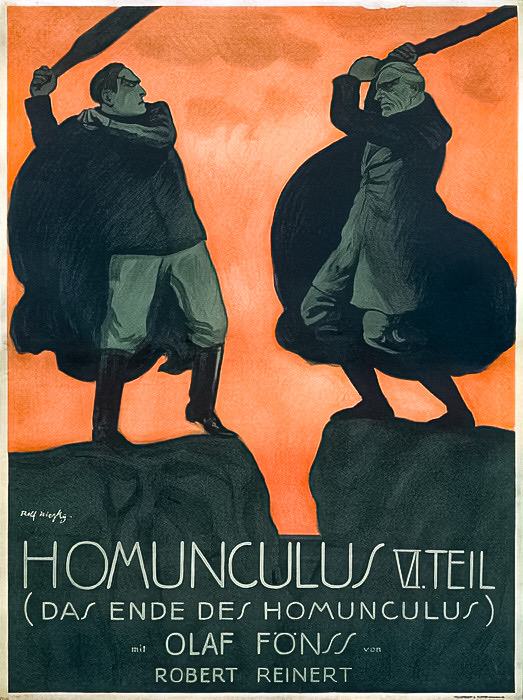
A definitive 6.7/10 rating for a film that redefined the boundaries of cult cinema. Homunculus, 6. Teil - Das Ende des Homunculus remains a cornerstone of transgressive art.
The year 1916 stands as a pivotal moment in the evolution of the moving image, and nowhere is this more evident than in the final movement of the Homunculus cycle. Robert Reinert’s screenplay, brought to life through a lens that predates the formal birth of German Expressionism, crafts a vision of apocalyptic despair that remains startlingly modern. While other films of the era, such as The Waxen Doll, toyed with the concept of artificial life through a more whimsical or melodramatic lens, Das Ende des Homunculus plunges headlong into the abyss of ontological crisis.
Olaf Fønss delivers a performance that transcends the theatrical gesticulations common to the silent era. His portrayal of the artificial man is one of restrained fury and profound weariness. By the time we reach this sixth installment, the character has shed the curiosity of youth and the bitterness of middle age, replacing them with a cold, calculated misanthropy. This isn't the lumbering, misunderstood creature of Mary Shelley, but a Nietzschean Ubermensch gone wrong—a figure of supreme intellect and physical perfection who finds the world fundamentally incompatible with his lack of a soul. The thematic weight here is far heavier than the contemporary social dramas like As a Woman Sows, focusing instead on the cosmic tragedy of existence itself.
Visually, the film utilizes the stark contrasts of black and white to emphasize the duality of its protagonist. The cinematography captures the transition from the sterile environments of the laboratory to the chaotic battlefields of a world at war. This shift serves as a visual metaphor for the protagonist's internal decay. The scale of the production is immense for its time, rivaling the ambitions seen in Richelieu, yet it maintains an intimate psychological focus. The use of shadow and light creates a chiaroscuro effect that highlights the crags of Fønss’s face, turning him into a living statue of grief.
The inclusion of cast members like Friedrich Kühne and Aud Egede-Nissen provides a necessary human grounding to the film’s more abstract philosophical excursions. Kühne, in particular, offers a performance that contrasts sharply with the coldness of Homunculus, representing the fragile, often flawed humanity that the protagonist seeks to eradicate. This tension between the organic and the synthetic is a recurring motif, much like the explorations of identity found in Das lebende Rätsel, though Reinert pushes the concept to its absolute breaking point in this finale.
One cannot ignore the historical context in which this film was produced. As Europe was being torn apart by the First World War, Reinert’s narrative of a world-ending conflict orchestrated by a singular, disconnected entity must have resonated with a visceral, terrifying frequency. The film’s depiction of war is not heroic; it is a manifestation of a death drive, a collective suicide pact led by a creature who cannot feel the pain he inflicts. In this sense, it stands in stark opposition to the suffrage-themed optimism of Your Girl and Mine: A Woman Suffrage Play, offering instead a grim prognosis for the future of civilization.
The narrative pacing is deliberate, building a sense of inescapable doom. Each scene is layered with a symbolic resonance that demands a high degree of lexical diversity to even begin to describe. The "Ende" of the title is not just the death of a character, but the collapse of an ideology. The protagonist’s failure to find a soul through science or power suggests a deep-seated skepticism toward the technological advancements of the early 20th century—a theme that echoes through the decades to films like Metropolis.
Robert Reinert’s script is a masterclass in serial storytelling. He manages to weave together the disparate threads of the previous five films into a cohesive, albeit devastating, tapestry. The dialogue—delivered through intertitles—is poetic and laden with philosophical inquiries that elevate the material above standard genre fare. It possesses a gravity that makes the lightheartedness of Reggie Mixes In or the adventurous spirit of The Golden West seem like products of a different universe entirely. Reinert understands that for the tragedy of Homunculus to land, the audience must feel the weight of his loneliness, not just the spectacle of his power.
The supporting cast, including Thea Sandten and Mechthildis Thein, navigate the melodrama with a grace that prevents the film from descending into parody. Their roles, while smaller than Fønss’s, are crucial in establishing the stakes of the conflict. They are the collateral damage of a high-concept war, a theme that provides a somber reflection on the nature of power and those who are crushed beneath its heels, similar to the dynamics explored in True Nobility.
The climax of the film—the literal end—is a sequence of pure cinematic bravura. The mountaintop confrontation, where Homunculus defies the heavens, is an image that has been seared into the annals of film history. The use of practical effects to simulate the lightning strike is remarkably effective, creating a sense of divine intervention that is both terrifying and cathartic. It is the moment where the artificial man finally meets an element he cannot control, a power greater than his own intellect. This confrontation with the sublime is far more potent than the domestic tragedies of The Prince Chap or the silent pathos of L'enfant prodigue.
Furthermore, the film’s exploration of the "uncanny valley"—the discomfort elicited by something that is almost, but not quite, human—is handled with sophisticated nuance. Homunculus’s perfection is his flaw; he is too symmetrical, too capable, too devoid of the messy contradictions that define the human experience. In comparing this to the character-driven mysteries of The Concealed Truth, one sees how Homunculus operates on a mythological level rather than a merely narrative one.
Looking back from a modern perspective, Das Ende des Homunculus serves as a haunting precursor to the horrors of the 20th century. It anticipates the rise of totalitarianism and the dehumanizing effects of industrial warfare. The film’s nihilism is not a stylistic choice but a philosophical conviction. It lacks the escapism of Beverly of Graustark or the moral clarity of The Spartan Girl. Instead, it offers a mirror to a world in the throes of a nervous breakdown.
The technical achievements of the production crew, from the set design to the editing, demonstrate a sophisticated understanding of the medium’s potential to evoke mood and atmosphere. The pacing in this final chapter is particularly noteworthy, eschewing the episodic nature of earlier parts for a relentless, forward-moving momentum that mirrors the protagonist's descent into madness. This kinetic energy is something often missing in more static productions like Marionetten, which, while visually interesting, lacks the visceral impact of Reinert’s work.
Ultimately, the tragedy of Homunculus is that he was a man ahead of his time, created by a science that could construct a body but not a purpose. His journey ends not with a bang or a whimper, but with a flash of light that obliterates the distinction between the creator and the created. The film remains a towering achievement of the silent era, a dark, complex, and deeply moving exploration of what it means to be human—and the terrible cost of being something else. It shares a certain spiritual kinship with the intense character studies found in The Truant Soul, yet it operates on a scale that is entirely its own.
In the final analysis, Homunculus, 6. Teil - Das Ende des Homunculus is an essential viewing for any serious student of cinema. It is a work of profound ambition, executed with a level of artistry that belies its age. It challenges the viewer to look into the eyes of the monster and see not a stranger, but a reflection of our own darkest impulses. It is a cinematic testament to the idea that without love, even the most perfect creation is destined for destruction. The film’s legacy is not just in its influence on the sci-fi and horror genres, but in its unwavering commitment to exploring the darkest corners of the human psyche.
A monumental conclusion to a saga that redefined the boundaries of early 20th-century film, offering a bleak but brilliant vision of the end of all things.
Community
Log in to comment.