Summary
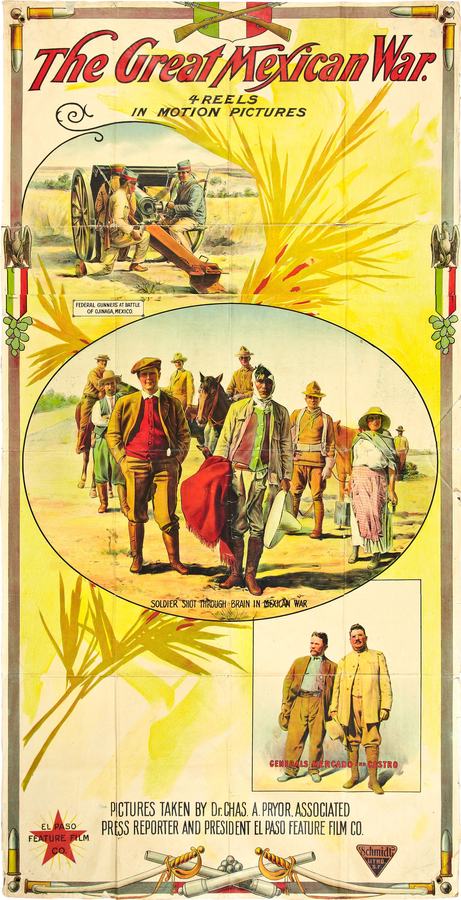
A sun-bleached crucible of identity, The Great Mexican War detonates the dime-novel myth of frontier valor by letting its celluloid battlefield seep southward into the chaparral and adobe arteries of a land already scarred by two empires. Charles A. Pryor’s nameless drifter—equal parts coyote trickster and penitent war-ghost—rides into a pueblo where the war’s last cannonade still echoes inside children’s skulls like a fever dream. He carries a rusted U.S. cavalry saber, a blood-stained promissory note from a dead Confederate paymaster, and a photograph of a woman whose eyes have been scratched out by pistol fire. Around him, the revolution is no longer a coherent insurrection but a kaleidoscope of vendettas: a barefoot priest who baptizes rifles, a widowed alchemist distilling silver nitrate into moonshine explosives, a teenaged soldadera mapping future victories on the cracked ceiling of a ruined cantina. Each night the village square becomes a proto-cinema: charcoal sketches projected by torchlight, animating atrocities the townsfolk cannot name. Pryor’s stranger ingratiates himself by operating the magic-lantern, yet every silhouette he projects peels back another layer of his own suppressed guilt—until the images start to move without his hand, reenacting a massacre he may have led across the Río Bravo. When the Federales arrive hunting a gringo saboteur, the villagers must decide whether to surrender the foreigner or weaponize their collective trauma, turning memory itself into an insurgent force. The final reel burns in the projector gate: a single unbroken shot in which the camera circles the plaza while dusk collapses into night, faces flickering between vengeance and absolution until the screen whites out in over-exposure, leaving only the soundtrack of galloping hooves and a woman whispering “No hay dos patrias, sólo una herida.”
Review Excerpt
"
Imagine a Western that arrives already infected—its moral marrow blackened by imperial hangover, its landscapes sun-seared yet haunted by the half-buried bones of those who never rode into legend. The Great Mexican War, long thought lost in a Kansas nitrate fire, re-emerges like a vengeful revenant: a 1914 one-reeler that somehow feels post-modern, post-war, post-everything.
Director-scenarist Charles A. Pryor (also the film’s laconic star) refuses the standard nickelodeon grammar of saloon b..."