DbcultAccessing Vault...
Cult Review
Senior Film Conservator
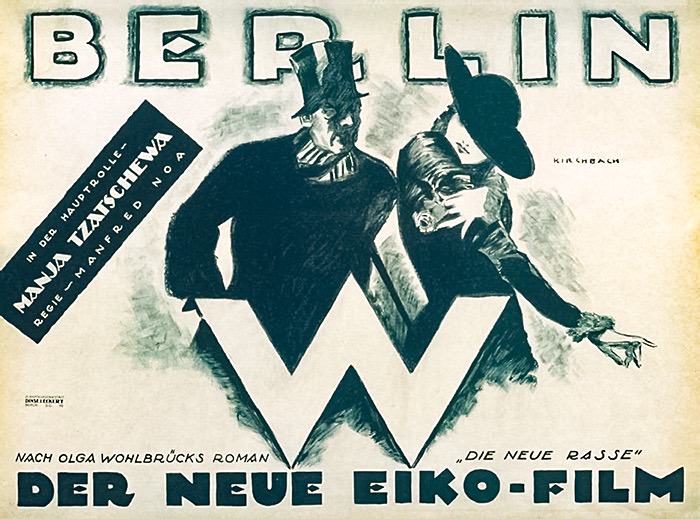
Berlin, 1922. The city is a palimpsest of revolution scars and champagne bruises, and no film drinks that contradiction deeper than Manfred Noa’s BERLIN W.—a title that sounds like a railway terminus but feels like a terminal diagnosis.
From the first iris-in, the movie announces its agenda: to make the metropolis itself the protagonist, a self-lacerating diva chewing on her own scenery. Cinematographer Curt Courant glides his camera over Alexanderplatz as if it were a lover’s back, discovering fresh welts with every caress. Smoke from locomotive stacks merges with cigarette exhalations; the frame becomes a cloud chamber where desire and debt collide at the speed of galloping inflation.
Tzwetta Tzatschewa—Bulgarian-born, Berlin-seasoned—embodies the new woman in a state of permanent dispersal. Her eyelids weigh heavy with kohl and unsent telegrams; when she dances, it is less for joy than to keep the floor from collapsing. Opposite her, Herbert Neuwald channels shell-shocked ennui into a performance so interior it feels X-rayed: every tremor of his cigarette hand sketches the post-war male psyche fraying like a tram ticket.
Hans Albers, still a decade away from becoming the Reich’s swaggering matinee idol, here plays a grifter whose grin knows the exact price of every soul in the room. Watch how he enters a shot: shoulders first, smile second, morality never—a diagonal intrusion that slices the screen into profit and loss. Meanwhile, Frida Richard’s aging starlet drifts through parlors like an exiled monarch, clutching a lapdog that might be the only creature in Berlin still capable of unironic loyalty.
In smaller roles, the city’s marginalized get their close-ups: Loo Hardy’s sex-worker negotiates her tariff with the brisk clarity of a stockbroker; Albert Steinrück’s corpulent pawnbroker weighs wedding rings on scales that once measured out artillery shells. Each cameo is a tessera in a vast, shattered mosaic titled Modernity.
Bobby E. Lüthge and Olga Wohlbrück’s screenplay—adapted from a newspaper serial that ran beside hyperinflation tables—treats plot as a striptease: every revelation peels away another layer of civic decency. The story pirouettes around a forged visa scheme: Albers promises Tzatschewa passage to Buenos Aires, but the real currency exchanged is illusion. Dialogue cards arrive sparingly, sometimes upside-down, as though even the intertitles have lost faith in gravity.
Notice the recurring motif of unread letters: they flutter like wounded pigeons through stairwells, carrying promises no post office can honor. In one bravura sequence, a rejected lover drops a billet-doux into the Spree; we cut to a barge carrying coal downstream, its black cargo destined to fuel the very furnaces that will re-melt the city’s resolve. Cause and effect dissolve into poetic economics.
Noa, best known for his 1924 Nathan the Wise, here revels in angular shadows borrowed from the expressionist crib, yet he balances that fever with documentary immediacy. Sets by Robert Neppach juxtapose jagged rooftops against luminous UFA backlots; a nightclub scene explodes in canary-yellow gels while just outside a policeman beats a pickpocket under sodium lamplight. The clash of palettes—nightmare blacks, bruise purples, sickly yellows—renders the capital as both carnival and morgue.
Camera movement anticipates later noir: tracking shots stalk characters through beer-hall basements, the lens hovering like a creditor. In one unforgettable insert, the camera descends in an elevator cage while the city rises past iron lattice—vertical montage as emotional seismograph.
Though released silent, BERLIN W. demands a jazz requiem in the mind. The rustle of celluloid through the gate becomes brushed snare; the clatter of typewriters in a newspaper office transmutes into frantic scat. Contemporary critics remarked that the film left them hearing saxophones during reel changes—testament to how Noa’s rhythmic cross-cutting syncopates the viewer’s pulse.
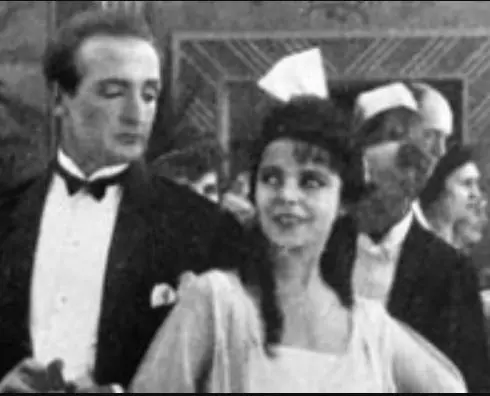
Compare this acoustic hallucination to the sound-on-film experiments of BLUE GRASS or the eerie hush of EERIE TALES; BERLIN W. occupies the liminal zone where silence itself grows tinnitus.
Weimar cinema loved its doomed vamps, yet Tzatschewa’s character refuses martyrdom with a shrug so casual it feels revolutionary. She trades lovers like currency, yet the film never moralizes; instead, it lingers on her solitary breakfasts—coffee so weak it resembles 1922 fiscal policy, bread smeared with turnip jam. In these quiet interludes we glimpse the raw cost of emancipation: the hollowing out of traditional safety nets.
Meanwhile, Eva Brock’s secretary, the perpetual also-ran, watches from office windows, her desire coded in the mechanical peck of typewriter keys—a rhythmic reminder that even longing must now meet productivity quotas. Their final confrontation, amid stacks of unclaimed passports, plays like a bureaucratic Judith and Holofernes retold with ink pads instead of swords.
BERLIN W. premiered six weeks before the assassination of foreign minister Walther Rathenau, an event that slammed the brakes on cosmopolitan delirium. Viewed today, every frame quivers with premonitory dread: swastikas appear not as props but as graffiti glimpsed in half-second inserts, like viruses awaiting a host. The nightclub revelers who mock army officers will, a decade later, be filing into sports stadiums for very different choreography.
Yet the film’s prescience lies less in political iconography than in mood: the sense that civilization has pawned its future for one last weekend bender. Compare the fatalistic ennui here to the masculine bravado of THE LONE WOLF’S DAUGHTER or the moral absolutism of THE FLAMES OF JUSTICE; Noa’s universe offers neither redemption nor damnation—only the endless transaction of dwindling possibilities.
For decades BERLIN W. survived only in censorship cards and a brittle production still of Tzatschewa smoking in a birdcage elevator. Then, in 1998, a 35mm nitrate negative—shrink-warped but complete—surfaced in a Rio de Janeiro basement, mislabeled as Gar el Hama V. Restoration by the Deutsche Kinemathek returned its amber pulses and sea-blue intertitles, allowing modern viewers to feel the film’s intended chromatic vertigo.
That resurrection invites reflection: how many other silent cities lie dormant, waiting for temperature-controlled resurrection? The thought chills even as it exhilarates, much like the final shot of BERLIN W. itself—a slow fade on the Fernsehturm that in 1922 did not yet exist, a ghost of a future that, once built, would cast its own long shadow back onto Noa’s fever dream.
Stream it on a laptop, lights off, headphones clamped. Let the flicker reflect off your retinas like passing elevated trains. Notice how your own room begins to smell faintly of damp wool and cheap coffee—Berlin’s olfactory signature. Track the way Tzatschewa’s mascara smudges evolve act-to-act, a barometer of emotional inflation. Marvel at intertitles that feel like ransom notes from history.
Then, when the credits roll and your screen returns you to the comfort of algorithmic menus, ask yourself: which city are you living in, and what illusions are you trading for passage out? BERLIN W. offers no answers; it merely holds up a mirror—cracked, clouded, yet mercilessly alive.
Verdict: A kaleidoscope of asphalt and heartbreak, BERLIN W. stands shoulder-to-shoulder with the canonized classics of Weimar cinema while whispering secrets they dared not utter. Seek it, screen it, surrender to it.
IMDb —
1919
Community
Log in to comment.