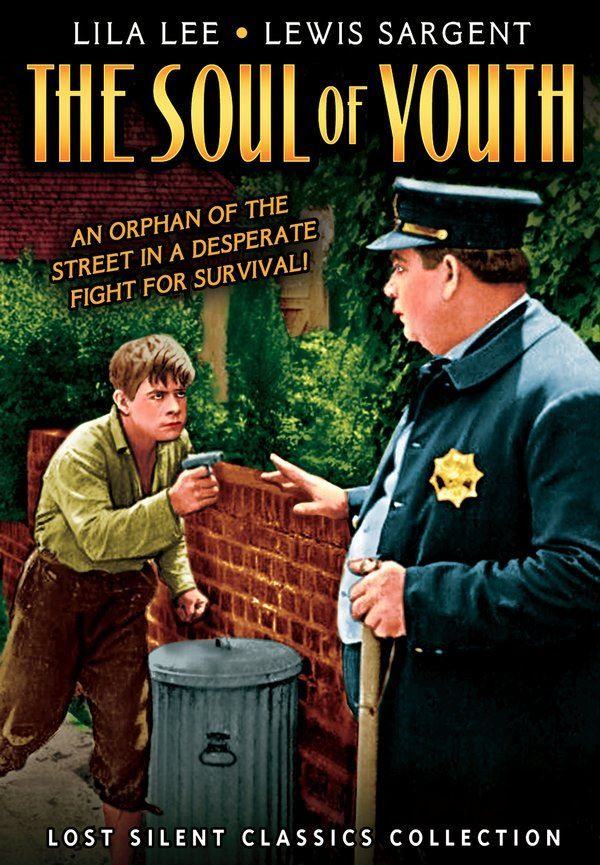
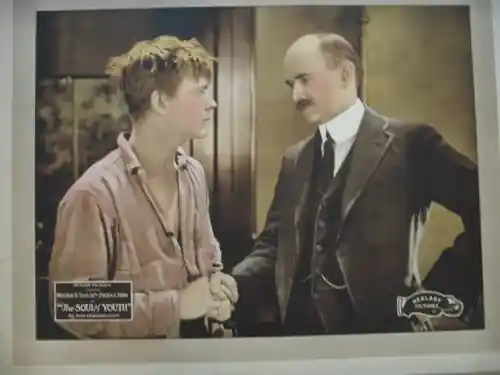
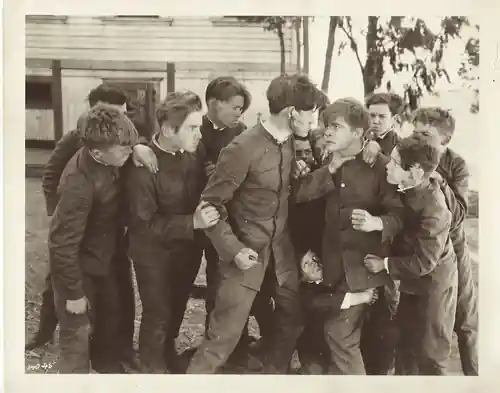
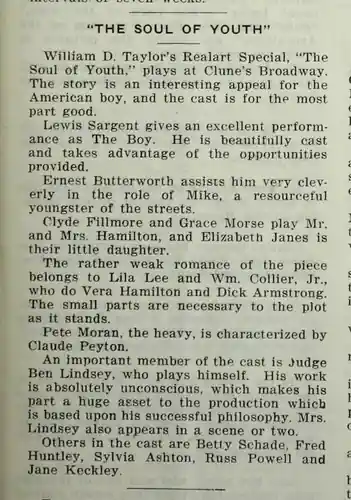
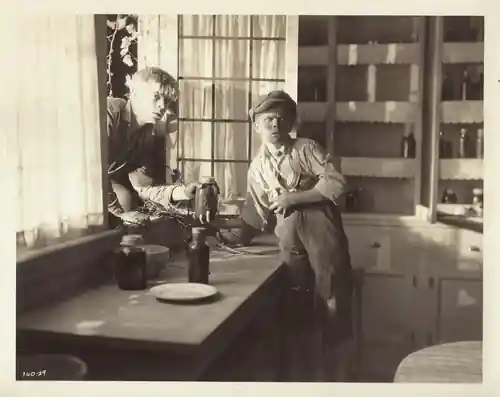
The story of an orphan boy who, due to the cruelty of others, is drawn into a life of sin on the streets prior to the redemption of a caring foster family..
Julia Crawford Ivers
United States
The Archetypal Desolation of the UnwantedIn the pantheon of early American cinema, few works capture the existential dread of the disenfranchised child with as much crystalline clarity as The Soul of Youth. Released in 1920, a year defined by its post-war recalibration and social flux, this film stands as a monumental ...
production_art
still_frame

still_frame

still_frame
publicity

still_frame

publicity
still_frame

Comparing the cinematic DNA and archive impact of two defining moments in cult history.
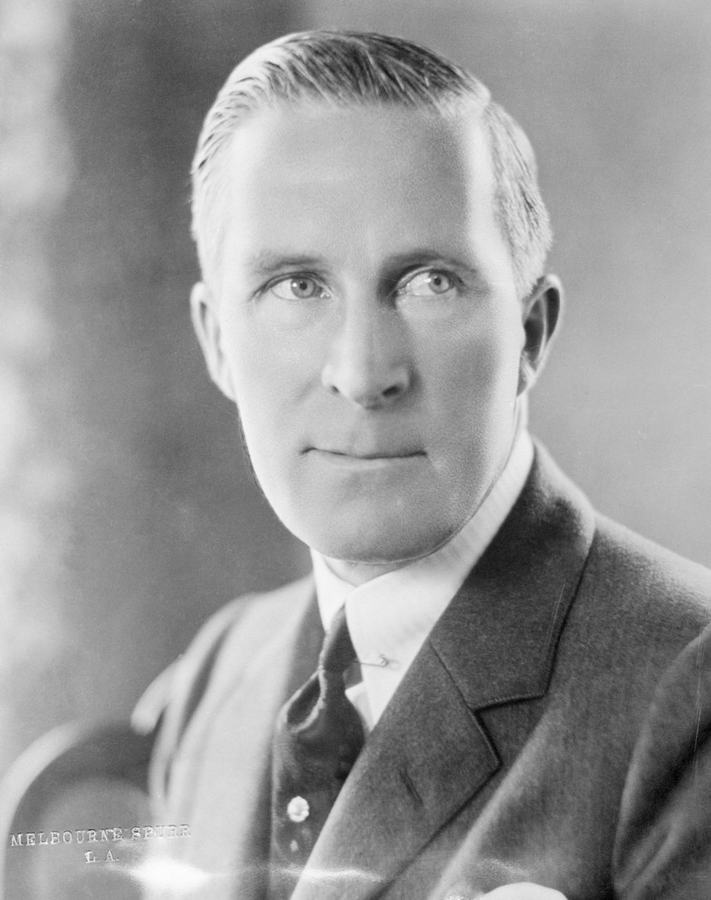
William Desmond Taylor
William Desmond Taylor
Community
Log in to comment.
"The Archetypal Desolation of the UnwantedIn the pantheon of early American cinema, few works capture the existential dread of the disenfranchised child with as much crystalline clarity as The Soul of Youth. Released in 1920, a year defined by its post-war recalibration and social flux, this film stands as a monumental testament to the screenwriting prowess of Julia Crawford Ivers. While many silent dramas of the era leaned heavily into melodramatic artifice, Ivers’ script possesses a grit that f..."


Deep dive into the cult classic
Discover similar cinematic experiences
A Directorial Spotlight on William Desmond Taylor