DbcultAccessing Vault...
Cult Review
Senior Film Conservator
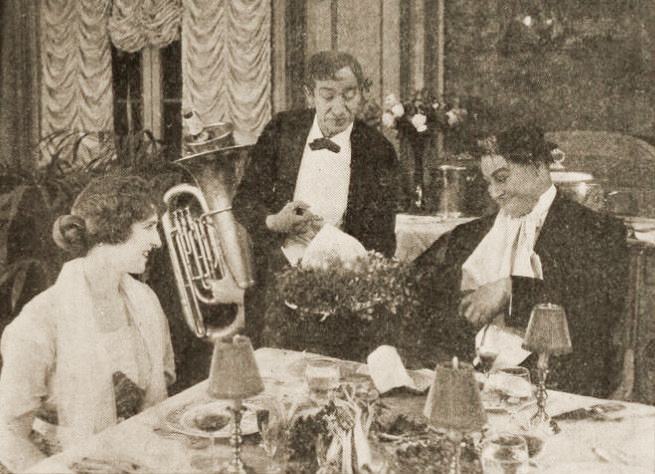
Frank Hall Crane’s Old Dutch opens on a snow-glazed Bowery alleyway, the camera craning down like a curious crow to watch an elderly man solder under a sputtering gas lamp. The image is all soot and starlight, a chiaroscuro worthy of Tess of the D’Urbervilles’ rural pessimism, yet the mood is jaunty—an American contradiction that the film will spend its reels untangling. Within minutes the picture leaps from grime to gilded fantasy: a $5,000 check, a champagne coupe, a train that hisses toward Florida like a basking serpent. The tonal whiplash is intentional; Crane wants us to feel the vertigo of sudden class ascent, the American Dream as carnival ride.
Vivian Martin’s Violet Streusand enters in a coat three sizes too big, sleeves swallowing her fingers. The coat is the first visual gag about inheritance—she wears her father’s failures. When she doffs it poolside at the Everglades Club, the camera lingers on her lithe frame with the same voyeuristic hesitation that made Don Juan’s escapades so risqué. Martin, a Broadway refugee, plays the ingénue with flapper insouciance: eyes wide but mouth always on the verge of a wisecrack. Her chemistry with George Hassell’s shambling, Yiddish-inflected Old Dutch is less father–daughter than vaudeville double-act, a pre-code Burns & Allen.
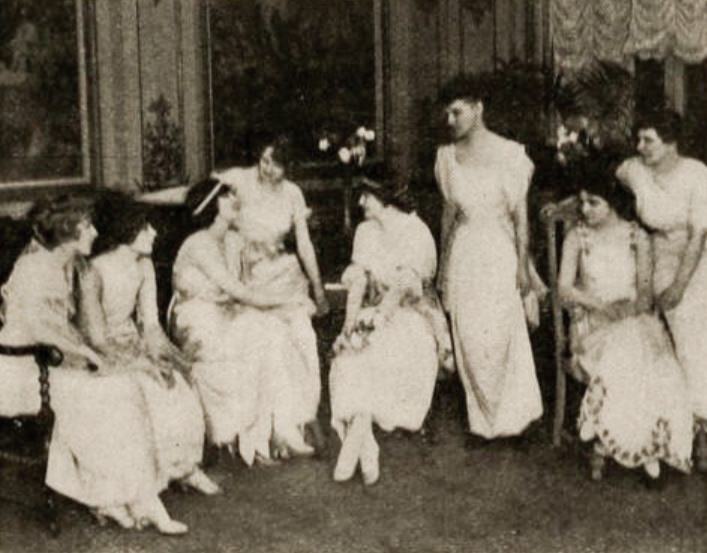
The teloptophone itself—an oak cabinet sprouting periscope arms—looks suspiciously like a mutant Mutoscope. Crane refuses close-ups of the gadget until the midpoint, letting rumor do the heavy lifting. When the lens finally glides across its brass dials, the image shimmers like heat haze, anticipating television’s ghostly raster. In 1920 this was science-fiction bordering on necromancy; in 2025 it feels like a Zoom call with worse latency. The device literalizes the film’s obsession with seeing versus being seen. Identity is no longer a social contract but a projection, easily pirated by any Bings-level grifter with a fountain pen.
“A name scribbled on a check is worth more than the face that invented the telephone,” the impostor crows, spelling out the movie’s thesis with vaudeville bluntness.
Edgar Smith’s script, adapted from a stage farce, layers class anxiety onto the classic comic scaffolding of impostor-at-the-resort. The hotel is a microcosm where bellboys become bailiffs and millionaires beg for applause. Compare it to Alice in Wonderland’s rabbit-hole social satire: both narratives drop innocents into societies governed by nonsense laws, though Crane’s Wonderland charges interest.
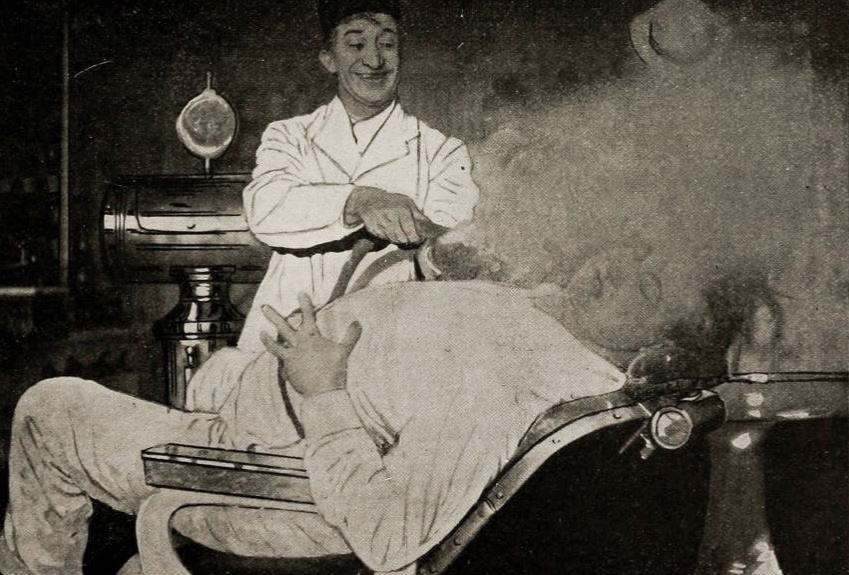
Lew Fields, the male half of Bings & Bings, was a real-life burlesque titan; here he weaponizes his baggy-pants persona, all arched eyebrows and malapropisms. His partner Marie Empress, statuesque in sequined pantaloons, serves as a foil to Violet’s dewy sincerity. Together they’re parasites dressed as peacocks, and their downfall—exposed in front of a ballroom of tuxedos—owes as much to class-coded schadenfreude as to narrative justice.
Visually the picture toggles between two palettes: the gunmetal grays of Manhattan, rendered in high-contrast orthochromatic stock, and the creamy, near-sepia tones of Florida, achieved by shooting through gauze and over-exposing by a third of a stop. The shift mirrors Old Dutch’s psychological migration from survival to leisure. Yet both worlds share the same compositional obsession—doorways. Characters are forever framed within arches, elevator cages, veranda trellises. They stand, literally, on thresholds, underscoring the precariousness of social mobility.
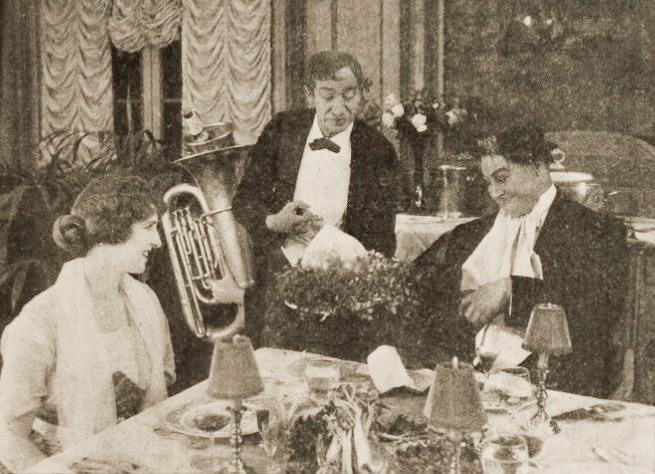
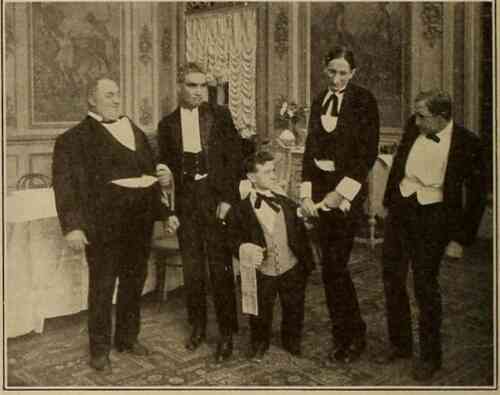
The banquet scene, a twelve-minute set-piece, is a masterclass of escalating tension. Crane blocks it like a chess match: the impostor at the head table; Violet, aproned, ladling consommé; Old Dutch, forced into a waiter's tailcoat, balancing trays. Note the cutaways to children peeking through balustrades—innocent witnesses whose future faith in meritocracy curdles in real time. When Rockmorgan’s elevator gate clangs open, the soundtrack (on the 2017 Murnau-Stiftung restoration) drops to a single timpani heartbeat, a sonic blackout before the visual blackout of Bings’ humiliation.
Gender politics? Retrograde, yet sneakily subversive. Violet’s eventual rescue hinges not on Harold’s affection but on her ability to manipulate the teloptophone, threatening paternal blackmail via video-proof. She weaponizes the male gaze, turning it back on the patriarch. One could read the finale as a proto-feminist coup, though the film hedges by rewarding her with marriage and a mink coat.
Comparative hat-tips: the mistaken-identity swirl rivals The Masked Motive’s shell-game plotting, while the working-class protagonists forced to labor among the rich anticipate the upstairs-downstairs dynamics of Sperduti nel buio. Yet Old Dutch lacks the cynical fatalism of those European imports; its DNA is pure Americana, salted with immigrant hustle.
Crane’s direction is workmanlike, not visionary, but the film crackles with textural authenticity—real hotel lobbies, real snow on sound-stage streets, real exhaustion in the actors’ eyes after a nineteen-hour shoot. That vérité lends the farce unexpected pathos; you sense these are people one recession away from the breadline.
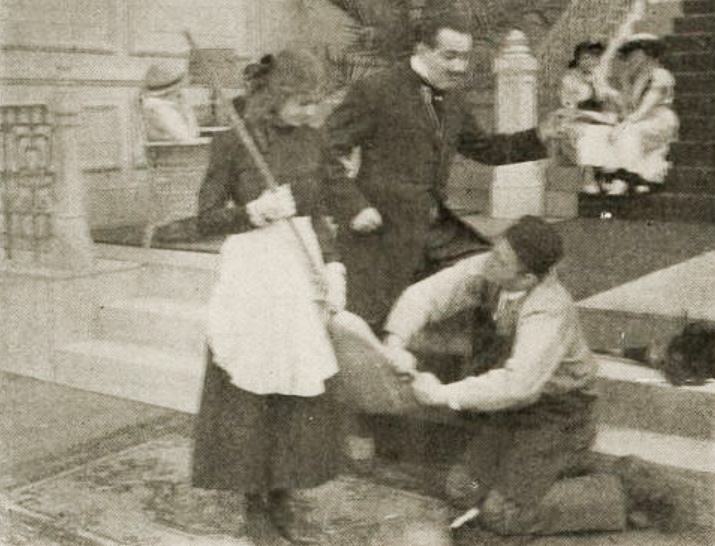
Does the picture lag? Briefly. A mid-film detour into comic horse-grooming feels like contractual padding to showcase child star Pat Walshe’s animal impersonations. Trim those four minutes and the narrative would hum like a Singer sewing machine. Still, the pacing recovers with a whip-pan chase through laundry chutes that rivals Keaton for spatial ingenuity.
The final iris-in closes on Violet and Harold kissing through the teloptophone’s flickering frame: a visual pun that love, like capital, is now transmitted rather than touched. It’s a gag that lands differently in an age of FaceTime proposals and crypto weddings. Crane, Smith, and company didn’t predict the future—they rehearsed it.
So why has Old Dutch languished in vaults while Sixty Years a Queen enjoys pristine restorations? Partly because the existing print is dupey, scratched like a losing lottery ticket. Partly because critics pigeonhole it as “ethnic” comedy, a ghetto within silent cinema’s already marginalized suburb. Yet its themes—surveillance, identity theft, the gig-economy humiliation of skilled labor—feel ripped from yesterday’s headlines.
Recommendation: seek out the 2017 restoration (available on Criterion Channel cycles or Kino’s MOD Blu). Watch it beside your laptop with Zoom open, camera off, and savor the century-old prophecy that your face can be stolen faster than your wallet. Grade on a curve for historical prescience: 8.7/10. A rambunctious, slightly tattered gem whose cracks let the future shine through.
Old Dutch may not tower like An Alpine Tragedy’s Expressionist peaks, but it hums in the marrow of American myth: the belief that if you invent the future, the world will happily forge your signature.
IMDb 6.7
1931
Community
Log in to comment.