DbcultAccessing Vault...
4.8/10
Senior Film Conservator
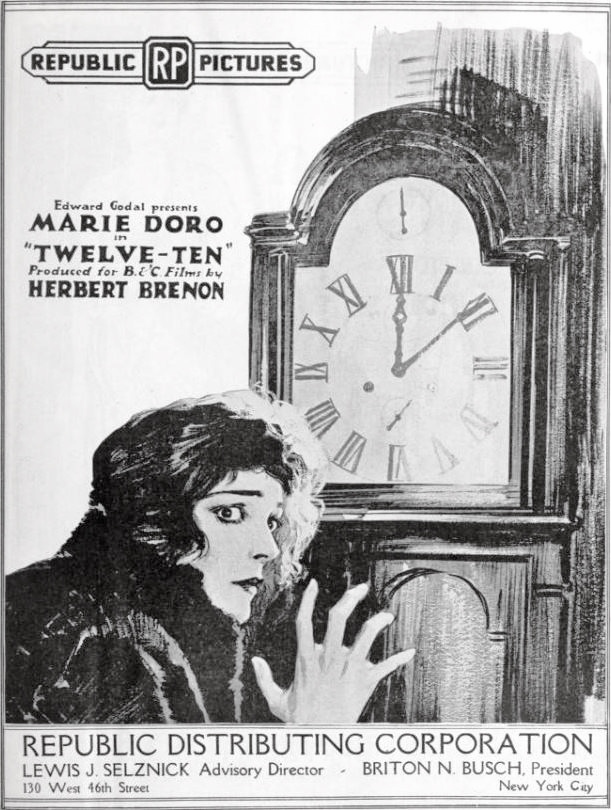
A definitive 4.8/10 rating for a film that redefined the boundaries of cult cinema. 12.10 remains a cornerstone of transgressive art.
The year 1919 stood as a precipice in cinematic history, a moment where the visual language of the silent screen began to shed its stage-bound origins for something more fluid, more hauntingly psychological. In the center of this evolution sits 12.10 (or Twelve-Ten), a film that manages to be both a quintessential Victorian melodrama and a surprisingly sharp thriller. Directed with a keen eye for atmospheric tension, it leverages the ethereal presence of Marie Doro to tell a story that, while familiar in its tropes, is exceptional in its execution.
To understand the impact of 12.10, one must first reckon with Marie Doro. By the time she starred in this production, she was already a seasoned luminary of both the stage and the screen. Her performance here is a masterclass in the 'waif' archetype, yet she imbues the character of the French orphan with a resilient dignity that transcends mere victimhood. Much like her work in Little Lady Eileen, Doro uses her expressive, large eyes to communicate a complex interiority that dialogue titles can only hope to approximate.
Her character's journey from the war-torn or displaced realities of France to the opulent, yet sterile, halls of British nobility provides the film's primary emotional friction. It is a transition we see echoed in other contemporary works like The Girl Philippa, where the female protagonist becomes a symbol of national identity caught in the gears of larger societal shifts. In 12.10, however, the conflict is more intimate, more claustrophobic. The threat isn't a foreign army; it is the rot within the very family that has sworn to protect her.
The plot of 12.10 is a meticulously wound mechanism. The adoption of Marie by the wealthy British nobleman (played with a weary, paternal grace by Ben Webster) sets the stage for a classic inheritance dispute. The introduction of the villainous nephew, portrayed with a sneering, calculated malice by James Carew, injects a sense of impending doom into the pastoral domesticity. The writing, credited to Earl Carroll and George Edwardes-Hall, avoids the frantic pacing of earlier short-form silents, opting instead for a slow-burn tension that culminates in the titular deadline.
The use of time as a narrative device was quite sophisticated for 1919. While films like A London Flat Mystery toyed with urban suspense, 12.10 uses the '12:10' marker as a psychological weight that hangs over the characters. It creates a rhythmic pulse for the editing, forcing the audience to synchronize their heartbeats with the ticking clocks scattered throughout the manor. This focus on a specific, looming moment of crisis prefigures the high-suspense thrillers of the 1940s, proving that the roots of the 'ticking clock' trope are buried deep in the silent era's soil.
The set design and cinematography work in tandem to create a world that feels both expansive and trapping. The nobleman's estate is rendered with a heavy, Gothic sensibility—long shadows, ornate furnishings, and vast, empty corridors that seem to swallow Marie’s small frame. This visual strategy highlights her isolation. Despite being 'rescued,' she is merely a pawn in a larger game of wealth and power. This theme of the 'threatened heiress' or 'endangered ward' is a recurring motif in films like The Primrose Ring or Little Lost Sister, but 12.10 strips away the sentimental fluff to focus on the cold, hard reality of greed.
The cinematography captures the subtle shifts in the characters' allegiances. Notice the way the camera lingers on James Carew’s face as he observes Marie and the nobleman; the lighting shifts from a warm, amber glow to a harsh, high-contrast side-lighting that emphasizes the predatory nature of his gaze. This is visual storytelling at its most potent, requiring no words to convey the shifting power dynamics within the household.
When we look at 12.10 alongside its contemporaries, we see a fascinating cross-section of early 20th-century anxieties. If we compare it to Dvije sirotice (The Two Orphans), we see a similar fascination with the plight of the vulnerable young woman, but 12.10 replaces the sprawling Dickensian chaos with a tight, focused thriller structure. Similarly, while American Buds focuses on the more wholesome, comedic aspects of children influencing the lives of crusty old men, 12.10 leans into the darkness, suggesting that the presence of a child can just as easily trigger the basest human instincts in those around them.
The film also shares an interesting DNA with The False Faces, particularly in its fascination with deception and the masks people wear to achieve their ends. In 12.10, the mask is one of familial duty and gentility, which makes the eventual betrayal all the more jarring. It’s a thematic cousin to Bought, which explores the transactional nature of human relationships, though here the 'currency' is a literal fortune rather than social standing.
The direction of 12.10 is remarkably assured. There is a specific sequence involving a 'fake death' plot that is handled with such panache that it still holds up today. The director understands that suspense is not built through action alone, but through the anticipation of action. By showing the audience the villain's plan and then forcing them to watch the innocent Marie walk blindly into the trap, the film creates a visceral sense of helplessness. It is a technique that Alfred Hitchcock would later perfect, but here it is in its primal, raw form.
The lighting in the final act, particularly during the sequence that leads up to the 12:10 deadline, is masterful. The use of shadow to obscure the villain’s movements while keeping Marie in a soft, vulnerable light creates a visual tension that mirrors the narrative stakes. This isn't just a film about a kidnapping; it’s a film about the encroachment of darkness upon the light of innocence. The technical proficiency displayed here rivals the character-driven depth found in The Hired Man, though 12.10 is far more concerned with the mechanics of the mystery genre.
Earl Carroll, often remembered for his lavish 'Vanities' and his contribution to the Broadway spectacle, brings an unexpected sense of theatrical weight to the screenplay. Collaborating with George Edwardes-Hall, the duo creates a script that is surprisingly lean. Every scene serves the dual purpose of character development and plot advancement. There is no 'fat' on this narrative. Unlike David Harum, which meanders through its character studies with a folksy charm, 12.10 is a bullet train aimed directly at its climax.
The dialogue titles are also worth noting. They are not merely functional; they have a poetic quality that enhances the mood. When the nobleman speaks of his love for Marie, the language is elevated, reflecting his status and his genuine affection. Conversely, the villain’s lines are short, sharp, and utilitarian. This linguistic distinction helps to further define the moral boundaries of the world they inhabit.
As we look back at 12.10, it’s clear that it occupies a unique space in the 1919 cinematic landscape. It lacks the surrealist experimentation of the burgeoning German Expressionist movement, yet it possesses a psychological depth that many American and British films of the time lacked. It is a bridge between the Victorian stage thriller and the modern cinematic mystery. It shares the thematic DNA of spiritualism and hidden motives found in Vera, the Medium, yet it remains grounded in a more tangible, physical danger.
The film’s focus on the 'plot afoot' to kidnap the girl and steal the fortune might seem like a cliché to modern audiences, but in 1919, the execution was everything. The way the film handles the revelation of the plot, the mounting dread as the clock ticks, and the eventual resolution, is handled with a sophistication that makes it a must-watch for any serious student of film history. It doesn't rely on the easy sentimentality of Romeo's Dad or the breezy lightheartedness of Beach Birds. Instead, it demands that the audience sit in the tension, feeling every second of the countdown.
In the final analysis, 12.10 is a triumph of atmosphere over artifice. While the plot is a standard-issue melodrama, the way it is told—through the lens of Marie Doro’s haunting performance and the director’s masterful control of tempo—makes it something much more significant. It is a film about the vulnerability of the outsider, the corruption of the family unit, and the inexorable march of time. It stands alongside Chains of the Past as a reminder that the ghosts of our decisions always come back to haunt us, usually at the stroke of twelve-ten.
For those who appreciate the silent era not just as a historical curiosity but as a vibrant, living form of art, 12.10 is a revelation. It proves that even within the constraints of a simple 'orphan in peril' story, there is room for profound psychological insight and genuine cinematic innovation. It is a dark, sparkling jewel of a film, polished by the passage of time and ready to be rediscovered by a new generation of cinephiles who aren't afraid of the dark—or the ticking of a clock.
Reviewer's Note: The restoration of 12.10 remains a priority for film archivists, as the surviving prints offer only a glimpse into the original brilliance of its tinting and tonal range. However, even in its degraded state, the power of the performances and the precision of the direction are undeniable.
IMDb 4.8
1919
Community
Log in to comment.