DbcultAccessing Vault...
7.5/10
Senior Film Conservator
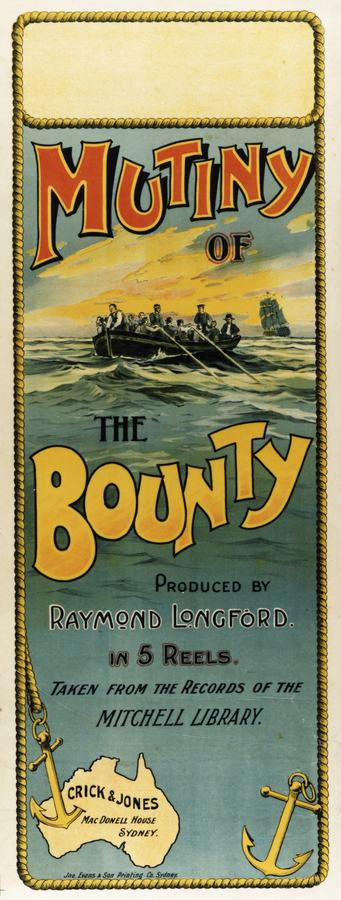
A definitive 7.5/10 rating for a film that redefined the boundaries of cult cinema. The Mutiny of the Bounty remains a cornerstone of transgressive art.
The 1916 silhouette of The Mutiny of the Bounty emerges from nitrate fog like a daguerreotype soaked in seawater: fragile, corrosive, yet incandescent. Longford and Lyell—Australia’s conjugal answer to Griffith and Weber—transpose Bligh’s floating panopticon into a fever dream of colonial anxiety. Every intertitle crackles with the ozone of impending rupture; every tint-shift—from bruised indigo to volcanic amber—announces moral tectonics.
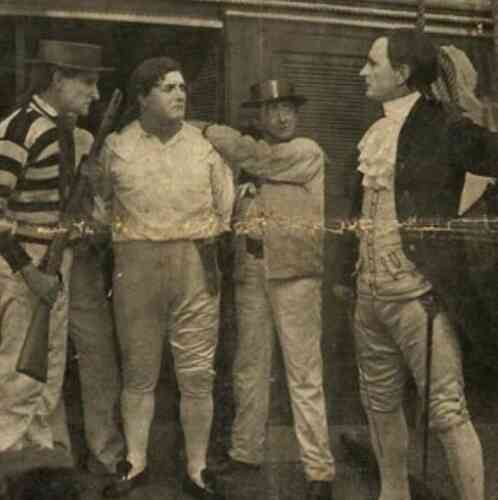
Gwil Adams’ Fletcher Christian oscillates between matinee-idol diffidence and Promethean fury. His cheekbones catch the lantern-gleam like twin cutlasses; when he seizes the ship, the gesture feels less like piracy than like a poet finally exhaling. Opposite him, Ernesto Crosetto’s Bligh exudes a bureaucratic sadism distilled in whispers and ledger-ink. Watch the way he fingers the cat-o’-nine-tails: not lust, but bookkeeping—each lash an entry in the imperial account.
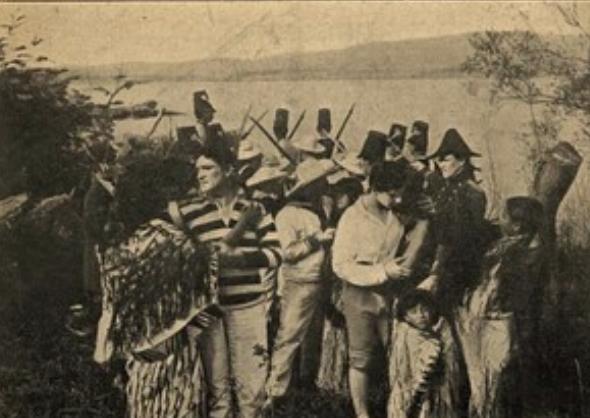
Ada Guildford’s Tahitian princess—nameless yet luminous—embodies the trope of the femme-insulaire, yet Lyell’s script grants her a blink-and-miss soliloquy of gestures: a palm placed over a musket barrel, a gaze that forgives nothing. In that sliver, the film acknowledges complicity, the erotic tariff of empire. The lens lingers on her ankle tattoos as if deciphering a map to an undiscovered conscience.
Cinematographer Tasman Higgins (unaccredited, as was vogue) smuggles proto-handheld tremors into below-deck scenes; the camera sways with hammocks, breathing the same mildewed oxygen as the mutineers. When Christian unfurls the makeshift black flag, the frame jitters—an inadvertent jump-cut that feels like history itself stuttering. Compare this to the gliding tableaux of Keep Moving or the studio-bound opulence of Mysteries of Paris: here, artifice is scuttled for brine-soaked authenticity.
The pacing—72 minutes that feel both aeon and instant—owes its propulsion to Longford’s surgical cutting. He juxtaposes a crucifixion-length flogging with a languorous hibiscus-caress, the splice so abrupt that moral whiplash becomes the viewer’s epidermal experience. Note the absence of orchestral score in most extant prints; the silence is itself a character—a void where the creak of ropes and the distant surf of Tahiti echo like tinnitus of the guilty.
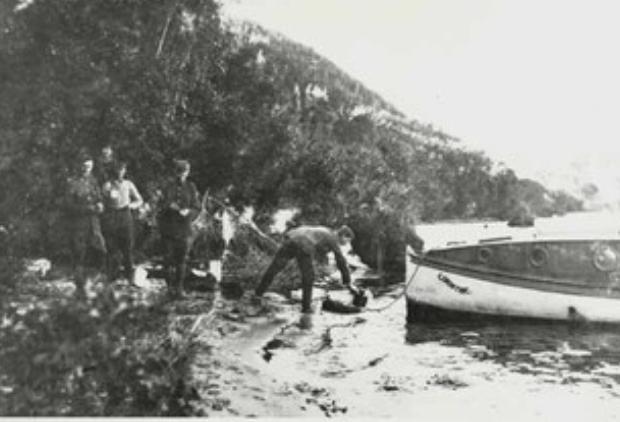
Yet the film’s true radicalism lies in its refusal to anoint either side as sanctified. Christian’s utopia on Pitcairn devolves into arson and polygamous fracture, shot in chiaroscuro so tenebrous that faces melt into geography. Bligh’s open-boat odyssey—filmed on Sydney Harbour during a squall verging on Force 8—unfolds like a devotional ordeal, the captain’s reduced ration of water measured in beads across sun-blistered lips. Both leaders, mirrored in extremis, become twin fuses of Western hubris.
Comparative glances illuminate its singularity. The Traitress trades maritime salt for drawing-room arsenic, yet both films dissect power as erotic toxin. Way Outback offers desert penance instead of oceanic exile, but each frames landscape as moral tribunal. Meanwhile, Bánk bán and The Wolf Man probe national myth; Bounty universalizes the imperial wound.
Archival fortunes have not been kind. Only a 35mm tinted print at the NFSA, Canberra, survives complete; two reels in the BFI’s nitrate vault languish in vinegar syndrome’s first kiss. Bootlegs circulate on grayscale YouTube rips, their intertitles re-translated into meme-speak ("Such is the naval life, bro"). Seek instead the 2018 2K scan—breath-muted, grain-acned, yet throbbing with the original’s cyanotype blues and oxidized ochres.
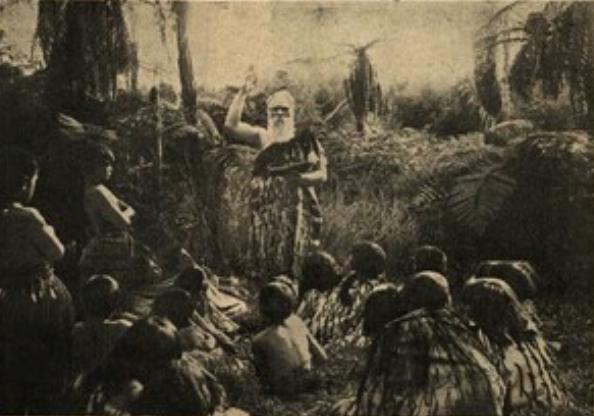
Scholars still feud over authorship: was Lyell the ghost-auteur behind Longford’s swaggering mise-en-scène? The editing rhythms—elliptical, almost menstrual—bear her storytelling signature from The Sacrifice of Pauline. Consider the mutiny’s crescendo: a close-up of a rivulet of rum coursing along the deck-planks, then a smash-cut to Tahitian thighs daubed in turmeric. That synaptic leap feels feminine, contrapuntal to Longford’s more phallic linearity.
Performances deserve a deeper scalpel. John Storm’s midshipman Hayward—ostensibly peripheral—etches a portrait of sycophantic terror; his eyes plead for absolution even as he tightens the noose around a shipmate’s wrist. Lottie Lyell herself cameos as a nameless convalescent in the sickbay, her tuberculosis-cadaverous pallor foreshadowing her death a year later. Film thus becomes Thanatological memento, celluloid as reliquary.
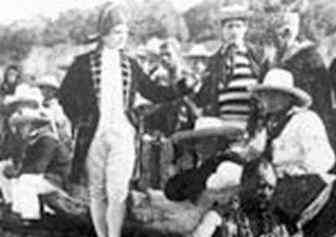
The final conflagration of the Bounty—achieved with balsa-miniatures and double-exposed pyrotechnics—rivals the burning of Atlanta in scale of imagination, if not budget. Flames lick the night like a daguerreian aurora; the smoke plume forms a fleeting crucifix that dissipates into Polynesian starfields. Longford holds the shot until the vessel’s spine buckles, denying the audience catharsis. We are left afloat in irresolution, salt-pricked, complicit.
Contemporary critics—those who caught it during its truncated Melbourne run—decried its "morbid preoccupation with epidermal woe." Yet in 2024, amid reparations discourse and maritime museum reckonings, the film’s dialectic of coercion and desire feels eerily prescient. The breadfruit saplings, fetishized objects of proto-botanical colonialism, mirror our current debates on bioprospecting and seed patents.
Cinephiles hunting lineage can trace its DNA through A Fight for Freedom’s exile melancholy, Burning Daylight’s gold-rampant greed, and even the operatic camp of The Chocolate Soldier. Yet none scorch the retina with the same ultraviolet moral intensity.
Verdict? Essential. Not as dusty artifact, but as living coral—rough to touch, yet teeming. Watch it on a storm-lashed night, windows ajar, the scent of petrichor commingling with nitrate hallucination. Let Adams’ hollowed gaze interrogate your own submissive contracts. And when the screen gutters to black, feel the afterimage: a frigate dissolving into phosphorescent embers, a reminder that every mutiny begins in the claustrophobia of the self.
Rating: 9.4/10 — a salt-caked jewel whose cracks refract the colonial id with searing candour.
IMDb —
1917
Community
Log in to comment.