DbcultAccessing Vault...
7/10
Senior Film Conservator
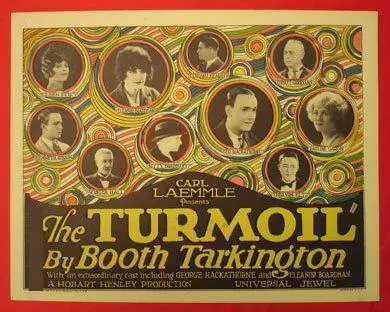
A definitive 7/10 rating for a film that redefined the boundaries of cult cinema. The Turmoil remains a cornerstone of transgressive art.
In the pantheon of 1924 cinema, few films capture the suffocating atmosphere of the burgeoning American industrial machine with as much psychological acuity as Hobart Henley’s The Turmoil. Adapted from Booth Tarkington’s novel, this silent masterpiece serves as a grim indictment of the 'self-made man' archetype. James Sheridan, Sr., portrayed with a terrifying, monolithic intensity by Emmett Corrigan, is not merely a character; he is the personification of a city choked by its own smoke. Unlike the visceral, almost primal obsession with wealth found in Erich von Stroheim’s Greed (1924), the avarice in The Turmoil is sanitized, organized, and ultimately more insidious because it masks itself as paternal duty.
The narrative architecture is built upon the friction between the old world of refined sensibilities—represented by the Vertrees family—and the new, clanging world of the Sheridans. Sheridan Sr. views his sons as extensions of his own ego, mere cogs designed to keep the pistons of his legacy in motion. The tragedy of the Sheridan household is one of emotional starvation amidst material plenty. While other films of the era, such as The Storm (1922), utilized natural disasters to test the mettle of their protagonists, Henley uses the flood in The Turmoil to illustrate the fragility of Sheridan’s constructed reality. The loss of James Jr. is a structural failure in the father’s blueprint, a crack in the foundation that he refuses to acknowledge until the entire edifice begins to crumble.
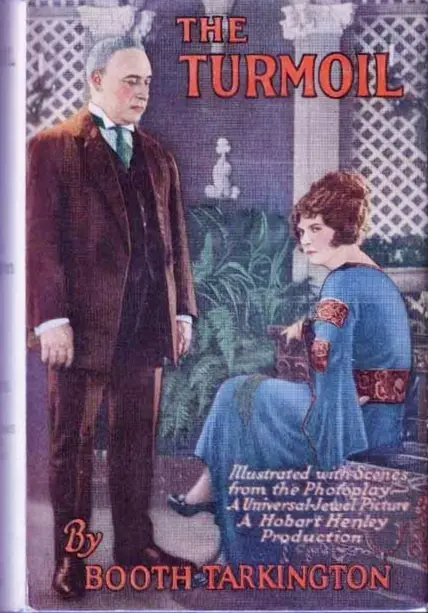
George Hackathorne’s portrayal of Bibbs is a revelation of silent acting, eschewing the histrionics often associated with the era for a nuanced, interiorized performance. Bibbs is the 'dreamer,' a figure frequently found in early 20th-century literature who serves as the moral compass in a world gone mad with commerce. His physical frailty is a direct manifestation of his refusal to be hardened by the factory floor. In many ways, his struggle mirrors the existential dread found in Whom the Gods Would Destroy, where the individual is crushed by forces far beyond their control.
The chemistry between Hackathorne and Eleanor Boardman, who plays Mary Vertrees, provides the film's only source of warmth. Boardman, a luminary of the silent screen, brings a dignified melancholy to the role of the impoverished aristocrat. Their romance is not a flight of fancy but a desperate survival tactic—two souls seeking refuge from the 'smoke and soot' that Sheridan Sr. so proudly identifies as the smell of progress. The cinematography emphasizes this contrast; the Sheridan mansion is often shot with sharp, oppressive angles and harsh lighting, while the scenes between Bibbs and Mary possess a soft, almost ethereal glow, reminiscent of the pictorialist style prevalent in the early twenties.
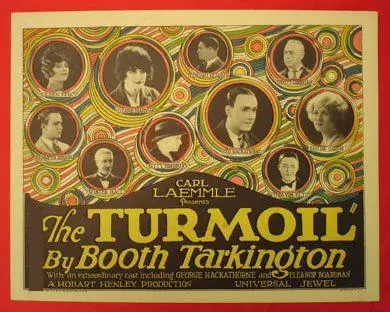
Technically, The Turmoil is a triumph of silent-era craftsmanship. The flood sequence is staged with a harrowing realism that rivals the scale of contemporary epics. However, the true spectacle lies in the film's ability to visualize internal collapse. When Roscoe (Theodore von Eltz) suffers his mental breakdown, the editing becomes frantic, mirroring his fractured psyche. This stylistic choice anticipates the German Expressionist influences that would soon permeate Hollywood. The film’s pacing is deliberate, allowing the audience to feel the slow erosion of the family unit. It doesn't rely on the quick-draw action of Trigger Fingers or the melodramatic twists of The Other Man's Wife; instead, it draws its power from the inevitable collision of misplaced ambition and human limitation.
One cannot overlook the thematic resonance of the setting. The city—unnamed but clearly modeled after Tarkington’s Indianapolis—is a character in its own right. It is a sprawling, breathing entity that demands sacrifices. The soot that covers the Sheridan windows is a metaphor for the moral blindness of the patriarch. Sheridan Sr. believes he is building a future, but he is actually burying his family in the debris of his own past. This critique of the American Dream is as potent today as it was in 1924, placing the film alongside other social critiques like As a Man Sows or the brooding atmosphere of The Deemster.
The Turmoil avoids the pitfalls of a purely moralistic fable by grounding its resolution in a painful realization rather than a sudden, unearned transformation. Sheridan Sr.’s eventual acceptance of Bibbs and Mary is not a total absolution of his character; rather, it is a concession born of total defeat. He has lost two sons to his ideology; he keeps the third only by abandoning the very principles that defined his life. This nuance is what elevates the film above standard melodrama. It is a somber, reflective work that asks what remains of a man once his worldly ambitions have been stripped away.
For modern viewers, the film offers a fascinating window into the anxieties of the 1920s—a period of rapid technological advancement and social displacement. While it lacks the avant-garde experimentation of European cinema like Der Leibeigene or the raw naturalism of Drama na okhote, its emotional core is universal. The Turmoil is a haunting reminder that the machinery of progress often operates by grinding down the very individuals it claims to elevate. It stands as a testament to Hobart Henley’s directorial vision and Emmett Corrigan’s formidable presence, securing its place as a vital, if often overlooked, chapter in the history of silent drama. In the end, the 'turmoil' of the title is not the chaos of the city or the rush of the flood, but the violent restructuring of a human heart.
IMDb —
1912
Community
Log in to comment.