DbcultAccessing Vault...
Cult Review
Senior Film Conservator
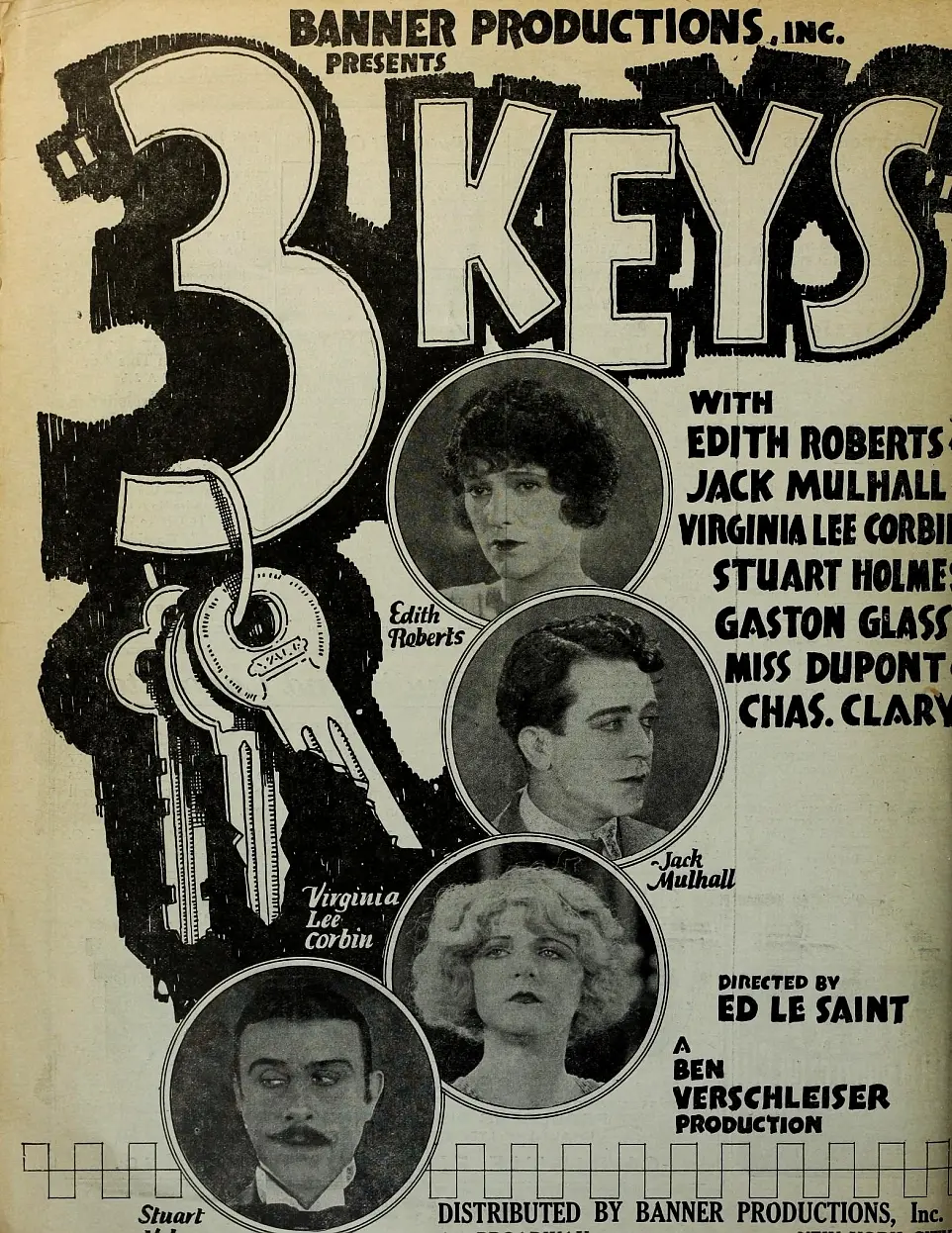
Short answer: yes, but with significant caveats. 3 Keys, a relic from 1920, is absolutely worth watching today if you possess a keen interest in early cinematic storytelling, the evolution of melodrama, and silent film performances. It is NOT for those seeking modern pacing, sophisticated character depth, or a narrative free from the charmingly overt contrivances of its era.
This film, like many of its contemporaries, operates on a logic that is both alien and fascinating to the modern viewer. It asks for a suspension of disbelief that extends beyond the fantastical, into the very fabric of human motivation and societal norms of a century past. And yet, within its melodramatic framework, there are glimmers of genuine human drama, surprising moral flexibility, and a narrative propulsion that, for all its datedness, remains curiously compelling.
The plot of 3 Keys is a masterclass in early 20th-century melodrama, a convoluted yet undeniably engaging tapestry woven with threads of financial desperation, moral compromise, and unexpected familial revelations. At its heart lies the precipitous fall of John Trevor, a Wall Street figure whose impending bankruptcy sets off a chain reaction of questionable decisions. His reliance on George Lathrop, his future son-in-law, for a crucial $100,000 highlights a societal vulnerability: reputation and financial standing were inextricably linked, often dictating one's very existence.
George Lathrop, a character whose moral compass is initially depicted as deeply flawed, squanders his inheritance with an ease that speaks volumes about the perceived invincibility of wealth at the time. His subsequent act of stealing negotiable securities from Sam Millington is not merely a crime; it's a desperate scramble to maintain a facade, a testament to the pressures of social expectation. This is where the film truly begins to intrigue, as it positions George not as a pure villain, but as a man cornered by his own profligacy, making a terrible choice to avert an even greater, more public humiliation.
The introduction of Alice, John's daughter, and her suspicion of George's affair with Clarita Ortega, adds a crucial layer of romantic entanglement. This personal betrayal, culminating in the broken engagement, is as vital to the narrative as the financial crisis. It underscores how closely intertwined personal honor and financial standing were in this period, where a man's word and his perceived fidelity could collapse his entire world as easily as a market crash. The film doesn't shy away from these intertwined pressures, presenting them as equally devastating.
However, the narrative truly pivots with the character of Jack Millington, Sam's son. Jack's discovery of both the theft and George's motivation—a detail that, in a less generous story, might have been used to condemn—is handled with a surprising degree of empathy. His decision to clear George, rather than expose him, introduces a powerful theme of redemption and the unexpected kindness of strangers (or, in this case, the son of the victim). This act of moral agency by Jack is the true 'key' that unlocks the film's complex resolutions.
Jack's elaborate scheme—lending John the capital, buying back the securities, and faking a car accident to convince his father that the securities were never truly lost—is a narrative contrivance that is both audacious and undeniably charming in its simplicity. It's the kind of grand gesture that only silent film melodrama could truly pull off, demanding a willing suspension of disbelief that modern audiences might struggle with. Yet, it works within the film's own internal logic, providing a swift and satisfying resolution to the financial woes.
The final twists, revealing Clarita as John's long-lost daughter and Alice finding happiness with an Italian count, tie up the loose ends with a neatness that is characteristic of the era. These resolutions, while perhaps too convenient for contemporary tastes, served to affirm a sense of cosmic justice and restored order. The film, in this regard, acts as a moral fable, suggesting that even the most tangled webs of deceit can be unraveled, and that happiness, though delayed, is ultimately achievable for all who deserve it.
Silent film acting is a unique art form, requiring a mastery of exaggerated gesture, expressive facial contortions, and precise body language to convey emotions without the aid of spoken dialogue. The cast of 3 Keys, led by Jack Mulhall as Jack Millington, largely rises to this challenge, delivering performances that, while occasionally broad, are often compelling and clear in their intent.
Jack Mulhall, in particular, embodies the heroic figure with a captivating earnestness. His portrayal of Jack Millington is a study in silent nobility. When he discovers the theft and the desperation behind it, Mulhall conveys a complex blend of shock, pity, and a burgeoning sense of responsibility through his furrowed brow and the subtle tightening of his jaw. It’s a performance that sells the improbable altruism of his character, making his elaborate plan to clear George feel genuinely motivated by compassion rather than mere plot device. His scene where he 'discovers' the securities after the faked accident, a moment of carefully choreographed surprise and relief, is particularly effective in its silent conviction.
Miss DuPont, as Alice Trevor, brings a certain vivacity to her role. Her portrayal of a woman scorned, suspecting her fiancé's infidelity, is marked by dramatic sighs, sharp turns of the head, and intensely focused glares. While her expressions might seem overwrought to a modern eye, they were the language of the time, effectively communicating her emotional turmoil and righteous indignation. The scene where she breaks off the engagement, her body stiff with betrayal, speaks volumes without a single intertitle, a testament to DuPont's ability to command the frame.
Joseph W. Girard, as the desperate John Trevor, conveys the crushing weight of financial ruin with a palpable sense of despair. His slumped shoulders and anxious pacing clearly articulate the pressure he is under, making his character's plight understandable, if not always sympathetic. Stuart Holmes, as George Lathrop, is perhaps the most intriguing performance, as he must transition from a somewhat dissolute wastrel to a man facing the consequences of his actions. Holmes manages to convey George's initial arrogance and later, his dawning remorse, with a nuanced shift in his physicality, from swagger to a more humbled posture.
The ensemble, including Edith Roberts as Clarita Ortega, contributes to the overall theatricality. Roberts, in particular, has the unenviable task of being both the innocent object of suspicion and the catalyst for a major plot twist. She navigates this with a delicate balance, her wide, innocent eyes often speaking more than any gesture. While some performances lean heavily into the melodramatic excesses that defined the era, they are, for the most part, committed and effective within the stylistic conventions of silent cinema. The actors understand their charge: to make the audience feel, often intensely, through visual means alone.
The direction in 3 Keys, while not groundbreaking, is competent and serves the narrative effectively. The film unfolds with a clear, linear progression, typical of early 20th-century filmmaking. The camera often remains static, observing the action from a medium-to-long shot, allowing the actors' full body movements and exaggerated expressions to tell the story. This observational style, while lacking the dynamic cutting and close-ups that would become prevalent later, has its own charm, allowing the viewer to take in the entire tableau of a scene.
There are moments, however, where the direction shows a nascent understanding of cinematic language beyond merely recording a stage play. For instance, the scene depicting George's theft of the securities is handled with a deliberate tension. The camera holds on George's nervous glances, the slow, deliberate movements of his hands as he approaches the safe, and the quick, furtive act of taking the bonds. This sequence, though simple by today's standards, effectively builds suspense, demonstrating a burgeoning awareness of how to use visual storytelling to heighten drama.
The cinematography, while not aspiring to grand artistic statements, is functional and clear. Lighting is generally straightforward, illuminating the sets and actors without much in the way of atmospheric shadows or complex chiaroscuro. This is not a film that relies on mood lighting to convey emotion; instead, it trusts the actors and the narrative itself to do that work. The sets, whether the opulent interiors of the Millington home or the more modest settings, are detailed enough to establish the social strata of the characters without being overly distracting. The Wall Street office, for example, is sparse but conveys the serious nature of John Trevor's financial woes.
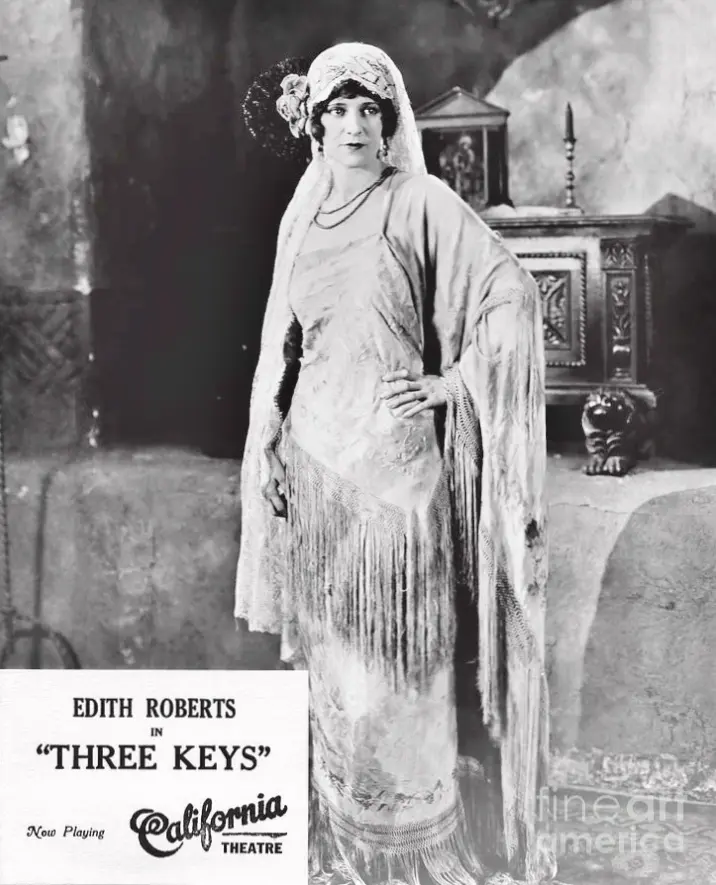
One notable aspect is the use of intertitles. These textual inserts, which provide dialogue, exposition, and emotional cues, are well-integrated and concise. They augment the visual storytelling without dominating it, striking a balance that allows the performances to breathe while ensuring the audience fully grasps the intricate plot. The pacing, dictated by these intertitles and the often-deliberate actions of the characters, is consistent. It’s a measured rhythm that demands patience from modern viewers but rewards those willing to immerse themselves in the era's storytelling conventions.
Comparing it to other films of the period, such as Pettigrew's Girl or The Price of Pleasure, 3 Keys exhibits a similar adherence to established narrative forms. It prioritizes clarity and emotional impact over stylistic experimentation. While it doesn't push the boundaries of cinematic technique, its straightforward approach ensures that the complex plot remains comprehensible and the dramatic stakes are always clear. The faked car accident scene, for instance, is staged with a practical effectiveness that, despite its simplicity, sells the deception convincingly within the film's world.
Beneath its surface of melodrama and convenient resolutions, 3 Keys offers some surprisingly robust thematic explorations. The most prominent theme is, undoubtedly, that of morality and the shifting definitions of right and wrong under duress. George Lathrop's theft, while criminal, is presented not as an act of inherent malice but as a desperate bid for survival and the preservation of social standing. This nuanced portrayal challenges the audience to consider the circumstances that drive individuals to desperate measures. It's a brave choice for a film of this era, which often preferred clear-cut heroes and villains.
The film also delves into themes of class and the power dynamics inherent in wealth. John Trevor's fear of bankruptcy is not just about losing money; it's about losing his place in society, his reputation, and his very identity. George's squandering of his inheritance similarly highlights the dangers of inherited privilege without responsibility. Conversely, Sam Millington represents the established, unshakeable wealth, and his son Jack, with his inherent generosity, embodies the benevolent capitalist who can right wrongs with a mere stroke of a pen. This class distinction is subtly woven throughout the narrative, illustrating how financial standing could dictate one's fate and moral choices.
Perhaps the most compelling theme is that of second chances and redemption. Jack Millington's decision to not only forgive George but actively work to clear his name is a powerful statement. It suggests that empathy and understanding can triumph over strict adherence to justice. George, in turn, is given an opportunity to rectify his life, leading to his realization of love for Clarita. This narrative arc implies a belief in the inherent goodness of people, or at least their capacity for change, a surprisingly optimistic outlook for a story steeped in deceit.
The revelation of Clarita as John's long-lost daughter, while a classic melodramatic trope, also speaks to themes of hidden identities and the unexpected ways families can be reunited. It's a tidy resolution that reinforces the idea of destiny and fate playing a hand in human affairs. Alice's journey to find happiness with an Italian count further emphasizes the idea that true love and happiness can be found even after significant heartbreak, underscoring the film's ultimately hopeful message.
The pacing of 3 Keys is undeniably a product of its time. It moves with a deliberate, almost stately rhythm that allows the audience to fully absorb each dramatic beat and emotional flourish. For viewers accustomed to the rapid-fire editing and constant narrative propulsion of modern cinema, this pace might initially feel slow. However, for those willing to adjust their expectations, it offers a different kind of engagement, one that allows for greater contemplation of the characters' predicaments and decisions.
The film dedicates ample time to establishing the financial peril, the romantic entanglements, and the moral dilemmas, ensuring that each piece of the intricate puzzle is laid out clearly. The build-up to George's theft, for instance, is not rushed; his internal struggle is conveyed through his actions and the reactions of those around him, rather than through quick cuts or voiceovers. This measured approach allows the melodrama to fully breathe, giving weight to the emotional stakes.
The tone of 3 Keys is, first and foremost, melodramatic. Every emotion is heightened, every decision carries immense weight, and every revelation is designed for maximum dramatic impact. This is not a subtle film; it aims for the heartstrings and the gut, often through overt means. Tears flow freely, gestures are grand, and the stakes feel existential, even for what might appear to be simple financial woes. This melodramatic tone is a defining characteristic of silent cinema, and 3 Keys embraces it wholeheartedly.
However, within this overarching melodrama, there are also undertones of moral inquiry and even a touch of romantic comedy, particularly in the later developments. The swift and somewhat unbelievable resolution of the financial crisis, combined with the convenient familial revelations and the tidy romantic pairings, injects a sense of optimistic fantasy. It suggests a world where good intentions, even after bad deeds, can lead to happy endings, often facilitated by a benevolent hand of fate (or, in this case, Jack Millington).
The film's ability to maintain its compelling nature despite these tonal shifts is a testament to its narrative strength. It never loses sight of its core dramatic questions, even as it weaves in elements of romance and redemption. The final acts, in particular, move with a surprising swiftness, resolving conflicts and pairing off characters with an efficiency that, while perhaps too neat, provides a satisfying emotional closure. It's a whirlwind, yes, but one that ultimately leaves the viewer with a sense of order restored, albeit through a rather circuitous path.
This film works because it is a fascinating artifact of early 20th-century storytelling, offering a window into the narrative conventions and moral sensibilities of its time. Its intricate plot, though convoluted, is genuinely engaging, and the emotional performances, while broad, are often compelling within their context. It's a masterclass in how silent cinema conveyed complex human drama without dialogue, relying entirely on visual cues and intertitles.
This film fails because its pacing can feel glacially slow to modern audiences, and its reliance on extreme coincidences and overly convenient resolutions might strain the suspension of disbelief for those unaccustomed to the melodramatic style. The moral ambiguities, while interesting, are often resolved too neatly, sacrificing depth for a tidy conclusion.
You should watch it if you are a film historian, a silent film enthusiast, or someone curious about the foundational elements of cinematic narrative. It offers valuable insights into the evolution of screenwriting and acting before the advent of sound. It's also a good choice if you appreciate a story where complex problems are solved with ingenuity and a surprising amount of generosity, even if the methods are a bit far-fetched.
3 Keys is more than just a forgotten film; it's a fascinating time capsule. While it won't resonate with every modern viewer, particularly those seeking the kinetic energy of contemporary cinema, it holds significant value for anyone intrigued by the foundations of narrative filmmaking. It's a testament to the enduring power of a well-spun yarn, even when that yarn is delivered through exaggerated gestures and intertitles. The film's willingness to explore moral ambiguities, even within a melodramatic framework, elevates it beyond mere curiosity.
Ultimately, it's a rewarding watch for the patient and historically minded cinephile. It serves as a stark reminder of how much storytelling has evolved, yet also how some core human dramas remain timeless. Don't expect a thrilling action flick or a deep character study; instead, prepare for a captivating journey into the heart of early 20th-century melodrama, where convoluted plots lead to surprisingly heartwarming, if improbable, conclusions. It’s a film that demands a certain kind of appreciation, but one that ultimately delivers a unique and engaging experience.
IMDb 6.3
1934
Community
Log in to comment.