DbcultAccessing Vault...
6.9/10
Senior Film Conservator
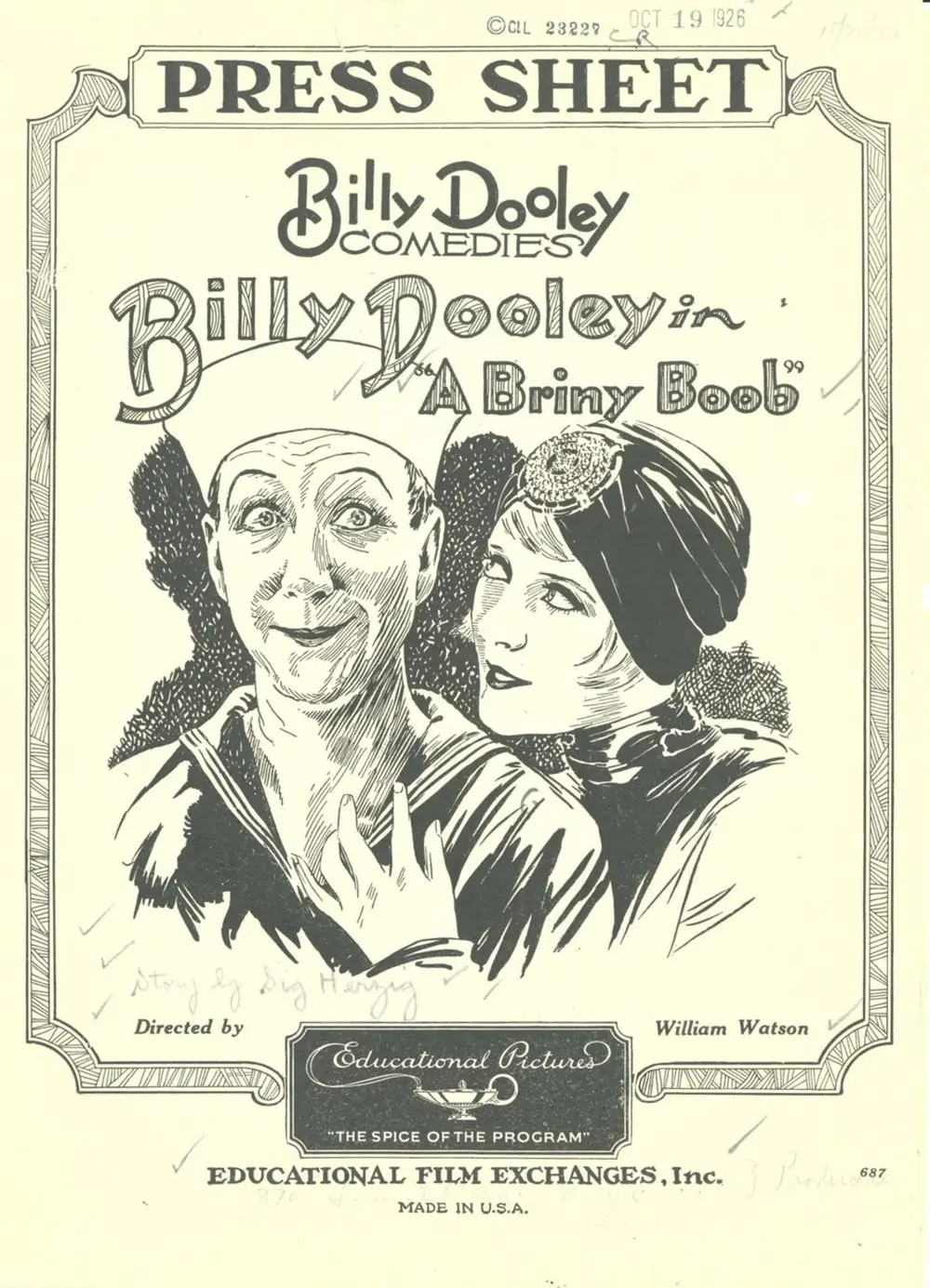
A definitive 6.9/10 rating for a film that redefined the boundaries of cult cinema. A Briny Boob remains a cornerstone of transgressive art.
Is this film worth watching today? Short answer: Yes, but strictly as a time capsule for fans of the Christie Comedy style. It is for the silent film enthusiast who appreciates the 'frantic sailor' archetype, but it is certainly not for anyone who requires their comedy to have a logical progression or emotional stakes.
This film works because of its relentless, almost exhausting pace and its sharp parody of the era's pop culture. This film fails because the narrative is essentially three unrelated sketches held together by a thin thread of coincidence. You should watch it if you want to see how 1920s audiences mocked the 'scandalous' literature of their time.
Billy Dooley was the king of the 'goofy sailor' trope. In A Briny Boob, he leans into the physicality that made him a staple of the Christie Studio. Unlike the calculated grace of Keaton or the pathos of Chaplin, Dooley operates on a frequency of pure, unadulterated panic. From the moment he receives the ten dollars—a small fortune for a sailor in 1926—his movements are jerky and unpredictable.
Consider the scene where he encounters the nurse-maid. There is no nuance here. He doesn't woo her; he simply reacts to her presence like a moth to a flame. This lack of character interiority might frustrate modern viewers, but it serves the slapstick engine perfectly. He is a prop in his own story, a human pinball bouncing between authority figures and romantic interests.
His performance here is comparable to his work in A Milk Fed Hero, though perhaps more focused on domestic absurdity than military blunders. Dooley’s face is a canvas of confusion. It works. But it’s flawed. The reliance on the 'susceptible sailor' cliché feels a bit tired even for 1926, yet Dooley’s commitment to the bit keeps the engine turning.
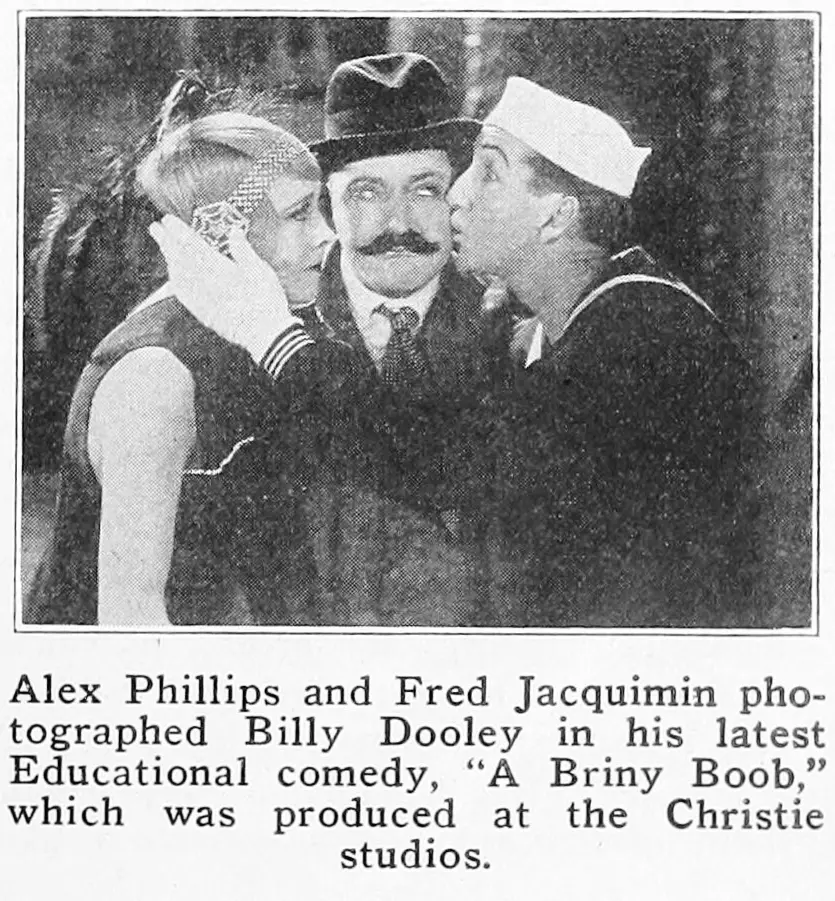
For the casual viewer, the answer is likely no. The humor is rooted in a very specific type of vaudevillian timing that can feel repetitive. However, for the cinema historian, it is a fascinating look at the mid-tier comedy shorts that filled theaters between features like Lily of the Dust.
The film provides a direct window into what the average moviegoer found hilarious: social embarrassment, mistaken identity, and a good old-fashioned chase. If you enjoy the chaotic energy of The Duck Hunter, you will find enough here to justify the twenty-minute runtime. It is a loud film despite its silence.
The most interesting segment of the film involves the rehearsal of Elinor Glyn’s Three Weeks. To a modern audience, the 'tiger rug' and the 'hectic' acting might seem like random weirdness. In reality, this was a sharp jab at one of the most scandalous novels of the early 20th century. Glyn’s book was famous for a scene involving a queen and her lover on a tiger skin, which became a shorthand for 'naughty' high society.
Watching Dooley, a low-class sailor, try to emulate this high-society erotica is genuinely funny. The contrast between his stiff, nautical movements and the supposed sensuality of the play is the film's strongest comedic asset. It’s a moment where the film rises above simple slapstick and engages in genuine social parody. It’s the 1920s equivalent of a TikToker trying to recreate a scene from Fifty Shades of Grey.
"The tiger rug scene isn't just a prop; it's a symbol of the film's desire to puncture the balloon of Victorian era leftovers."
The direction by the Christie team ensures that this sequence is the centerpiece. The framing is tighter here than in the park scenes, emphasizing Billy’s claustrophobia as he is 'utilized' by the lady of the house. It’s a rare moment of structured comedy in an otherwise rambling plot.
Technically, A Briny Boob is standard for its time, but that doesn't mean it's lazy. The outdoor shots in the public park have a naturalistic light that contrasts well with the staged, shadows-and-velvet look of the mansion interior. The transition from the 'classical dancers' on the lawn to the domestic space of the reward-giver is handled with a briskness that prevents the viewer from questioning the logic of the situation.
The pacing is the real star here. Christie Comedies were known for their 'marathon' finishes, and this film is no exception. Once the husband arrives, the editing accelerates. We see quick cuts between the husband’s rage, the maid’s betrayal, and the oblivious policemen outside. It lacks the sophisticated geometry of a Buster Keaton chase, but it makes up for it with sheer volume of movement.
One surprising observation: the film treats the 'classical dancers' with a strange mix of reverence and mockery. Their movements are filmed with enough clarity to be aesthetic, yet they are ultimately just a source for Billy to steal flowers. It’s a cynical take on 'high art' that permeates the whole film.
When compared to something like Golf or Too Much Married, A Briny Boob feels more episodic. It doesn't have the singular focus of a sports comedy or a domestic dispute film. Instead, it’s a 'day in the life' gone horribly wrong. This makes it feel slightly more modern in its structure, resembling a sketch comedy show more than a short story.
The use of the 'suspicious husband' trope is a bit more aggressive here than in The Marionettes. Frederick Peters plays the husband with a genuine menace that briefly threatens to turn the comedy into a thriller before the police arrive to restore the status of 'farce.'
A Briny Boob is a fascinating, if messy, example of the 'Boob' subgenre of silent comedy. While it lacks the heart of the era's bigger stars, Billy Dooley’s manic performance provides enough sparks to keep the film from feeling like a total relic. The satire of Elinor Glyn is a highlight that rewards those with a bit of historical knowledge. It isn’t a masterpiece, but it is a vibrant, loud, and occasionally clever piece of entertainment that deserves a look from anyone interested in the roots of the sitcom.
Ultimately, the film succeeds as a distraction. It doesn't ask much of you, and in return, it gives you a tiger rug, a confused sailor, and a chaotic police chase. Sometimes, that’s exactly what cinema should be.

IMDb —
1930
Community
Log in to comment.